Resonance A Plague Tale Legacy Combat Guide: How to Parry and Defect Perfect Counter Mechanics
If you came into Resonance: A Plague Tale Legacy expecting another slow-burn survival experience built around hiding in tall grass, sneaking past soldiers, and desperately escaping rats, the combat system is going to catch you off guard.
This time, Sophia is not Amicia.
She is faster, more aggressive, better equipped, and—most importantly—actually capable of standing her ground. Set 15 years before A Plague Tale: Requiem, Resonance takes the familiar historical horror atmosphere and pushes the series toward a much more physical third-person action experience. Sophia carries both a sword and dagger, and the game expects you to use them rather than treating melee combat as a last resort.
That makes parrying and perfect deflects two of the most important mechanics in Resonance: A Plague Tale Legacy.
I quickly found that trying to play every encounter defensively simply does not work once the game starts throwing multiple mercenaries, shielded enemies, and more aggressive attackers at you. Blocking can save you, but a well-timed deflect can completely flip an encounter. One second you’re surrounded; the next, you’ve removed an enemy from the fight and are already preparing to counter the next attacker.
Here is how I recommend approaching the entire system.
Parry vs. Deflect: They Are Not the Same Thing
The first mistake many players will make is treating parry and deflect as interchangeable mechanics. They aren’t.
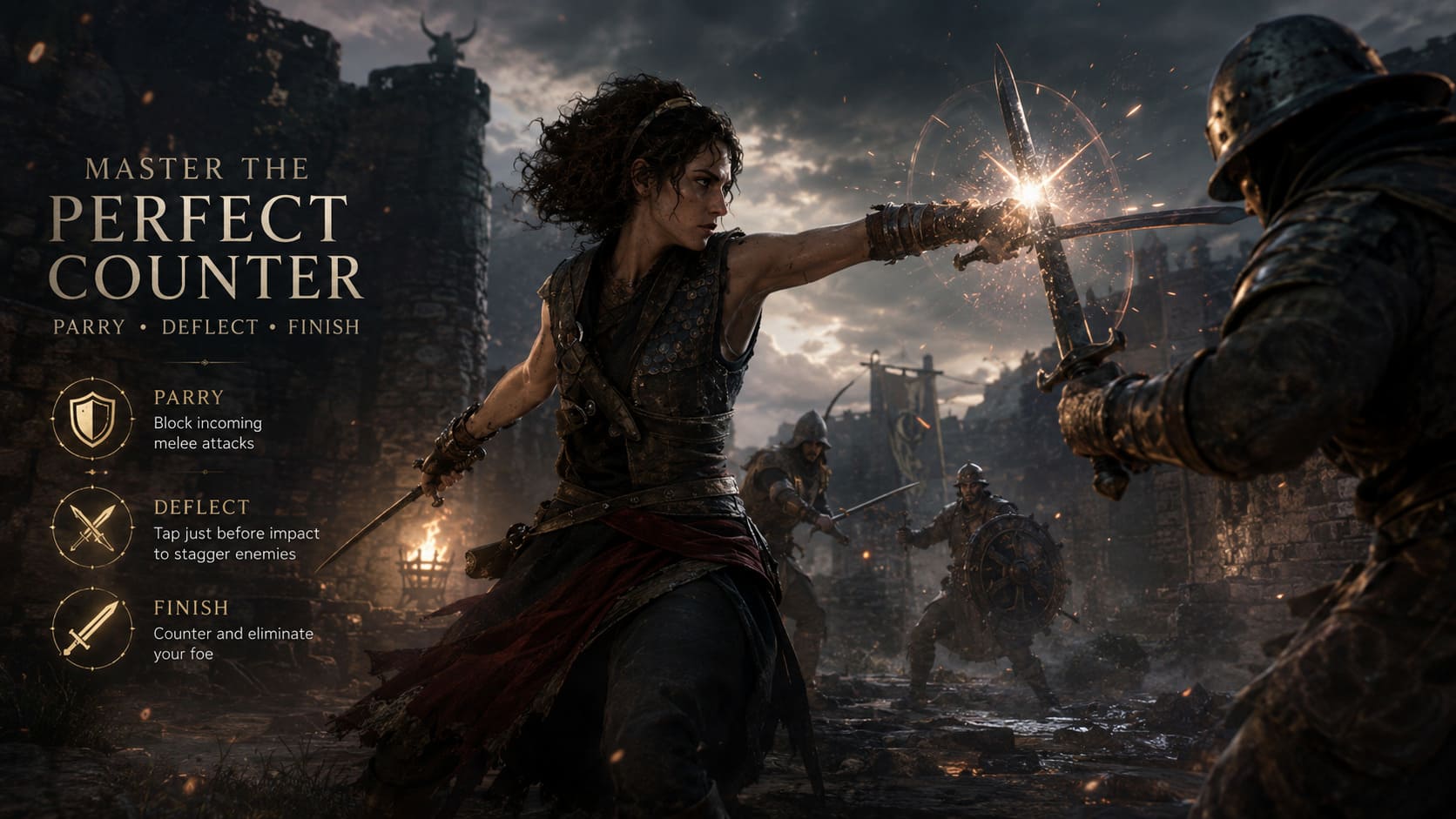
A standard parry is essentially your safety net. You raise Sophia’s guard as an enemy attack comes in and absorb the hit with your blade. It keeps you alive and prevents the immediate damage, but it doesn’t necessarily give you a massive offensive advantage.
A perfect deflect, on the other hand, is about timing.
Instead of holding your guard early, you wait until the enemy’s attack is almost at the point of impact and tap the defensive button. Get it right and Sophia knocks the attacker completely off balance, creating a short but extremely valuable counter window.
| Mechanic | Purpose | Timing | Result |
|---|---|---|---|
| Parry | Defensive protection | Hold before impact | Blocks incoming melee damage |
| Deflect | Offensive counter | Tap just before impact | Staggers and exposes enemy |
| Finisher | Damage conversion | Immediately after deflect | Rapidly eliminates target |
Think of it this way: parry keeps you alive, while deflect lets you take control of the fight.
That distinction becomes increasingly important as the difficulty rises.
Resonance Combat Controls
Before trying to build muscle memory, make sure you know the defensive inputs for your platform.
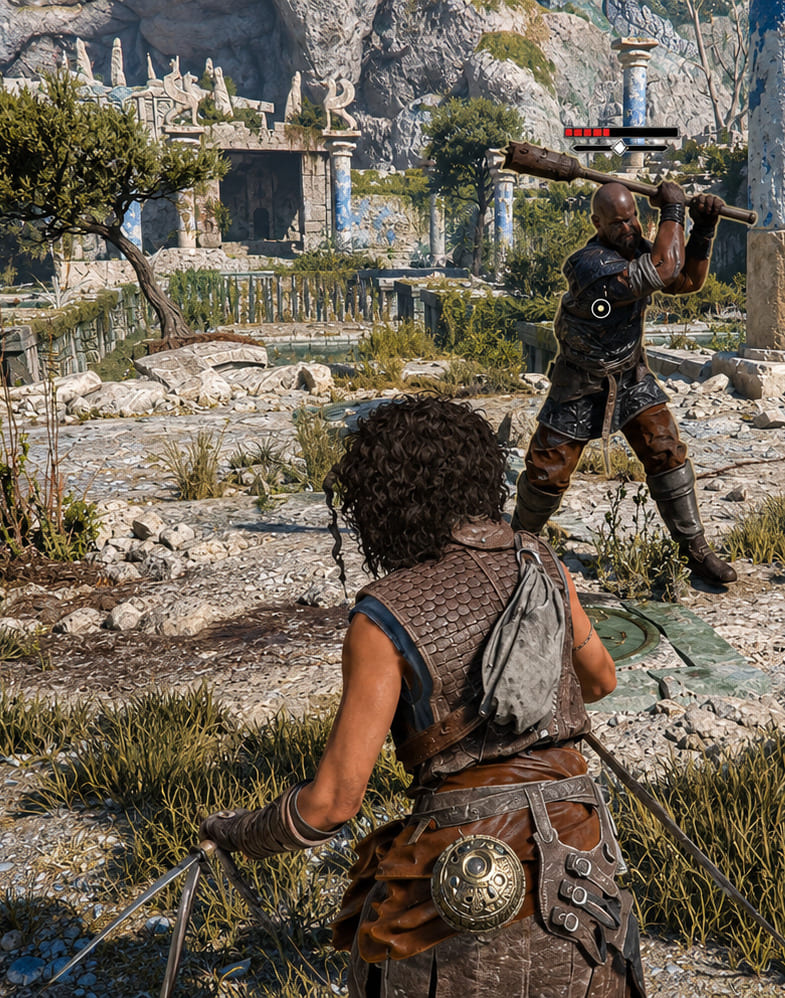
| Platform | Parry / Deflect | Counter Attack |
|---|---|---|
| PC | Right Mouse Button | Left Mouse Button |
| PlayStation 5 | L1 | Square |
| Xbox Series X|S | LB | X |
The important part isn’t memorizing the buttons themselves. It’s learning the rhythm.
A common beginner habit is to hold the defensive button continuously whenever an enemy gets close. That’s understandable, but it can make Sophia feel far less effective than she actually is.
Don’t panic-block. Watch the attack.
Once you start recognizing enemy animations, the combat becomes dramatically more satisfying.
How to Perform a Reliable Parry
A standard parry is much more forgiving than a perfect deflect, which makes it the mechanic I would recommend learning first.
When an enemy begins an attack, bring Sophia’s guard up before the weapon reaches her. You don’t need frame-perfect timing here. The goal is simply to intercept the incoming strike and prevent damage.
1. Watch the Weapon
Don’t stare exclusively at the enemy’s face or body.
Mercenaries can move unpredictably, and some attack animations contain exaggerated body movements designed to make you react too early. The weapon itself is usually the better visual reference.
Watch the sword, axe, or spear.
2. Recognize the Wind-Up
Most normal melee attacks have a clear preparation animation. An enemy pulls their weapon back, shifts their weight, and commits to the strike.
That’s your signal to raise Sophia’s guard.
3. Hold Your Guard Through Impact
Press and hold RMB on PC, L1 on PS5, or LB on Xbox as the attack comes toward you.
A successful parry produces the satisfying clash of steel and prevents the enemy’s attack from immediately damaging Sophia.
But don’t fall into the trap of holding guard forever.
Heavy enemies can eventually pressure Sophia’s defense and leave her vulnerable if you repeatedly absorb attacks without fighting back.
Parry should be a reset button, not your entire game plan.
How to Master the Perfect Deflect
This is where Resonance starts feeling like a proper action game.
A perfect deflect requires you to wait longer than your instincts want you to.
That is the entire trick.
When an enemy starts swinging, your brain will scream at you to block immediately. Ignore it. Let the animation develop.
Step 1: Wait for Commitment
Allow the enemy to complete most of the wind-up.
You are looking for the moment when the attacker has committed to the strike and can no longer easily cancel it.
Step 2: Read the Timing Cue
On easier and standard difficulties, attacks can provide a subtle visual indication shortly before impact.
Treat this as training wheels rather than something you should become dependent on.
On higher difficulties, you’re better off learning the actual animations.
Step 3: Tap, Don’t Hold
This is the critical difference.
Tap the defensive button just before the weapon connects.
On PC, that’s a quick RMB tap. On PS5, tap L1. On Xbox, tap LB.
If you’re constantly holding the button, you’re effectively performing a normal parry rather than deliberately fishing for a perfect counter.
Step 4: Confirm the Deflect
A successful deflect has a distinct feel.
You’ll see sparks, hear a sharper impact sound, and often get a brief slowdown that makes the successful timing immediately obvious.
That’s your invitation.
Step 5: Counter Immediately
Don’t admire your work.
Hit LMB, Square, or X immediately after the successful deflect to launch the counterattack or finishing sequence.
This is where the mechanic pays off. Instead of merely surviving the enemy’s attack, Sophia turns their aggression against them.
The Biggest Mistake: Trying to Deflect Everything
This is one of those lessons that sounds obvious until you’re actually surrounded by enemies.
Not every attack should be parried.
Some attacks are deliberately designed to punish players who stand their ground.
Red Attacks Need to Be Dodged
When a heavy enemy prepares a powerful attack accompanied by a red visual warning, don’t try to be a hero.
These attacks are generally intended to bypass your normal defensive options. Attempting a perfect deflect can result in Sophia getting knocked down or suffering heavy damage.
Red attack? Dodge.
It sounds simple, but learning this rule will save you an absurd amount of frustration.
The best players aren’t necessarily the ones who deflect everything. They’re the ones who immediately recognize which attacks are worth challenging and which ones should be avoided.
Don’t Forget the Supernatural Threats
Resonance isn’t only about fighting human opponents.
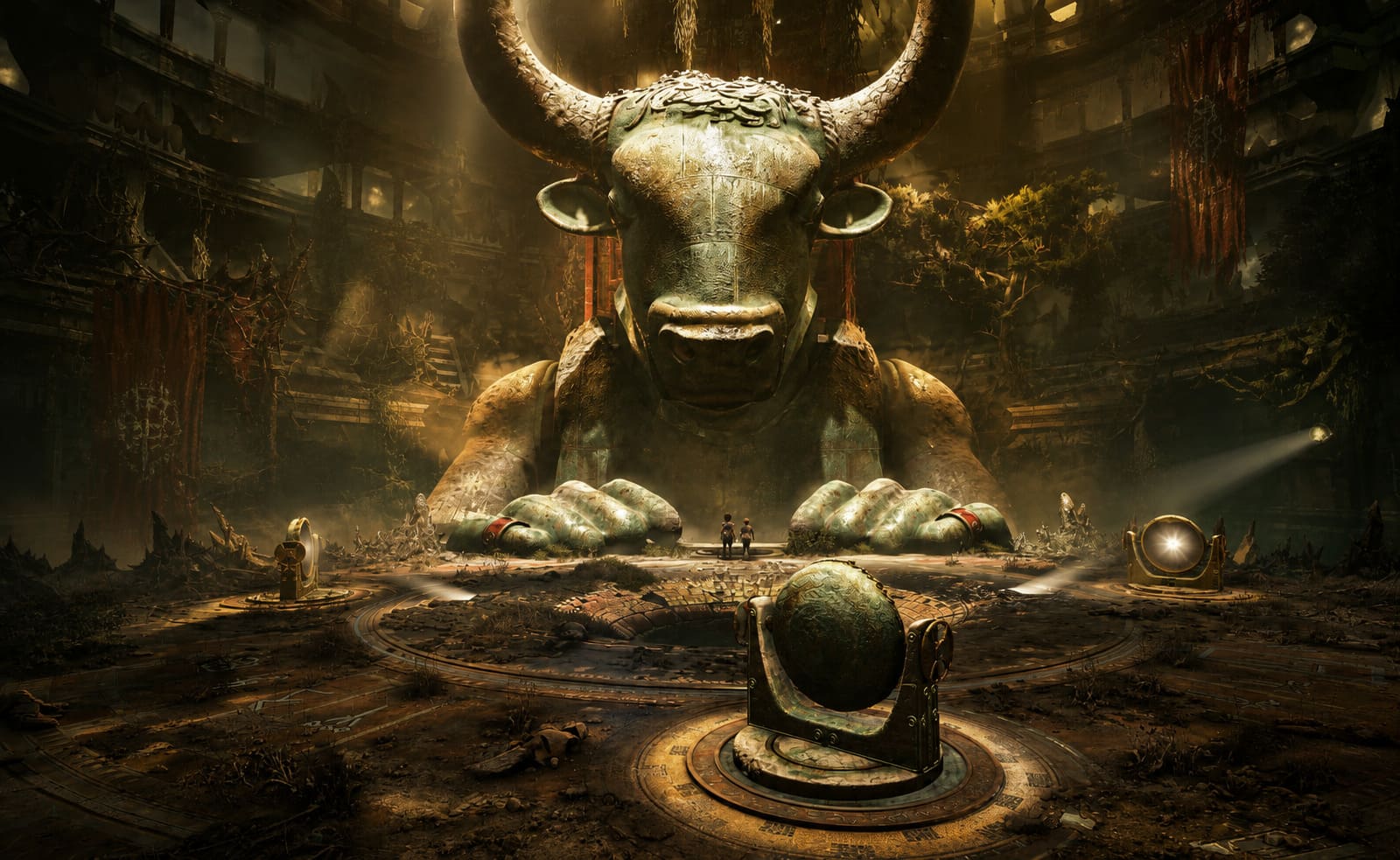
The game’s connection to the mysterious Minotaur’s Island and its dual-timeline elements introduces threats that don’t always behave like conventional melee enemies.
Some supernatural or environmental hazards cannot simply be solved with a sword.
This is where Sophia’s Minoan sphere becomes particularly important. Certain supernatural entities need to be brought into a physical or vulnerable state before conventional combat becomes effective.
Trying to parry something that isn’t properly materialized is a fantastic way to discover that the game absolutely does not care about your confidence.
Use the tools the game gives you.
Crowd Control: How to Survive When You’re Outnumbered
Fighting one enemy is easy.
Fighting four enemies who all want to stab you simultaneously is where things get interesting.
The key is to avoid becoming trapped in the middle of a crowd.
Pick a Target
Don’t randomly attack whoever happens to be closest.
Identify the weakest or most exposed enemy and focus on them first. Look for an incoming attack, deflect it, and immediately use your counter.
Removing one opponent from the equation is often more valuable than damaging three enemies slightly.
Use Finisher Windows
A successful finisher can give Sophia a brief period where surrounding enemies cannot immediately interrupt the animation.
Use that time intelligently.
While the finishing animation plays, start thinking about where the next threat is coming from. Don’t wait until the animation ends before deciding where to turn.
Good combat in Resonance is partly about what you do during animations.
Fight Near the Environment
Walls, ruined pillars, narrow spaces, and other environmental features can become extremely useful.
Positioning yourself intelligently can prevent enemies from surrounding you completely. Contextual attacks can also turn the environment into another weapon, allowing Sophia to punish enemies near structures instead of relying exclusively on repeated sword swings.
The environment isn’t just decoration. Use it.
Combining the Minoan Sphere With Deflects
This is one of the more interesting combinations in Sophia’s toolkit.
If you’re struggling against extremely fast enemies, the Minoan sphere can help disrupt their rhythm. Certain light-based effects can interfere with enemy behavior and give you more breathing room.
That means you don’t always have to force yourself to learn an absurdly fast deflect window immediately.
Create the opening first, then learn the timing.
Once you’re comfortable, you’ll be able to use the sphere to control a difficult encounter rather than simply using it as an emergency button.
A Simple Combat Loop That Actually Works
After spending enough time with the system, I recommend thinking about combat as a loop rather than a sequence of isolated attacks:
Observe → Parry or Dodge → Deflect → Counter → Reposition → Repeat
If an enemy launches a normal attack, you have the option to parry.
If you recognize the timing, go for the deflect.
If you see a dangerous red attack, get out of the way.
If your deflect connects, immediately counter.
Then reposition before the next enemy has a chance to surround you.
That rhythm is much more reliable than simply mashing the attack button and hoping Sophia’s animations carry you through the encounter.
Resonance: A Plague Tale Legacy Combat Guide – Essential Tips and Tricks to Master Sophia’s Blades
Beginner Mistakes to Avoid
There are a few habits I’d recommend breaking early.
- Holding block constantly: This makes you reactive and can leave you vulnerable against heavy pressure.
- Deflecting too early: If Sophia raises her guard before the final attack window, you’ll usually get a normal parry instead.
- Ignoring red attacks: These are often warnings to move, not invitations to show off.
- Attacking without repositioning: Even after a successful counter, other enemies are still moving around you.
- Focusing only on health damage: Removing one enemy completely can be much more valuable than spreading damage across an entire group.
- Ignoring the environment: Walls, pillars, and narrow spaces can dramatically change the flow of a fight.
Resonance A Plague Tale Legacy Ending Explained: Full Spoilers and Lore Deep Dive
Final Thoughts: Learn the Rhythm, Not Just the Buttons
The biggest change Resonance: A Plague Tale Legacy brings to the franchise isn’t simply that Sophia has a sword.
It’s that the game wants you to understand combat instead of merely surviving it.
Parrying gives you a dependable defensive option, but perfect deflects are where Sophia’s combat system really starts to sing. Once the timing clicks, enemy attacks stop feeling like unavoidable threats and start looking like opportunities.
That’s the moment I think Resonance’s combat becomes genuinely addictive.
You’ll eventually reach the point where an enemy raises their sword and you don’t think about the button anymore. You see the animation, wait that extra fraction of a second, tap the guard, hear the sharp metallic impact, and immediately drive into the counter.
That’s the flow you’re chasing.
Practice against the early-game scouts. Learn their attack animations. Stop panic-blocking. Respect red attacks. Use the Minoan sphere when it gives you an advantage, and always keep an escape route when you’re fighting multiple enemies.
Once those habits become automatic, Sophia stops feeling like someone trying to survive Minotaur’s Island.
She starts feeling like the most dangerous person on it.