Dive or Die Children of Rain Guide: How to Survive Deep Dives and Manage Sanity
There are survival games that punish mistakes, and then there’s Dive or Die: Children of Rain, a game that practically dares you to make one. After spending hours exploring the Abyssal Pool, I realized this isn’t a roguelite where brute force or lucky loot carries you to victory. Every descent feels like a calculated gamble where oxygen is more valuable than any relic you’ll ever haul back to the surface.
What impressed me most is how the game constantly forces you to think about two battlefields at once. One is beneath the ocean, where every second burns precious oxygen while horrific creatures patrol the darkness. The other is your settlement, where exhausted survivors slowly lose hope, develop psychological trauma, and eventually become just as dangerous as the monsters below.
If you’re struggling to survive past the early days or simply want to build a stronger expedition strategy, this guide covers the mechanics that matter most while sharing practical tactics that consistently deliver better results.
Why Every Dive Feels Like a Boss Fight
Unlike many survival games where exploration is mostly about gathering resources, every expedition in Dive or Die: Children of Rain feels like walking into enemy territory with a ticking bomb strapped to your back.
That bomb is your oxygen supply.
Air isn’t just another survival meter. It determines:
| System | Why It Matters |
|---|---|
| Exploration Time | Every second underwater consumes oxygen. |
| Combat | Attacking burns additional oxygen. |
| Stress | Panic dramatically increases air consumption. |
| Looting | Opening containers costs valuable time and oxygen. |
| Escape | Returning too late usually means permanent death. |
The biggest mistake I made during my first several runs was treating oxygen like stamina. It isn’t. Think of it as your entire expedition budget. Every unnecessary fight, wrong turn, or greedy decision spends resources you’ll desperately need later.
Mastering Oxygen Before Anything Else
One lesson becomes obvious after only a few failed expeditions: efficient movement matters more than expensive equipment.
Every action slowly drains your tank.
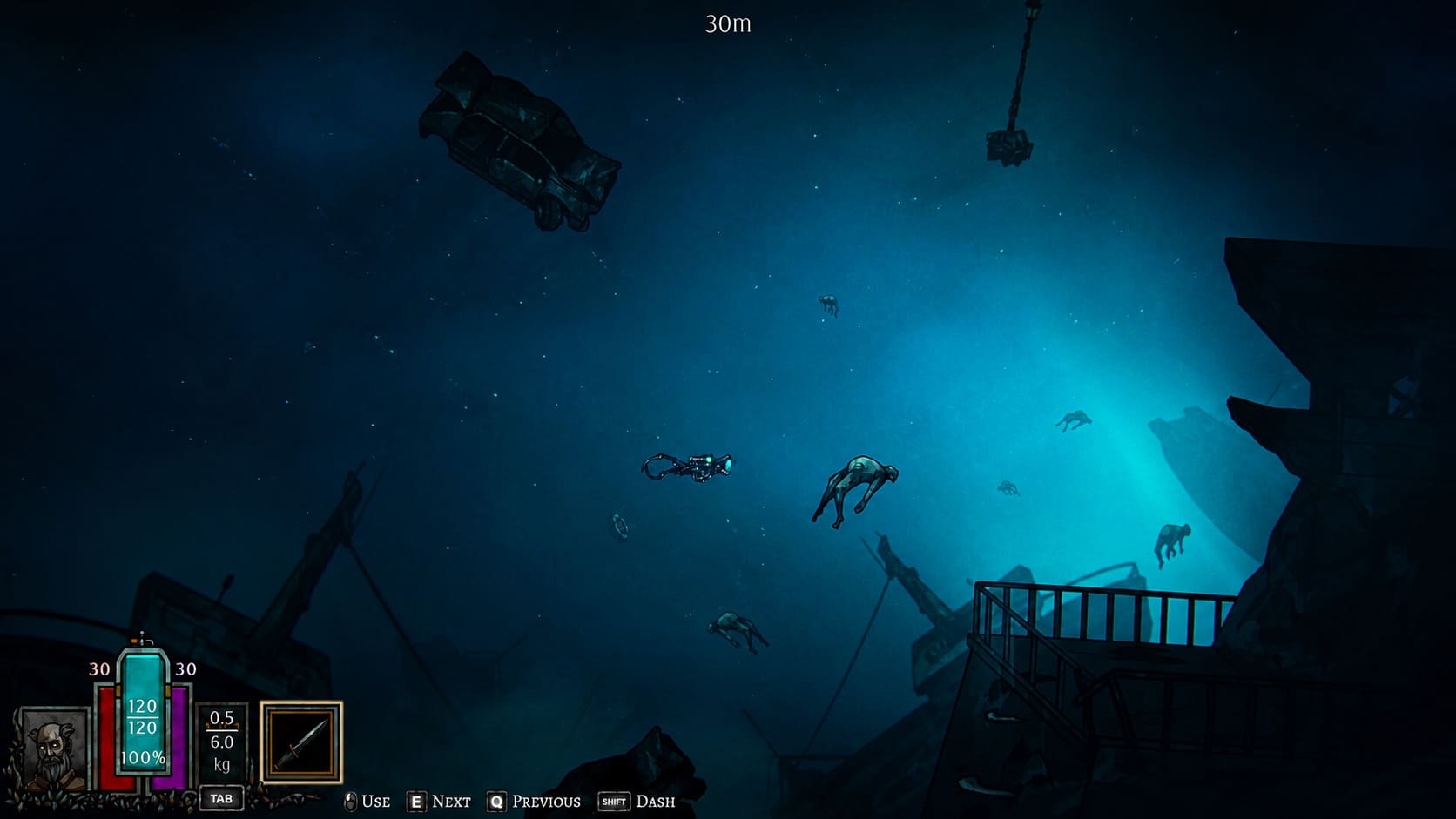
Basic swimming through flooded corridors steadily reduces your remaining air. Searching abandoned structures takes even longer, and combat drains oxygen far faster than many players expect. The deeper you descend, the less room you have for mistakes.
Several situations increase consumption dramatically:
- Encountering terrifying sea creatures.
- Witnessing disturbing environmental events.
- Extended combat encounters.
- Panicking inside dark unexplored areas.
Once your oxygen drops below roughly one-third capacity, the dive should already be ending. Chasing “one more crate” is probably responsible for more failed expeditions than every monster in the Abyss combined.
That extra relic rarely compensates for losing an experienced diver forever.
Learn the Geography of the Abyss
Successful players don’t simply wander. They memorize.
The Abyssal Pool gradually transforms from an intimidating maze into recognizable territory filled with landmarks, shortcuts, and reliable extraction paths.
During early dives, focus less on collecting everything and more on understanding:
- Safe routes back to extraction.
- Dangerous predator patrol zones.
- Reliable resource locations.
- Hidden side passages.
- Areas suitable for future exploration.
Treat every expedition like reconnaissance instead of a loot run.
Later, when better equipment becomes available, you’ll already know exactly where valuable resources are located.
Don’t Ignore Light Sources
Darkness isn’t only atmospheric—it directly affects survival.
Poor visibility creates multiple problems simultaneously. You miss environmental hazards, predators ambush more easily, and stress builds much faster.
Keeping flares or glowsticks available gives you valuable information before committing to dangerous tunnels. Good visibility often prevents combat entirely because you spot enemies long before they notice you.
Ironically, switching off your diving light occasionally helps avoid certain hostile creatures attracted to illumination, although doing so increases psychological pressure on your diver.
It’s a constant balancing act.
Upgrade the Surface Before Chasing Deep Water
Many players become obsessed with reaching lower depths immediately. That’s usually a mistake.
Your underwater success depends heavily on what you’ve already built back at camp.
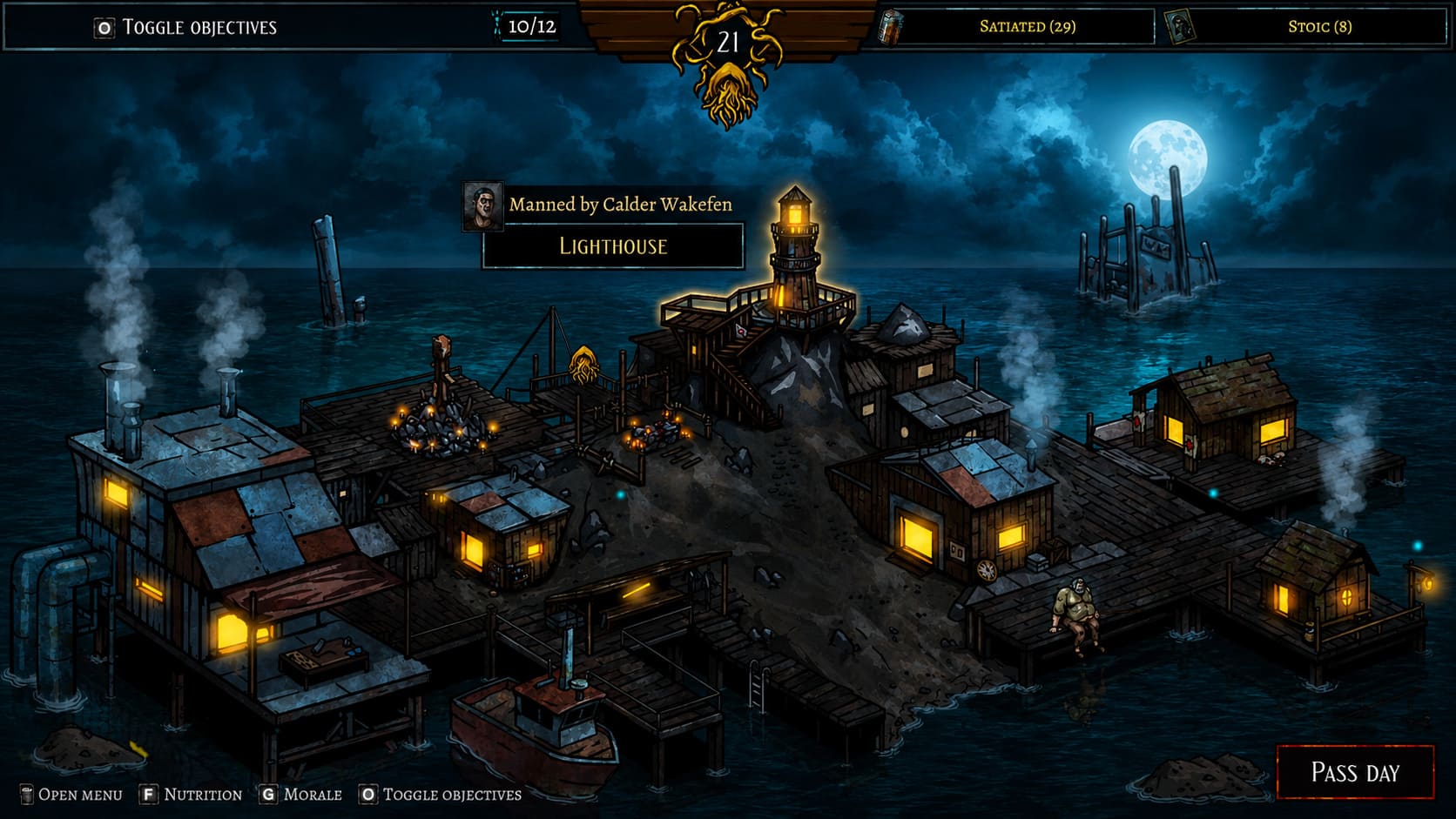
Highest Priority Base Upgrades
| Structure | Primary Benefit |
|---|---|
| Diving Deck | Better diving suits, larger oxygen tanks, improved pressure resistance. |
| Workshop | Advanced equipment, portable breathing gear, reinforced weapons. |
| Fishing Hut | Stable daily food production. |
| Town Hall | Passive survivor improvements and resilience bonuses. |
| Library | Permanent morale research upgrades. |
Attempting high-pressure zones without upgraded diving suits often creates more problems than rewards. Damaged equipment leaks oxygen faster, turning already dangerous expeditions into complete disasters.
Patience pays off.
Fighting Should Never Be Your Default Solution
This may surprise players coming from traditional action games. Combat is rarely profitable.
Every fight costs oxygen. Every injury costs medicine. Every delay increases the chance of another encounter.
Most hostile creatures exist to drain your resources rather than block progression.
Instead, prioritize avoidance whenever possible.
Useful survival techniques include:
- Breaking enemy line of sight behind ruins.
- Using underwater vegetation as cover.
- Throwing distraction devices.
- Deploying chemical lures.
- Moving quietly through less populated routes.
When combat becomes unavoidable, finish it quickly.
High burst damage beats prolonged exchanges almost every time because your oxygen meter never stops ticking downward.
Winning the Psychological War at Camp
The surface settlement isn’t a safe haven. It’s another survival system entirely.
Every evening your Camp Report tells the real story behind your expedition. Even successful dives can leave the colony slowly collapsing from within.
Two resources deserve constant attention.
Nutrition
Food shortages quickly spiral into larger problems.
- Hungry survivors become weaker.
- Productivity falls.
- Morale crashes.
- Health deteriorates.
Whenever supplies begin shrinking, dedicate future expeditions specifically to food collection instead of expensive crafting materials.
Sometimes staying alive tomorrow is worth more than unlocking a better weapon today.
Morale
Morale acts as the emotional backbone of the colony.
Ignoring it eventually creates:
- Survivor conflicts.
- Psychological disorders.
- Sabotage events.
- Mental breakdowns.
- Permanent deaths.
Recovering from widespread panic is considerably harder than preventing it in the first place.
Buildings That Keep Everyone Sane
Several facilities directly influence your colony’s long-term stability.
Town Hall
Provides passive improvements that strengthen survivors against mental stress during increasingly dangerous expeditions.
Library
One of my favorite buildings. Researching mysterious discoveries transforms fear into knowledge, permanently improving morale across the settlement while rewarding exploration beyond simple resource gathering.
Infirmary
Physical injuries are obvious. Psychological wounds aren’t. The Infirmary treats both before they become irreversible problems affecting future dives.
Memorial
Permanent death is unavoidable. Losing experienced divers devastates morale throughout the colony. Constructing and improving the Memorial softens those emotional blows, allowing your settlement to recover faster after tragedy.
Altar
Perhaps the darkest mechanic in the game. When resources become critically low and despair spreads everywhere, offerings at the Altar temporarily stabilize your community. It’s an uncomfortable decision, fitting perfectly within the Lovecraftian atmosphere.
Rotate Divers Like a Real Expedition Leader
One strategy I underestimated early on was roster management.
Sending the same diver into consecutive dangerous expeditions almost guarantees long-term psychological damage.
Instead:
- Allow exhausted survivors to recover.
- Rotate specialists regularly.
- Assign lighter camp duties after stressful dives.
- Monitor individual mental conditions frequently.
Fresh divers consistently outperform burned-out veterans carrying multiple trauma traits.
Watch Negative Traits Before They Spread
Mental conditions develop gradually. Ignoring early warning signs is extremely risky.
Common psychological problems eventually include paranoia, irrational fears, and delusions that affect both individual performance and overall colony stability.
The moment someone begins showing symptoms, temporarily remove them from frontline exploration.
Treatment is significantly cheaper than repairing widespread morale collapse.
Keep Food Stockpiles Larger Than You Think
If I had to recommend one habit that improves nearly every campaign, it would be maintaining surplus food.
Many players focus exclusively on rare crafting materials. That’s understandable. Advanced equipment is exciting. Starving colonies aren’t.
A simple rhythm works surprisingly well:
- Two resource-focused expeditions.
- One dedicated food expedition.
This approach keeps Nutrition healthy while preventing desperation during unlucky runs.
DIVE or DIE Children of Rain PS5, Xbox Release Date & Gameplay Analysis
Final Thoughts – Balance Greed with Survival
What makes Dive or Die: Children of Rain memorable isn’t simply its Lovecraftian horror or brutal difficulty.
It’s the constant tension between ambition and restraint.
Every decision asks the same question:
“Can I push just a little farther?”
Sometimes the answer is yes. Most of the time, experienced players know when it’s time to leave.
Upgrade your Diving Deck before chasing extreme depths. Invest heavily in the Workshop to expand your equipment options. Respect oxygen as your single most valuable resource, avoid unnecessary battles whenever possible, and never allow your settlement’s morale to quietly collapse while you’re focused on gathering relics.
Surviving the full 40-day countdown isn’t about becoming fearless. It’s about making smart decisions day after day, keeping your divers alive, preserving the sanity of your colony, and recognizing that the greatest threat beneath the Black Rain isn’t always the monster lurking in the darkness—it might be your own overconfidence.