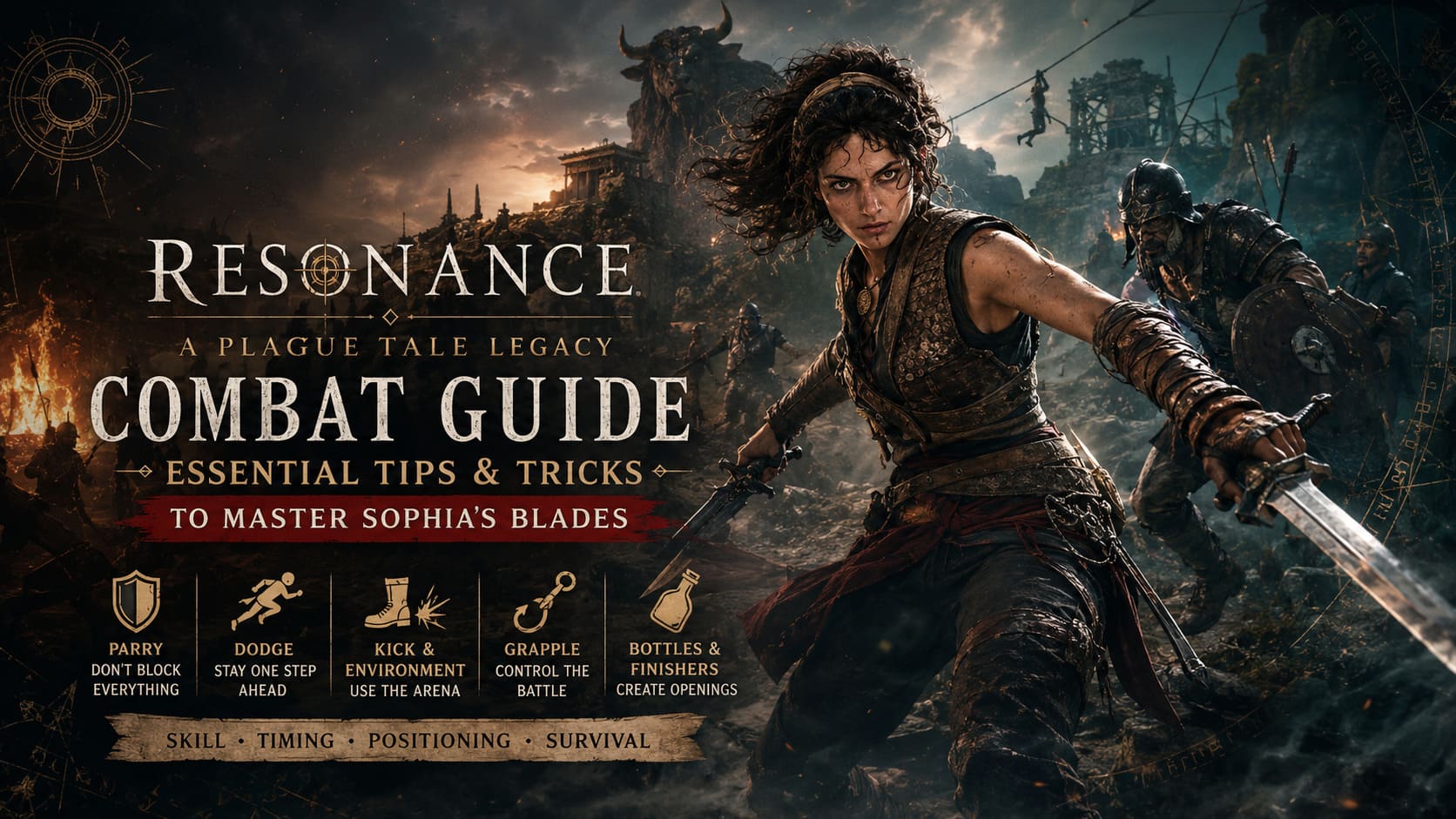
Resonance: A Plague Tale Legacy Combat Guide – Essential Tips and Tricks to Master Sophia’s Blades
After spending a lot of time with action-adventure games that try to mix stealth with melee combat, I was genuinely curious about how Resonance: A Plague Tale Legacy would handle the transition. The previous A Plague Tale games trained players to think defensively. Amicia survived by staying out of trouble, using her sling, alchemy, distractions, and the environment to escape situations that were usually far too dangerous to fight head-on.
Sophia is a very different protagonist.
Set 15 years before the events of A Plague Tale: Requiem, Resonance: A Plague Tale Legacy puts you in control of a young pirate and plunderer exploring the mysterious Minotaur’s Island. She is faster, more confident, and considerably more comfortable fighting at close range.
That doesn’t mean Sophia is some unstoppable warrior.
In fact, one of the first things I noticed is how quickly combat can punish sloppy play. Sophia may have a sword, dagger, grapple hook, and several useful tricks, but a couple of badly timed hits can put you right back at the last checkpoint. The combat therefore feels less like a traditional hack-and-slash system and more like a careful mixture of Sekiro-style timing, Ghost of Tsushima-like positioning, and Sifu-inspired aggression.
If you’re looking for Resonance: A Plague Tale Legacy combat tips, the biggest lesson is simple: don’t confuse aggression with button mashing.
1. Learn to Parry Before You Learn to Attack
The parry is arguably the most important combat mechanic in Sophia’s arsenal.
When an enemy attacks, pressing the block button immediately before the hit connects can trigger a perfect parry. Instead of simply protecting Sophia, this defensive maneuver breaks the opponent’s posture and creates an opening for a devastating counter.
This is where the combat starts becoming much more interesting.
A normal block can keep you alive, but repeatedly holding the button isn’t a strategy I recommend. Sophia’s posture can suffer, and you can quickly find yourself trapped between multiple enemies.
The better approach is to treat every incoming attack as an opportunity.
| Combat Action | Best Use | Main Benefit |
|---|---|---|
| Perfect Parry | Standard melee attacks | Breaks enemy posture |
| Dodge | Heavy or unblockable attacks | Avoids incoming damage |
| Roll | Large attack radius | Creates extra distance |
| Kick | Shields and positioning | Staggers enemies |
| Finisher | Stunned enemies | Quickly removes targets |
The important distinction is learning which attacks can actually be parried. Heavy overhead strikes and certain unblockable attacks need to be avoided instead.
If you see a clear red warning or an enemy preparing a massive swing, don’t try to be heroic. Dodge.
I’ve played plenty of melee-focused games where players eventually develop the bad habit of trying to parry absolutely everything. Sophia’s combat rewards discipline instead.
2. Dodge When the Game Tells You to Dodge
Sophia’s dodge and roll aren’t just emergency buttons. They are fundamental parts of her movement system.
Some enemies use large, slow attacks specifically designed to catch players who are standing directly in front of them. Trying to block these attacks repeatedly is usually a losing battle.
Instead, move laterally.
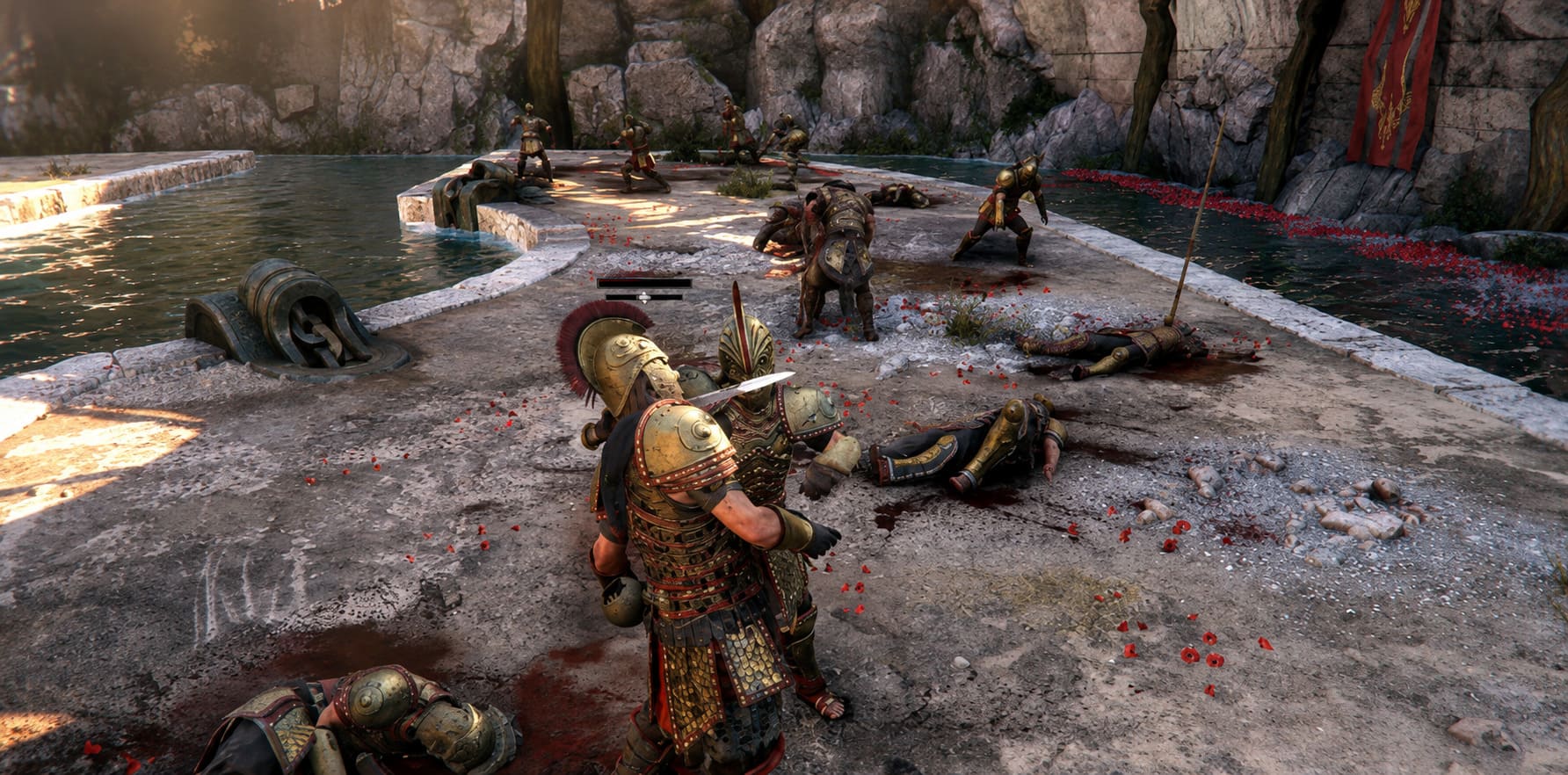
A sideways dodge can put Sophia behind an enemy, while a backward roll can create enough space to reset the fight. This becomes especially valuable when multiple enemies are attacking simultaneously.
I personally found that constant repositioning makes combat dramatically easier. Rather than standing in the center of an arena and trading blows, move around the edges, force enemies to follow you, and create smaller engagements.
Sophia is fast enough to turn a chaotic battle into something manageable.
3. Don’t Sleep on Sophia’s Kick
The kick initially looks like a minor addition to the combat system, but it has considerably more practical value than you might expect.
Use it to disrupt shield-bearing enemies, create breathing room, or push opponents toward dangerous environmental objects.
The environment is particularly important.
If an enemy happens to be standing near a ledge, fire, spikes, or another hazard, kicking them in the right direction can completely change the encounter. You don’t always need to drain an enemy’s health bar when the environment can do the job for you.
This is one of those mechanics that separates experienced players from people simply learning the controls.
Look at the arena before you look at the enemy’s health bar.
4. The Grapple Hook Is More Than a Traversal Tool
One of my favorite parts of Sophia’s toolkit is the grapple hook.
At first glance, it looks like something primarily designed for exploration. In combat, however, it becomes an excellent crowd-control option.
The grapple can help Sophia manipulate enemies rather than simply damage them. Depending on the situation, you can use it to disrupt ranged attackers, interfere with shielded enemies, or pull targets into a position where Sophia can finish them.
That makes it particularly useful when you’re fighting several enemies at once.
Why the Grapple Matters
- Disrupt distant enemies before they become a problem.
- Create openings against heavily protected opponents.
- Manipulate enemy positioning.
- Quickly transition from ranged utility into close-range attacks.
- Reduce the pressure created by multiple attackers.
The biggest mistake is saving the grapple for a “perfect” situation.
If an archer is making your life miserable, deal with the archer. There is no prize for fighting three melee enemies while allowing a crossbowman to shoot you in the back.
5. Bottles Are Surprisingly Powerful
Environmental objects become especially useful when you’re struggling with the timing-based combat.
Bottles can provide a straightforward way to interrupt enemies and create opportunities for finishers. If your parry timing isn’t consistent yet, using throwable objects can give you another route into an enemy’s vulnerable state.
This is particularly helpful against stronger guards.
Rather than repeatedly attacking an enemy who is blocking, look around the arena. You may have everything you need to create an opening sitting on the ground nearby.
This is a recurring theme in Resonance: the environment is part of Sophia’s weapon set.
6. Know When to Use the Sword and When to Finish With the Dagger
Sophia’s sword and dagger serve different purposes, and understanding that distinction makes combat much cleaner.
The sword is your primary offensive weapon. It works well against weaker enemies and becomes especially effective after you have already created an opening.
The dagger, meanwhile, is much more about finishing.
When an opponent’s posture breaks or they’re stunned by an environmental attack, that’s when you want to capitalize. Don’t waste the opportunity by continuing a normal attack string.
The basic combat loop becomes:
Defend → Create an Opening → Stagger → Finish → Reposition
Once you start thinking about fights this way, Sophia’s combat feels much less chaotic.
7. Never Let Groups Surround You
This is probably the most important general combat tip I can give.
Fighting three enemies isn’t necessarily difficult.
Fighting three enemies while standing in the middle of them is.
Sophia’s mobility gives you plenty of tools to avoid that situation. Sprint around the arena, vault over obstacles, dodge through openings, and force enemies to approach from predictable directions.
You want to turn a 3v1 into several temporary 1v1 situations.
Deal With Ranged Enemies First
Archers and crossbowmen are especially dangerous because they interfere with your timing.
You’re concentrating on an enemy directly in front of you, waiting for the attack animation so you can parry, and suddenly a projectile comes from somewhere off-screen.
That’s how otherwise manageable encounters fall apart.
Whenever possible, prioritize ranged enemies early.
The grapple hook is particularly useful here, but simply breaking away from the melee group and sprinting toward the ranged attacker can also work.
8. Use the Environment as Your Extra Weapon
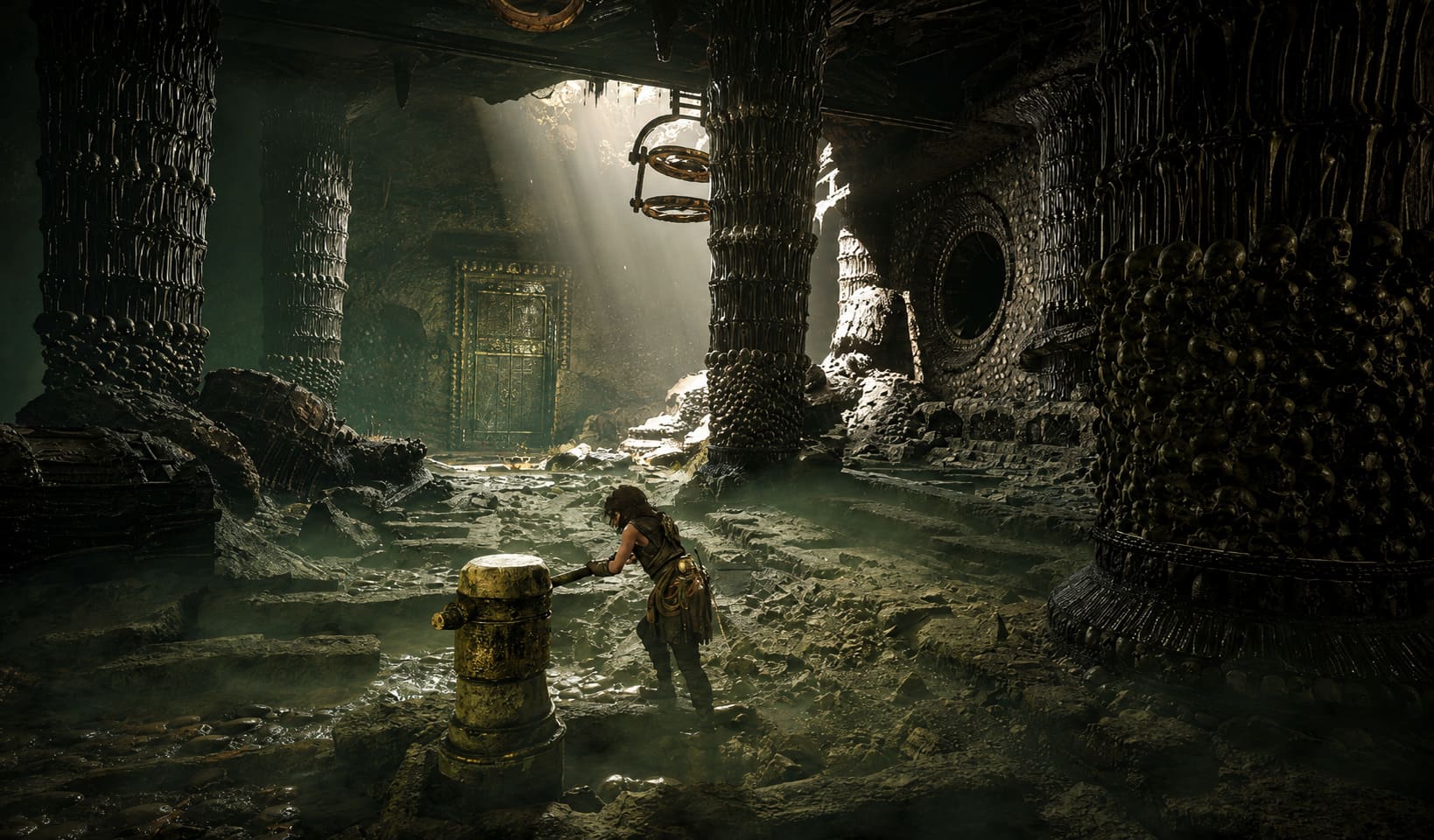
The island isn’t just a backdrop.
Fire, ledges, traps, narrow passages, elevated platforms, and other environmental elements can influence how an encounter plays out.
Before engaging, take a second to look around.
Ask yourself:
- Where can I retreat?
- Is there a ledge nearby?
- Are there environmental hazards?
- Can I separate the enemies?
- Is there high ground?
- Can I use an object to stun someone?
This sounds basic, but it becomes increasingly important when enemy numbers increase.
Good positioning can be more valuable than another upgrade.
9. Understand the Dual-Timeline Combat System
The dual-timeline mechanic is one of the more unusual features of Resonance: A Plague Tale Legacy.
Sophia can move between the medieval present and the ancient Minoan era, and changes made in the past can affect the environment you encounter later.
That means some combat encounters aren’t really solved entirely inside the fight itself.
If an arena feels cramped, inaccessible, or difficult to escape, don’t immediately assume that you need better combat skills. There may be something in the ancient timeline that can change the battlefield.
This creates an interesting layer of preparation.
Instead of simply asking, “How do I defeat these enemies?”, start asking:
“Can I change this battlefield before I fight them?”
That mindset can make certain encounters considerably easier.
10. Master the Minoan Sphere and Light Manipulation
The Minoan sphere gives Sophia another unusual tool to work with.
Light manipulation isn’t merely a puzzle mechanic. It can influence exploration, interact with ancient machinery, and help Sophia deal with dangerous areas connected to the island’s supernatural elements.
Coming from the earlier A Plague Tale games, this system feels familiar in spirit but different in execution. Light has always been important to the franchise, but here it becomes tied much more closely to the island’s ancient history.
When you’re stuck, don’t just search for a lever or door.
Look at the light.
There may be a mechanism, pathway, or environmental interaction that isn’t immediately obvious.
11. Keep Moving When a Fight Gets Messy
One piece of advice I would give almost any player is to stop treating retreat as failure.
If you’ve lost control of an encounter, run.
Sophia’s speed makes disengagement a legitimate tactic. Breaking line of sight, moving into vegetation, and allowing enemies to lose their immediate advantage can completely reset the situation.
Then you can come back from a better position.
There is nothing impressive about dying because you refused to step away from a bad fight.
I’ve learned this lesson in countless action games: survival is more important than maintaining your combo.
12. Upgrade the Right Things First
Resources should be spent with a purpose rather than simply upgrading whatever becomes available.
For a combat-focused playstyle, I would prioritize upgrades that improve the reliability of Sophia’s utility tools.
| Upgrade Priority | Why It Matters |
|---|---|
| Grapple Recovery | Lets you use the grapple more frequently |
| Stun Duration | Gives you larger finishing windows |
| Combat Utility | Improves crowd-control options |
| General Gear | Useful once core tools are upgraded |
Faster grapple recovery is particularly valuable because the tool can solve multiple problems at once.
A longer stun window is also extremely useful if you’re still getting comfortable with the game’s combat timing.
13. Pay Attention to Sound
One surprisingly useful habit is listening instead of constantly watching every corner of the screen.
The soundtrack dynamically reacts to danger, while enemy voices and combat sounds can give you information about attacks that aren’t immediately visible.
If you’re locked into a duel, audio cues can warn you that another enemy is preparing to attack.
This is especially important in crowded encounters.
Don’t play with the volume so low that you’re relying entirely on visual indicators.
Resonance A Plague Tale Legacy Ending Explained: Full Spoilers and Lore Deep Dive
Final Thoughts: Sophia Rewards Players Who Fight With a Plan
Resonance: A Plague Tale Legacy is a fascinating evolution of the series’ combat philosophy.
The older games often asked you to survive by avoiding danger. Sophia, on the other hand, gives you the tools to confront danger directly. But the game still expects patience, awareness, and smart decision-making.
The best Resonance: A Plague Tale Legacy combat strategy isn’t simply learning to parry perfectly. It’s understanding when to parry, when to dodge, when to kick, when to use the grapple, when to retreat, and when to manipulate the environment before the fight even begins.
If I had to boil the entire combat system down to a few rules, they’d be these:
- Parry normal attacks instead of constantly blocking.
- Dodge heavy and unblockable attacks.
- Keep moving when fighting groups.
- Eliminate ranged enemies early.
- Use the grapple and environmental objects aggressively.
- Exploit hazards instead of relying entirely on weapon damage.
- Use the dual timeline to change difficult battlefields.
- Treat light manipulation as part of your combat toolkit.
- Retreat when an encounter becomes chaotic.
- Upgrade utility abilities that give you more control.
Sophia isn’t designed to stand in the middle of a battlefield and absorb punishment. She’s at her best when she’s constantly moving, disrupting enemies, creating openings, and turning the environment against anyone foolish enough to chase her.
Resonance A Plague Tale Legacy Sophia: Full Origin Story and Lore Breakdown
And honestly, that’s what makes the combat work for me. It still carries the tension and vulnerability that define A Plague Tale, but now there’s a much greater feeling of agency. You’re not simply trying to survive the island.
You’re learning how to hunt on it.