Divinum Combat Guide: 7 Advanced Tips and Tricks for Beginners (Sigil Games)
Divinum is the kind of game that makes you question your controller for the first few hours. Not because the controls are bad, but because the game expects a level of discipline that most Metroidvanias never demand. After spending plenty of time with action games, character-action titles, and difficult 2D adventures, I thought I knew what to expect. I was wrong.
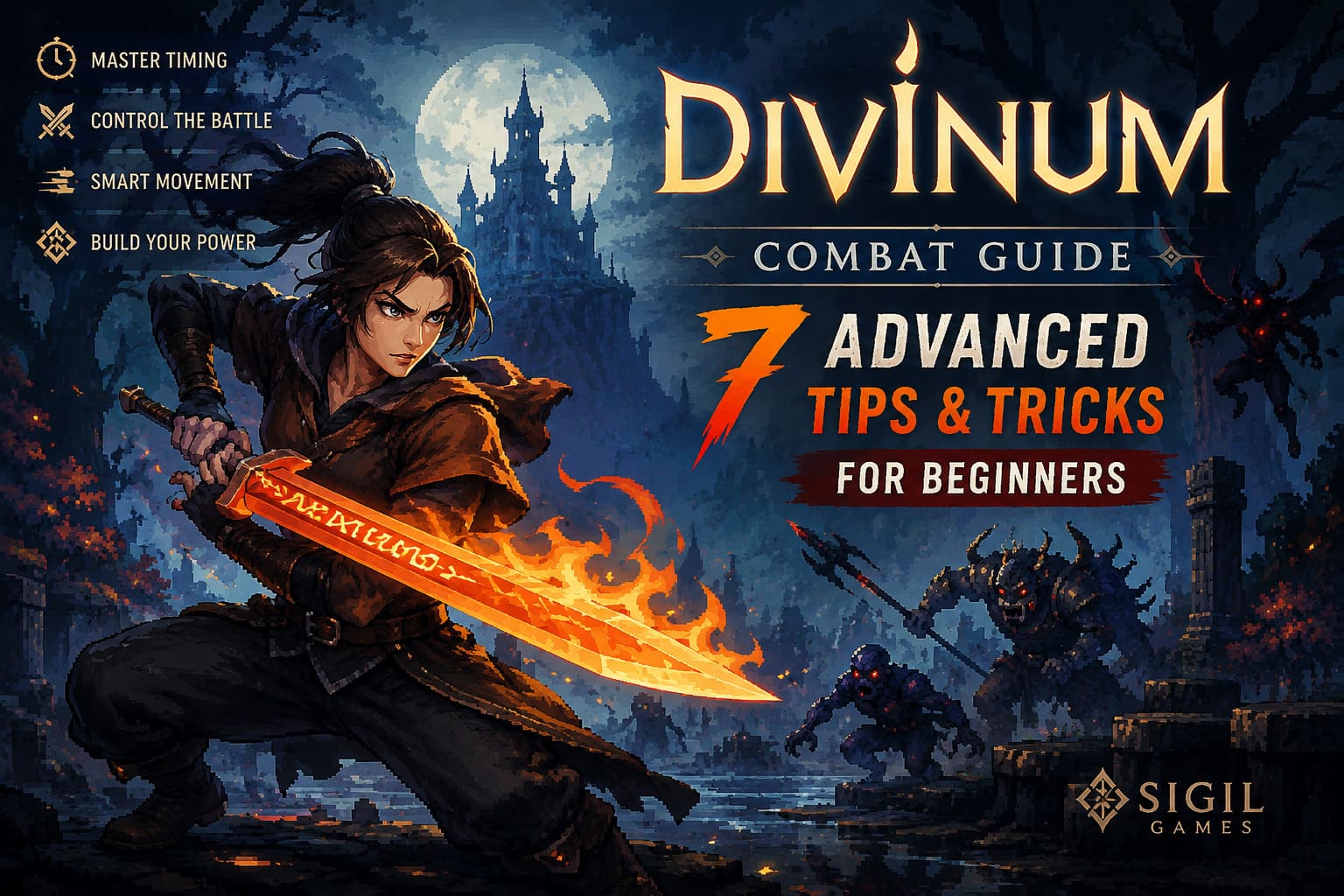
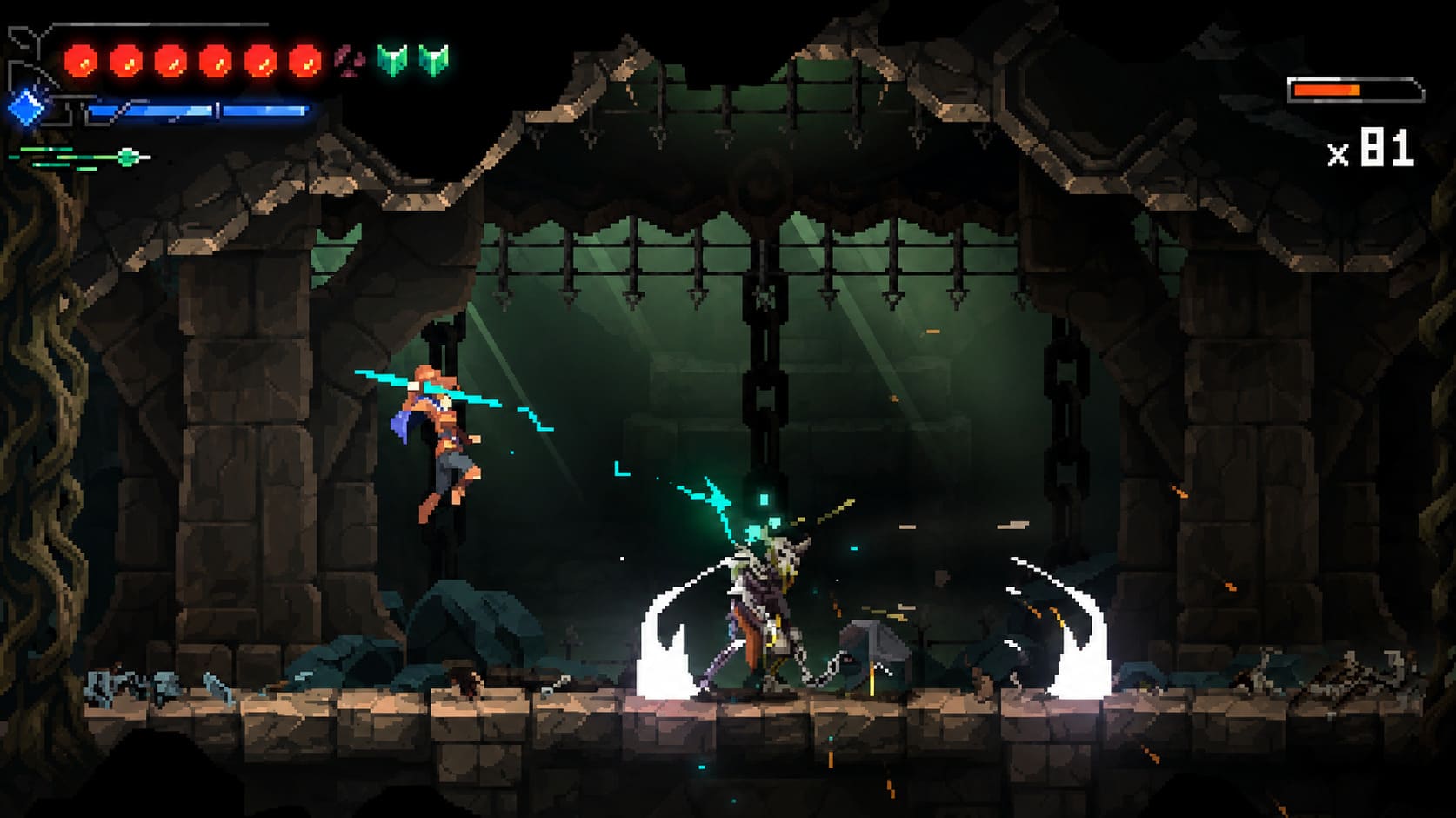
Developed by Sigil Games, Divinum combines dark fantasy exploration with fast, deliberate combat. You play as Fjor, a warrior moving through a bleak island filled with hostile creatures, hidden areas, and remnants of an older supernatural history. The pixel-art presentation gives it the look of a traditional dark fantasy Metroidvania, but the combat feels much closer to an old-school character-action game.
The biggest thing to understand is that Divinum does not reward panic. It rewards knowing exactly when you can attack, when you can move through an enemy, and when you absolutely need to get out of the way. Once that started making sense to me, the game became much more enjoyable.
If you’re looking for Divinum combat tips for beginners, these are the seven lessons I wish I had understood before spending so much time getting knocked around by enemies that initially looked harmless.
1. Stop Being Afraid of Enemy Bodies
The first major adjustment is also one of the most important. Normal enemy contact does not automatically damage Fjor. That’s a surprisingly liberating mechanic if you’re coming from games where touching an enemy is enough to lose health.
At first, I kept backing away whenever an enemy moved toward me. It felt like the natural thing to do. But Divinum punishes that instinct because you’re giving up valuable attacking space for no real reason.
You can move through an enemy when they aren’t actively attacking. This means positioning becomes much more flexible than it initially appears.
- Move through enemies instead of automatically retreating.
- Watch for the moment an enemy actually begins an attack animation.
- Stay close when it is safe so your counterattack arrives immediately.
- Don’t confuse enemy movement with an enemy attack.
The distinction is critical. An enemy walking into you isn’t necessarily dangerous. The sword swing, projectile, leap, or other attack that follows is what you need to respect.
After years of playing Soulslikes and traditional Metroidvanias, I had to consciously remove the habit of treating every enemy collision as a threat. Once I did, Divinum’s arenas suddenly felt much less restrictive.
2. Your Combos Are Commitments, Not Suggestions
This is where Divinum starts separating button mashers from players who actually understand its combat system.
Every attack has a rhythm. Some attacks are quick and relatively safe. Others commit Fjor to a longer animation, and pressing attack repeatedly without thinking can leave you standing there while an enemy prepares something nasty.
I’ve played plenty of action games where throwing out a full combo is usually the correct answer. Divinum isn’t one of them. You need to know what the next animation is going to cost you.
A good habit is to stop treating the attack button like a machine gun. Hit once, watch the result, then decide whether continuing makes sense.
Pay particular attention to:
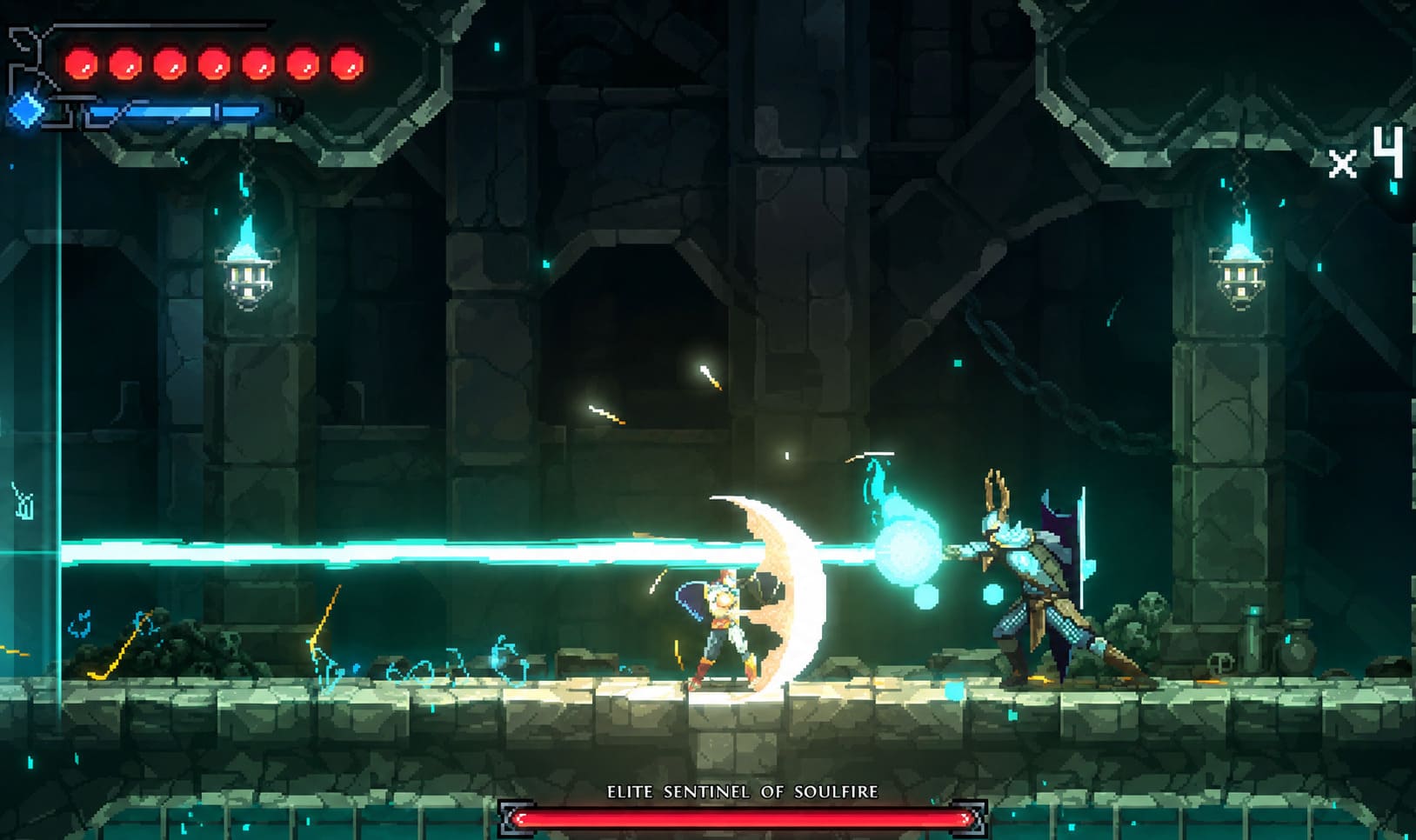
- Attack recovery after heavy strikes.
- Which attacks can transition into movement.
- Which skills leave Fjor committed until the animation ends.
- The difference between a safe opening and a fake opening.
Some light attacks can also be followed by defensive movement, giving you a chance to escape when an enemy suddenly changes its pattern. Don’t assume every attack has the same cancel properties. Test your favorite moves outside dangerous encounters and learn their timing.
That small investment in practice pays off enormously against bosses.
3. Learn to Take Enemies Off the Ground
One of the most useful combat techniques in Divinum is controlling where an enemy is allowed to fight you. If you can launch a target into the air, you’ve temporarily removed a major threat from the ground-level battlefield.
This becomes especially valuable when several enemies are present at once. A dangerous melee opponent can be much easier to handle when you’re juggling it above the rest of the encounter.
A basic combat sequence worth practicing is:
| Combat Phase | What to Do | Main Purpose |
|---|---|---|
| Opening | Use quick ground attacks | Create a safe hit opportunity |
| Launch | Use a suitable lifting attack | Remove the enemy from ground combat |
| Air String | Follow with jump attacks | Maintain pressure while limiting retaliation |
| Finisher | End with a heavy downward attack | Deliver damage and reset positioning |
You don’t need to perform complicated combos immediately. Start by learning one reliable ground-to-air sequence. Once it becomes muscle memory, you can experiment with longer strings and weapon transitions.
The important part is that you’re not simply doing more damage. You’re controlling the enemy’s ability to participate in the fight. That’s often more valuable than raw DPS.
4. Treat the Dash as Part of Your Offense
I’ve always been guilty of saving dodge abilities for emergencies. In Divinum, that mentality can hold you back.
The dash is not just a panic button. It is one of the game’s most useful tools for maintaining combat position.
When an enemy attacks horizontally, dashing through the attack can be far more effective than retreating. If your timing is correct, the attack passes harmlessly through Fjor and you end up on the other side of your opponent.
That creates an immediate opportunity for another attack.
Think of the dash as a repositioning tool rather than an escape button.
There is an important catch: you cannot rely on it constantly. Whether your limitation comes from cooldowns, stamina, or the specific defensive resource involved, repeatedly dashing without considering your next few seconds can leave you with nothing when a real threat arrives.
One of my favorite habits became simple movement followed by a dash only when an attack was actually committed. That preserved the defensive option while still keeping Fjor close enough to punish the enemy.
5. Build Your Rune Setup Around How You Actually Fight
The rune system is where Divinum starts becoming much more personal. Rather than simply chasing the largest number on a stat screen, you can build around the way you prefer to approach combat.
This matters because a rune that looks excellent on paper isn’t automatically useful for every encounter.
If you enjoy staying close to enemies, offensive bonuses and resource generation can work together extremely well. If you’re still learning boss patterns, mobility-focused effects may provide more practical value than another damage increase.
I recommend thinking about your rune loadout in terms of combat problems rather than raw statistics.
- Running out of resources too quickly? Add resource-oriented options.
- Struggling against mobile enemies? Favor faster or more flexible attacks.
- Getting punished during long combos? Reduce your dependence on slow commitments.
- Handling groups poorly? Look for effects that improve area coverage or sustained pressure.
And don’t ignore optional areas. Some of the most useful upgrades are hidden away from the obvious path. Divinum’s exploration and combat systems are closely connected, so taking the time to investigate suspicious walls, side paths, and combat challenges can directly improve your fighting ability.
6. Don’t Attack the Biggest Enemy First
One of the easiest mistakes in a crowded arena is locking onto the largest or most visually intimidating opponent.
That target isn’t always the real problem.
Support enemies, ranged attackers, flying creatures, and spellcasters can turn a manageable melee fight into complete chaos. You may be perfectly capable of fighting the strongest enemy in the room, only to get interrupted repeatedly by attacks coming from somewhere else on the screen.
Before committing to a combo, take a quick look around the arena.
Who can attack you from a distance?
Who can heal or enhance another enemy?
Which opponent is easiest to remove quickly?
Those questions are often more important than simply asking which enemy has the most health.
When several melee enemies are chasing you, movement can also turn the situation in your favor. Pull them toward one side of the room, allow them to bunch together, then use wide attacks to hit multiple targets at once.
Just don’t let the crowd push you against a wall. Being trapped at the edge of an arena dramatically reduces your options. If that happens, a well-timed dash through the group can restore the space you need.
7. Use Your First Boss Attempts as Training Sessions
This is probably the most important advice I can give after playing difficult action games for years: your first attempt at a boss does not need to be a winning attempt.
It’s tempting to enter a new boss room and immediately throw everything you have at it. Then the boss performs an attack you’ve never seen, you panic, burn your defensive options, and die before understanding what happened.
Instead, spend the first attempt learning.
Watch the boss’s body language. Listen for distinctive audio cues. Notice which attacks have obvious wind-ups and which ones are designed to catch impatient players.
Try to answer four questions:
- What attack happens most frequently?
- Which attacks can be dashed through?
- When does the boss become vulnerable?
- Which of my attacks can I safely use during that opening?
This approach may feel slow, but it saves time in the long run. Once you’ve recognized the boss’s rhythm, the encounter changes from random-looking chaos into a sequence you can actually read.
And don’t panic when your health gets low. This is easier said than done, especially when you’ve spent several minutes on a difficult fight. But low health is exactly when disciplined play matters most.
Stop attacking for a moment if necessary. Create distance. Watch the next attack. Dodge cleanly. Then punish.
Divinum System Requirements: Can You Run the 2026 Metroidvania on PC?
What I Wish I Knew Before Playing Divinum
If I had to reduce the entire Divinum combat guide to a few principles, they would be surprisingly simple.
| Lesson | Bad Habit | Better Approach |
|---|---|---|
| Positioning | Always retreat | Move through enemies when safe |
| Combos | Constant button mashing | Commit only when the opening is real |
| Defense | Save the dash indefinitely | Use it actively for positioning |
| Builds | Stack damage blindly | Match runes to your playstyle |
| Bosses | Force damage immediately | Learn patterns before optimizing damage |
Is Divinum Worth Buying on Launch Day? Real Review and Verdict (2026)
Final Thoughts
Divinum became considerably more enjoyable for me once I stopped trying to play it like a conventional Metroidvania. Its combat isn’t about keeping maximum distance or avoiding every possible interaction. It is about understanding exactly when you are safe enough to be aggressive.
The lack of ordinary contact damage is the perfect example. At first, it seems like a small mechanical detail. In practice, it changes the entire way you move around enemies.
Then there are the animation commitments, dash timing, air combos, rune builds, target priorities, and boss patterns. None of these systems are particularly complicated in isolation. The difficulty comes from using them together without losing control of the situation.
My biggest Divinum beginner tip is simple: slow down your decision-making, not your character. Keep moving. Stay aggressive when the opening is there. But make every attack intentional.
Once the combat rhythm finally clicks, Fjor stops feeling like a fragile warrior fighting for survival and starts feeling like a character you are actually controlling. That’s when Divinum gets really satisfying. The game is still demanding, but the difficulty begins to feel earned rather than arbitrary.
If you’re struggling during the opening hours, don’t immediately assume you need better equipment or a stronger rune setup. You may simply need to stop retreating, learn your cancel windows, and start reading attacks instead of reacting to them.
Those changes made a bigger difference for me than any single upgrade ever did.