Fell & Sell Guide: How to Maximize Store Popularity Fast and Expand Your Roadside Cabin
There is something wonderfully stupid about Fell & Sell. You go into a dungeon expecting to become a legendary monster-slaying hero, come back covered in blood with a backpack full of junk, and then spend the next few minutes worrying about shelf placement and whether you charged enough for a sword.
That contrast is exactly why I like it.
Fell & Sell isn’t just another dungeon crawler with a shop attached to it. The two sides of the game constantly fight for your attention. You need better loot to run a better store, but running the store gives you the money and upgrades needed to survive deeper dungeon runs. Get one side wrong and the other starts falling apart.
Your little roadside cabin looks pretty pathetic at the beginning. Give it some time, though, and you can turn that wooden shack into a serious mercantile operation.
The trick is understanding store popularity, inventory management, pricing, cabin layout, crafting, and dungeon efficiency as one connected system. Once those pieces start working together, the game becomes much easier to control.
And, honestly, this is where Fell & Sell gets addictive.
How the Fell & Sell Economy Actually Works
The basic loop is straightforward:
Dungeon → Loot → Craft → Sell → Upgrade → Better Dungeon Runs
Sounds simple, right? It isn’t.
Every dungeon trip carries risk because resources you haven’t secured can disappear if you die. That makes greed one of your biggest enemies. You might have enough loot to make the run worthwhile, but then you spot another room and think, “One more.”
We’ve all done it.
Sometimes that extra room contains exactly what you needed. Other times you’re staring at a defeat screen wondering why you didn’t just go home five minutes earlier.
I recommend treating every expedition as a business decision rather than simply a combat run. Ask yourself whether the next few rooms are worth the risk. If your backpack is already packed with valuable materials, getting home alive is often more profitable than chasing one more drop.
| Activity | Main Benefit | My Priority |
|---|---|---|
| Dungeon Runs | Loot and crafting materials | Very High |
| Crafting | Better selling prices and value | Very High |
| Shop Upgrades | More capacity and sales potential | High |
| Quest Board | Gold, recipes, popularity | High |
| Decoration | Passive bonuses and efficiency | Medium-High |
| Raw Material Sales | Quick emergency cash | Medium |
The biggest mistake new players make is treating these systems separately. They aren’t.
How to Increase Store Popularity Fast
Store popularity is one of the most important progression tools in Fell & Sell. A popular store means more customers, better sales opportunities, and a much healthier flow of money into your expansion plans.
If your popularity keeps dropping, don’t immediately assume you need a bigger shop. In many cases, the problem is much simpler.
Your shelves suck.
Seriously.
1. Never Let Your Store Look Empty
Empty display space is terrible for your shop.
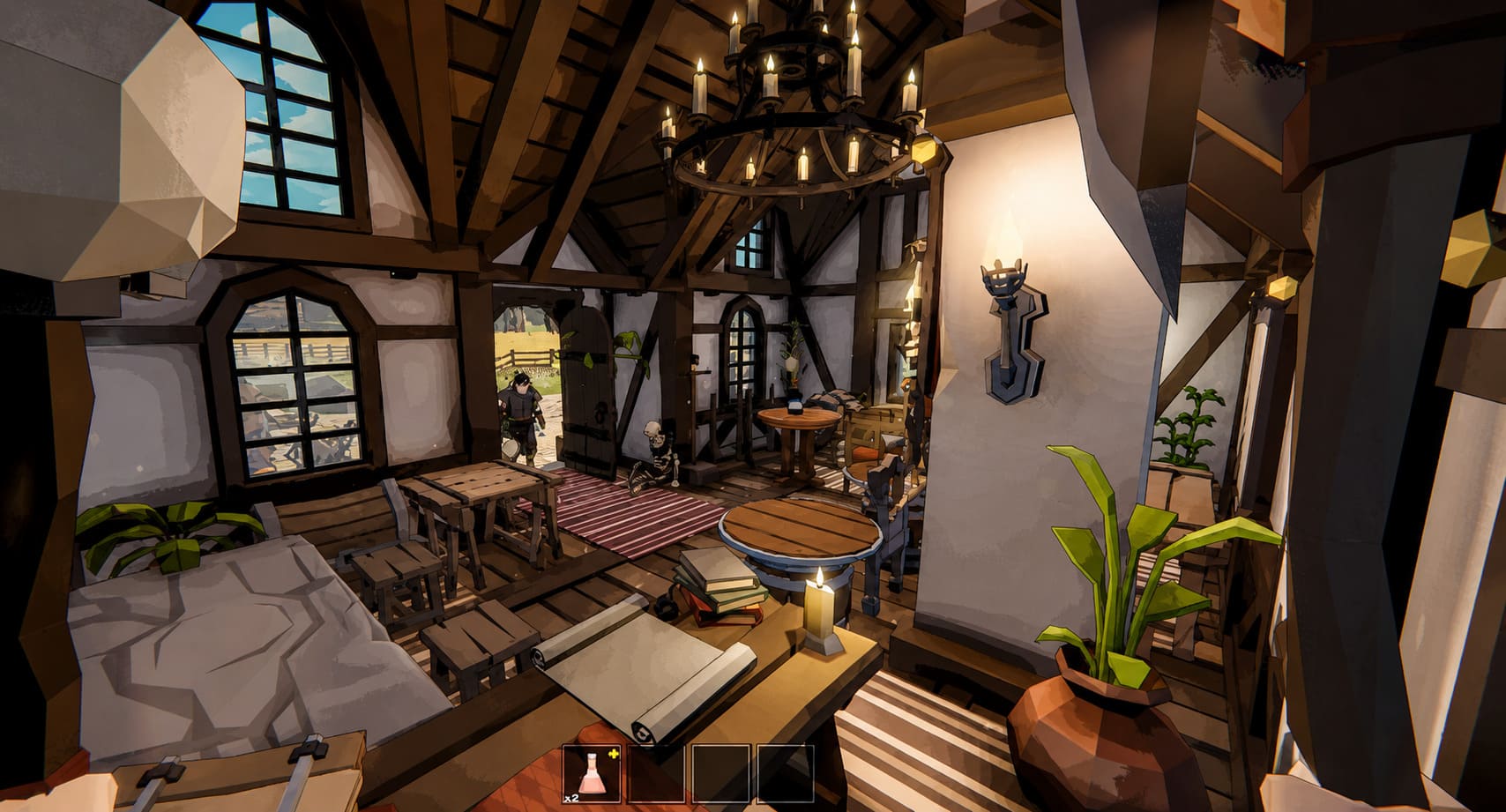
If customers walk into your cabin and see bare shelves everywhere, you’re effectively telling them that your business has nothing worth buying. Even if you’ve got one incredibly expensive legendary weapon sitting in the corner, an otherwise empty store doesn’t create a good impression.
Try to keep your available display slots filled.
You don’t need every item to be amazing, either. A cheap item occupying a shelf is usually more useful than leaving that shelf completely empty.
If you’re running short on premium equipment, use whatever reasonable dungeon materials you have available. Common weapons, herbs, basic resources, and lower-tier goods can keep the store looking active while you’re preparing the next serious batch of products.
This is especially useful after a dangerous dungeon run where you came back with less high-tier loot than expected.
2. Stop Guessing With Your Prices
Pricing is probably the easiest place to ruin your economy.
Charge too much and customers stop buying. Charge too little and everything disappears from your shelves, but your wallet barely notices.
During the early game, I generally like staying around 110%–125% of an item’s base value as a starting point.
Don’t treat that number as some sacred law of the game. Your actual results depend on the item, demand, popularity, and progression. Think of it as a useful starting range rather than a magic formula.
The important part is watching what actually happens.
If something sells instantly every time you put it on the shelf, you’ve got information. Maybe you can raise the price slightly.
If an item sits there all day while customers ignore it, lower the price.
Your sales history is more useful than blindly following a fixed percentage.
That’s one of the habits that made my own shop much more profitable. Instead of asking, “What should this item cost?” I started asking, “How quickly do I want this item to sell?”
Those are two very different questions.
Use the Quest Board Whenever You Can
The local quest board is easy to overlook when you’re focused on dungeon progression.
Don’t.
Quest rewards can provide gold, useful crafting recipes, and additional store popularity, making them a convenient way to strengthen your business without relying entirely on shop sales.
My preferred routine is simple:
- Finish a dungeon expedition.
- Return safely to the cabin.
- Check the quest board.
- Complete suitable local objectives.
- Convert the rewards into your next round of upgrades or crafting.
It doesn’t sound exciting, but these small sources of progression add up.
And if you’re already heading into the wilderness, completing a quest during that trip is basically free efficiency.
Your Cabin Layout Matters More Than You Think
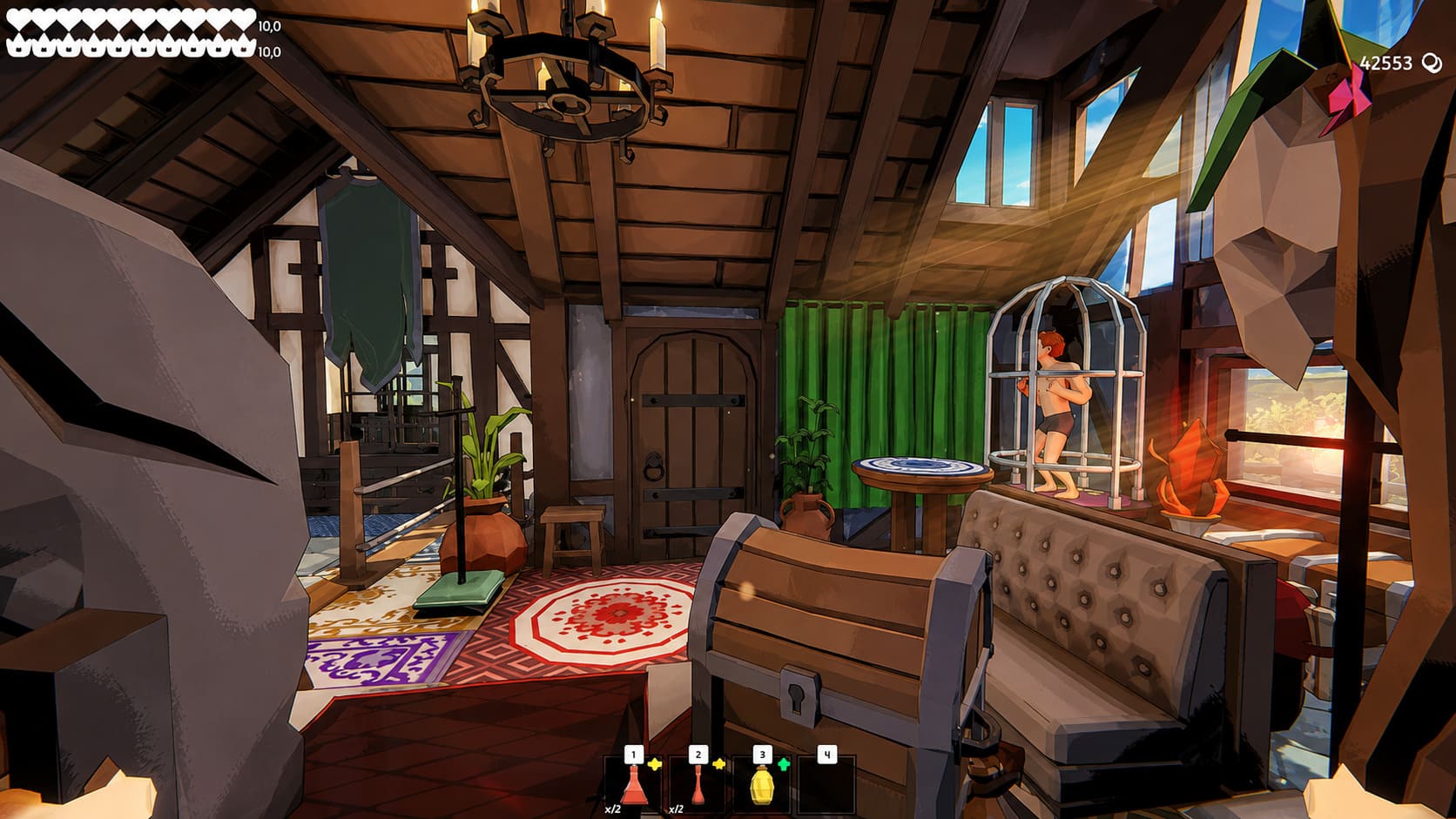
One of the things I really enjoy about Fell & Sell is that the cabin isn’t just a decorative box.
Furniture, decorations, displays, crafting stations, and your character’s progression all interact with the space.
You should think about your cabin as both a shop and a preparation room for your next dungeon run.
Place important products where customers are naturally going to see them. High-value displays shouldn’t be hidden behind awkward furniture or placed somewhere customers barely visit.
If you have different furniture categories or decoration themes available, experiment with grouping them together. Matching themes can provide useful bonuses, and those bonuses can affect both your combat preparation and commercial setup.
That’s the part I wouldn’t ignore.
A pretty cabin is nice. A pretty cabin that also makes your character stronger and your products more valuable is much better.
What Furniture Should You Prioritize?
If you’re deciding between buying another purely decorative object and purchasing something that improves your actual progression, I’d normally take the functional option.
Look for upgrades connected to things such as:
- Inventory weight
- Health regeneration
- Combat damage
- Piercing or offensive stats
- Useful crafting or retail bonuses
Inventory capacity is particularly valuable.
More carrying capacity means you can stay productive longer during dungeon runs before returning home. That means more materials per expedition, which eventually means more products on your shelves.
It is one of those upgrades that doesn’t look spectacular when you buy it, but you notice the difference after several runs.
Cabin Expansion: What Should You Upgrade First?
Your original roadside cabin is never going to support a serious business forever.
Eventually, you’ll need more storage, more crafting space, and more room for customers and displays.
I wouldn’t expand randomly, though.
First Expansion: Storage
Storage should be one of your earliest priorities.
Dungeon runs generate a ridiculous amount of stuff, and throwing everything onto your main retail floor quickly becomes a headache.
A dedicated storage area lets you keep raw materials ready for future crafting instead of constantly scrambling for resources.
This also makes bulk crafting much easier.
Second Expansion: Workshop and Forge
Moving crafting equipment away from your primary sales area can completely change how efficiently you use the cabin.
Once your workshop isn’t consuming valuable retail space, you can dedicate more room to displays and customer-facing products.
That means more inventory on offer and a much better opportunity to build a diverse storefront.
And that’s important because a shop selling only one type of product can become extremely dependent on a narrow customer demand pattern.
Third Expansion: Go Vertical
Once a second floor becomes available, I’d use it to separate your product categories.
Keep fast-moving, practical goods downstairs where customers can easily find them. Potions, common materials, and other affordable products make sense here.
Then use the upper level for your expensive stuff.
Weapons. Armor. Premium crafted equipment.
It makes the cabin feel more like an actual specialized shop, but more importantly, it helps you organize your inventory around different customer needs.
Dungeon Farming: Your Shop Is Only As Good As Your Loot
This is where the other half of Fell & Sell kicks in.
You can’t build a rich store by repeatedly selling garbage.
The deeper dungeon layers are where the serious money starts appearing, and the game rewards players who can consistently extract valuable materials without getting themselves killed.
There are reportedly 15 primary dungeon layers, with stronger farming opportunities appearing as you progress.
The goal isn’t simply to reach the deepest possible floor every run.
The goal is to maximize valuable loot per successful run.
That’s a huge difference.
Magic Builds Can Be Excellent for Farming
From my experience, magic-oriented builds can be extremely effective when you’re trying to clear groups quickly.
Area-of-effect attacks are particularly useful when enemies start appearing in clusters. Instead of spending forever fighting targets individually, you can wipe groups out quickly and keep moving.
That matters because dungeon efficiency isn’t just about damage.
It’s about damage + movement + survival + loot density.
A build that kills everything quickly but gets you killed every third run isn’t actually efficient.
I’d rather have a slightly slower build that consistently returns home with a full backpack.
Pay Attention to Dungeon Events
Random dungeon modifiers can completely change what is worth farming.
If an event such as Midas Touch or Mushroom Season appears, don’t treat it as background noise.
These events can create opportunities to collect unusual resources that are considerably more valuable than your normal dungeon haul.
When a lucrative modifier appears, adjust your priorities.
Forget about grinding your usual route for a moment. If the event resources are valuable, farm the event while it’s active.
This is one of the easiest ways to make a good run turn into a great run.
Don’t Hoard Your Potions
I’m guilty of this in basically every game.
I save the good consumables because I might need them later.
Then I finish the game with a bag full of potions I never used.
Don’t do that in Fell & Sell.
Speed and strength potions can dramatically improve your dungeon efficiency. Faster movement and quicker kills mean less time spent exposed to danger and more opportunities to fill your inventory.
If a potion helps you complete a run faster and come home safely with more valuable loot, using it is an investment, not a waste.
Advanced Shop Strategy: Follow What Actually Sells
Once your cabin is stable, stop treating every item equally.
Look at what customers are buying.
If a particular weapon disappears almost immediately, that’s valuable information. If a certain pair of boots sits untouched for several business days, that’s also valuable information.
Use those results to adjust your crafting priorities.
For example, if high-tier swords consistently sell faster than everything else, start directing more of your materials toward swords.
You’re not abandoning variety. You’re simply putting more resources into proven winners.
This is where Fell & Sell starts feeling less like a basic shop simulator and more like a real little economy.
Your customers are telling you what the market wants. Listen to them.
Build a Store With Variety, Not Chaos
I like having a reasonably broad selection of products rather than filling every shelf with the same item.
A storefront with roughly 20–30 different products can give you a healthy mix of cheap purchases and expensive equipment.
The important thing is not to chase a specific number blindly.
Think in categories.
You want some affordable items that move frequently, some mid-range products that provide dependable profit, and a smaller selection of expensive goods capable of generating serious revenue.
That creates a much healthier business than gambling everything on one product.
Don’t Ignore Checkout Speed
A surprisingly easy bottleneck is the checkout process itself.
If customers are waiting around because you’re slow to process transactions, you’re losing potential efficiency.
Character movement speed and relevant shopkeeping talents can make a real difference here. The faster you can move between customers and complete transactions, the more smoothly your shop operates.
It isn’t glamorous.
It isn’t the kind of upgrade you’ll brag about.
But when your store gets busy, you’ll notice it immediately.
Fell and Sell Crashing on Startup Windows 11: 2026 PC Fix Guide
My Recommended Fell & Sell Progression Strategy
If I were starting another save today, I’d keep the plan fairly simple:
Early Game: Keep every shelf reasonably stocked, avoid reckless dungeon deaths, and use the quest board regularly.
Mid Game: Improve inventory capacity, expand storage, move crafting equipment out of retail space, and start tracking which products actually sell.
Late Game: Push deeper dungeon layers, farm valuable events, specialize your crafting around high-demand products, and expand vertically.
The biggest lesson is that Fell & Sell rewards consistency more than reckless ambition.
You don’t need one gigantic dungeon run that makes you rich.
You need ten successful runs that steadily fill your storage.
You don’t need one customer to buy an absurdly expensive weapon.
You need dozens of customers buying products at prices that keep your business moving.
And you definitely don’t need to turn your cabin into a museum.
You need it to make money.
How to Fix Fell & Sell Low FPS, Stuttering, and Lag (2026 PC Guide)
Final Verdict
Fell & Sell’s shop system works because it gives everything you do a consequence.
Go into the dungeon and you risk losing your loot. Stay home too long and your inventory dries up. Sell too cheaply and your expansion slows down. Charge too much and customers stop buying. Ignore your cabin layout and you waste valuable space.
Everything connects.
For me, that’s the biggest reason the game works.
The best strategy isn’t simply “farm the highest-value item.” It’s building a reliable cycle where your character gets stronger, your dungeon runs become safer, your crafting becomes more profitable, your shelves stay full, and your cabin keeps expanding.
Start small.
Keep the shelves stocked.
Don’t get greedy in the dungeon.
Watch what sells.
Spend your profits intelligently.
And when that pathetic little roadside cabin finally starts looking like a genuine commercial empire, you’ll realize you’ve been playing two games at once—and somehow both of them are addictive.