The Blood of Dawnwalker Combat Guide: 10 Essential Tips to Master the Blade and Cursed Magic
There are plenty of dark fantasy RPGs that promise brutal combat, but The Blood of Dawnwalker takes a noticeably different approach. After playing games built around parries, stamina management, directional attacks, and supernatural abilities, I went into Rebel Wolves’ RPG expecting something familiar. It isn’t.
The first thing that stood out to me is how quickly the combat punishes you for playing on autopilot. You can’t simply walk into a group of enemies, mash light attacks, and expect your health bar to survive. Every encounter asks you to pay attention to positioning, enemy animations, stamina, timing, and, perhaps most importantly, what kind of fighter Coen is at that particular moment of the day.
Coen’s identity as a Dawnwalker makes the combat system especially interesting. During the day, you’re closer to a traditional warrior who relies heavily on weapons and careful defense. At night, vampiric abilities completely change the rhythm of combat.
After spending time with the system, these are the 10 combat tips I consider the most important for surviving Vale Sangora and getting the most out of the game’s sword, witchcraft, and vampiric mechanics.
1. Learn Directional Combat Instead of Fighting on Instinct
The biggest adjustment for players coming from conventional action RPGs is the directional combat system.
Your attacks aren’t simply determined by pressing an attack button. The direction you choose matters, with strikes coming from different angles including high, low, left, and right.
If you’ve played something like Kingdom Come: Deliverance or Chivalry 2, the general idea should feel recognizable. You’re effectively trying to understand where your opponent is vulnerable while making sure you’re not exposing the same opening yourself.
The important part is not memorizing a rigid attack sequence. Watch the enemy.
If an opponent is protecting one side, attack from another. If their stance changes, react rather than continuing whatever combo you started.
For me, this is where Dawnwalker becomes much more interesting than a typical hack-and-slash RPG. The combat rewards reading the enemy instead of simply reading your cooldowns.
2. Don’t Treat Omni Combat as a Replacement for Skill
The Omni combat option is a useful alternative for players who don’t enjoy manually controlling every attack and defensive direction.
It can make chaotic encounters considerably easier to manage, particularly when several enemies are attacking at once. However, I wouldn’t recommend relying on it exclusively.
The problem is that automated defense isn’t always as efficient as manually responding to an incoming attack. Stamina becomes a major concern, and certain powerful attacks can still force you to react manually.
I’d personally use Omni combat as a convenience rather than a crutch. It’s perfectly reasonable while you’re learning the game, but eventually you’ll want to understand manual defense anyway.
3. Watch Enemy Animations Before You Swing
One of the best habits you can develop is learning to recognize the different stages of an enemy’s attack.
A melee strike isn’t an instantaneous event. There’s preparation, a moment where the direction becomes readable, and finally the actual swing.

That gives you valuable information.
Instead of thinking, “The enemy is attacking, so I should block,” start thinking:
“What attack are they preparing, where is it coming from, and when should I respond?”
This distinction becomes extremely important against stronger enemies. The more dangerous the opponent, the less room you have for random reactions.
You should also pay attention to your own attack animations. If you’re committed to a strike and realize that you’ve chosen the wrong moment, canceling your attack can sometimes save you from eating a counterattack.
That small defensive habit has saved me countless times in games with similar combat systems.
4. Make Perfect Parries Your Long-Term Goal
Blocking is useful. Perfect parrying is better.
A normal block can protect you, but it also puts pressure on your stamina. If you’re constantly holding defense while several enemies attack, your stamina can disappear surprisingly quickly.
A well-timed directional parry, however, can completely change an encounter.
The basic idea is simple: identify the incoming attack direction and match your defense to it at the right moment.
When you get the timing correct, the enemy can be staggered and left vulnerable. Against appropriate human targets, this can create opportunities for powerful finishing attacks.
Don’t expect to master this immediately. I would actually recommend spending time practicing against weaker enemies instead of trying to learn perfect parries during a difficult boss encounter.
Once the timing becomes muscle memory, combat feels dramatically more controlled.
5. Remember That Day and Night Are Basically Two Combat Styles
This is probably my favorite part of the combat design.
Coen isn’t just a normal warrior who happens to become stronger at night. The day/night cycle fundamentally changes how you should approach fights.
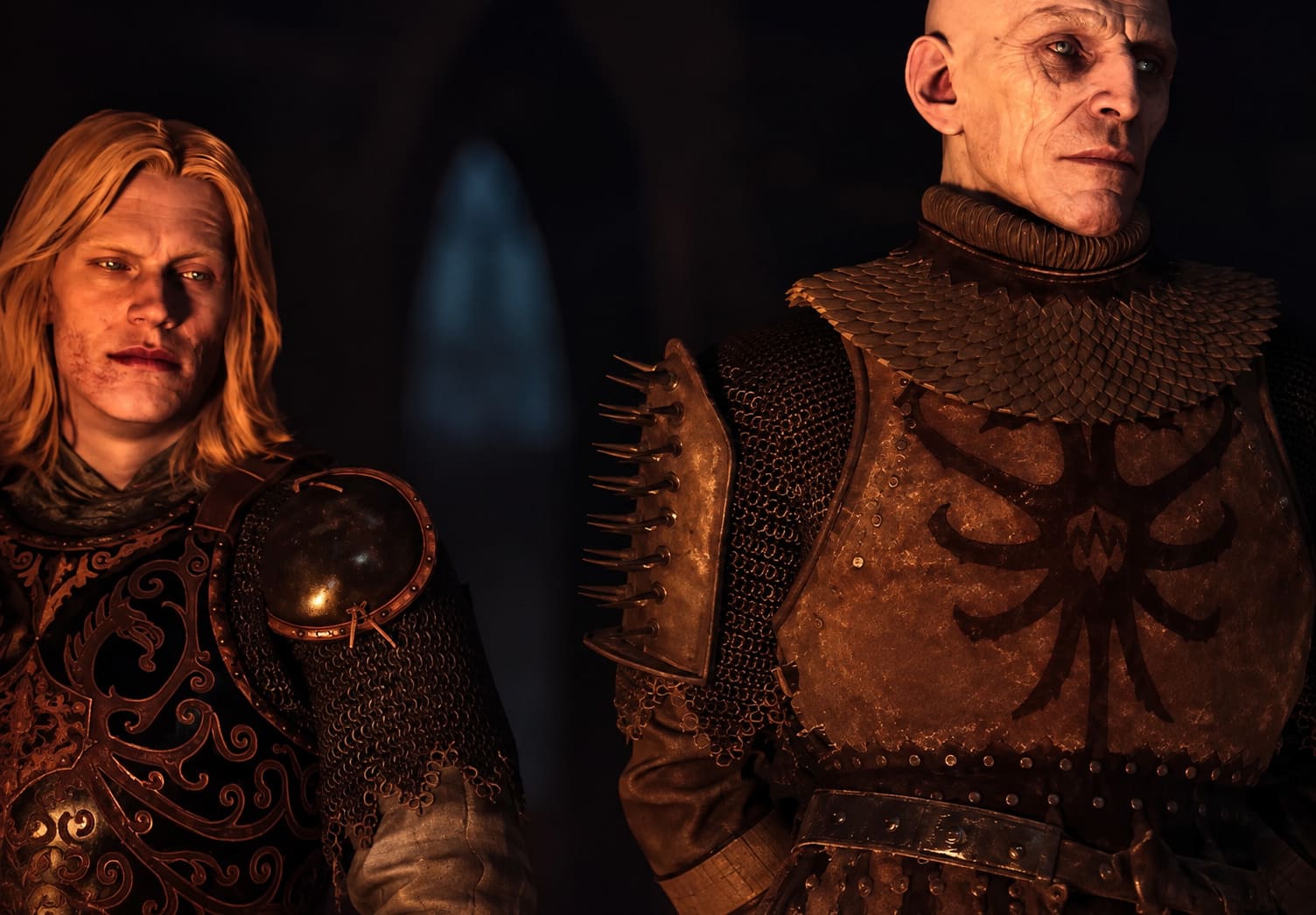
During the Day
Your human side puts more emphasis on:
- Swordplay and conventional weapons
- Defensive timing
- Stamina management
- Witchcraft used carefully
- Positioning and controlled engagements
The lack of easy health regeneration makes mistakes especially expensive.
During the Night
The vampire side becomes much more prominent.
You gain access to supernatural attacks and greater mobility, allowing you to approach combat more aggressively. Dodging, repositioning, and exploiting isolated targets become much more important.
I found this duality far more interesting than simply giving the player a “day form” and “night form.” It encourages you to rethink encounters rather than simply increase your damage after sunset.
6. Treat Witchcraft as a Health-Based Resource
One mistake I would strongly recommend avoiding is treating Witchcraft like a conventional mana system.
Your magical abilities come with a serious cost: using Witchcraft can consume your own health.
That creates a fascinating risk-and-reward loop.
A powerful spell might eliminate a dangerous enemy or provide valuable crowd control, but using it unnecessarily can leave you dangerously close to death.
This becomes particularly problematic during daylight when recovering lost health isn’t as straightforward.
My preferred approach is to use Witchcraft strategically rather than constantly.
Don’t spend health simply because an ability is available.
Save your strongest spells for moments when they can change the outcome of an encounter—breaking enemy formations, interrupting dangerous attacks, or finishing a target that would otherwise consume too much time and stamina.
7. Use Activation Charges Before They Go to Waste
The game’s combat system also gives you another important resource: Activation Charges.
Successful attacks and well-executed defensive actions can help build these charges, which can then be spent on your active abilities.
This creates a nice feedback loop:
Fight well → generate charges → use abilities → regain control of the battlefield.
You shouldn’t allow your charges to remain capped for long periods. If you’re sitting at maximum charges while continuing to attack normally, you’re effectively wasting potential ability generation.
Experiment with your active ability slots and find a combination that matches your preferred playstyle.
A player who enjoys aggressive melee combat might want abilities that create openings or stun enemies, while a more tactical player can use ranged or area-based powers to control groups.
8. Don’t Waste Your Vampiric Healing
The vampire side of Coen comes with an extremely useful emergency option: feeding on vulnerable enemies to recover some health.
It looks spectacular, but don’t let the animation fool you into thinking this is an unlimited healing system.
The ability has a significant cooldown and only restores a limited portion of your health. That means using it simply because you’re missing a small amount of HP can be a terrible decision.
I’d treat it as an emergency resource rather than routine healing.
If you’re fighting several enemies and know that another wave is coming, keeping your vampiric heal available can be much more valuable than using it immediately.
Good resource management is often what separates a clean victory from a desperate retreat.
9. Build Around One Primary Combat Identity
The three progression paths give you considerable freedom, but that doesn’t mean you should spread your investment randomly.
The major directions are:
| Skill Path | Main Focus | Best For |
|---|---|---|
| Way of the Sword | Weapons, stamina, physical combat | Aggressive melee players |
| Way of the Witch | Spells, control, tactical abilities | Strategic and ranged playstyles |
| Way of the Vampire | Mobility, supernatural attacks, aggression | Fast and aggressive players |
The Way of the Sword is the obvious choice if you want Coen to feel like a traditional warrior, with abilities focused on weapon damage, stamina efficiency, and aggressive movement.
The Way of the Witch is more appealing if you enjoy controlling fights from a distance and using abilities to manipulate encounters.
The Way of the Vampire pushes you toward speed, mobility, and supernatural violence.
Personally, I wouldn’t rush to unlock everything. Pick the mechanics you actually enjoy and build around them.
A focused build will generally feel more satisfying than a character who has a little bit of everything but doesn’t excel at anything.
The Blood of Dawnwalker: Can You Ally with the Vampire Lords? Choice and Consequence Guide
10. Never Let a Group Surround You
This is the simplest tip on the list, but possibly the one that will save you the most deaths.
Don’t fight five enemies just because the game allows you to.
Large groups create problems that have nothing to do with your damage output. Even if you’re capable of defeating every opponent individually, simultaneous attacks can overwhelm your defensive timing.
Whenever possible, create space.
Use the environment. Separate enemies. Attack isolated targets. Retreat around corners. Take advantage of vertical positioning. If you can remove one enemy before the main fight begins, do it.
This is especially important when facing enemies with different attack ranges. Getting trapped between a melee fighter and a ranged attacker can quickly turn a manageable battle into a disaster.
One of the most valuable habits in The Blood of Dawnwalker is simply knowing when not to attack.
Coen in The Blood of Dawnwalker: Full Protagonist Lore, Origin, and Mechanics Explained
The Best Combat Mindset for The Blood of Dawnwalker
After playing plenty of action RPGs, I’ve learned that complicated combat systems aren’t necessarily good combat systems. What matters is whether the mechanics actually encourage you to make meaningful decisions.
That’s where The Blood of Dawnwalker has the potential to stand out.
You aren’t just deciding whether to attack or defend. You’re constantly making smaller decisions:
Which direction is the enemy attacking from? Should I parry or dodge? Can I afford to use Witchcraft? Should I spend my Activation Charges? Is this enemy worth fighting right now? Is it safer to wait until night?
Those decisions make combat feel much more deliberate.
The most important lesson is to stop thinking about Coen as a character with one fixed combat style. He’s effectively two different fighters connected by the clock. During the day, patience, swordsmanship, and resource conservation matter more. At night, mobility, aggression, and vampiric abilities allow you to take much greater risks.
If you learn the directional combat system, become comfortable with perfect parries, manage your health and Activation Charges carefully, and—most importantly—avoid letting enemies surround you, the combat becomes far less intimidating.
And honestly, that’s the part I appreciate most. The game doesn’t seem interested in making every fight easy. It wants you to earn control of the battlefield.
Once that clicks, every successful parry, perfectly timed dodge, and well-placed supernatural attack starts to feel less like the game handed you a victory and more like you actually outplayed the enemy.