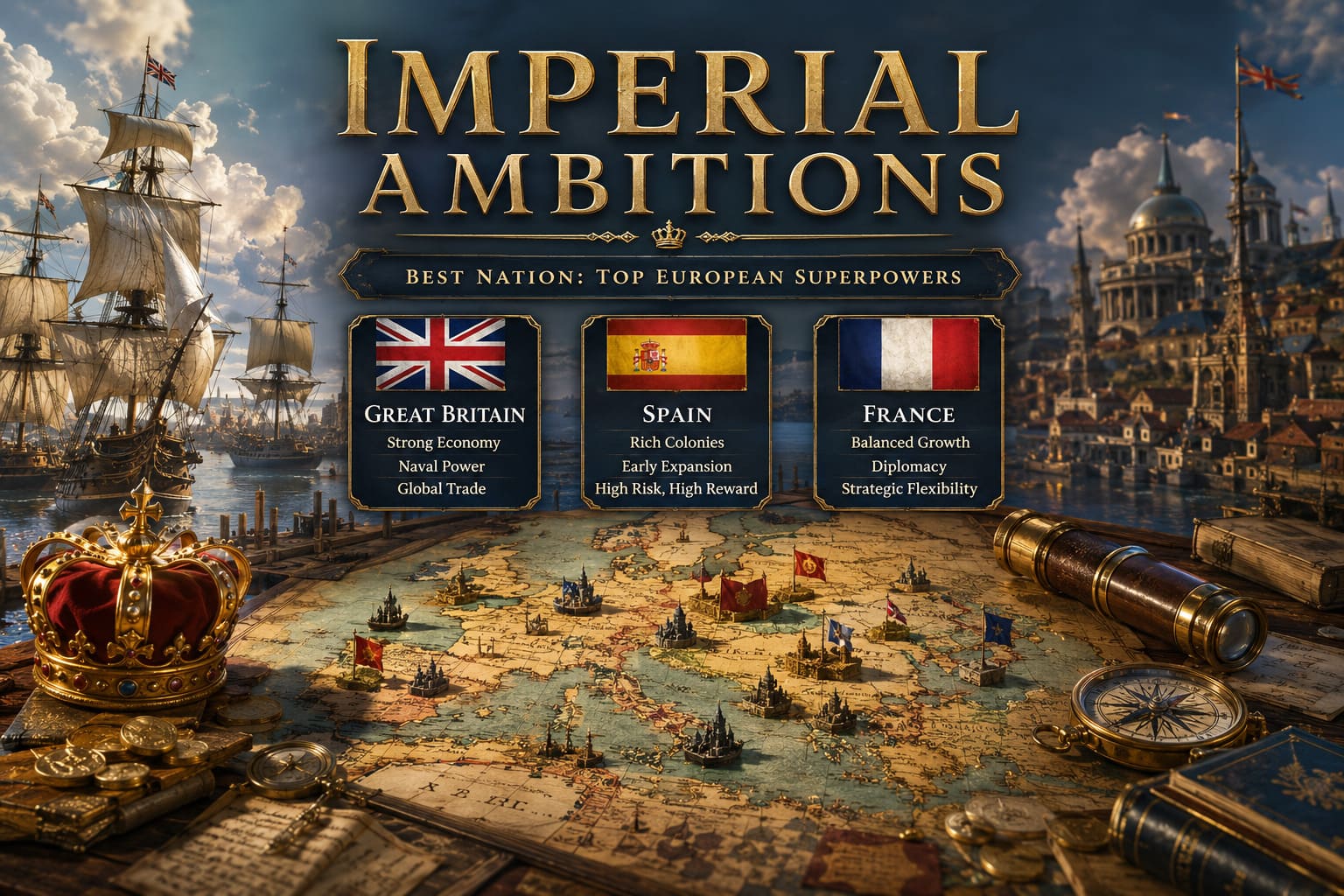
Imperial Ambitions Best Nation: Top European Superpowers Ranked for Strategy Fans
There is something refreshing about Imperial Ambitions. It doesn’t try to imitate every modern grand strategy game, and it certainly doesn’t hold your hand. After spending dozens of hours experimenting with different nations, restarting failed campaigns, and making more economic mistakes than I would like to admit, I realized that the strongest country is not necessarily the one with the biggest army or the richest starting treasury.
What impressed me most is how every decision echoes throughout your empire. Ignore food production for a few turns, and your cities begin to suffer. Expand too quickly, and suddenly you’re dealing with unrest instead of enjoying your newly conquered territory. Push industrialization without considering your workforce, and your economy starts working against you.
If you’re wondering which European nation deserves your first serious campaign, here’s my personal ranking based on experience rather than theory.
What Makes a Nation Strong?
Many newcomers immediately compare military strength or starting resources. After several campaigns, I don’t think that’s the right approach.
In Imperial Ambitions, success depends on how smoothly your nation can handle several interconnected systems at once.
The strongest countries usually have:
- A stable domestic economy
- Safe expansion opportunities
- Reliable access to important resources
- Enough flexibility to recover from mistakes
The game constantly rewards planning instead of rushing. That’s one reason I’ve enjoyed it far more than many recent strategy releases.
My #1 Choice: Great Britain
If someone asked me which nation I’d recommend without hesitation, my answer would always be Great Britain.
Not because it’s overpowered—but because it gives players room to actually learn the game.
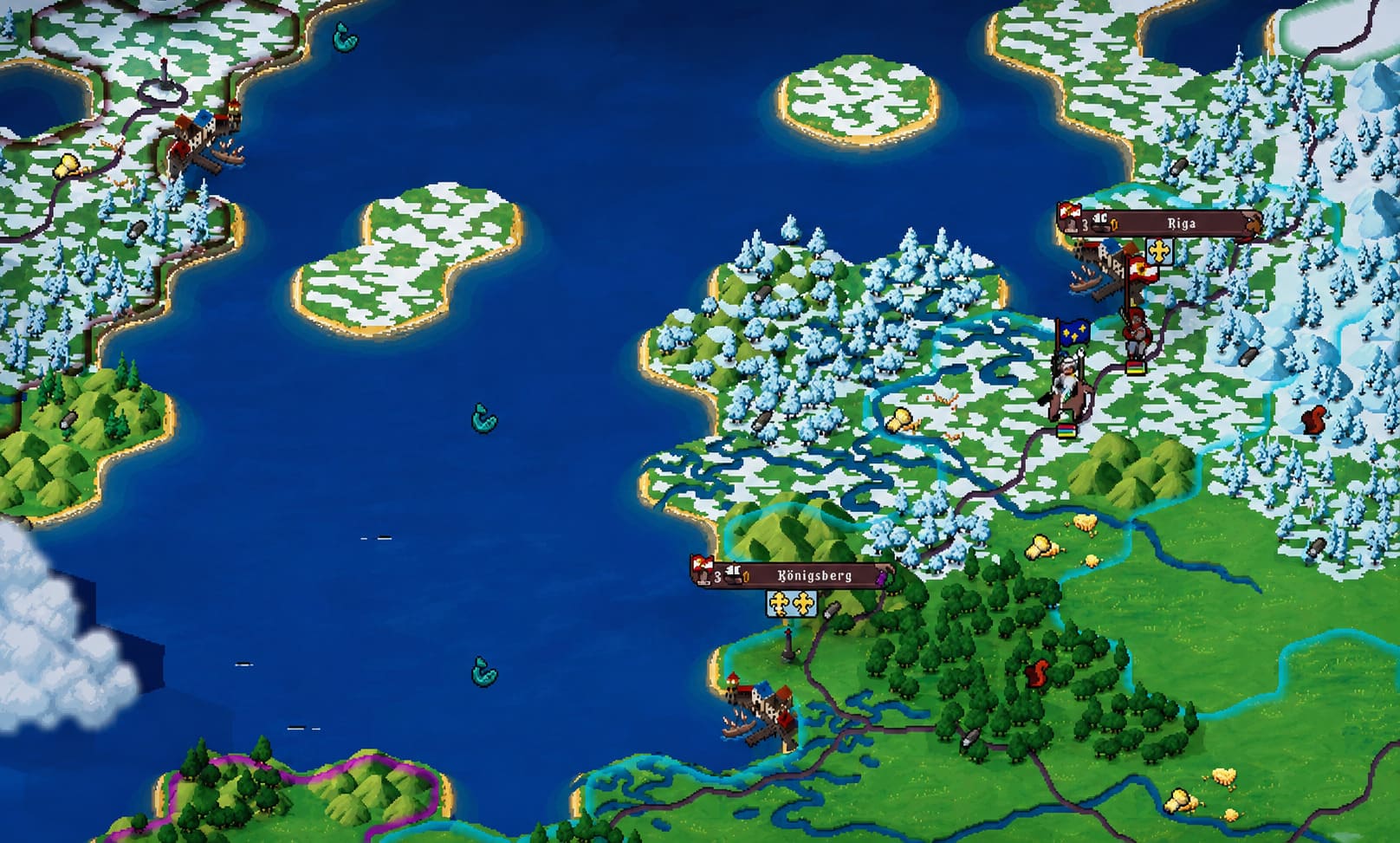
The Island Advantage
Being separated from mainland Europe changes everything.
During my first British campaign, I noticed I wasn’t constantly worrying about enemy armies crossing my borders. Instead of spending enormous amounts on soldiers, I invested those resources into ports, workshops, and exploration.
That single difference snowballs into a huge advantage.
While continental powers prepare for wars, Britain can quietly build an economy that eventually becomes impossible to match.
Excellent Economic Foundation
Britain starts with resources that naturally complement each other.
- Wood feeds construction.
- Coal supports manufacturing.
- Cities quickly become productive without requiring complicated logistics during the opening turns.
I found myself earning stable income much earlier than with other nations, allowing faster investments into ships and colonial expansion.
Naval Expansion Feels Natural
Eventually every successful campaign moves overseas.
Britain simply reaches that stage more comfortably than anyone else.
Building additional fleets never felt like a burden because my economy was already supporting them. Once exploration begins, discovering valuable colonial regions becomes much easier than trying to fight over crowded European territory.
If your goal is controlling global trade rather than endless continental warfare, Britain feels almost tailor-made for that style.
Spain: Incredible Potential With Serious Risks
Spain was actually my second campaign.
For the first twenty turns I thought it was completely broken.
Then everything started falling apart.
That’s the beauty of Imperial Ambitions.
Fast Colonial Expansion
Spain reaches distant territories earlier than almost every rival.
Those early discoveries often include:
- Gold deposits
- Silver mines
- Valuable plantation land
- Strategic ports
Watching treasure flow back to Europe feels incredibly satisfying.
Wealth Creates New Problems
The game does a surprisingly good job showing that massive wealth isn’t automatically good.
Several of my Spanish campaigns suffered because I focused too heavily on precious metals while neglecting domestic production.
Money was everywhere.
Consumer goods were not.
Prices climbed.
Public satisfaction dropped.
Suddenly the richest empire on the map struggled to maintain stability.
That lesson alone completely changed how I approached later campaigns.
Religious Pressure Adds Another Layer
Spain also encourages aggressive religious expansion.
Sometimes it works beautifully.
Other times your colonies become increasingly difficult to manage as local resistance grows.
It’s an interesting mechanic because it forces you to think beyond military conquest.
Winning battles is easy.
Keeping provinces loyal is much harder.
France: The Most Balanced Experience
France surprised me more than any other nation.
Before playing, I expected another military-heavy European power.
Instead, it became one of the most flexible campaigns I’ve experienced.
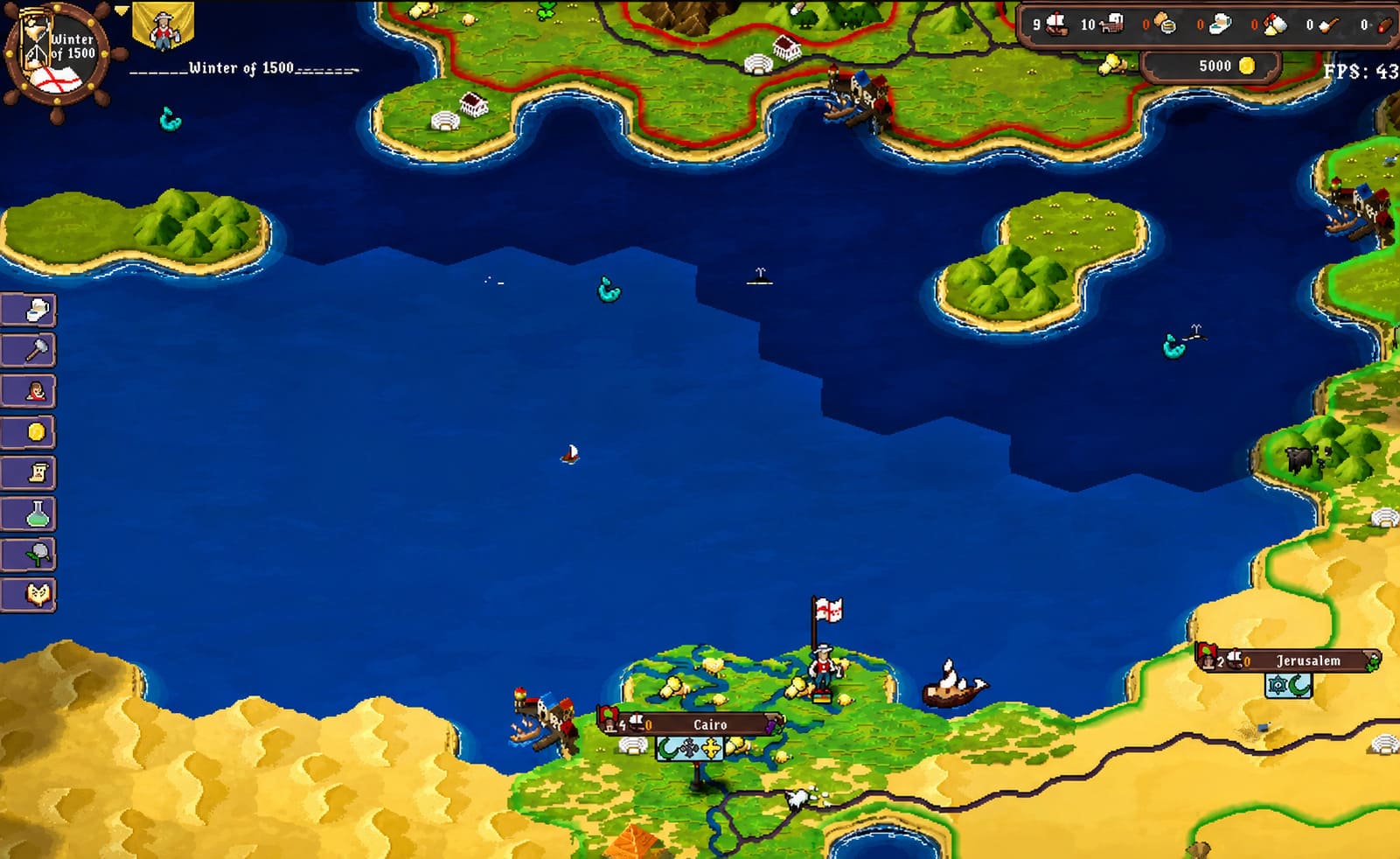
Agriculture Makes Life Easier
Food rarely became a major issue.
That may sound like a small advantage, but experienced strategy players know how valuable stable population growth really is.
A reliable food supply supports almost every other economic system.
Instead of constantly fixing shortages, I could focus on infrastructure and diplomacy.
Strong Diplomatic Opportunities
France rewards players who prefer negotiation over conquest.
Building relationships with independent native populations often proved cheaper than launching military expeditions.
Less warfare meant:
- Lower military expenses
- More productive workers
- Fewer rebellions
- Better long-term stability
It’s a slower approach, but one that consistently paid off in my campaigns.
Geography Is Both a Blessing and a Curse
Unlike Britain, France cannot ignore European politics.
You’re surrounded by potential rivals.
That means maintaining armies even during peaceful periods.
Those military costs delay colonial investments, making timing much more important than with Britain.
Comparison Table
| Nation | Difficulty | Economy | Military Pressure | Colonial Potential | Best For |
|---|---|---|---|---|---|
| Great Britain | Easy | Excellent | Low | Excellent | First campaigns, trade-focused players |
| Spain | Medium-Hard | Very Strong | Medium | Outstanding | Aggressive expansion |
| France | Medium | Stable | High | Strong | Balanced strategic gameplay |
One Mistake Almost Everyone Makes
If there’s one pattern I’ve seen among new players—including myself—it’s expanding too early.
Capturing more cities feels rewarding.
Managing them does not.
Every new territory increases logistical complexity.
Your workforce becomes stretched.
Trade routes become longer.
Security costs rise.
Meanwhile, unrest quietly grows beneath the surface.
One failed campaign taught me something valuable.
Sometimes improving three cities is far more profitable than conquering ten.
Imperial Ambitions constantly rewards quality over quantity.
Specialists Matter More Than You Think
At first I underestimated agents.
Later I realized they can completely change the direction of a campaign.
Some of my favorite upgrades include:
- Surveyors for locating premium expansion sites.
- Cartographers for improving exploration efficiency.
- Geologists for discovering hidden mineral wealth.
- Specialized covert agents for disrupting underground smuggling networks.
A well-developed specialist often contributes more than several additional military units.
That’s not immediately obvious during the first few hours, but it becomes increasingly important as your empire grows.
My Preferred Opening Strategy
No matter which European nation I choose now, I generally follow the same opening philosophy.
- Secure food production before anything else.
- Build a reliable lumber economy.
- Expand manufacturing gradually instead of all at once.
- Recruit explorers early.
- Avoid excessive taxation during the opening phase.
- Delay unnecessary wars until the economy is self-sustaining.
It isn’t the fastest strategy.
It also isn’t the most exciting.
But it’s by far the most consistent.
Imperial Ambitions Gameplay Guide: Mechanics, Population Simulation, and Colonization Strategy
Who Should Choose Each Nation?
Choose Great Britain if you:
- Prefer economic management.
- Enjoy naval gameplay.
- Want the easiest learning curve.
- Like building powerful trade empires.
Choose Spain if you:
- Love rapid expansion.
- Enjoy taking calculated risks.
- Want to dominate overseas colonies.
- Don’t mind solving economic crises later.
Choose France if you:
- Prefer balanced gameplay.
- Like diplomacy.
- Enjoy managing both continental and colonial affairs.
- Want flexibility instead of specialization.
Final Thoughts
After spending considerable time experimenting with different European powers, I still believe Great Britain offers the strongest overall experience in Imperial Ambitions.
Its protected geography, reliable economy, and natural path toward naval dominance make learning the game’s deep mechanics far less frustrating. It doesn’t hand you easy victories, but it gives you enough breathing room to recover from mistakes—something that’s incredibly valuable in a strategy game built around long-term planning.
That said, I also appreciate that the developers avoided making every nation feel the same. Spain delivers an exciting campaign full of explosive highs and painful economic lessons, while France rewards patience, diplomacy, and careful resource management.
Ultimately, the “best” nation depends on what kind of strategist you are. If you enjoy methodical empire building and watching a carefully planned economy evolve into a global powerhouse, Britain is difficult to beat. If you prefer dramatic expansion, treasure fleets, and constant challenges, Spain may become your favorite. And if you enjoy balancing diplomacy, agriculture, warfare, and colonization all at once, France offers one of the richest strategic experiences available.
That’s what keeps bringing me back to Imperial Ambitions. Every campaign tells a different story, every mistake becomes a lesson, and every successful empire feels genuinely earned rather than simply following an optimal build order. Few modern grand strategy games manage to create that feeling, and for me, that’s what makes this one worth investing hundreds of hours into.