Gothic 1 Remake Learning Points Guide: Best LP Distribution & Character Builds
The first thing that struck me when I started playing Gothic 1 Remake was how refreshingly uncompromising it feels compared to most modern RPGs. After years of playing games that constantly tell you where to go, what to do, and how to build your character, stepping back into the Valley of Mines felt almost shocking.
The world doesn’t care if you’re ready.
A scavenger can kill you. A group of molerats can ruin your day. Wandering too far from safety in the opening hours often ends with a loading screen. And honestly, that’s exactly why Gothic remains special.
After spending dozens of hours experimenting with different character builds, testing LP investments, and replaying early chapters several times, I’ve come to one conclusion: Learning Points are the most valuable resource in the entire game.
Spend them wisely, and you’ll become a walking nightmare for Orcs and Minecrawlers. Waste them, and you’ll spend half the game struggling against enemies that should be easy kills.
Why Learning Points Matter More Than Ever
Unlike many RPGs where attribute points can be reassigned or where leveling naturally makes your character stronger, Gothic’s progression system forces you to commit.
Every level grants:
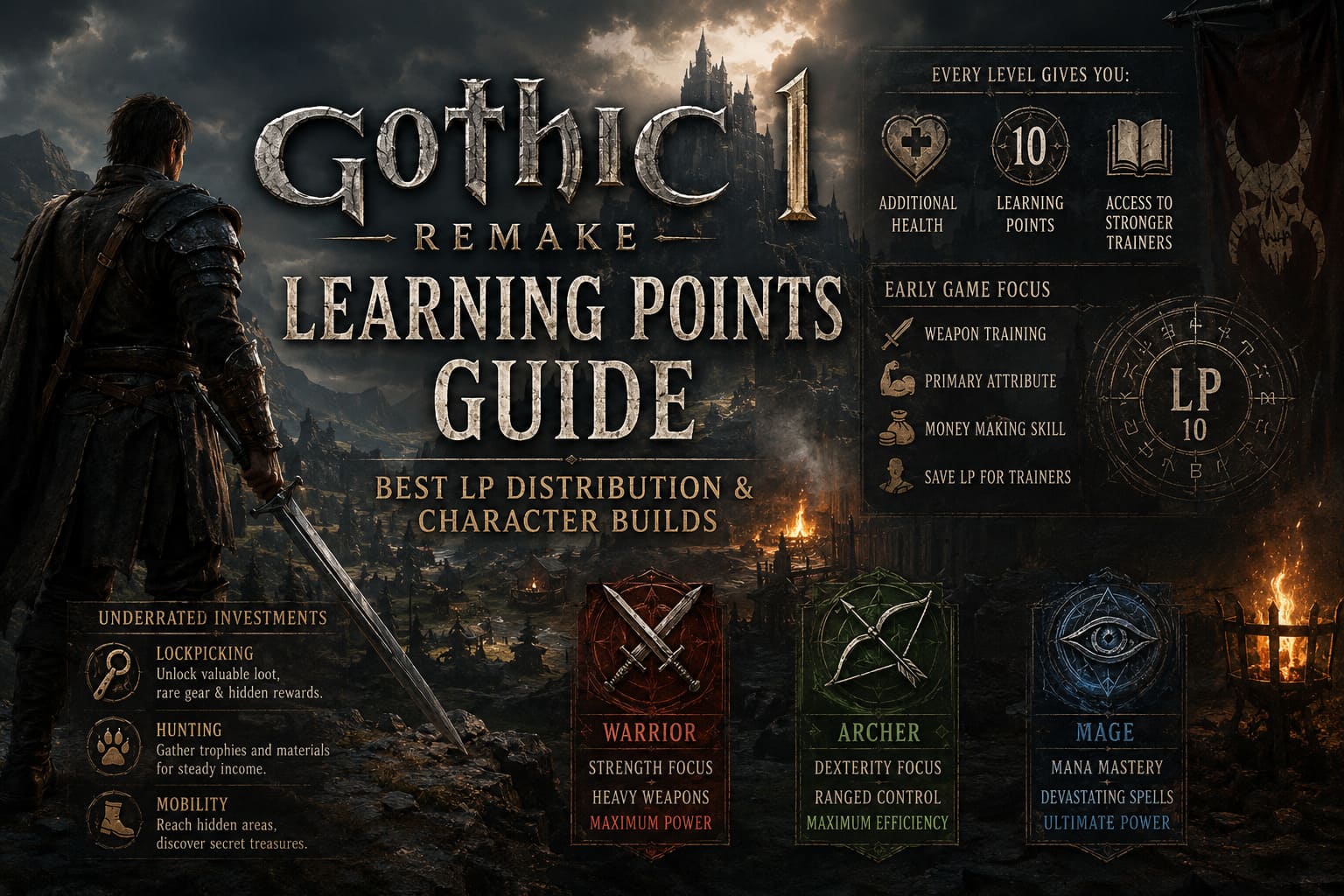
- Additional Health
- 10 Learning Points
- Access to stronger trainers and abilities
However, LP alone means nothing until you find the right trainer. This creates one of the most rewarding progression systems I’ve seen in RPGs because every decision carries weight.
I learned this lesson the hard way during my first playthrough when I tried creating a “balanced” character.
Big mistake.
Trying to improve Strength, Dexterity, and Magic simultaneously left me mediocre at everything. The remake strongly rewards specialization, especially during the first two chapters.
My First Priority: Weapon Training
If there’s one investment I would recommend to every new player regardless of build, it’s basic weapon mastery.
Many newcomers focus entirely on attributes, but combat skills are what truly transform your character.
Before training, combat feels clumsy:
- Slow attack animations
- Weak combo chains
- Limited defensive options
- Difficult timing windows
After unlocking trained weapon handling, combat becomes dramatically smoother.
The difference is night and day.
I consider this the single best early-game investment because it immediately improves survivability while also increasing damage output.
Early Game LP Allocation That Never Fails
After several playthroughs, I’ve settled on a progression route that consistently delivers strong results.
Levels 1–5
- Invest in One-Handed Weapon Training.
- Raise your primary combat attribute.
- Learn a money-making skill.
- Save some LP for upcoming trainers.
For melee characters, that means Strength.
For archers, that means Dexterity.
For future mages, surprisingly, I still recommend investing into basic physical combat first.
Magic takes time to become powerful, and the early game can be brutal for fragile spellcasters.
Recommended Early Attribute Targets

| Build Type | Primary Stat | Early Goal | Mid-Game Goal |
|---|---|---|---|
| Warrior | Strength | 25-30 | 60+ |
| Archer | Dexterity | 30-35 | 70+ |
| Mage | Strength + Mana | 20 Strength | Heavy Mana Focus |
These numbers provide access to significantly stronger equipment without wasting valuable LP.
The Melee Warrior: My Favorite Build
I’ve played nearly every major RPG released over the last twenty years, from classic Gothic and Morrowind to Elden Ring and Kingdom Come Deliverance.
Yet there’s something uniquely satisfying about a pure Strength build in Gothic.
The reason is simple:
Power feels earned.
You start as a nobody barely capable of surviving a wolf attack.
Hours later you’re swinging enormous weapons that can cut through enemies in a few strikes.
How I Build a Warrior
Early game priorities:
- One-Handed Training
- Strength to 25+
- Lockpicking
- Basic Hunting
Mid-game priorities:
- Strength to 50-60
- Advanced weapon mastery
- Better armor acquisition
Late-game priorities:
- Two-Handed specialization
- Strength above 80
- Endgame weapon upgrades
Once your Strength reaches higher values, enemy encounters become significantly easier. Larger weapons also provide superior reach, which is surprisingly important against aggressive enemies.
Many players underestimate weapon range until they start fighting Orc Warriors.
Trust me, you’ll appreciate every extra inch of reach.
Archer Build: Surprisingly Powerful
I initially expected ranged combat to feel weaker than melee.
I was wrong.
A dedicated Dexterity build can become incredibly efficient.
The biggest advantage isn’t damage.
It’s control.
Being able to eliminate enemies before they reach you changes the entire flow of combat.
Instead of reacting to danger, you’re creating favorable situations from the start.
Why Dexterity Is More Valuable Than It Looks
Dexterity affects more than bows.
It also improves:
- Pickpocketing effectiveness
- Access to certain equipment
- Overall utility gameplay
- Economic opportunities
This creates a build that not only excels in combat but also generates wealth faster than most alternatives.
I found myself constantly sitting on large ore reserves while playing a thief-archer hybrid.
Lockpicking Is Worth Every LP
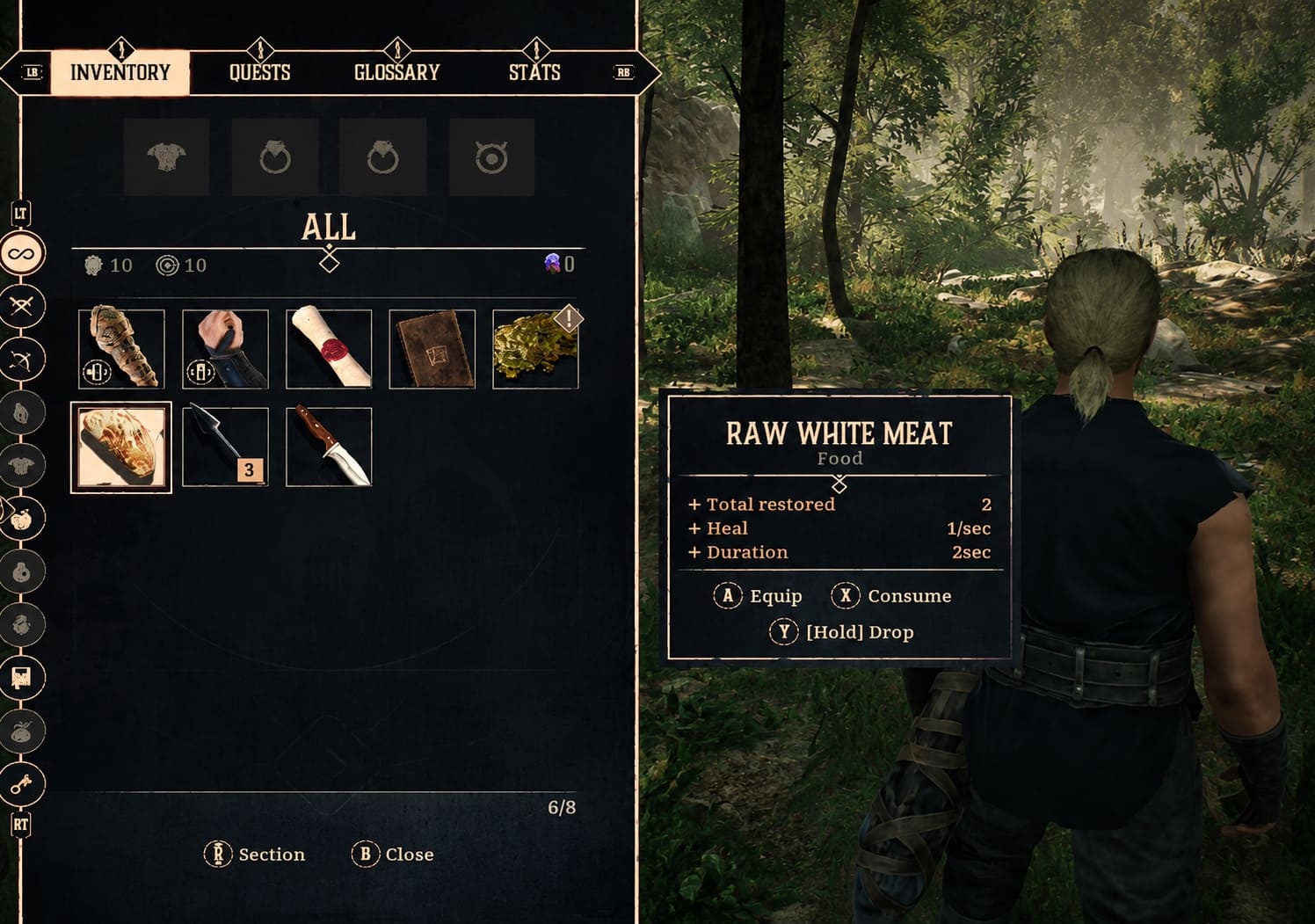
Some players skip lockpicking because they see it as optional.
I completely disagree.
Throughout the remake, locked chests contain:
- Valuable weapons
- Rare jewelry
- Crafting materials
- Permanent stat bonuses
- Large ore rewards
Opening more containers means accumulating resources faster.
And in Gothic, resources translate directly into power.
One of the smartest things I did during my last playthrough was investing in lockpicking earlier than usual.
The return on investment was enormous.
The Mage Path: Incredible but Demanding
Mage gameplay is arguably the most rewarding long-term experience in Gothic 1 Remake.
It’s also the most difficult.
Unlike many RPGs where magic becomes available immediately, Gothic forces you to earn your place among spellcasters.
The journey requires patience.
Lots of patience.
What New Players Should Know
The biggest mistake aspiring mages make is rushing Mana.
At first this sounds logical.
More Mana equals more spells, right?
Not exactly.
Early game survival remains your primary concern.
That’s why I recommend:
- Basic melee training first
- Small Strength investment
- Gradual Mana progression
- Efficient Circle advancement
This approach creates a much smoother experience than attempting a pure caster build from the very beginning.
Once higher-tier spells become available, the entire game changes.
Crowd control abilities, devastating area attacks, and powerful utility spells transform encounters that would overwhelm other builds.
The Most Underrated LP Investments
Every player talks about Strength, Dexterity, and Magic.
Few discuss utility skills.
That’s a mistake.
Several secondary abilities provide tremendous value.
Hunting Skills
Learning to collect trophies from animals creates a consistent source of income.
Over time, skins, claws, teeth, and other materials generate thousands of ore.
Mobility Skills
The remake places far greater emphasis on exploration than many players expect.
Improved movement abilities help you reach:
- Hidden treasure caches
- Secret equipment stashes
- Underwater loot
- Rare crafting resources
Some of my best finds came from areas that many players simply walk past.
Gothic 1 Remake Steam Deck Best Settings: 2026 Optimization Guide for 40 FPS & Battery Life
A Progression Trick Every New Player Should Use
One piece of advice I always give new players:
Don’t immediately consume permanent stat boosters.
Save them.
Train your attributes first.
Then use:
- Permanent potions
- Special meals
- Rare herbs
- Attribute-enhancing accessories
This strategy maximizes efficiency and helps avoid wasting valuable progression opportunities.
Veteran Gothic players have followed this approach for years, and it remains just as effective in the remake.
Final Thoughts
After countless RPG playthroughs across multiple generations of gaming, I still believe Gothic’s progression system remains one of the most rewarding ever created.
It doesn’t hand out power for free.
Every attribute increase matters.
Every trainer feels important.
Every Learning Point carries real value.
My biggest recommendation is simple: choose a direction early and commit to it.
Whether you become a devastating warrior, a deadly marksman, or a master of runic magic, specialization will always outperform a scattered build.
The Valley of Mines is a dangerous place filled with monsters, bandits, and powerful factions competing for control.
With smart LP management and a clear build strategy, you’ll eventually become something far more dangerous than all of them combined.
You’ll become the strongest person inside the Barrier.