How to Fish (Dazed Games) Best Starter Items: Beginner’s Progression Guide (2026)
If you have played enough survival games, you probably know the drill: the first hour is usually about collecting scraps, learning the mechanics, and trying not to waste the handful of resources the game gives you. How to Fish takes that familiar formula and throws it into a much stranger mix of fishing, physics, survival, combat, and co-op chaos.
Developed by Swedish indie studio Dazed Games and released on Steam in August 2026, How to Fish puts you on a remote island after a boating disaster. You and up to three friends are left with practically nothing. There is no comfortable tutorial loadout, no convenient pile of equipment waiting in a chest, and no magical progression system that makes the first few hours easy.
You fish, deal with what you catch, sell it, buy better equipment, and repeat the process until you can afford to venture farther from the starting area.
Having played plenty of survival games where the early-game economy can either make or break a run, my biggest piece of advice is simple: don’t spend your first money on things that look exciting. Spend it on things that make every future trip more efficient.
That distinction is especially important in How to Fish.
How the Early Game Actually Works
The basic progression loop sounds almost ridiculously simple:
- Catch fish.
- Deal with the fish once you land it.
- Transport your catch safely.
- Sell it for money.
- Invest the profits into better equipment.
- Use that equipment to reach better fishing areas.
The interesting part is that How to Fish doesn’t treat fishing as a passive activity. Your catches can become a physical problem, and the surrounding environment can become one too.
That means your first purchases shouldn’t necessarily be about catching the rarest fish possible. Your goal is to make ordinary fishing faster, safer, and more profitable.
In my experience with games built around resource loops, players often make the same mistake: they optimize the reward before optimizing the process. That’s backwards.
If you can make ten ordinary fishing trips efficiently instead of three expensive trips with fancy equipment, the cheaper strategy usually wins.
Best Starter Items in How to Fish
There are several pieces of early equipment worth prioritizing, but they aren’t equally important. I would approach the starter shop roughly in this order.
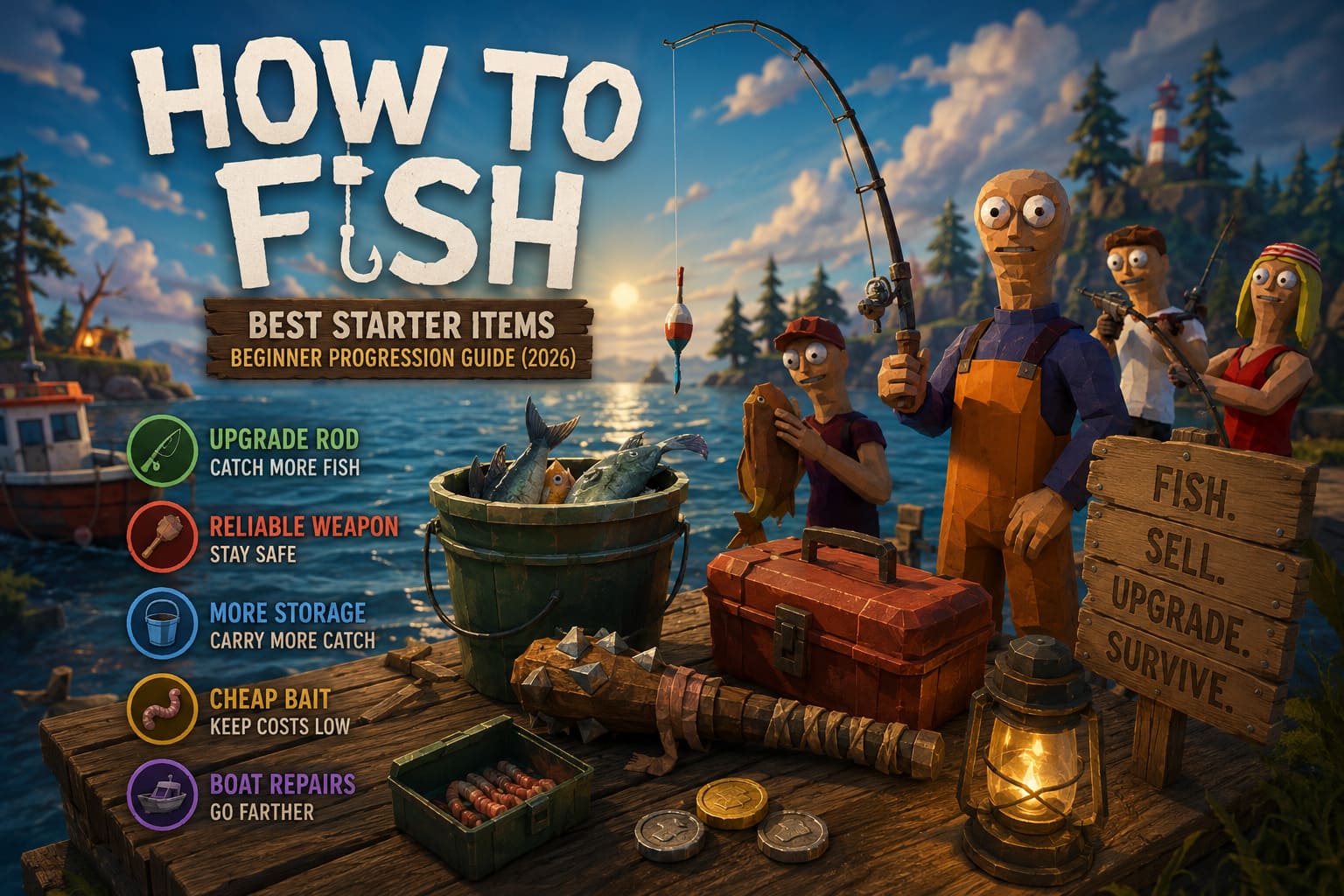
| Priority | Starter Item | Why It Matters | Early Value |
|---|---|---|---|
| 1 | Basic Rod Upgrade | Improves the core fishing loop | Extremely High |
| 2 | Basic Club or Fish Cleaver | Helps deal with catches and threats | High |
| 3 | Storage Bucket or Creel | Reduces unnecessary trips | High |
| 4 | Basic Bait | Keeps fishing costs low | High |
| 5 | Boat Repair Equipment | Improves mobility and access | Medium |
The exact availability and balance of individual equipment can change as Dazed Games updates the game, but the underlying progression philosophy remains the same: upgrade the tools you use constantly before buying specialized gear.
1. Upgrade Your Fishing Rod First
If there is one purchase I would make almost immediately, it is a basic rod upgrade.
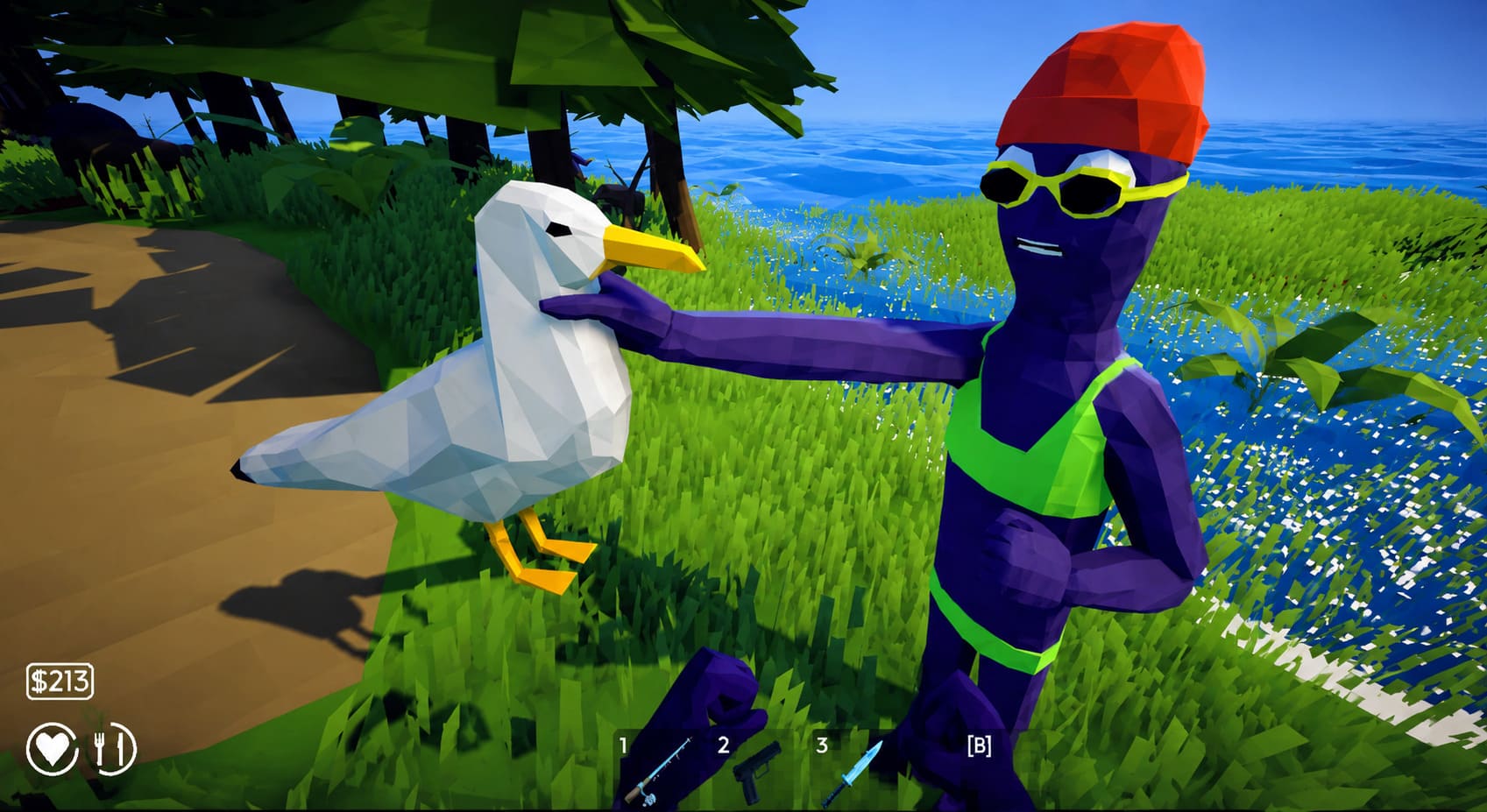
This isn’t the most glamorous purchase in the game. You aren’t going to look at it and think you’ve just unlocked an endgame weapon. But that’s exactly why it’s valuable.
The fishing rod is involved in practically every profitable activity during the opening hours. A better starter rod can make casting more comfortable, improve your consistency, and make the fishing minigames less frustrating.
And consistency matters more than it sounds.
Losing fish because you are repeatedly struggling with the basic fishing mechanics is effectively losing money. Every missed catch represents bait, time, and another trip back to the water.
Don’t underestimate boring upgrades. In survival games, boring upgrades are often the ones that quietly save you the most time.
2. Get a Reliable Weapon
The second thing I would look for is a basic club, fish cleaver, or comparable early-game weapon.
This is one of the details that makes How to Fish different from a traditional fishing simulator.
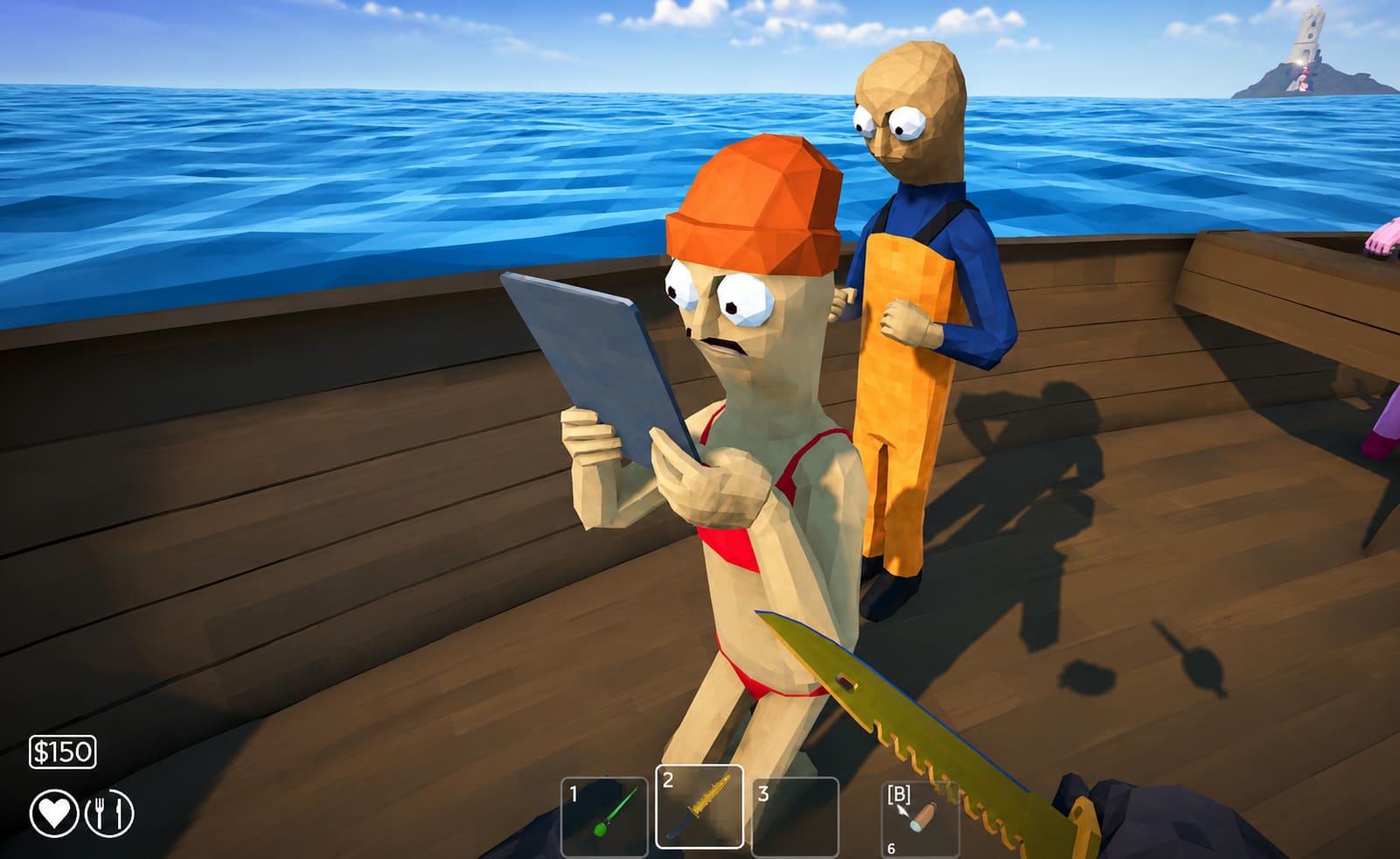
Your catch isn’t always just a passive item that magically appears in your inventory. The game leans into its physical, chaotic design, meaning some fish and environmental encounters can turn a simple fishing trip into a fight.
Having a weapon nearby gives you a way to deal with catches quickly and provides some insurance against hostile creatures.
I wouldn’t waste money chasing an expensive weapon during the opening section, though.
You aren’t trying to become the island’s greatest warrior. You just need something dependable enough to keep the fishing operation moving.
That distinction can save a surprising amount of early currency.
3. Buy Cheap Bait and Keep Your Costs Under Control
This is where many beginners can burn through their starting money.
Fancy bait and premium lures are tempting. Games have trained us to believe that the more expensive item must produce the better result. But early in How to Fish, that isn’t necessarily the smartest way to build your economy.
For your initial fishing areas, basic earthworms and inexpensive organic bait should be your workhorses.
Cheap bait allows you to experiment without feeling like every missed cast is a financial disaster. More importantly, it leaves enough money available for equipment that permanently improves your progression.
Think about your early budget as an investment fund.
A rod upgrade can help with dozens or hundreds of future catches. A pile of premium consumables disappears much faster.
I’d rather have a slightly less exciting fishing trip with reliable equipment than spend everything on premium bait and discover that I’m still struggling with basic storage and mobility.
4. Increase Your Carrying Capacity
A basic bucket, creel, or other early storage upgrade is another item that looks less important than it really is.
Imagine catching several fish, walking back to the merchant, selling them, returning to the shoreline, and repeating the entire process.
Now imagine doing the same thing while carrying several catches at once.
That’s where the value becomes obvious.
Inventory upgrades don’t directly increase the value of your fish, but they improve the amount of useful work you can complete before returning to town.
This is one of my favorite types of upgrade in survival games because it doesn’t feel powerful in the traditional sense. Instead, it quietly removes friction from the entire game.
More storage means fewer empty walks. Fewer empty walks mean more time fishing. More fishing means more money.
That’s a very good early-game equation.
5. Don’t Ignore Your Boat
Your initial boat isn’t going to turn you into an ocean explorer immediately, but basic repair equipment and early mobility upgrades are worth considering once your core setup is working.
The reason is simple: fishing in one location forever isn’t necessarily the most efficient strategy.
Different areas can offer different opportunities, and moving between nearby fishing spots can help keep your sessions productive.
However, I would put boat-related purchases behind the rod, weapon, storage, and basic bait.
Mobility is useful.
Efficiency at your primary activity is more useful.
Once your fishing operation is generating money consistently, then start putting some of that money into travel.
The Biggest Beginner Mistake: Buying Premium Gear Too Early
If you’ve played MMOs, survival games, or loot-heavy RPGs, you’ve probably made this mistake before.
You see a shiny high-tier item.
You buy it.
You feel powerful for approximately five minutes.
Then you realize you have no money left for the equipment you actually need.
Don’t do that.
The early areas of How to Fish are designed around basic progression. Expensive lures and specialized equipment become more attractive when you can actually take advantage of the fish, locations, and encounters they are intended for.
Until then, keep your economy boring.
Buy inexpensive bait. Upgrade your core equipment. Increase storage. Maintain your mobility. Build a cash reserve.
Once the basic system is working, then start experimenting.
Rotate Your Fishing Locations
Another lesson I learned from playing resource-focused games is that standing in one location forever is rarely optimal.
If your fishing area starts feeling less productive, move.
Try different sections of the shoreline and nearby water. If you have access to your boat, use it to explore small coastal areas instead of treating the first successful fishing spot as your permanent home.
This also makes the game more enjoyable.
One of the strengths of How to Fish is that fishing isn’t presented as a completely static activity. You’re supposed to explore, experiment, and eventually push beyond the comfortable starting zone.
If your current spot stops feeling profitable, don’t stubbornly wait for the game to give you better results.
Pack your gear and move.
The Best Co-op Strategy Isn’t Four Players Fishing
Playing with friends changes the early game considerably.
At first, it might seem logical for everyone to grab a rod and fish simultaneously. More rods should mean more fish, right?
Sometimes.
But four players performing exactly the same task can create unnecessary chaos.
A better approach is to divide responsibilities.
One player can focus primarily on catching fish. Another can deal with catches and nearby threats. A third can handle transportation and selling. The fourth can explore, watch for environmental dangers, or prepare the next fishing location.
You don’t have to follow this division perfectly, but specialization can make a coordinated group dramatically more efficient.
And honestly, this is where I think How to Fish has the potential to become particularly entertaining.
The game already has the ingredients for the kind of co-op session where a perfectly normal fishing trip suddenly becomes a complete disaster because somebody brought the wrong equipment, dropped a valuable catch, or wandered too far from the group.
That’s not necessarily a problem.
It’s part of the charm.
Pay Attention to the Environment
Don’t treat the world as background decoration.
Unusual water movement, strange ripples, changes in water color, unusual environmental events, and suspicious-looking locations are all worth investigating.
Indie games often hide their most interesting moments in places that aren’t highlighted with enormous quest markers.
How to Fish encourages experimentation, so if something looks strange, try fishing there.
You might discover a different type of encounter, a valuable catch, or simply learn something about how the game’s world behaves.
Either way, you’re gaining information.
A Simple Beginner Progression Route
If you’re completely new to How to Fish, I’d keep your first few hours relatively straightforward.
Phase One: Establish Your Economy
Start with cheap bait and learn the fishing mechanics. Don’t worry about rare catches yet.
Your first objective is simply to prove that you can consistently turn fishing trips into profit.
Phase Two: Improve Efficiency
Once you have some money, prioritize the rod and storage.
At this point, your objective changes from “Can I make money?” to “Can I make money faster?”
That difference is important.
Phase Three: Add Combat and Mobility
Get a reliable basic weapon and make sure your mobility options are maintained.
Now you should be able to handle more situations without every unexpected encounter forcing you to retreat.
Phase Four: Start Exploring
Once the basic economy is stable, begin experimenting with different fishing locations, boat routes, better bait, and more specialized equipment.
This is when the game should start opening up considerably.
Best Steam Deck Settings for How to Fish (Dazed Games): Performance & Optimization Guide (2026)
My Recommended Starter Priority
If I had to start a fresh save today, my early shopping order would look something like this:
- Basic rod upgrade
- Reliable early weapon
- Cheap bait supply
- Storage upgrade
- Basic boat maintenance
- More specialized fishing equipment later
The exact order can shift depending on what you find, how much money you’re earning, and whether you’re playing solo or with a group.
But the principle stays the same: invest in the equipment that improves every future activity before spending money on luxury gear.
How to Fish (Dazed Games) Hidden Achievements Guide: 100% Walkthrough
Final Verdict: Build the Machine Before Chasing the Big Catch
The opening hours of How to Fish are much easier once you stop thinking about rare fish and start thinking about efficiency.
Your first goal isn’t to become rich.
It isn’t to own the best boat.
It isn’t to catch the biggest monster in the ocean.
Your first goal is to create a reliable money-making machine.
Catch fish efficiently. Deal with them quickly. Carry as many as possible. Sell them. Reinvest the money. Repeat.
Once that foundation is established, the more exciting parts of How to Fish become much easier to enjoy.
Personally, that’s the progression style I prefer. I’ve played enough games where developers throw powerful equipment at players early only to make the first few hours feel meaningless. How to Fish works better when you embrace the scrappy beginning.
You start with almost nothing, make a little money, buy something useful, and slowly turn a miserable island survival situation into a functioning operation.
Don’t chase the flashy gear. Build your foundation first.
Get the rod. Get a weapon. Keep cheap bait stocked. Expand your storage. Maintain the boat. Explore when the current fishing spot stops paying off.
Do that, and your journey off the island should be considerably smoother—and probably a lot more profitable.