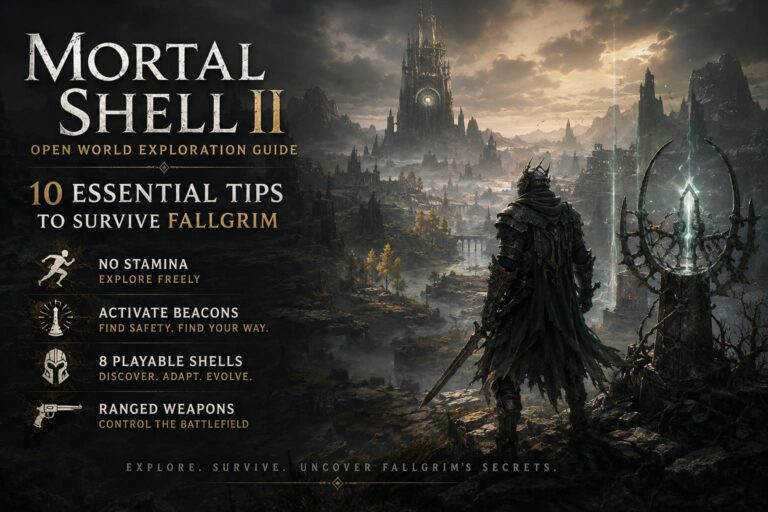
Onimusha Way of the Sword Difficulty Settings Guide: How to Configure Modular Sliders for the Ultimate Challenge
I’ve been waiting a long time for a new Onimusha, and now that Onimusha: Way of the Sword is finally here, I can safely say this is not the kind of game I want to rush through.
Released on September 4, 2026, Way of the Sword brings Capcom’s classic samurai franchise back after a ridiculously long absence. The last mainline game, Onimusha: Dawn of Dreams, arrived back in 2006. That is an entire gaming generation ago.
And somehow, this new entry doesn’t feel like Capcom simply dug up an old franchise and slapped modern graphics onto it.
You play as Miyamoto Musashi, visually modeled after legendary Japanese actor Toshiro Mifune, as he fights through a dark fantasy version of Edo-period Kyoto. The city is beautiful, dangerous, and absolutely crawling with Genma demons. There’s blood, supernatural madness, enormous enemies, and plenty of opportunities to feel like the coolest samurai alive for about five seconds before getting punished for one bad input.
That last part is important.
Difficulty is one of the most interesting things about Way of the Sword.
Capcom has moved away from the old-school approach where you simply pick Easy, Normal, or Hard and accept whatever the developers decided was appropriate. Instead, Way of the Sword gives players considerably more control over how demanding the combat becomes.
As someone who loves difficult action games but doesn’t particularly enjoy artificial difficulty, I actually think this is a smart move.
Story Mode vs. Action Mode
When starting a new game, you aren’t immediately confronted with a gigantic wall of complicated options. Instead, Way of the Sword gives you two main starting points: Story Mode and Action Mode.
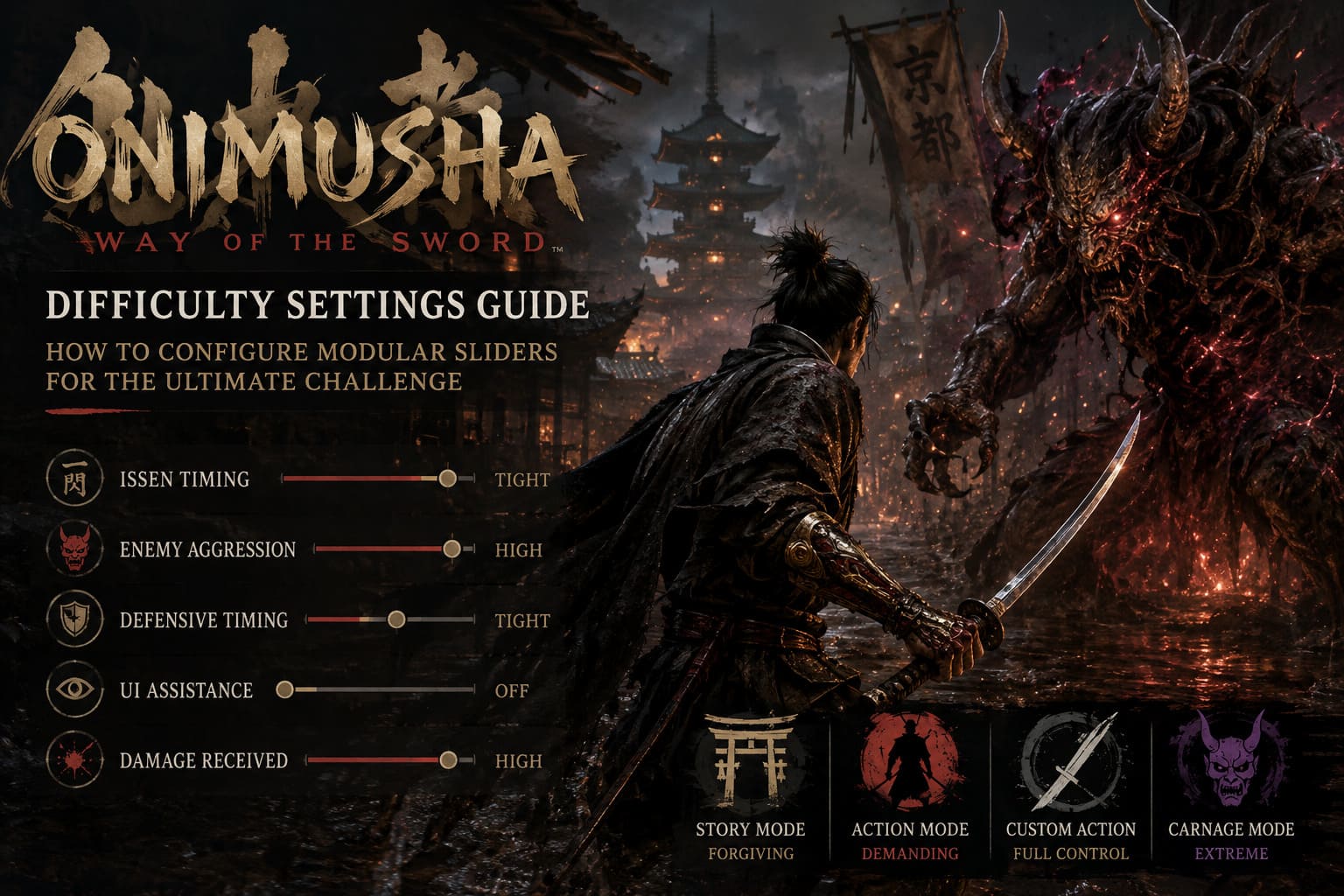
Think of these as templates rather than completely separate experiences.
| Mode | Best For | General Experience |
|---|---|---|
| Story Mode | Beginners and story-focused players | Forgiving combat and easier defensive timing |
| Action Mode | Experienced action-game players | More aggressive enemies and demanding combat |
| Custom Action | Players who want control | Individual combat parameters can be adjusted |
| Carnage Mode | Hardcore veterans | Extremely punishing, high-risk combat |
Story Mode is exactly what it sounds like. It is aimed at players who want to enjoy Musashi’s journey, explore Kyoto, see the impressive environments, and experience the story without constantly worrying that one missed parry will send them back to the last checkpoint.
Enemies are less threatening, Musashi takes less damage, and defensive mechanics are more forgiving.
Honestly, I think that’s perfectly fine.
Not every player wants to spend 30 minutes learning one boss attack pattern just to progress. Some people simply want the samurai fantasy.
Then there is Action Mode, which is where things start getting serious.
Enemies hit harder, become more aggressive, and expect you to actually understand the combat system. Button mashing isn’t going to carry you very far. Positioning matters. Timing matters. Defensive reactions matter.
And, most importantly, the Issen system becomes something you’ll eventually need to understand rather than just a cool mechanic you occasionally trigger by accident.
Why the Custom Difficulty System Is So Good
This is the part I really like about Way of the Sword.
Instead of treating difficulty as a single giant number, Capcom lets you adjust individual parts of the combat experience.
That’s a much better solution than simply giving enemies absurd health pools.
I’ve played plenty of games where “Hard Mode” basically means enemies have three times the health and your character suddenly feels like they’re fighting with a wet cardboard sword.
Thankfully, Way of the Sword takes a more interesting approach.
You can change things like Issen timing, enemy aggression, defensive windows, visual assistance, and incoming damage. That means you can make the game harder in ways that actually affect how you play.
For example, I don’t mind enemies having normal health. What I want is for them to be more aggressive and force me to react faster.
That creates tension without turning every encounter into a ten-minute exercise in hitting a giant health bar.
Issen Timing
The Issen mechanic is arguably the heart of the classic Onimusha combat identity.
The idea is simple but the execution can be brutal: you need to attack at the right moment as an enemy strikes. Pull it off correctly and you can deliver a devastating counterattack.
There is also Hajiki Issen, which builds on the same concept after a successful defensive action.
The difficulty configuration lets you modify how forgiving this timing is.
If you’re learning the combat system, widen the window. There is absolutely no shame in doing that.
If you’re the kind of player who enjoys sitting down with a boss until every attack animation is burned into your brain, tighten it.
Personally, I think the tight setting is where the combat starts becoming addictive.
When you finally land a perfect Issen after several failed attempts, it feels earned.
Enemy Aggression Changes Everything
This is probably the slider I’d recommend experimenting with first.
Increasing enemy aggression doesn’t just make enemies hit harder. It changes the flow of encounters.
At lower settings, enemies are less coordinated. You can isolate targets, control the battlefield, and deal with opponents one at a time.
Turn aggression up, however, and suddenly you’re dealing with enemies attacking from different angles.
Some opponents may pressure Musashi while another prepares a ranged attack. Others can attempt to flank you or interrupt longer attacks.
This changes combat from:
“I’ll kill this guy, then that guy.”
into:
“Wait, who’s attacking me right now?”
And that’s exactly the kind of pressure I want from a modern Onimusha.
Defensive Timing Is Not Just a Number
Parrying and blocking become significantly more important as the difficulty rises.
The defensive timing setting controls how forgiving your inputs are when attempting a perfect guard.
Keep the window generous and you have more room to learn.
Make it tighter and you need to react to what enemies are actually doing instead of simply responding to obvious visual prompts.
This is where Way of the Sword can become genuinely tense.
A slightly late defensive input can leave Musashi open, and against stronger enemies, that mistake can snowball quickly.
My recommendation?
Don’t immediately set everything to maximum.
Start with normal defensive timing. Once you’re comfortable reading enemy animations, tighten the window.
There is a big difference between challenging combat and combat that simply feels frustrating.
Should You Turn Off UI Assistance?
Absolutely — but only when you’re ready.
The game can provide visual indicators and button prompts that help identify certain attacks and defensive opportunities.
For new players, these are extremely useful.
For experienced players, however, turning them off can completely change the atmosphere.
Suddenly you’re not waiting for a giant visual cue to tell you what to do. You’re watching enemy movement.
The shoulders shift.
The weapon moves.
The enemy changes stance.
Then you react.
That’s much closer to the fantasy of actually reading an opponent rather than playing a reaction test based on UI notifications.
For my first serious playthrough, I’d keep assistance enabled. On a second run, I’d turn most of it off.
Damage Scaling: The Slider That Will Ruin Your Evening
If you want Way of the Sword to become genuinely unforgiving, increase the damage Musashi receives.
This setting is straightforward, but its effect is enormous.
A mistake that barely matters on lower settings can become a major problem when incoming damage is increased.
Suddenly healing resources matter.
Positioning matters.
Getting surrounded becomes terrifying.
And that one enemy you ignored in the corner suddenly becomes the most important thing in the room.
This is one of those settings I would increase gradually.
High damage plus maximum enemy aggression plus minimal defensive windows can create an incredible challenge, but it can also turn every encounter into a punishment simulator if you aren’t prepared.
My Recommended Difficulty Setups
There isn’t one “correct” difficulty for Onimusha: Way of the Sword. That’s the whole point of this system.
Here are the setups I’d personally recommend.
The Classic Samurai Setup
| Setting | Recommendation |
|---|---|
| Base Mode | Action |
| Issen Window | Tight |
| Enemy Aggression | High |
| Defensive Timing | Tight |
| UI Assistance | Off |
| Damage Received | High |
This is the setup for players who want Way of the Sword to fight back.
You won’t have much UI assistance to fall back on, enemies will keep the pressure on, and mistakes will hurt.
But when everything clicks?
It’s fantastic.
This is probably the configuration I’d use once I’ve already learned the basic mechanics.
The Balanced Challenge
| Setting | Recommendation |
|---|---|
| Base Mode | Action |
| Issen Window | Standard |
| Enemy Aggression | High |
| Defensive Timing | Standard |
| UI Assistance | On |
| Damage Received | Standard |
This is my favorite recommendation for a first serious playthrough.
You still get aggressive enemies and demanding combat, but the game doesn’t constantly punish you for being human.
You can focus on learning enemy behavior while still enjoying the cinematic side of the game.
The Story-Focused Setup
| Setting | Recommendation |
|---|---|
| Base Mode | Story |
| Issen Window | Standard |
| Enemy Aggression | Lower |
| Defensive Timing | Generous |
| UI Assistance | On |
| Damage Received | Low |
If you’re here primarily for the story, characters, environments, and samurai atmosphere, go with this.
There’s no achievement for suffering unnecessarily.
Carnage Mode: For People Who Really Hate Themselves
Then there is Carnage Mode.
This is where Capcom stops politely asking whether you’re comfortable.
Carnage Mode is designed around extreme combat pressure. Certain heavy attacks can potentially kill Musashi in a single hit, meaning defensive mistakes become catastrophic.
But the interesting part is that Musashi’s lethal counter capabilities are also amplified.
So the mode isn’t simply:
“Enemies kill you faster.”
It’s more like:
“Everything can die incredibly quickly, including you.”
That creates a high-risk, high-reward combat loop.
If you are incredibly confident with Issen timing and defensive mechanics, Carnage Mode could be the ultimate way to experience the game.
For everyone else?
I’d save it for later.
Onimusha Way of the Sword Boss Guide: Hardcore Strategies to Defeat Every Genma Boss
Do Difficulty Settings Affect Rewards?
This is another area players should pay attention to.
According to the structure described for the game, playing at the easiest settings can limit access to the highest completion ranks. Players chasing S Rank-level results and related achievements or trophies will need to use Action Mode or more demanding custom configurations.
There is also New Game Plus, where certain upgrades, weapon skins, and Oni-related equipment can carry forward.
However, some of the highest-tier challenge content is designed to prevent your endgame equipment from completely destroying the intended difficulty.
I actually like that approach.
What’s the point of an ultra-hard mode if you can enter it with an absurdly overpowered character and delete everything in seconds?
Sometimes the best difficulty reward is simply knowing that you actually earned the victory.
How to Fix Onimusha Way of the Sword Low FPS and Micro Stuttering on PC
Final Thoughts
Onimusha: Way of the Sword is one of those games where I think Capcom made the right call by giving players more control.
The biggest strength of this system isn’t that it lets you make the game harder.
It’s that it lets you decide how you want the game to be difficult.
Want aggressive enemies but forgiving Issen timing? You can do that.
Want minimal UI assistance but normal damage? Go ahead.
Want a brutally demanding samurai experience where every mistake can end the fight? The game has you covered.
And that’s much better than simply selecting “Hard” and hoping the developers guessed correctly about what you consider fun.
For my money, I’d start with Action Mode, standard defensive timing, high enemy aggression, standard damage, and UI assistance enabled. Once the combat clicks, begin tightening the Issen and defensive windows and gradually remove the training wheels.
Because that’s where Onimusha: Way of the Sword starts becoming really special.
It isn’t just about watching Miyamoto Musashi look cool while cutting through demons.
It’s about eventually reaching the point where you stop thinking about the buttons.
You see the attack.
You react.
The blade moves.
And suddenly the Genma is dead.
That’s the Onimusha feeling I’ve been waiting for.