Resonance A Plague Tale Legacy Full Story Explained: The Ending and Lore Connections Revealed
There’s something wonderfully unsettling about the way A Plague Tale universe keeps turning its smallest mysteries into something much bigger. Resonance: A Plague Tale Legacy takes that idea and runs straight into ancient mythology.
Rather than simply continuing Amicia and Hugo de Rune’s story after A Plague Tale: Requiem, the game reaches backward to explore the history behind the Macula and, more importantly, the woman who would eventually become one of the most memorable allies in the series: Sophia.
Set in 1334, fifteen years before the events of Requiem, the game gives Sophia center stage. She isn’t yet the experienced ship captain players remember. She is younger, rougher around the edges, and very much in survival mode. She has spent years running with dangerous people, stealing, fighting, and doing whatever was necessary to stay alive.
That changes when Sophia steals a mysterious journal from her former crew.
Inside are references to a forgotten island, ancient ruins, an impossible connection to her bloodline, and something that sounds suspiciously like a buried piece of the Macula’s history.
Naturally, Sophia goes looking.
And this is where things get seriously weird.
Sophia’s Journey to Minotaur’s Island
Sophia’s motivation feels much more personal than Amicia’s journey ever did. Amicia was thrown into a nightmare she never asked for. Sophia, by contrast, chooses to follow the mystery.
The stolen journal points toward Minotaur’s Island, a remote Mediterranean location wrapped in Greek mythology and surrounded by stories that should have remained buried.
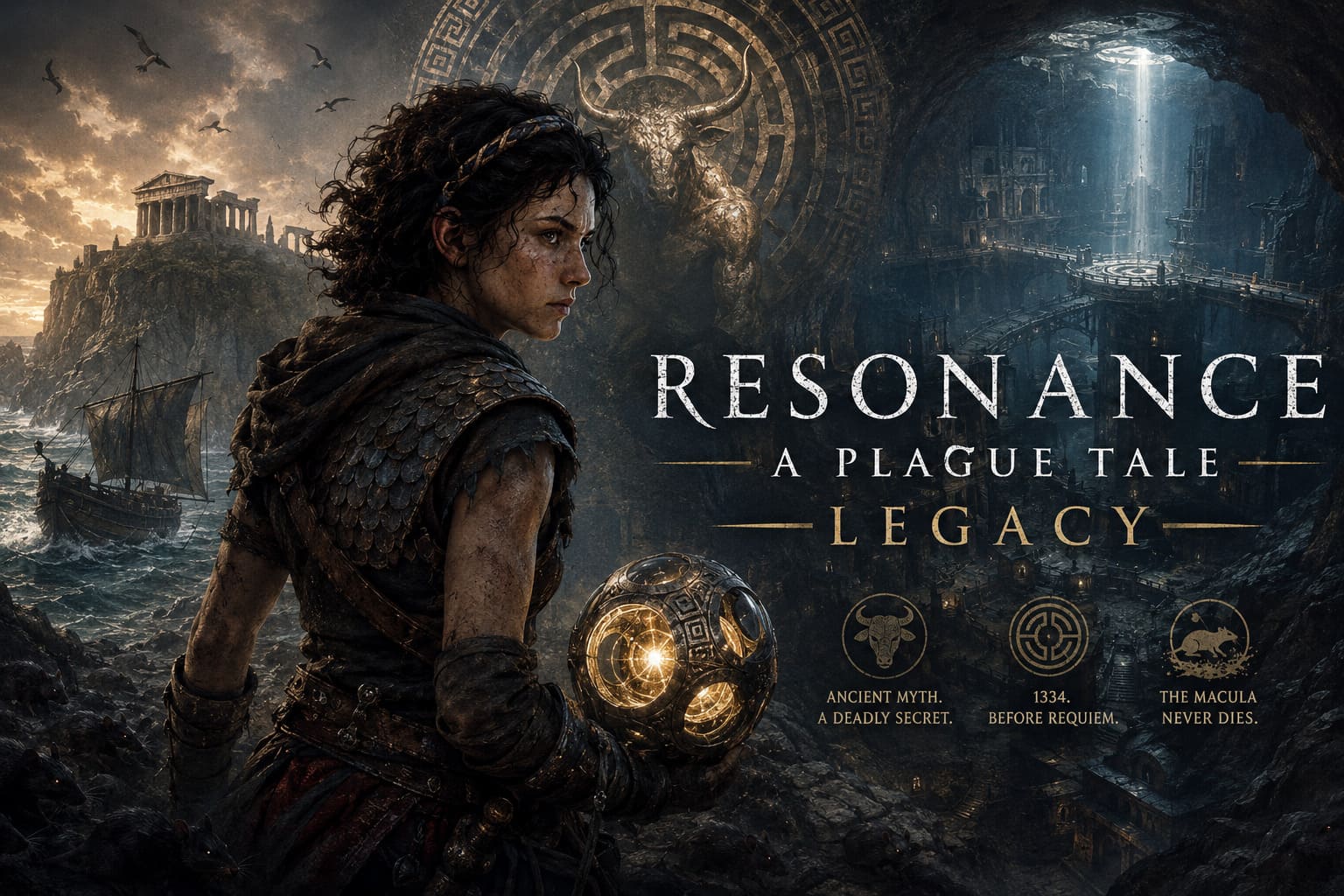
Sophia reaches the island while being hunted by an armed military force determined to recover the artifacts and information she stole. The chase immediately establishes the game’s tone: this isn’t a comfortable archaeological adventure where you wander around ancient ruins taking screenshots.
The island wants her dead.
As Sophia pushes inland, reality starts behaving badly. Ancient structures seem to shift. Underground routes don’t line up with what should physically be possible. Massive mechanisms still function after centuries of abandonment. The deeper she goes, the more obvious it becomes that the island wasn’t simply built by an ancient civilization.
It was built for a purpose.
Sophia eventually discovers the Minoan Sphere, a mysterious artifact capable of manipulating and redirecting light. From a gameplay perspective, this becomes one of the game’s defining mechanics, but its importance to the story is even bigger.
The Sphere is essentially a key to understanding what happened here.
And that’s when Resonance pulls its biggest trick.
The Dual Timeline Is More Than a Flashback Mechanic
The coolest part of Resonance: A Plague Tale Legacy is easily its two-timeline structure.
Sophia begins experiencing visions connected to the island’s ancient past. These aren’t simple flashbacks or dream sequences. They allow her—and the player—to experience events from another era through the legendary Greek hero Theseus.
This gives the game two very different flavors.
Sophia’s sections are built around mobility, tactical encounters, environmental puzzles, stealth, and manipulation of light with the Minoan Sphere. Theseus’s chapters are much more direct. He is essentially a walking medieval-era tank dropped into an ancient nightmare.
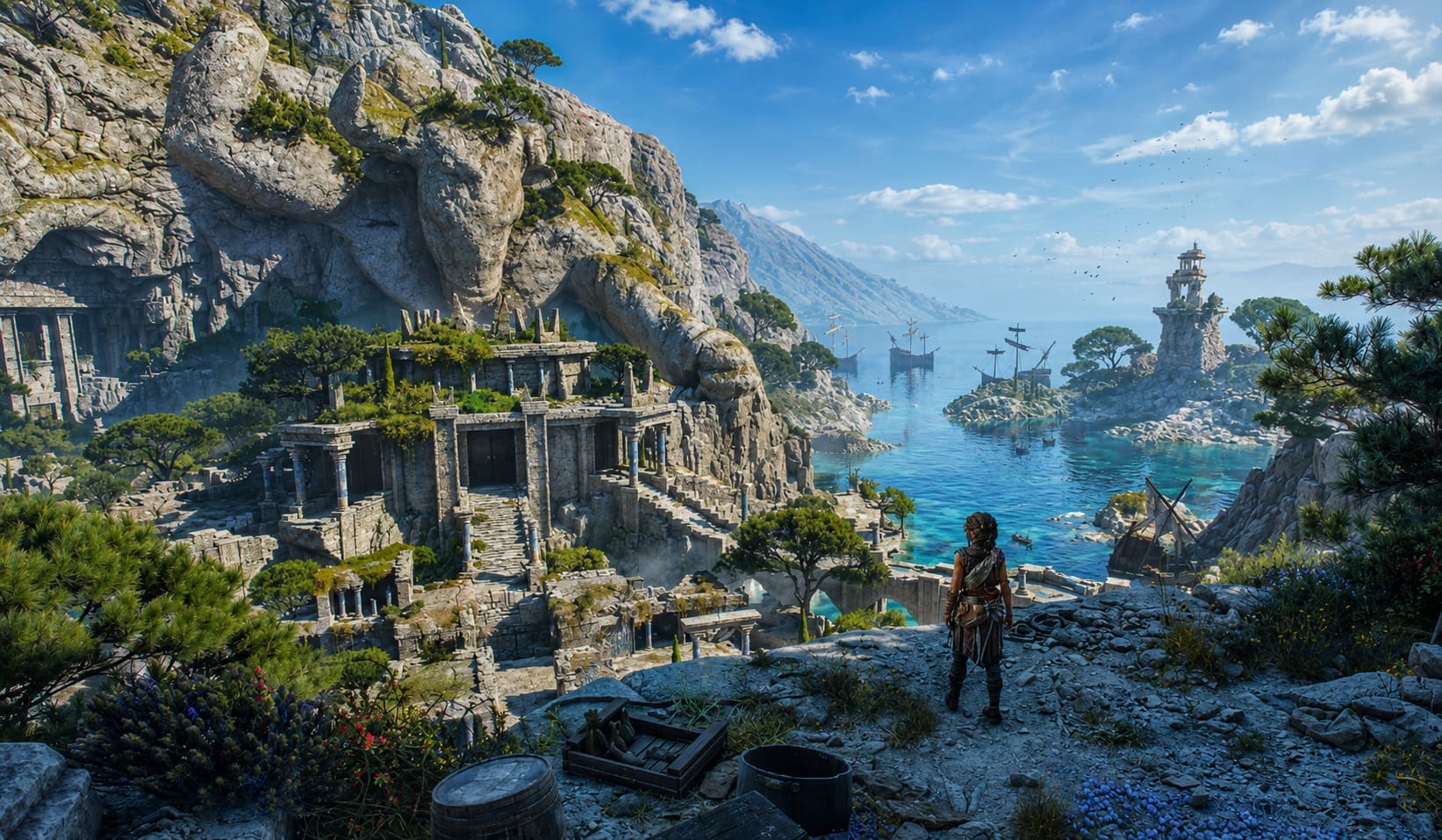
His combat revolves around shields, heavy weapons, physical strength, and brutal close-range encounters.
I genuinely like this contrast because it prevents the historical sections from feeling like filler. Theseus isn’t there just so the developers can say, “Hey, remember Greek mythology?” His actions have consequences for Sophia’s world.
What happens in the past changes the present.
A mechanism activated by Theseus can alter the physical structure Sophia encounters centuries later. A seal opened in his timeline may become a hidden passage in hers. An environmental change can reveal that something we thought was mythology was actually a distorted historical memory.
That makes the title Resonance feel appropriate.
The two eras are effectively echoing through each other.
The Minotaur Was Never Just a Monster
This is where the game’s lore becomes particularly interesting.
The traditional story of Theseus and the Minotaur has always been about a hero entering a labyrinth to kill a monstrous creature.
Resonance completely reframes that legend.
The Minotaur wasn’t simply an animalistic monster created for an ancient myth. It was connected to the Prima Macula, the supernatural force that sits at the center of the A Plague Tale mythology.
Long before the events surrounding the de Rune family, ancient civilizations had already encountered this terrifying phenomenon.
The Minoans attempted to understand it.
Then they made the classic mistake of thinking they could control it.
They couldn’t.
The Prima Macula was treated as a source of power, and the Minoans attempted to harness its properties to push the boundaries of what humanity could achieve. Their experiments eventually produced a catastrophic mutation in a Carrier.
That Carrier became the being remembered as the Minotaur.
Suddenly, one of the oldest myths in European storytelling has a completely different meaning.
The labyrinth wasn’t necessarily created because some king wanted to hide a monster from the world.
It was a containment system.
And that changes everything about Theseus.
Daedalus Built a Prison, Not a Palace
The legendary inventor Daedalus is another major piece of the puzzle.
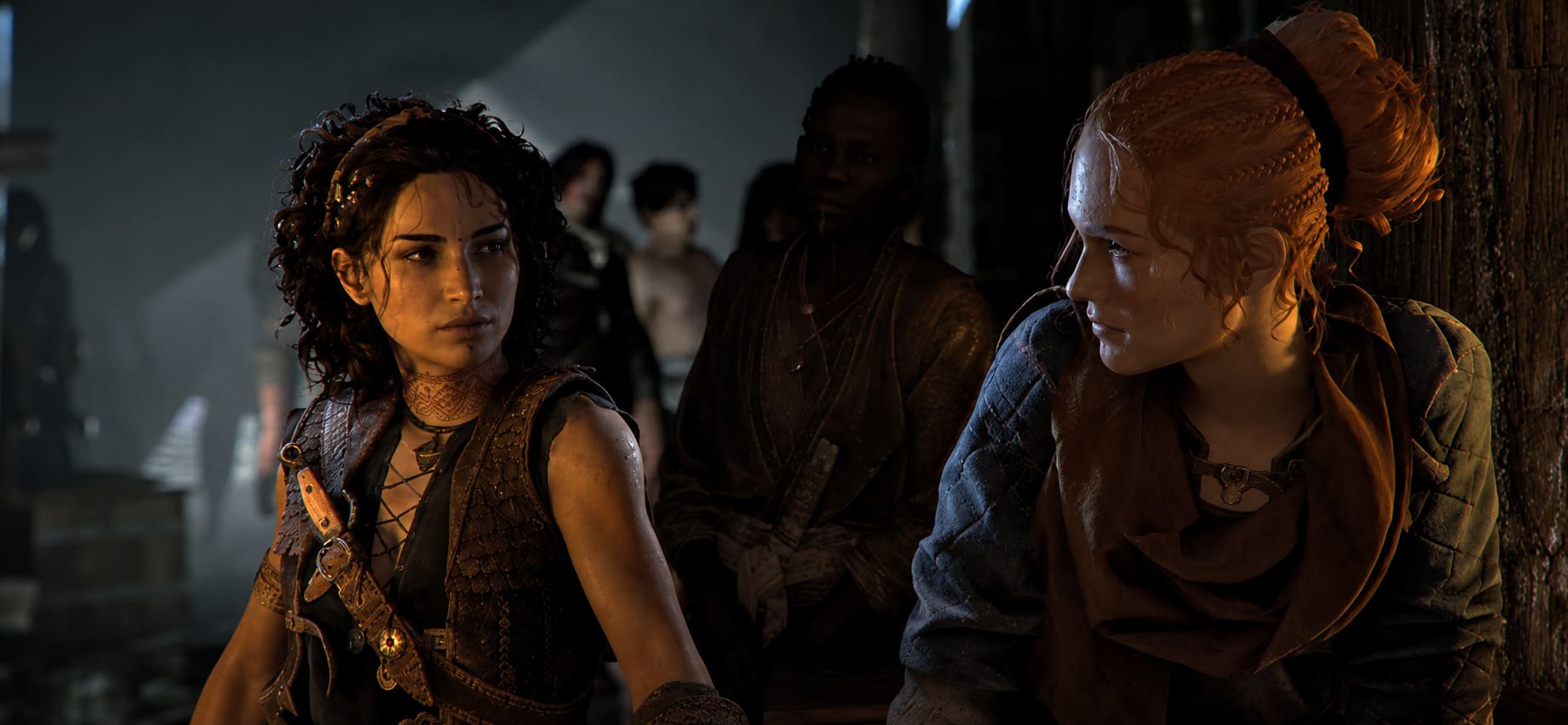
The Labyrinth beneath Minotaur’s Island isn’t merely an elaborate maze. It’s a gigantic technological and supernatural containment structure.
The further Sophia explores, the more the architecture begins to look less like classical Greek construction and more like something that should not exist in the ancient world at all.
- Massive gears.
- Energy systems.
- Ancient light channels.
- Biological-looking material.
- Hidden chambers.
Everything points toward one conclusion: Daedalus was attempting to contain something powerful enough to threaten the entire region.
The Minoan Sphere was part of that system.
Light wasn’t just a gameplay gimmick. It was a weapon and a stabilizing force. The ancient machinery used focused light to suppress the corrupted energy connected to the Prima Macula.
That’s one of those details that makes the game’s worldbuilding work for me. The franchise has always associated light and darkness with more than simple visual contrast, and Resonance pushes that symbolism into the actual mythology.
The Labyrinth becomes a machine designed to keep darkness buried.
Theseus Was a Protector, Not Just a Hero
This also gives Theseus a much darker role in the story.
The famous Greek hero wasn’t simply sent into the Labyrinth to earn glory by killing the Minotaur.
He became part of the containment process.
His mission was to confront the corrupted Carrier and force it into the deepest section of the Labyrinth, where the ancient light system could keep it contained.
In other words, Theseus wasn’t simply fighting a monster.
He was helping maintain a prison.
That makes his legendary victory feel almost tragic. The story remembered him as a hero who defeated the Minotaur, while the reality was much uglier: the threat was never truly destroyed.
It was buried.
And buried things have a nasty habit of coming back in horror games.
The Ancient Seal Begins to Fail
By 1334, the containment system has survived for centuries, but it is no longer functioning properly.
The ancient light sources have weakened. The machinery is deteriorating. The entity beneath the island is beginning to wake.
Sophia isn’t randomly drawn toward Minotaur’s Island.
The supernatural force beneath it is effectively calling to her.
Her lineage makes her uniquely capable of interacting with the Minoan Sphere, and the island’s ancient system recognizes that connection.
Unfortunately, Sophia isn’t the only person who reaches the heart of the Labyrinth.
The military force chasing her eventually catches up.
Their obsession with the Sphere becomes the catalyst for disaster.
When the final light stabilizers are damaged, the ancient containment system begins to collapse.
And the game goes absolutely feral from there.
The Darkness Beneath the Labyrinth
One of the creepiest revelations is that the island’s connection to the Macula isn’t limited to rats.
Instead, Sophia encounters a living black biomass, a fluid and constantly moving manifestation of corrupted energy.
It doesn’t behave like an ordinary enemy.
It reacts.
It hunts.
It responds to movement and sound.
The Labyrinth itself starts breaking apart as the entity pushes against its ancient prison.
At this point, Sophia realizes something important: repairing the old system isn’t enough.
The ancient solution was temporary.
The seal has already failed once.
Eventually, it will fail again.
Sophia has to decide whether she is willing to make the kind of sacrifice that Theseus made centuries before her.
Sophia’s Ending Explained
The final confrontation takes Sophia into the heart of the ancient containment chamber, where she finally encounters the source of the island’s corruption.
The entity attempts to manipulate her through visions and promises. It offers answers about her lineage and the power to control the darkness instead of fearing it.
For someone who has spent her life searching for answers, that’s an incredibly dangerous temptation.
Sophia refuses.
She understands what would happen if the ancient Macula strain escaped Minotaur’s Island.
It wouldn’t remain a local problem.
The consequences could spread far beyond the Mediterranean.
So Sophia makes the only decision she believes can permanently end the cycle.
She overloads the Minoan Sphere.
Instead of using the artifact simply to manipulate light or escape, she pushes its remaining power beyond its intended limits. The ancient energy systems beneath the island become part of the final chain reaction.
The result is catastrophic.
The Labyrinth collapses.
The containment chamber is destroyed.
The ancient Carrier and its corrupted power are buried beneath the ruins.
And Minotaur’s Island begins disappearing beneath the sea.
Sophia survives—but barely.
She escapes aboard her vessel battered, traumatized, and permanently changed by what she witnessed.
The important distinction is that Sophia doesn’t walk away because she defeated the Macula through superior strength.
She survives because she refuses to become another person who tries to control it.
That is arguably the most important thematic point in the entire story.
How Resonance Connects to A Plague Tale: Requiem
This is where the prequel becomes much more valuable than a simple side story.
Sophia’s appearance in A Plague Tale: Requiem suddenly carries much more weight.
When she eventually encounters Amicia and Hugo, she isn’t hearing about supernatural forces for the first time. She has already spent years dealing with the consequences of the Macula.
She has seen what happens when people try to exploit it.
She has seen a Carrier transformed into a monster.
She has walked through a Labyrinth specifically designed to contain the power.
And she has personally risked her life to prevent that power from spreading.
That makes her willingness to believe Amicia far easier to understand.
Sophia doesn’t need months of convincing that Hugo’s condition is real.
She already knows the nightmare exists.
Her experience also explains why she seems unusually comfortable navigating strange ruins and supernatural environments. She has effectively been through her own version of an ancient Macula apocalypse long before Amicia’s story begins.
Is Resonance: A Plague Tale Legacy on Game Pass Ultimate? Subscription Guide & Day One Details
What the Ending Really Means for the Series
The biggest revelation isn’t simply that the Minotaur was connected to the Prima Macula.
It’s that the Macula has been affecting humanity for far longer than the events of the main games suggest.
The de Rune story is no longer an isolated tragedy.
It’s one chapter in an ancient cycle.
Different civilizations have encountered the same force. Some tried to understand it. Others tried to exploit it. Some attempted to contain it.
And again and again, humanity paid the price.
That’s why Sophia’s story works so well as a prequel. It doesn’t just tell us what she was doing before Requiem. It expands the scale of the entire mythology.
The rats, the Carriers, the Protectors, the ancient ruins, the supernatural visions—all of these things suddenly feel like pieces of a much older puzzle.
My Take on the Story
As someone who has spent a ridiculous amount of time picking apart game lore, this is exactly the kind of prequel I want.
It doesn’t simply explain where a supporting character came from. It takes a character players already know and gives her experiences that completely change how you interpret her later actions.
Sophia was already one of the more interesting characters in Requiem. Now her confidence around Amicia and Hugo feels earned rather than convenient.
The dual timelines are also a great fit for the franchise. They allow Resonance to play with history without turning the game into a straight mythology lesson. You get ancient combat with Theseus, tense exploration with Sophia, and a mystery that slowly connects the two.
Most importantly, the ending doesn’t erase the tragedy of A Plague Tale.
It makes it worse.
Sophia saves the world from one ancient manifestation of the Macula, but the larger cycle clearly continues. The darkness she encounters wasn’t the beginning of the story—and destroying Minotaur’s Island wasn’t the end.
It was just another battle in a war humanity has been fighting for centuries without fully understanding it.
And honestly, that’s a much more interesting direction than simply giving us another sequel about the de Rune family.
Resonance: A Plague Tale Legacy turns Sophia from a memorable side character into one of the most important links in the franchise’s mythology. Her journey explains the knowledge she carries into Requiem, recontextualizes the Minotaur legend, expands the history of the Prima Macula, and establishes that the nightmare surrounding Carriers and Protectors began long before Amicia and Hugo ever entered the picture.
The island may sink beneath the Mediterranean.
The Labyrinth may collapse.
The Minotaur may finally disappear into the darkness.
But the Macula?
That story is clearly far from over.