Onimusha Way of the Sword Endings Explained: How to Unlock the True Ending and All Final Cinematics
Onimusha: Way of the Sword is finally here, and after years of waiting for Capcom to bring this series back, I’ll admit that I went into it with pretty high expectations. The original Onimusha games still have a special place in my gaming history. They had that strange combination of samurai drama, horror, demons, brutal swordplay, and just enough ridiculous Capcom madness to make them unforgettable.
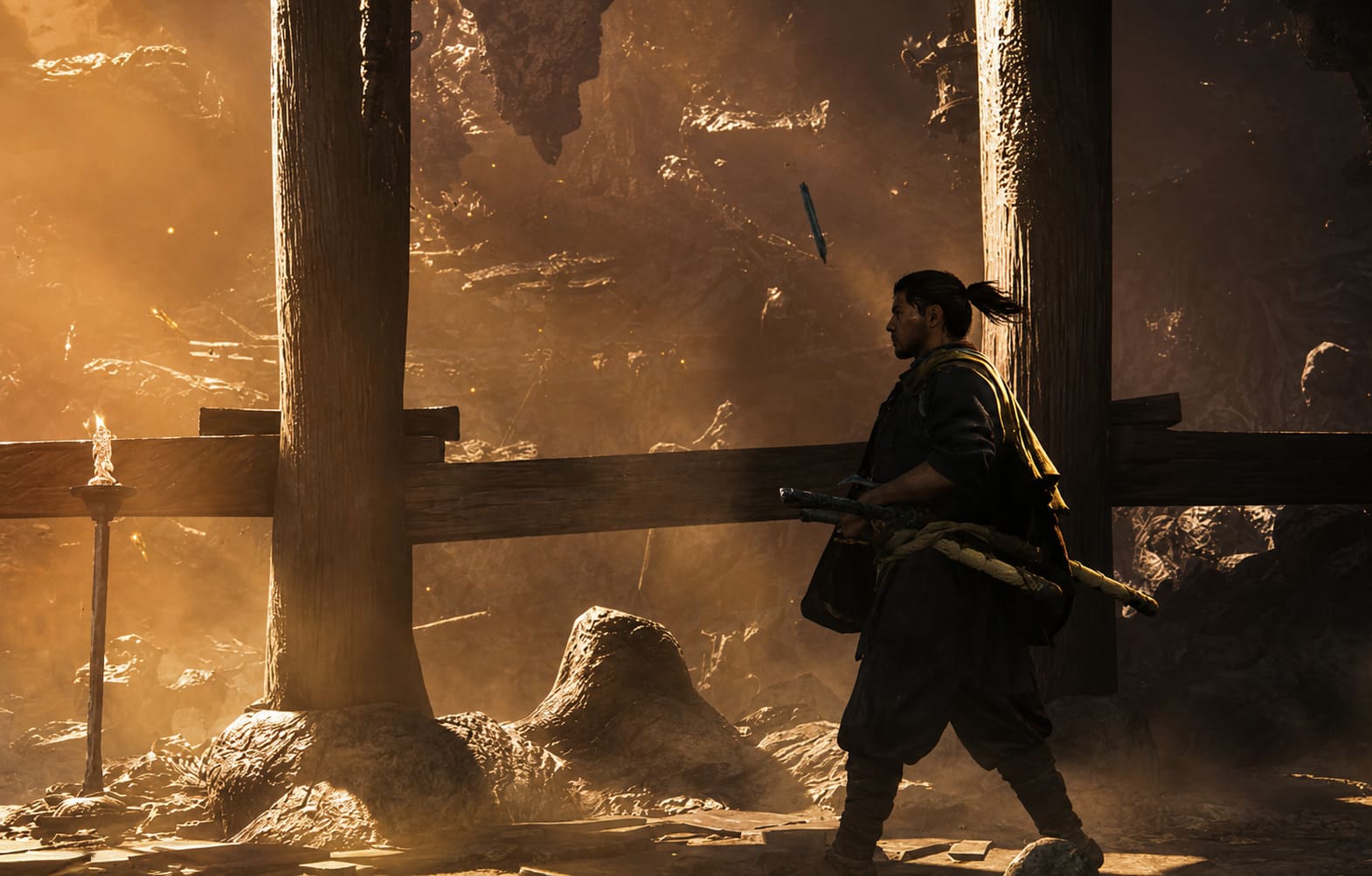
Way of the Sword takes that formula and pushes it into a much larger modern adventure. This time, we follow Miyamoto Musashi through an Edo-period Kyoto being consumed by the supernatural force known as Malice. Musashi isn’t simply another samurai protagonist, either. His appearance is modeled after legendary Japanese actor Toshiro Mifune, giving him an instantly recognizable presence.
And then there is the Oni Gauntlet.
That thing is practically a second character. Musashi uses it to absorb Genma souls, manipulate supernatural energy, and gain abilities that turn some encounters from desperate sword fights into absolute massacres. But the gauntlet also ties directly into the game’s darker side, particularly the different ways Musashi’s story can end.
Onimusha: Way of the Sword has three major endings: the Normal Ending, the Bad Ending, and the True Ending. If you’re simply following the main story, you can easily miss what is arguably the most interesting conclusion.
So, if you’ve finished the game and are wondering whether there was more to that final sequence, or you’re planning another playthrough and want the best possible ending, here’s what you need to know.
How the Endings Work in Onimusha: Way of the Sword
One thing I like about Way of the Sword is that its ending system isn’t presented as a giant checklist while you’re playing. The game gives you plenty of room to explore Kyoto, complete optional activities, find hidden upgrades, and make important decisions.
That makes the finale feel more connected to how you actually played Musashi.
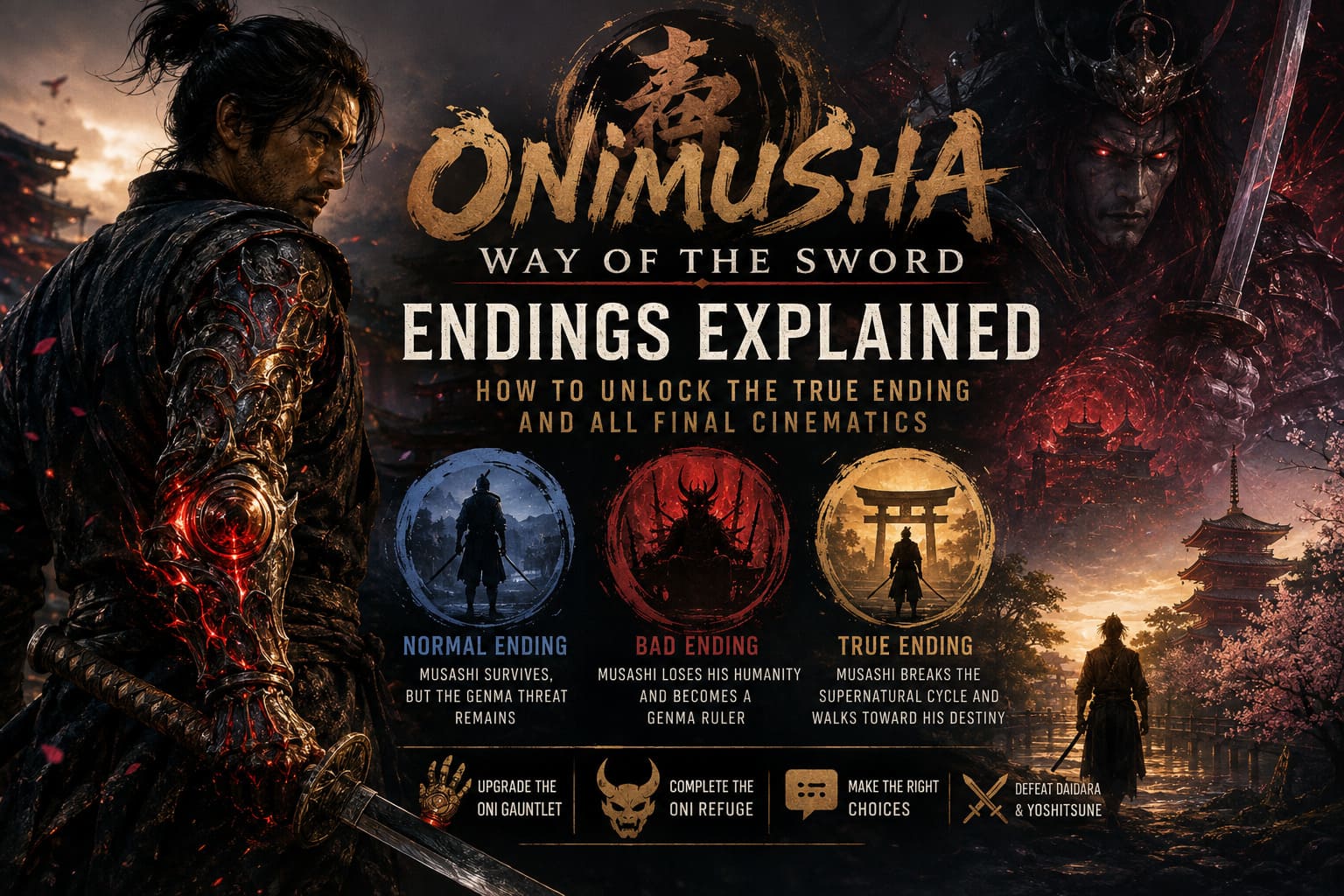
The major factors behind the ending are:
- Oni Refuge completion
- Oni Gauntlet upgrades
- Important dialogue decisions
- How you deal with Musashi’s connection to Oni and Genma power
You don’t necessarily realize how important some of these things are until you’re approaching the endgame. That’s exactly the kind of design I appreciate. It gives exploration a purpose instead of making every hidden room feel like another collectible warehouse.
Ending Requirements at a Glance
| Ending | Main Requirement | Result |
|---|---|---|
| Normal Ending | Complete the main story without meeting the True Ending requirements | Musashi survives, but the Genma threat remains |
| Bad Ending | Make corrupting choices and embrace Genma power | Musashi loses his humanity and becomes a Genma ruler |
| True Ending | Maximize the Oni Gauntlet, defeat Daidara, and maintain Musashi’s humanity | Musashi breaks the supernatural cycle and walks toward his historical destiny |
1. Normal Ending – The Path of Steel
The Normal Ending is probably the one most players will see naturally on their first run.
And honestly? That’s not necessarily a bad thing.
You don’t have to obsessively search every corner of Kyoto or clear every optional challenge. If you concentrate on the main missions and treat the side content as optional, you’ll eventually reach the standard conclusion.

How to Unlock the Normal Ending
Simply complete the main storyline without satisfying all of the requirements for the True Ending.
You don’t have to completely clear the Oni Refuge, and you don’t need to find every hidden Oni Gauntlet upgrade.
What Happens?
The final battle against Yoshitsune is a brutal one, and Musashi eventually manages to break Yoshitsune’s blade using the remaining power of the Oni Gauntlet.
The Malice covering Kyoto begins to disappear, and the demonic fortress starts collapsing around them.
There is a cost, though.
Takamura sacrifices himself, giving Musashi and Okuni enough time to escape. The two eventually reach safety around Kiyomizu-dera Temple, where Musashi gets a moment to take in what happened.
The Oni Gauntlet remains attached to his arm, but its supernatural power has largely burned away.
Kyoto has been saved, at least for now.
Musashi understands that the Genma haven’t necessarily been erased forever. The threat has been pushed back rather than completely eliminated.
He eventually says goodbye to Okuni and continues his journey alone.
The final image of Musashi walking away is deliberately bittersweet. He’s alive, he’s stronger, but he isn’t exactly walking away as the same man who entered Kyoto.
Personally, I think this ending fits Musashi surprisingly well. It’s not a fireworks-and-victory-lap conclusion. It’s quieter, almost melancholy, and leaves the character with unfinished business.
2. Bad Ending – The Fall of the Peerless
Now we get to the ending that shows what happens when Musashi goes too far.
The Bad Ending is built around corruption. Instead of treating the Oni Gauntlet as a tool that must be controlled, Musashi becomes increasingly dependent on supernatural power.
His obsession with becoming the greatest swordsman eventually works against him.
How to Unlock the Bad Ending
The key is making choices that push Musashi toward power rather than humanity.
During major conversations with characters such as Okuni and Takamura, selecting the more selfish or aggressive responses contributes to Musashi’s descent.
There is also an emphasis on using corrupting Genma power without properly purifying it.
In other words, if you’re playing Musashi as someone who doesn’t care about the consequences as long as he becomes stronger, you’re heading toward this conclusion.
What Happens?
The final confrontation with Yoshitsune ends very differently.
Musashi defeats his enemy, but the victory doesn’t free him. Instead, the accumulated Genma energy finally overwhelms his remaining humanity.
His eyes turn crimson.
The Oni Gauntlet changes.
The corruption spreads across Musashi’s body, covering him with grotesque demonic armor and transforming the very thing that once helped him fight the Genma into an instrument of his destruction.
And then comes the really nasty part.
Musashi doesn’t save Kyoto. He becomes its nightmare.
The Malice returns, covering the capital and turning the city into a domain for supernatural creatures. Okuni is forced to flee after realizing that the man she knew is effectively gone.
The final image is deliberately excessive in classic dark-fantasy fashion: Musashi sitting upon a throne surrounded by twisted weapons and bones, having become the new supreme power of the Genma.
It’s a pretty grim way to finish the game.
But I actually think the Bad Ending works because it connects directly to Musashi’s central obsession. His desire to become peerless isn’t automatically heroic. If he stops caring about people and only cares about power, the game asks a pretty simple question:
What exactly is the point of becoming the world’s greatest swordsman if you’ve destroyed the person holding the sword?
3. True Ending – The Legacy of the Onimusha
This is the ending most completionists will want.
The True Ending gives Musashi’s story a much stronger sense of closure and expands the finale with additional cinematic material. It also feels like the conclusion designed for players who bothered to understand every side of the Oni system.
And yes, getting it takes some work.
How to Unlock the True Ending
Before starting the final assault, you need to make sure you’ve handled the major optional requirements.
1. Fully Upgrade the Oni Gauntlet
Explore Kyoto carefully and search for hidden areas, secret walls, puzzles, and rooms containing the necessary upgrades.
If you’re the type of player who normally runs straight through the critical path, this is where the game is going to punish you.
Explore everything.
2. Complete the Oni Refuge
This is arguably the biggest requirement.
The Oni Refuge, essentially the game’s Dark Realm challenge, takes Musashi through increasingly difficult combat encounters.
You need to reach its deepest level and defeat Daidara, a massive Genma wielding an enormous club.
Daidara isn’t exactly the kind of optional boss you casually beat while half-paying attention. This is one of those fights where the game expects you to understand its combat mechanics rather than simply having a powerful weapon.
Defeating Daidara gives you the purification catalyst required for the final outcome.
3. Preserve Musashi’s Humanity
Dialogue matters.
When dealing with Okuni, Takamura, and other important characters, choose responses that emphasize protecting innocent people, respecting sacrifice, and resisting the temptation of absolute power.
Basically, play Musashi like a human being rather than a walking sword with anger issues.
What Happens in the True Ending?
The final battle against Yoshitsune becomes much more significant when Musashi enters it with a fully upgraded and purified Oni Gauntlet.
Yoshitsune eventually reveals that Musashi’s journey has been part of a much larger plan. The collection of human, Oni, and Genma souls wasn’t simply a consequence of the adventure.
It was part of the process.
Yoshitsune intended to use that enormous accumulation of supernatural energy to create something capable of tearing apart the boundaries between worlds.
This is where Musashi finally gets his answer.
Rather than allowing the Oni power to consume him, he takes complete control of it.
The result is one of the game’s biggest cinematic moments.
Musashi unleashes the power of the Crimson Oni and performs a devastating Break Issen, severing Yoshitsune’s connection to the mortal world.
The important detail here isn’t simply that Musashi wins.
It’s how he wins.
He doesn’t become a demon.
He doesn’t abandon his humanity.
He uses the supernatural power without allowing it to define him.
That’s why the True Ending feels much more satisfying than the other two.
As Yoshitsune is defeated, the demonic fortress collapses and dissolves into golden particles. Takamura’s spirit appears and helps guide Musashi and Okuni back toward safety.
Then comes the moment I consider the real payoff.
At Kiyomizu-dera, the Oni Gauntlet finally separates from Musashi’s arm.
Instead of remaining attached to him as a permanent curse, it becomes a dormant stone artifact and seals the Genma portal.
Musashi is finally free.
Musashi’s Future After the True Ending
The extended epilogue gives the True Ending an entirely different emotional tone.
Musashi stands beside the Shijo River beneath a clear sky, free of the curse that followed him through Kyoto.
He’s changed, though.
The journey has forced him to confront the difference between strength and obsession. He leaves his supernatural weapons behind and returns to what he was before all of this madness began:
a swordsman.
Not a Genma king.
Not an Oni vessel.
Not some immortal warrior chasing absolute power.
Just Musashi.
The ending then points toward his future confrontation with Sasaki Kojiro, also known as Sasaki Ganryu, connecting the supernatural events of Way of the Sword with the legendary historical figure Musashi would eventually become.
For me, that’s easily the strongest part of the ending.
After everything Musashi goes through, the final reward isn’t some ridiculous transformation into an all-powerful god. It’s freedom.
How to Beat Minamoto no Yoshitsune
Regardless of which ending you’re chasing, you still have to survive the final battle.
Minamoto no Yoshitsune is a serious combat test, especially if you’ve been relying on aggressive attacks throughout the game.
Phase 1
Yoshitsune relies heavily on fast sword attacks, floating movements, and teleportation.
Don’t panic and start swinging wildly.
Watch his overhead attacks and use Deflect at the right moment. A successful defensive move can damage his stamina and create the opening you need.
When his guard breaks, focus your attacks where they matter and take advantage of the resulting soul drops.
Phase 2
Things become considerably nastier once Yoshitsune starts incorporating Malice attacks.
You’ll have to deal with projectiles and wider attacks that can punish you for staying too close.
When Yoshitsune takes to the air, the Oni Bow can be extremely useful for interrupting his attacks.
His forward lunges are another opportunity for a well-timed perfect parry, allowing Musashi to enter Blazing State and dramatically increase his offensive pressure.
The biggest mistake here is getting greedy.
Take the damage when the opening is there, then get out.
Phase 3
The final phase is where the fight stops feeling like a traditional samurai duel.
Yoshitsune transforms into a huge multi-armed demonic creature, and his attacks become much harder to read.
Healing opportunities are limited, so surviving becomes more important than dealing maximum damage every second.
This is where Issen counters become incredibly valuable.
Wait until the final instant before Yoshitsune’s attack connects, execute the counter correctly, and you’ll have an opportunity to punish him while also obtaining valuable yellow healing souls.
If you’ve been struggling with this phase, stop trying to rush it.
Patience wins this fight.
WARDOGS PC Optimization Guide: Best Settings for Max FPS, Visibility, and No Lag (2026)
Which Onimusha: Way of the Sword Ending Is Best?
If you’re only interested in seeing the story, the Normal Ending is perfectly fine.
The Bad Ending is worth experiencing at least once because it shows just how far Musashi can fall when his obsession with power takes over.
But if you’re asking me which ending I’d recommend pursuing first, it’s obviously the True Ending.
Not simply because the game labels it as “true,” but because it gives Musashi’s character arc a proper resolution. The Oni Gauntlet, the Genma corruption, Takamura’s sacrifice, Yoshitsune’s plan, and Musashi’s obsession with strength all come together.
The ending also gives him something the other conclusions don’t:
a future.
That’s important for a character based on someone as famous as Miyamoto Musashi.
Rather than ending his story with another supernatural curse or leaving Kyoto trapped in darkness, Way of the Sword ultimately puts Musashi back on the road toward the legendary swordsman history remembers.
And after spending hours cutting through demons, absorbing souls, surviving impossible fights, and dealing with the consequences of his choices, that quiet final image feels earned.
If you’re going for 100% completion, don’t rush the final chapter. Search Kyoto, finish the Oni Refuge, upgrade the Oni Gauntlet, and pay attention to your dialogue choices. The True Ending is absolutely worth the extra effort.