Battle for Embolia Class Tier List 2026: Best Characters and Classes Ranked
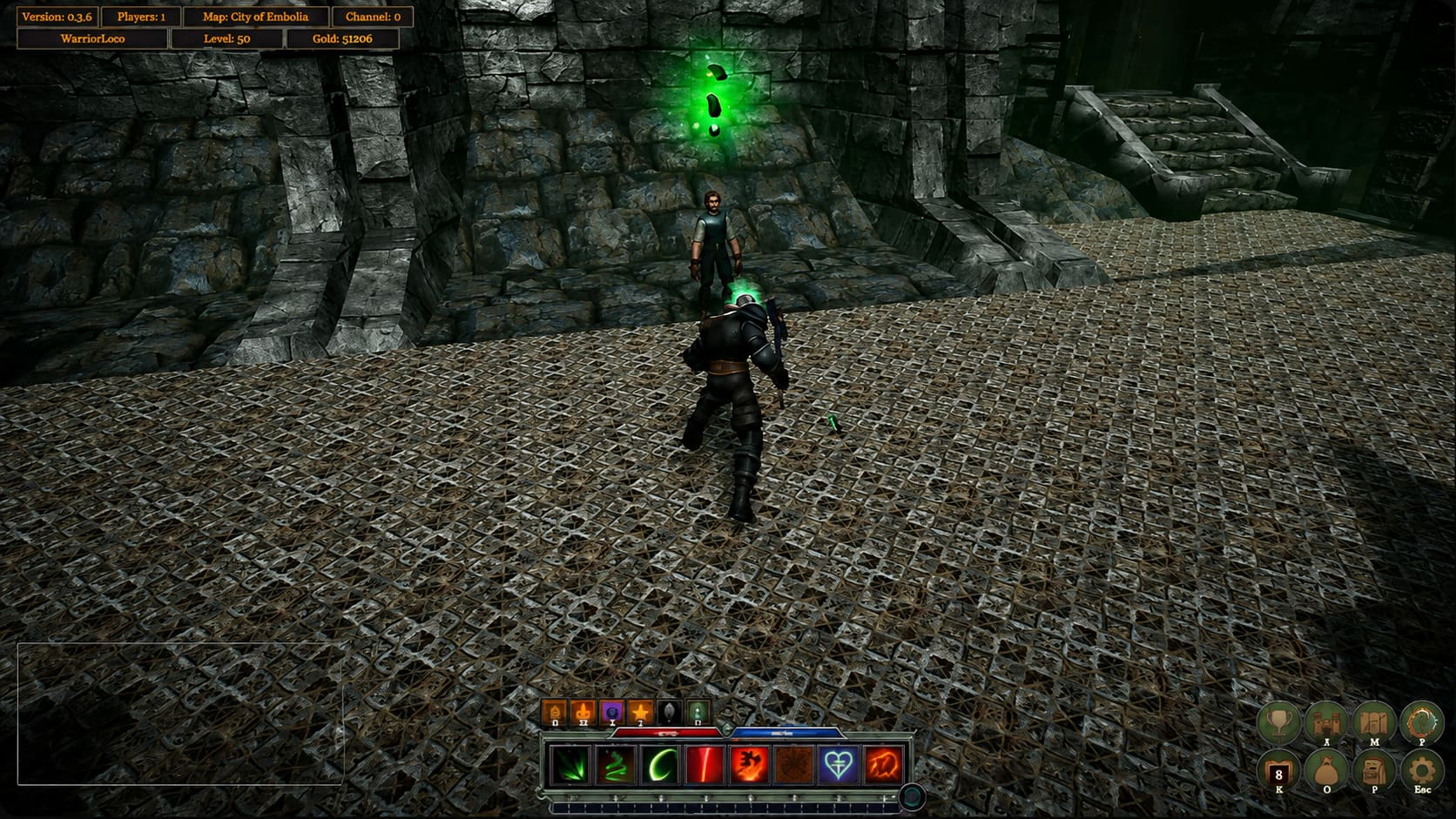
When I first jumped into Battle for Embolia, I honestly didn’t expect much. Another indie MMORPG promising “revolutionary combat” usually ends up feeling like a slightly different version of the same old grind. But this one surprised me in a good way. The combat feels alive, reactive, and genuinely demanding, especially because dodging isn’t automatic—you actually have to time it with the spacebar, which makes even basic encounters feel like mini boss fights.
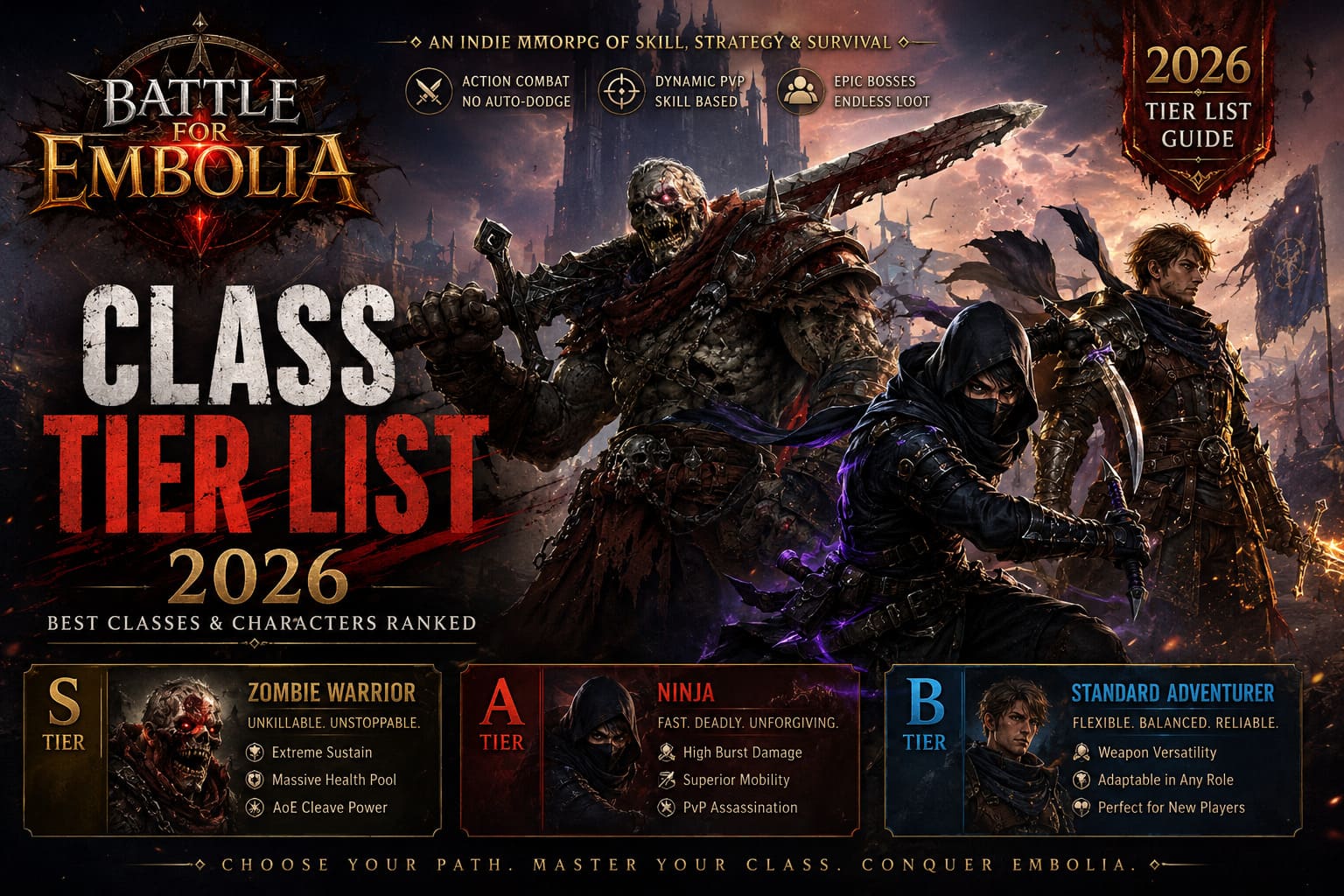
After spending time in early builds, testing different archetypes, and digging through community feedback, I decided to put together this 2026 class tier list. Not as a rigid meta rulebook, but as a player’s perspective—someone who enjoys experimenting, failing, and slowly mastering systems that don’t hold your hand.
Battle for Embolia: How to Equip Two Weapons and Master Dual Wielding
S Tier – The Classes That Feel Slightly Too Strong
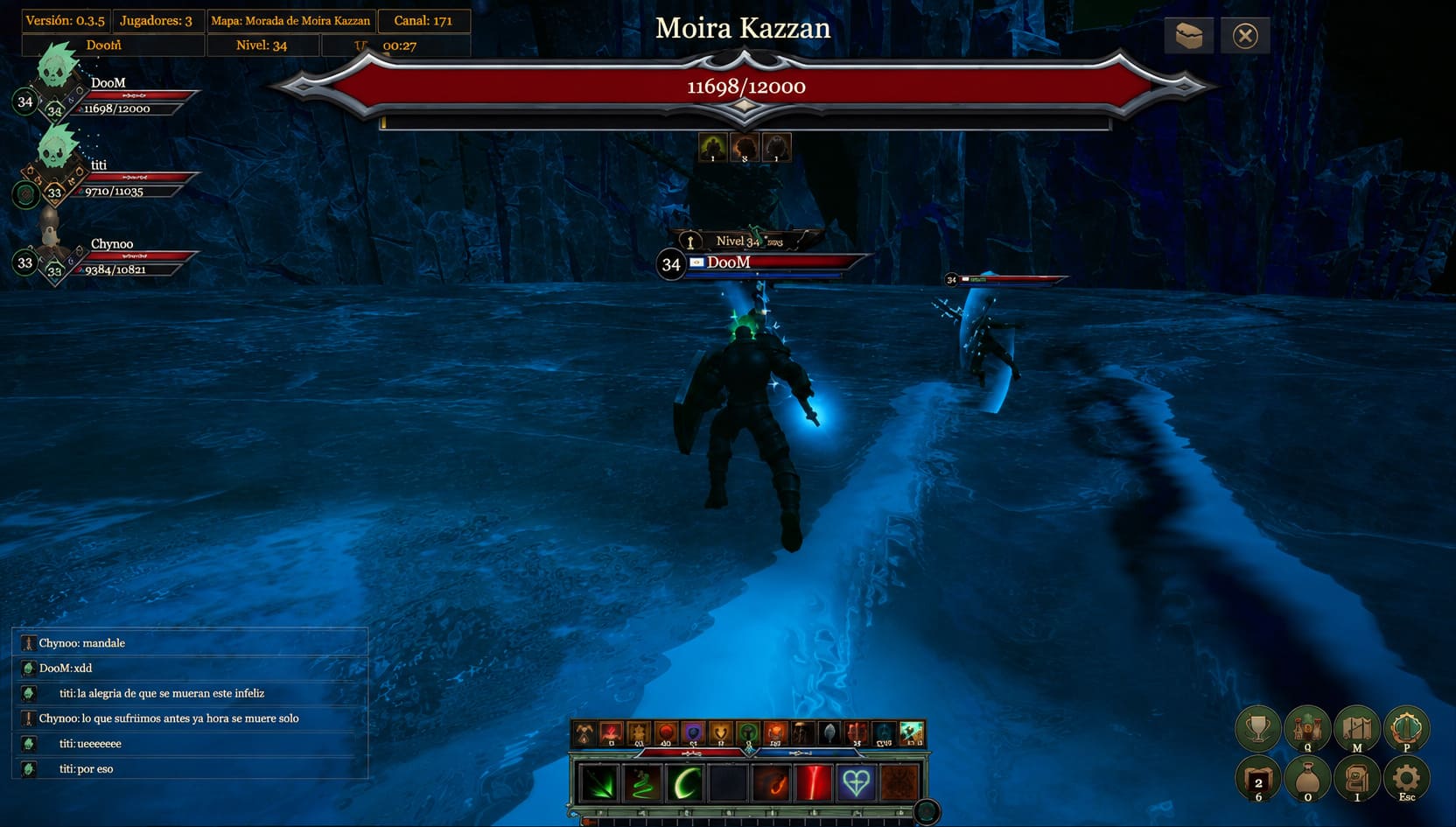
Zombie Warrior – The Unkillable Carry Machine
The Zombie Warrior sits comfortably at the top of the current meta, and honestly, it’s hard to argue against it once you reach higher zones. This class doesn’t just survive mistakes—it shrugs them off like they never happened.
In later game areas like desert zones and high-level dungeons, where bosses stack AoE patterns and punishing mechanics, most classes start to struggle. The Zombie Warrior, however, just keeps going.
What makes it so dominant comes down to a few key strengths:
- Extremely high sustain through lifesteal and regeneration loops
- Massive health pool scaling that reduces mistake punishment
- Strong synergy with heavy weapons for cleave-heavy combat
From personal experience, I’ve tanked mechanics that should have wiped me instantly and still walked away alive. It’s the kind of class that lets you lead dungeon groups without constantly relying on perfect healer support.
If I had to describe it simply, it’s the “I refuse to die” archetype disguised as a playable class.
A Tier – High Skill, High Reward Gameplay
Ninja – Fast, Deadly, and Extremely Punishing
The Ninja is the complete opposite of the Zombie Warrior in almost every way. It’s fast, fragile, and brutally unforgiving—but when played well, it becomes one of the most explosive classes in the entire game.
This is the class I keep returning to, even though it has absolutely humbled me more than once.
The Ninja excels in:
- High burst damage windows
- Exceptional mobility and repositioning tools
- Strong PvP assassination potential
In PvP, a skilled Ninja can completely control engagements—appearing, deleting a target, and disappearing before the enemy even reacts. In PvE, however, the margin for error shrinks dramatically.
One missed dodge or mistimed cooldown often means instant death.
The trade-off is clear: you don’t get consistency—you get potential. And that potential can out-damage even S-tier classes in short bursts, but only if your execution is flawless.
B Tier – Balanced, Flexible, and Underrated
Standard Adventurer – The All-Rounder Experience
The Standard Adventurer is often overlooked, but I think it deserves more respect than it gets. It doesn’t specialize in anything extreme, but it also doesn’t fall apart in any situation.
This is the class I recommend for players who are still learning the game or just want flexibility without pressure.
Key strengths include:
- Ability to swap between weapon types easily
- Strong adaptability in different group roles
- Forgiving learning curve for new players
Recent updates improved its flow significantly, especially around skill rotation flexibility. It now feels smoother and more responsive in combat compared to earlier builds.
It may never feel overpowered, but it also rarely feels useless—which, in a new MMORPG, is a bigger advantage than it sounds.
Weapon Meta and Build Strategy
While class choice matters, your actual performance in Battle for Embolia often depends more on weapon synergy and build decisions than the class itself.
The game features multiple weapon types that directly influence attack speed, range, and skill interactions, meaning your build identity can shift dramatically based on gear drops.
From what I’ve seen and tested, the most important build principles are:
- Heavy melee setups work best with Zombie Warrior for AoE dominance
- Dual-wield builds are essential for Ninja crit-focused burst gameplay
- Hybrid stat gear allows flexible adaptation for different bosses
Interestingly, some rare drops can completely reshape your build mid-progression, forcing you to rethink your entire playstyle on the fly.
Build Comparison Overview
| Build Type | Best Class | Core Strength | Difficulty |
|---|---|---|---|
| Heavy Tank DPS | Zombie Warrior | Survivability + AoE damage | Easy |
| Burst Assassin | Ninja | Mobility + Crit burst | Hard |
| Adaptive Hybrid | Standard Adventurer | Flexibility + balance | Medium |
Small Systems That Actually Matter
One thing I genuinely appreciate is how many “small” systems quietly influence gameplay without overwhelming you.
Consumables, rare crafting drops, and niche buffs can all subtly change how efficiently you farm or clear bosses. Nothing feels mandatory, but everything stacks up over time.
Even minor items—like special consumables tied to fishing or rare dungeon drops—can make noticeable differences in long farming sessions.
Final Thoughts – What Should You Play?
Ultimately, there’s no single correct answer in Battle for Embolia, but there are definitely different experiences depending on your choice.
If you want durability, simplicity, and reliability, the Zombie Warrior is unmatched. If you prefer speed, precision, and high-risk gameplay, the Ninja delivers some of the most intense moments in the game. And if you want flexibility and a relaxed learning curve, the Standard Adventurer is the safest starting point.
Personally, I keep switching between Zombie Warrior and Ninja depending on my mood. One makes me feel unstoppable. The other makes every fight feel like a test of reflexes and focus.
That’s what makes the game interesting—it doesn’t lock you into one identity. It pushes you to experiment until something clicks.