Co-op Survival & Sanity Chaos: How Multiplayer Works in The Mound
I’ve played a lot of co-op survival horror games on stream over the years, and most of them fall into predictable patterns. Either the tension fades after the first few hours, or the mechanics become too familiar to really scare anyone anymore.
But The Mound: Omen of Cthulhu feels like it was built specifically to break that cycle.
Not by reinventing the genre completely, but by twisting the psychological pressure in ways that actually affect how players behave in real time.
This isn’t just another “survive the monsters” experience. It’s a game where your squad slowly starts to lose trust in reality itself.
Stepping into Madness: Early Preview of The Mound: Omen of Cthulhu (2026)
Co-Op Player Count – Simple Structure, Deep Design
The co-op structure is very straightforward on paper:
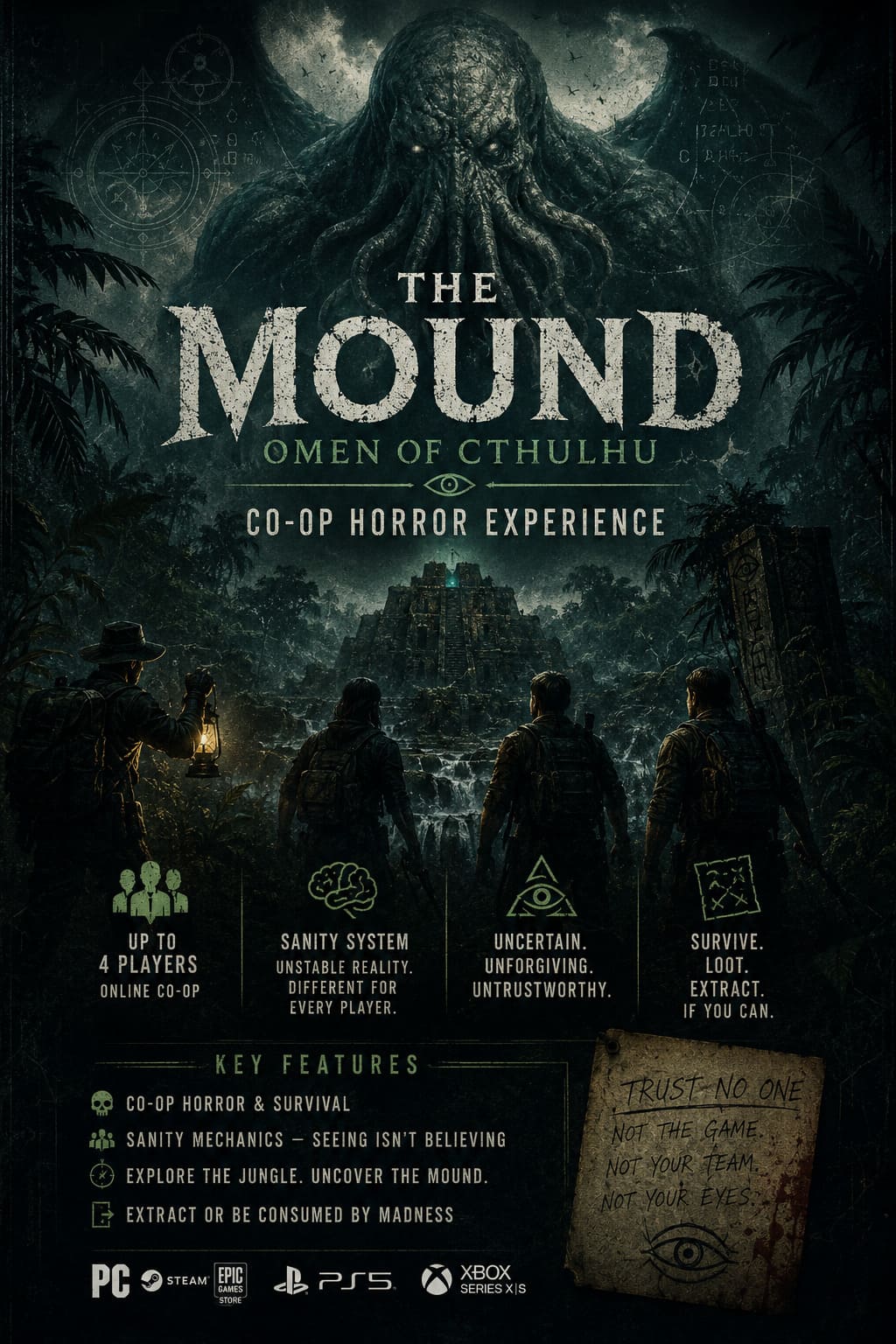
The Mound: Omen of Cthulhu supports up to 4 players in online co-op.
This limitation might sound restrictive at first, but after multiple sessions with a full squad, it becomes obvious why the developers chose it. Four players is the sweet spot where communication is still manageable, but confusion can easily spiral out of control when things go wrong.
Why 4 Players Works So Well
- Small enough for tight communication
- Large enough for role separation
- Enough chaos for miscommunication to matter
- Still vulnerable to collapse under pressure
Any more players would dilute the paranoia. Any fewer would reduce the tactical options. Four is exactly where the tension feels natural.
Streamer First Impressions – Controlled Chaos from the Start
From a streaming perspective, the game immediately stands out because it refuses to guide the player too much. There’s no over-explaining of mechanics or safety nets. Instead, you’re dropped into a hostile environment and expected to adapt quickly.
The first few minutes already set the tone: limited resources, unclear objectives, and a sense that something is always watching, even when nothing is visible.
The Core Feeling
It doesn’t feel like traditional horror. It feels like uncertainty simulation.
You’re not just fighting enemies—you’re constantly trying to figure out whether your own senses can be trusted.
Core Gameplay Loop – How Co-Op Actually Works
The structure of gameplay follows a repeating cycle, but each loop feels different because of how unstable the environment becomes.
1. The Galleon Hub Phase
Every mission starts on a ship, acting as a central hub. This is where preparation happens, but even this phase is tense because resources are shared and limited.
Players must decide who gets what gear, and these decisions often cause early disagreements that carry into the mission itself.
2. Jungle Deployment
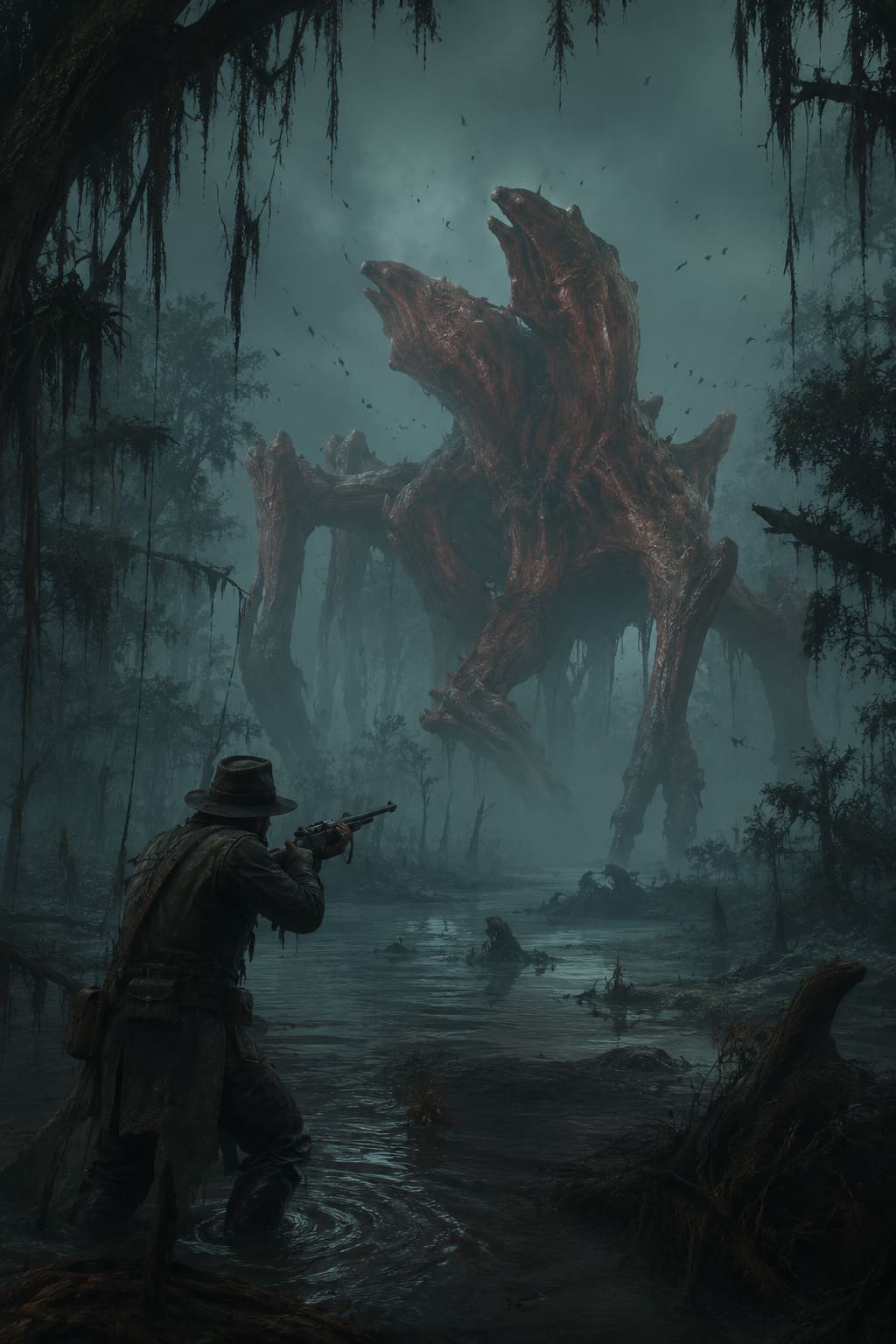
Once deployed, the squad enters a dense, hostile jungle environment filled with unpredictable threats. The game encourages both group movement and splitting up, but both choices carry serious risks.
3. Loot and Survival Pressure
Every item matters. Carrying too much slows you down, but leaving resources behind can make extraction impossible. This creates constant tension between greed and survival.
4. Extraction Phase
The final stage often becomes a panic-driven escape sequence where coordination breaks down and mistakes are punished immediately.
Sanity System – The Defining Feature of the Game
The most important mechanic in the entire game is the sanity system. This is where The Mound separates itself from most co-op horror titles.
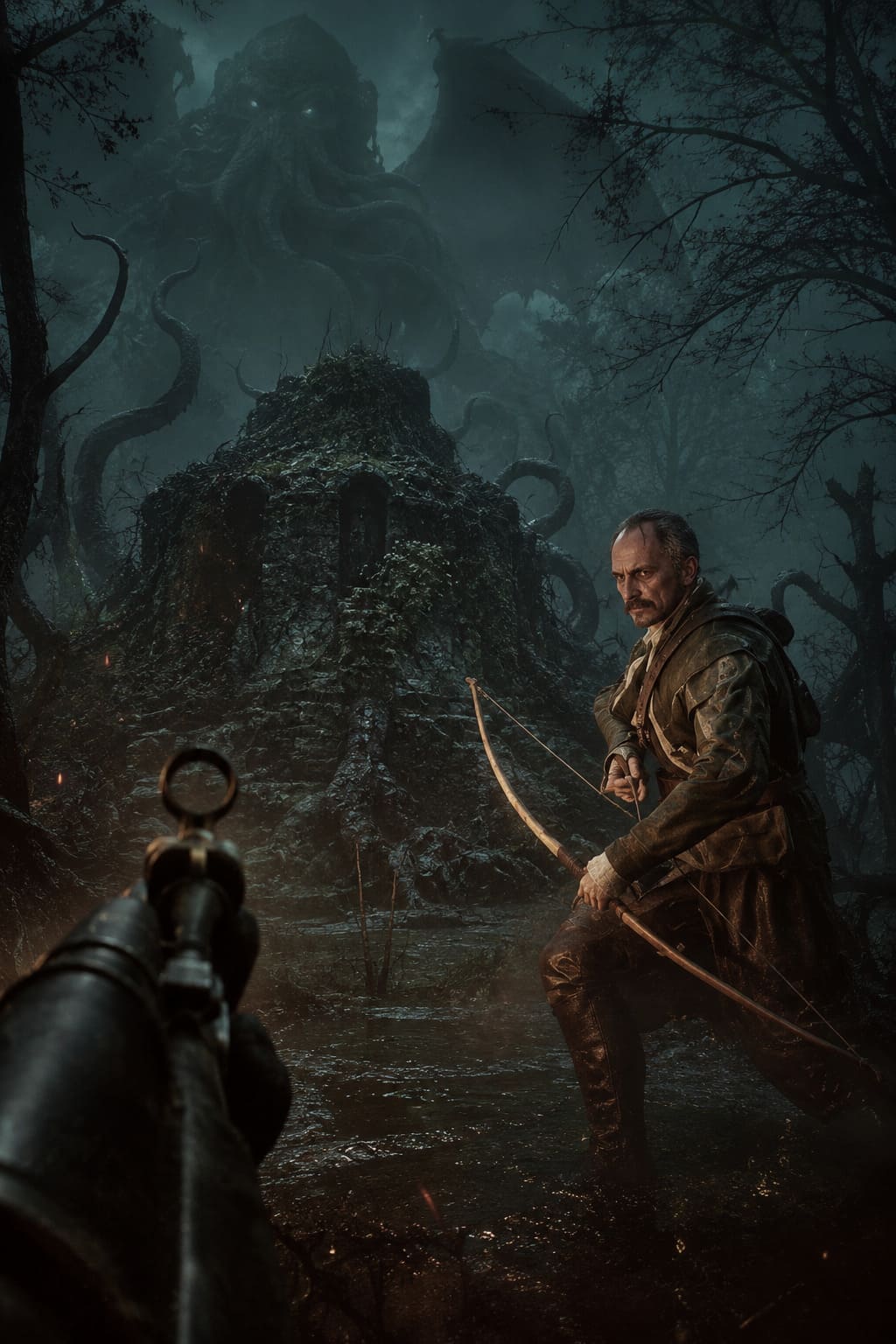
Instead of simply reducing vision or adding distortion effects, the game actively manipulates perception in ways that differ between players.
This means that two people standing in the same place may see completely different realities.
Examples from Gameplay Sessions
- A teammate appearing as a monster to only one player
- Audio cues that only certain players hear
- Enemies that do not exist for the entire group
- False visual hallucinations causing friendly fire incidents
This system creates a constant psychological question: is the game deceiving you, or are you actually seeing the truth while others are not?
Team Roles – Naturally Emergent Gameplay Structure
One of the most interesting aspects is that roles form organically rather than being assigned.
| Role | Description |
|---|---|
| Scout | Pushes forward and explores first, often triggering danger |
| Support | Manages resources, healing, and team sustainability |
| Combat Focus | Handles direct threats and enemy encounters |
| Wildcard | Unpredictable player often affected most by panic or confusion |
These roles are not fixed, but they tend to emerge naturally based on player behavior under stress.
Solo Play – Functional but Extremely Punishing
Yes, solo play is available, but it fundamentally changes the experience. Without other players, the psychological layer loses its social dimension.
The game becomes more about isolation than confusion between teammates, which shifts the tone significantly.
While playable, it is clearly not the intended way to experience the game’s core systems.
Platforms and Technical Availability
The game is available across major current-generation platforms, including PC and modern consoles. Crossplay support exists in some configurations, but may vary depending on updates and platform integration status.
Supported Platforms
- PC (Steam and Epic Games Store)
- PlayStation 5
- Xbox Series X|S
Why This Game Works So Well for Streaming
From a content creation perspective, this is one of those games that naturally produces moments without needing scripted events.
The combination of limited trust, shared uncertainty, and hallucination mechanics creates unpredictable situations that feel authentic rather than designed.
Streaming Highlights
- Constant miscommunication between players
- Audience confusion mirroring player confusion
- Unexpected betrayal moments caused by perception differences
- Natural storytelling emerging from gameplay systems
This is the kind of game where every session becomes a unique story, not because of narrative writing, but because of how systems interact under pressure.
Final Thoughts – A Co-Op Experience Built on Distrust
The Mound: Omen of Cthulhu is not trying to be a comfortable co-op experience. It is designed to slowly dismantle the trust between players while maintaining just enough structure to keep the group moving forward.
It succeeds because it understands a simple truth: the strongest horror in multiplayer games doesn’t come from monsters. It comes from uncertainty about your teammates, your senses, and even your own perception of reality.
For squads of four players looking for something that goes beyond standard survival gameplay, this is a title that delivers something genuinely unstable, unpredictable, and memorable.
Just be prepared—because after a few sessions, you may stop trusting what you see on screen, and more importantly, what your friends tell you they see.