Resonance A Plague Tale Legacy Ending Explained: Full Spoilers and Lore Deep Dive
If there is one thing I love about a great story-driven game, it is when the final hours make me look back at everything I played before and suddenly see it differently. Resonance: A Plague Tale Legacy absolutely goes for that feeling.
Instead of simply giving us another chapter with Amicia and Hugo, Asobo Studio takes a much bigger risk. The game goes back 15 years before A Plague Tale: Requiem and puts Sophia in the spotlight. And honestly, I think that was the right choice. Sophia already had plenty of personality in Requiem, but seeing her younger, more reckless, and much more dangerous makes her later relationship with Amicia feel completely different.
What surprised me most, though, is how much Resonance expands the mythology of the Macula. The game isn’t just telling another supernatural survival story. It suggests that the Macula has existed through different civilizations, taking different forms depending on the fears surrounding its Carrier.
And that makes the ending much more interesting than a simple “defeat the monster and escape” conclusion.
A Very Different Sophia
The Sophia we meet in Resonance is almost unrecognizable compared with the smuggler from Requiem.
She is younger, aggressive, confident, and clearly comfortable living outside the law. She isn’t trying to save the world. She is trying to survive, make money, and stay one step ahead of the people hunting her.
That personality works surprisingly well with the game’s new combat system.
Instead of relying heavily on stealth and environmental manipulation like Amicia, Sophia can fight much more directly. Sword attacks, parries, counters, and mobility make her feel like someone who has spent years surviving dangerous situations.
I personally enjoyed this change because it prevents Resonance from feeling like Requiem with a different protagonist. The developers clearly wanted Sophia to have her own gameplay identity.
But then the island starts calling to her.
And that’s where things get weird.
Minotaur’s Island Is More Than a Setting
Sophia eventually reaches the mysterious island that becomes the center of the entire story. It looks ancient and abandoned at first, but the deeper she travels, the more obvious it becomes that something is fundamentally wrong.
The architecture changes.
The darkness behaves unnaturally.
And Sophia begins experiencing visions connected to Theseus, a warrior from the distant Minoan past.
This dual timeline is one of the most interesting parts of the game. Sophia isn’t simply investigating an archaeological mystery. She is effectively walking through the consequences of something that happened thousands of years earlier.
At the center of it all is the Minoan Sphere, an extraordinary artifact associated with Daedalus.
The Sphere allows Sophia to manipulate concentrated light, which becomes both a gameplay mechanic and an important piece of the lore. Light isn’t just useful for solving puzzles. It represents the ancient civilization’s attempt to resist the darkness created by the Macula.
And this is where Resonance makes its biggest revelation.
The Macula Was Never Just About Rats
For years, fans could look at the Macula through the events of Innocence and Requiem and assume that its connection to rats was fundamental.
Apparently, it isn’t.
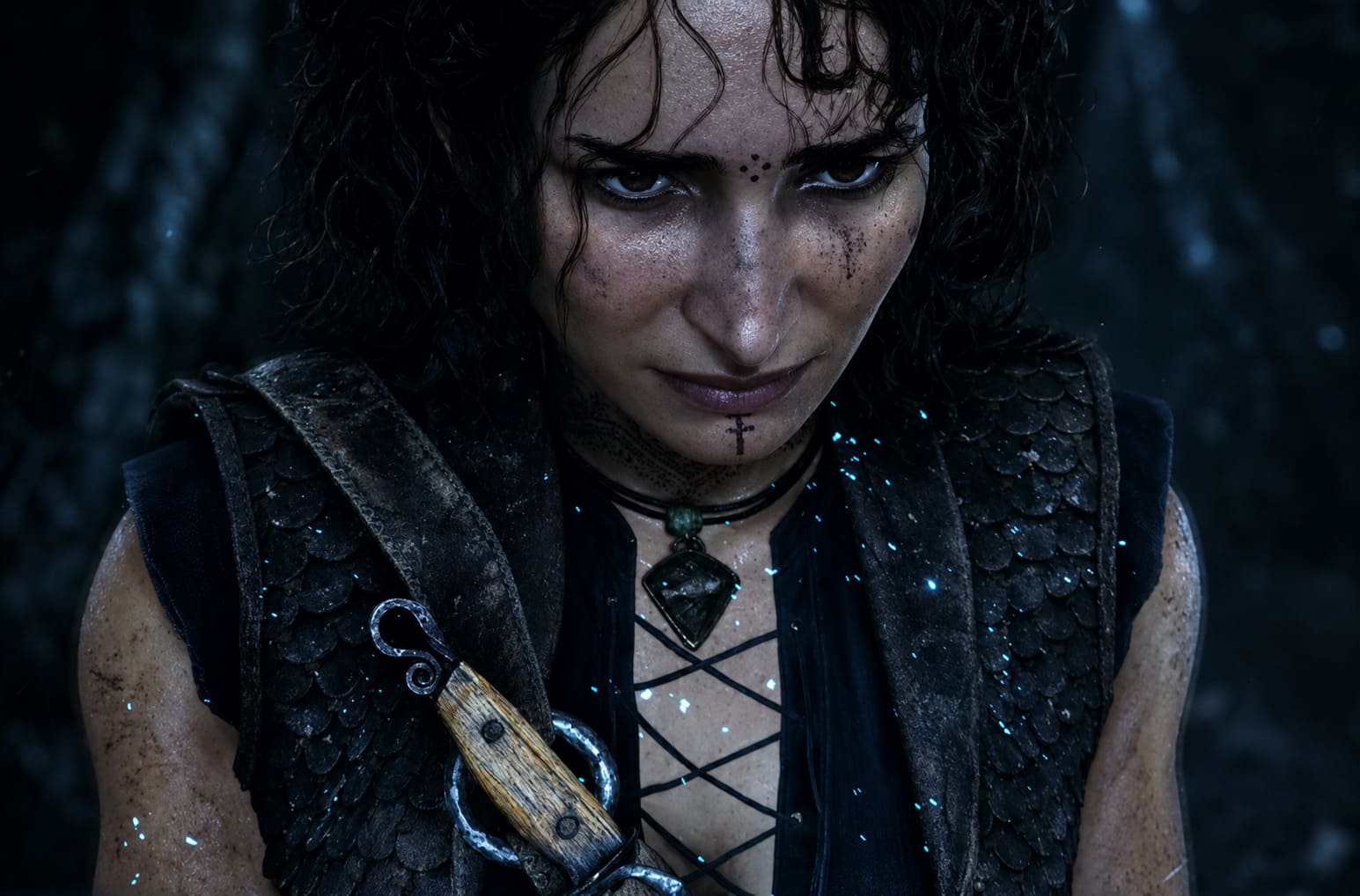
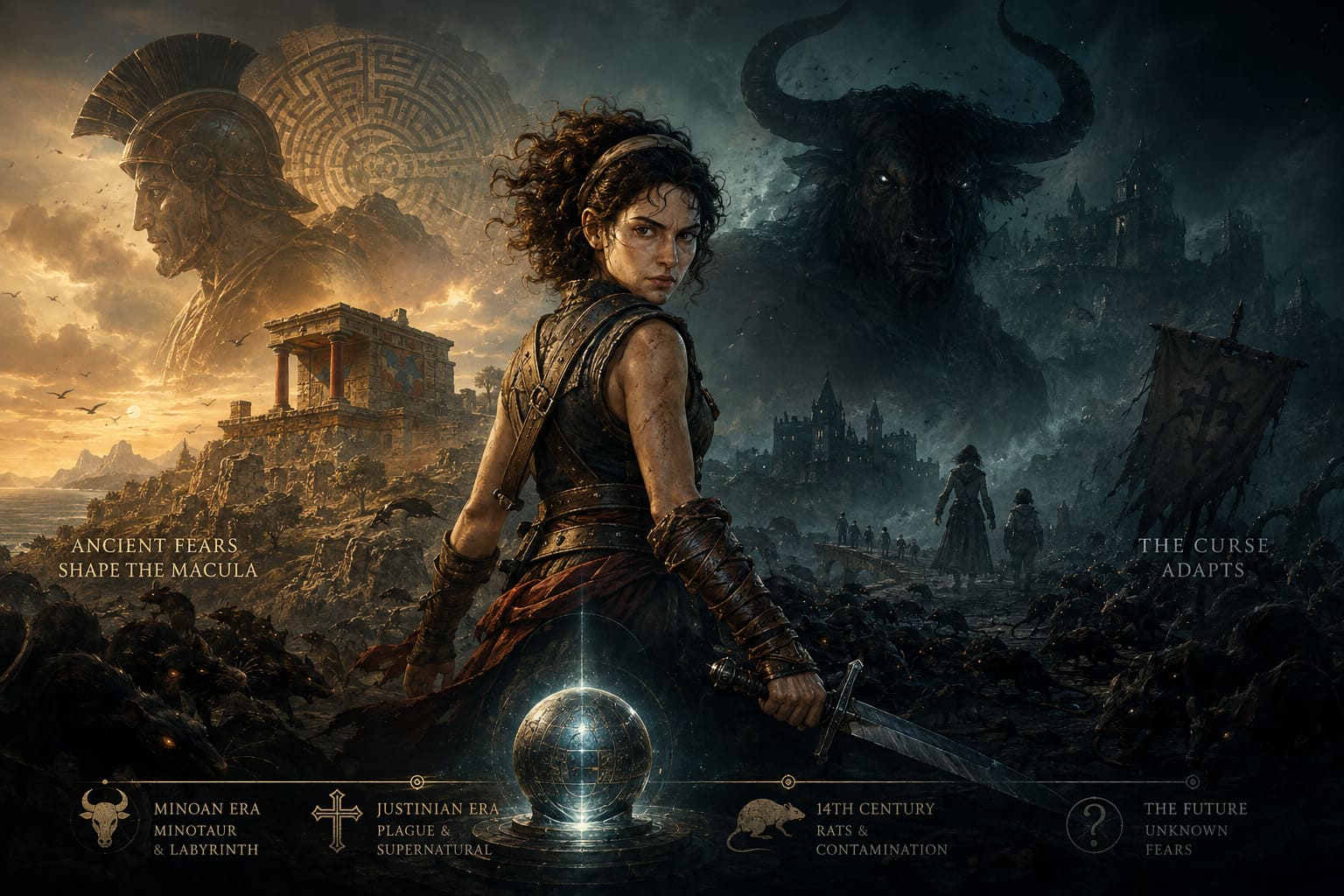
According to the mythology established by Resonance, the Prima Macula can manifest differently depending on the fears, emotions, and collective psychology of the civilization surrounding its Carrier.
That changes the entire franchise.
In medieval France, the Macula becomes associated with disease, death, contamination, and enormous swarms of rats. But thousands of years earlier, the fears of the people on Minoan Island were completely different.
They feared the Minotaur.
They feared the labyrinth.
They feared something lurking beneath the earth.
So the Macula took a form that reflected those fears.
I have to admit, this is probably my favorite lore idea introduced by Resonance. It makes the supernatural elements of A Plague Tale feel much larger without completely throwing away what came before.
Who Was the Real Minotaur?
This is where the ending becomes genuinely tragic.
The creature isn’t simply an ancient monster hiding underneath the island.
The “Minotaur” was connected to an ancient Carrier of the Prima Macula.
This child had the power of the Macula but lacked the protection necessary to control it. Without a proper Protector, the Carrier’s fear and despair grew until the Macula essentially consumed the surrounding environment.
The labyrinth wasn’t just a prison.
It became a physical representation of the Carrier’s psychological collapse.
The island itself was transformed by the supernatural force.
That means the monster Sophia has been fighting throughout much of the story is not simply an independent beast. It is an expression of the Carrier’s anger, suffering, and isolation.
And that is very A Plague Tale.
The real horror isn’t necessarily the monster.
It is what happens when a vulnerable person is left alone with something they cannot understand.
Lenny’s Tragic Fate
Sophia’s journey becomes even darker when Lenny is corrupted by the island’s influence.
I liked this part because it reinforces one of the game’s biggest themes: the Macula doesn’t simply attack the body.
It attacks the mind.
The island brings out regrets, fears, resentment, and unresolved emotions. Lenny eventually loses control and turns against Sophia.
The confrontation ends with Sophia killing her companion.
There isn’t a triumphant feeling afterward. Sophia survives, but she is clearly damaged by what happened.
For me, this scene works because it echoes the emotional structure of the main A Plague Tale games. Survival always comes with a price.
You don’t walk away from the Macula untouched.
Theseus Was the Original Protector
Eventually, Sophia reaches the deepest part of the labyrinth and discovers the truth about Theseus.
He wasn’t simply the legendary hero who killed a monster.
He was a Protector.
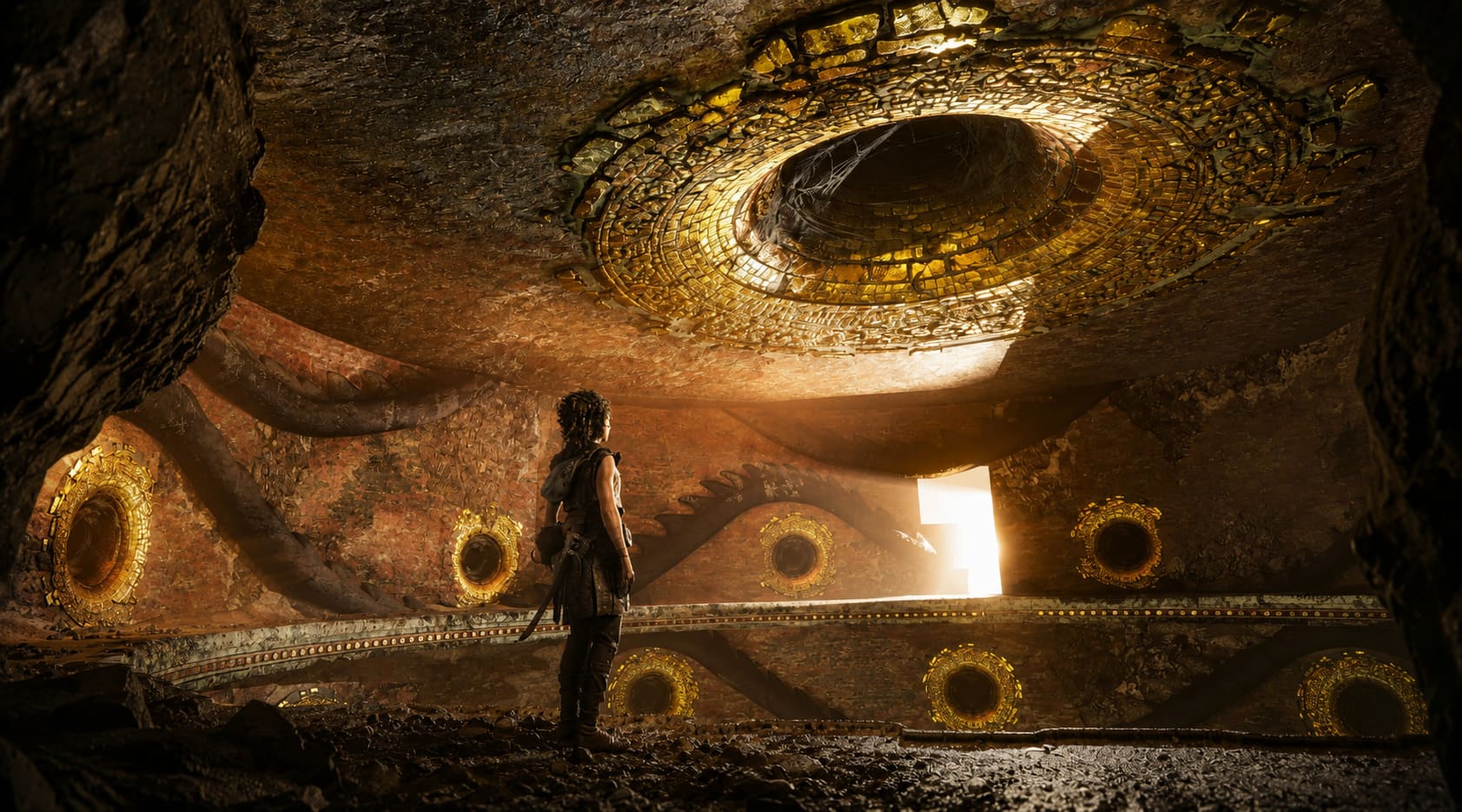
His role was to protect the Carrier, just as Amicia’s role became connected to protecting Hugo and earlier Protectors were connected to their own Carriers.
The tragedy is that Theseus arrived too late.
He couldn’t save the ancient Carrier from the Macula’s corruption. Instead, he used the Minoan Sphere to contain the curse beneath the island.
It was essentially an ancient version of the same impossible choice that keeps appearing throughout A Plague Tale.
Save the Carrier.
Contain the Macula.
Or sacrifice something precious to prevent the disaster from spreading.
Theseus chose containment.
Unfortunately, two thousand years is a very long time for any seal to remain intact.
The Final Battle Explained
The final confrontation combines everything the game has been building toward.
Sophia reaches the ancient core of the island and encounters the remains of the Minoan Carrier. The area itself seems to exist somewhere between the present and the distant past, allowing the game to merge Sophia’s story with Theseus’ memories.
The final battle isn’t simply about defeating a giant creature with a sword.
Sophia has to use the Minoan Sphere and its concentrated light to destroy the protective barrier surrounding the ancient core.
As the light reaches the center of the Macula’s manifestation, Sophia finally understands what has been calling her to the island.
The resonance wasn’t random.
The Macula was searching for a connection.
Sophia isn’t another Carrier, but her bloodline has a connection to the ancient Protector lineage. That connection is enough for the island to recognize her and pull her deeper into its nightmare.
Eventually, Sophia overloads the Sphere.
The ancient remains are destroyed.
The Minotaur manifestation collapses.
And the island begins to fall apart.
Sophia escapes, but the victory is not nearly as complete as it first appears.
Did Sophia Actually Destroy the Macula?
No.
This is arguably the most important detail in the entire ending.
Sophia destroys the Minoan manifestation of the Macula, but she does not destroy the Prima Macula itself.
The curse survives.
It simply loses its ancient anchor.
And this creates a terrifying implication.
Without its connection to the Minoan Carrier, the Macula begins searching for another path.
What Changes?
| Era | Macula Manifestation | Central Fear |
|---|---|---|
| Ancient Minoan Era | Minotaur and Living Labyrinth | Monsters, Darkness, Isolation |
| Justinian Era | Plague and Supernatural Threats | Disease and Death |
| 14th Century | Rats and Contamination | Black Death, Filth, Disease |
| Possible Future | Unknown | Modern Technological and Biological Fears |
This is where Resonance cleverly connects itself to the established timeline.
The Macula doesn’t need to look the same forever.
It adapts.
How the Ending Connects to Hugo
After Sophia destroys the ancient Minoan anchor, the curse seeks another potential vessel.
The story strongly implies that its attention eventually moves toward Europe and the bloodlines connected to the future Carrier.
That gives Resonance a fascinating position in the overall chronology.
Sophia doesn’t accidentally create the Macula.
But by destroying the old manifestation, she helps trigger the next stage of its journey.
Eventually, the curse finds Hugo de Rune.
And suddenly the events of Innocence and Requiem feel much less isolated.
The rats aren’t a completely separate supernatural phenomenon.
They are simply the form the Macula takes in a world terrified by plague.
Sophia’s Role in Requiem Makes More Sense Now
This is probably the biggest character connection for me.
When Sophia meets Amicia in Requiem, she initially comes across as practical and cynical. She is a smuggler who seems motivated by survival and money.
But after playing Resonance, that attitude feels different.
Sophia has already experienced something that most people could never understand.
She knows what the Macula is capable of.
She has watched someone close to her become corrupted.
She has entered a supernatural labyrinth and survived an ancient Carrier’s nightmare.
So when she sees what is happening to Hugo, she isn’t simply helping another stranger.
She recognizes the pattern.
That makes her relationship with Amicia considerably more meaningful.
The Bigger Theme: Carriers and Protectors
One of the most interesting ideas introduced here is the repeating relationship between Carrier and Protector.
Theseus and the Minoan Carrier.
Aelia and Basilius.
Amicia and Hugo.
Different centuries.
Different cultures.
Different forms of the Macula.
But the same basic tragedy keeps repeating.
A child carries an enormous supernatural burden.
Someone else is expected to protect them.
And the world around them often becomes the thing that destroys them.
That’s what makes the ending so depressing despite Sophia technically winning.
She defeats one manifestation of the curse, but she doesn’t break the cycle.
She simply closes one chapter.
Resonance A Plague Tale Legacy Sophia: Full Origin Story and Lore Breakdown
What the Ending Could Mean for A Plague Tale 3
The post-credits scene from Requiem already hinted that the Macula could survive far beyond medieval France.
A modern child showing signs of the curse completely changes the possibilities for the franchise.
After Resonance, that tease becomes even more exciting.
If the Macula really adapts to the fears of each era, then a modern A Plague Tale wouldn’t necessarily need another army of rats.
Imagine a world where the Macula manifests through fears of pandemics, genetic engineering, artificial intelligence, biotechnology, surveillance, or technological collapse.
Personally, I think that would be an incredible direction.
The franchise has already proven that its strongest stories aren’t really about rats. They’re about fear, human cruelty, helplessness, and the relationship between a Carrier and the person trying desperately to save them.
A modern setting could push those ideas somewhere completely new.
Resonance A Plague Tale Legacy Full Story Explained: The Ending and Lore Connections Revealed
Final Verdict
Resonance: A Plague Tale Legacy doesn’t just expand Sophia’s backstory. It fundamentally changes how I look at the entire A Plague Tale universe.
The biggest reveal is that the Macula isn’t a static plague with one predictable appearance. It is something far more ancient and adaptable, capable of reflecting the fears of the civilization around its Carrier.
The Minotaur was never just a monster.
The labyrinth was never just a location.
Theseus wasn’t simply a hero.
And Sophia’s victory wasn’t the end of the Macula.
It was another turn of the wheel.
What I appreciate most is that the game manages to make its own story feel complete while still leaving the door wide open for the future. Sophia survives, the ancient curse is finally severed from its Minoan prison, and the island disappears beneath the sea.
But the Macula remains.
And knowing what happens to Hugo later makes that final realization considerably darker.
Humanity keeps changing. Its fears keep changing. The Macula changes with them.
That is the real horror of Resonance — you can destroy the monster, burn the labyrinth, and bury an entire civilization beneath the sea, but you can never completely destroy the thing that created the nightmare in the first place.