The Mound Omen of Cthulhu Sanity System Explained: Map Layout Shifts, Hallucinations, and Co-op Sabotage Mechanics Guide
I’ve played plenty of co-op horror games over the years, and after a while they all start leaning on the same tricks. A loud noise here, a monster jumping out of a dark hallway there, maybe a limited ammo economy to keep everyone nervous. It works until you’ve seen it a hundred times.
The Mound: Omen of Cthulhu feels different because it attacks something that most games barely touch. Instead of simply trying to kill your character, it tries to convince you that everything around you is a lie. That single design decision changes the entire experience from a traditional extraction shooter into something that constantly messes with your confidence.
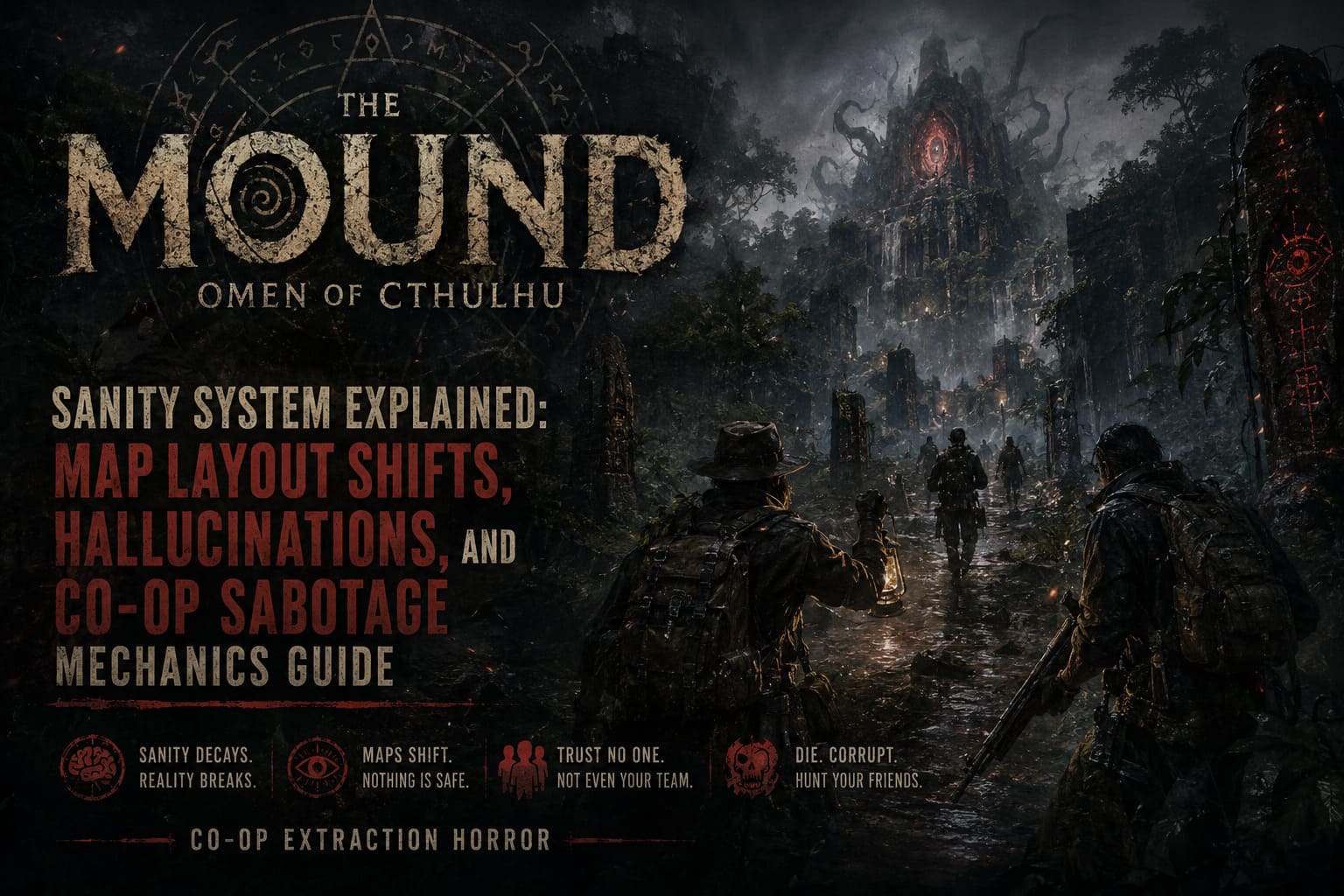
The deeper your squad pushes into the cursed jungle, the less reliable your senses become. Maps refuse to stay the same, teammates become impossible to identify, and even your escape route may disappear while you’re convinced you’re heading in the right direction. That’s exactly why understanding the Sanity System isn’t optional—it’s the single most important mechanic in the entire game.
Assassin’s Creed Black Flag Resynced PS5 Pro Performance Guide: How to Fix Frame Drops
Madness Is More Than a Status Bar
Most games treat sanity as another resource sitting next to your health and stamina. Lose too much, use an item, recover, and repeat. The Mound takes a completely different approach by making sanity one of the central gameplay systems that influences nearly every decision your squad makes.
Your mental stability actively changes how trustworthy the environment becomes, how easily your teammates can coordinate, and whether your own memory of the map remains useful. Instead of worrying only about surviving the next monster encounter, players constantly have to wonder whether what they’re seeing is even real.
What Causes Your Sanity to Collapse?
Your mind slowly deteriorates during every expedition, and there are multiple reasons why this happens. Some sanity loss is unavoidable, while other situations can be minimized through smart teamwork and careful planning.
Primary Sources of Sanity Loss
- Exploring deeper into the cursed jungle and underground ruins.
- Making excessive noise with firearms or careless movement.
- Being attacked by supernatural creatures with psychological abilities.
- Separating from your teammates for extended periods.
- Remaining exposed during dangerous encounters.
Every minute spent pushing deeper into hostile territory increases psychological pressure. Unlike health damage, sanity often declines quietly until players suddenly realize that their perception of reality has already begun to break apart.
Why Staying Together Is Essential
Many extraction shooters encourage players to split into multiple groups in order to gather loot faster. In The Mound, that strategy often becomes one of the fastest ways to lose control of the mission.
As soon as players move too far away from one another, the game begins introducing subtle warning signs. Environmental sounds become muffled, colors fade from the screen, and awareness of nearby threats decreases. These aren’t simply visual effects—they’re gameplay warnings that your character is becoming increasingly vulnerable to mental collapse.
Monsters also become significantly more dangerous when they isolate a single player. Even if your squad wants to cover more ground, maintaining visual contact and consistent communication is usually the smarter choice.
The World Changes Along With Your Mind
One of the most impressive mechanics in The Mound: Omen of Cthulhu is the way the environment evolves alongside your deteriorating sanity. Unlike traditional horror games with static layouts, this world refuses to remain predictable.
As your sanity falls below critical levels, the game’s environment quietly begins rewriting itself. Areas that previously seemed familiar suddenly become confusing, and reliable escape routes may disappear entirely. Players quickly learn that memorizing the map isn’t enough because the map itself no longer respects its original layout.
Examples of Environmental Distortion
| Sanity Effect | Gameplay Impact |
|---|---|
| Hallways begin looping | Navigation becomes increasingly confusing. |
| Jungle paths disappear | Safe routes unexpectedly vanish. |
| Dead ends replace open passages | Retreat becomes far more difficult. |
| Rooms shift position | Previously memorized layouts become useless. |
| Landmarks change appearance | Players lose confidence in their own navigation. |
This mechanic constantly creates tension because players never know whether they’re actually lost or simply being manipulated by their own deteriorating perception.
Hallucinations Destroy Team Confidence
Visual hallucinations are where the psychological horror truly begins. Instead of relying on cheap jump scares, the game slowly convinces players that nothing around them can be trusted.
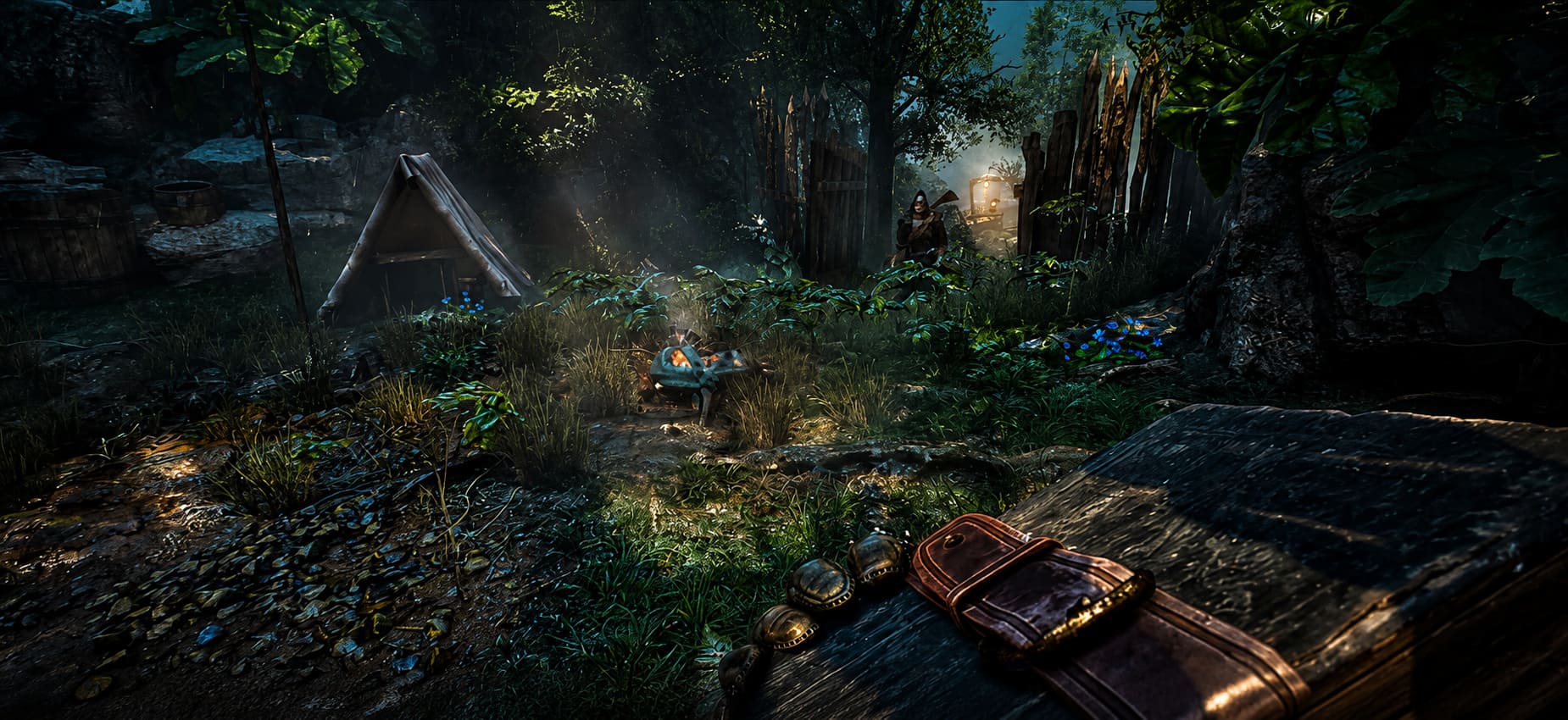
As sanity continues to decline, the environment transforms into something increasingly disturbing. Blood may appear across the landscape, valuable supplies can become hidden behind illusions, and harmless objects may suddenly look incredibly dangerous.
The most terrifying hallucinations involve your teammates. Friends can appear as horrifying monsters, while deadly creatures may briefly resemble trusted allies. The result is constant uncertainty that forces everyone to hesitate before pulling the trigger.
Common Hallucination Effects
- Blood covering familiar environments.
- Illusions hiding useful equipment.
- Environmental traps appearing harmless.
- Friendly players resembling monsters.
- Enemies disguised as squad members.
Moments like these generate genuine panic because players can accidentally shoot one another while honestly believing they’re defending the team.
Communication Becomes Your Greatest Weapon
Because visual information becomes unreliable, voice communication turns into one of the most valuable survival tools available. Map markers and user interface elements can only accomplish so much once hallucinations begin affecting every player’s perception.
Simple verbal confirmations suddenly become incredibly important. Constantly announcing your location, your current objective, or your next movement helps prevent friendly fire and keeps the squad coordinated even when nobody fully trusts what they’re seeing.
Death Doesn’t Mean You’re Finished
Most cooperative shooters simply eliminate players after death and force them to wait until the mission ends. The Mound introduces a far more creative and terrifying consequence.
If a player completely loses control inside the cursed depths, they may transform into a corrupted creature rather than leaving the game. Instead of helping the squad survive, that former teammate immediately becomes one of the expedition’s greatest threats.
The newly corrupted player already understands the team’s preferred routes, communication habits, and extraction strategy. Rather than fighting predictable artificial intelligence, surviving players suddenly find themselves hunted by someone who knows exactly how they think.
Best Strategies for Managing Sanity
Experienced squads quickly learn that sanity is every bit as valuable as ammunition or healing supplies. Running out almost always leads to disaster, no matter how well equipped the team may be.
Stay Close Together
Maintaining squad cohesion significantly reduces unnecessary sanity loss while also protecting isolated players from specialized enemies that thrive on separation.
Locate Hidden Sanity Anchors
Every expedition contains hidden areas capable of restoring or stabilizing sanity. Many of these require puzzle solving or coordinated teamwork before they can be activated, making communication extremely important.
Use Rare Resources Carefully
Certain consumable items temporarily prevent sanity loss, but activating them often creates bright visual effects that attract nearby monsters. Good teams coordinate their use instead of activating them during complete chaos.
Rescue Survivors
Saving specialized survivors throughout expeditions unlocks meaningful upgrades that improve future runs. Many of these rewards strengthen long-term sanity recovery and overall expedition survivability.
Common Beginner Mistakes
| Mistake | Better Choice |
|---|---|
| Splitting up for faster loot | Remain within teammate range. |
| Ignoring visual distortions | Assume every hallucination could be dangerous. |
| Using sanity items too early | Save them for critical situations. |
| Trusting map memory completely | Expect environmental changes. |
| Remaining silent during missions | Communicate your position constantly. |
Developing good habits early dramatically improves survival rates once expeditions begin reaching the deeper and far more dangerous regions of the island.
Why This System Feels Different From Other Horror Games
What makes The Mound: Omen of Cthulhu so memorable isn’t simply the existence of a sanity mechanic. It’s the way every major gameplay system revolves around it. Combat becomes more difficult because communication suffers, navigation becomes unreliable because maps evolve, and teamwork slowly breaks apart because players lose confidence in their own senses.
Rather than relying on scripted horror moments, the game creates unforgettable stories naturally through its mechanics. One player confidently leads the squad toward extraction, another insists the path has changed, someone else starts seeing monsters where teammates should be standing, and suddenly nobody knows which version of reality is correct.
Final Thoughts
The Mound: Omen of Cthulhu stands out by making psychological horror an active gameplay mechanic instead of a simple visual theme. The Sanity System doesn’t exist merely to create atmosphere—it constantly changes how players fight, communicate, explore, and survive.
From shifting environments and disturbing hallucinations to corrupted teammates hunting their former allies, every expedition becomes an unpredictable battle against both supernatural forces and the gradual collapse of human perception. If you’re approaching this game like a traditional extraction shooter, you’ll probably survive your first few encounters. If you learn to protect your sanity as carefully as your health, you’ll actually have a chance of escaping the jungle alive.