Wanderburg Castle Size Scaling Mechanics Explained: How to Build the Ultimate Moving War Machine
If there is one mechanic that makes Wanderburg stand out from the usual roguelike crowd, it is the way your castle physically grows as you play. You are not simply unlocking bigger numbers on a character sheet or buying another passive upgrade from a menu. Your fortress gets larger, heavier, more dangerous, and harder to control, turning every successful encounter into a decision about how much power you actually want to carry.
I’ve always liked games that make progression feel tangible, and Wanderburg absolutely nails that feeling. Watching a tiny rolling stronghold evolve into a ridiculous medieval monster is the kind of progression that makes you think, “Okay, one more run.” Then suddenly it is 2 a.m. and you are trying to figure out why your enormous castle just got stuck between two rocks.
The important thing is that castle size in Wanderburg is not simply a reward. It changes how you move, fight, defend yourself, and manage resources. Getting bigger can make you terrifying, but it can also turn you into a giant target that struggles to escape trouble.
Here is how I approach the system and what I think matters most when pushing a castle toward its maximum potential.
Wanderburg Beginner Guide: Top Tips, Tricks, and Strategies to Grow Your Castle
How Castle Growth Works in Wanderburg
The basic idea is wonderfully simple: consume things and become stronger.
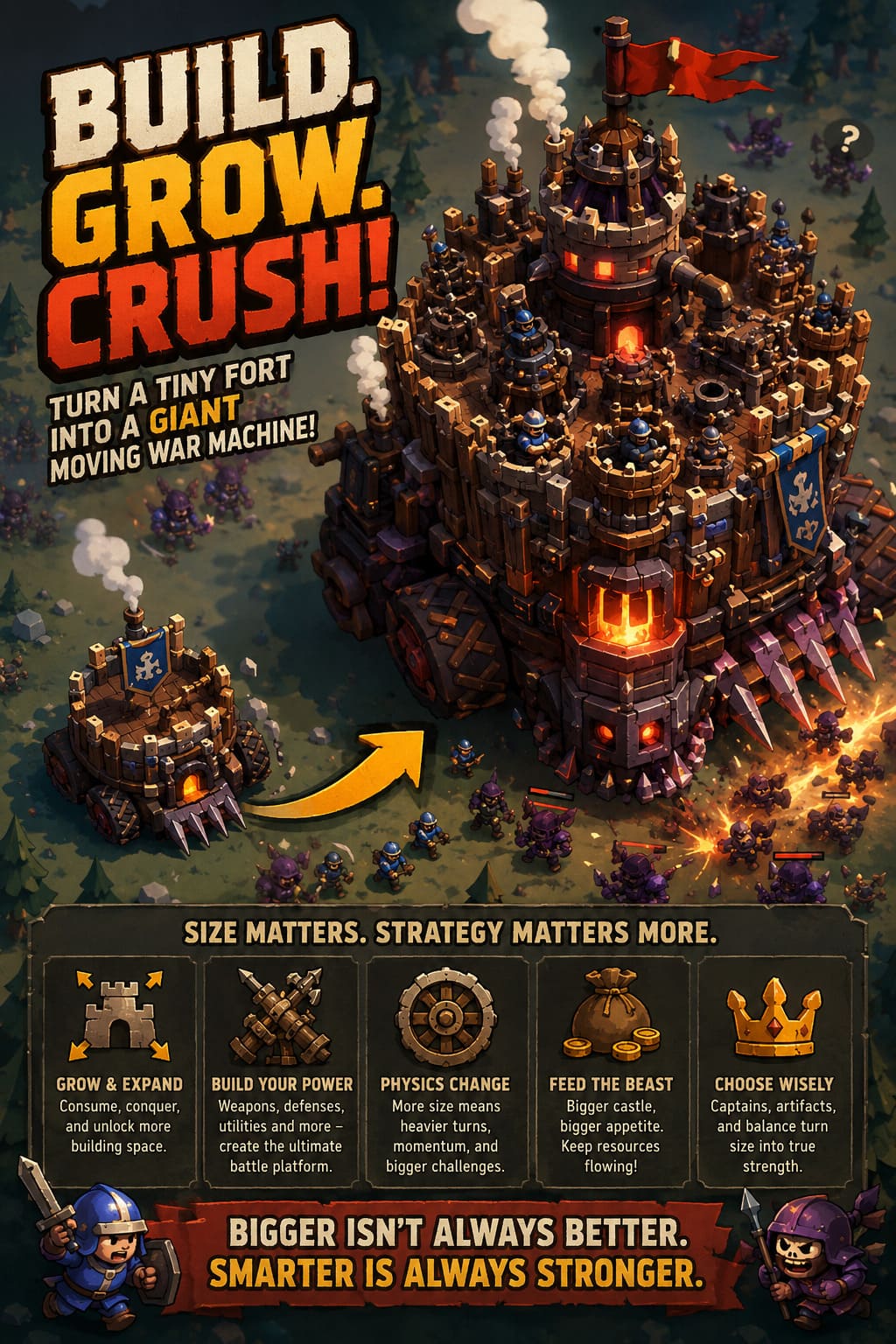
Your castle travels through a procedurally generated medieval environment filled with structures, resources, settlements, and enemies. Smaller objects can be absorbed or destroyed, while larger targets provide more valuable rewards. That accumulated mass gradually pushes your fortress through different size stages.
The visual change is only half the fun. Each increase in size gives you more physical room to work with, meaning the castle effectively becomes a larger combat platform.
That creates a satisfying progression loop:
- Explore the world and locate worthwhile targets.
- Consume resources, structures, and settlements.
- Grow your castle and unlock additional space.
- Improve your weapons, defenses, mobility, and utility systems.
- Hunt increasingly valuable targets to support the larger fortress.
The catch is that enemies are growing more dangerous at the same time. A giant castle might have vastly more firepower than the little starter wagon, but its larger body is also much easier for enemy attacks to hit.
That is where Wanderburg becomes interesting rather than simply becoming an endless power fantasy.
Bigger Castle, Bigger Building Grid
One of the most important consequences of scaling is the expansion of your construction area.
Early in a run, you are working with a tiny amount of space. Every module matters because there simply isn’t enough room to build everything you want. You might have to decide between another weapon, additional protection, or some form of utility.
As the castle grows, more grid positions become available. Suddenly you have room to create an actual combat platform instead of a tiny improvised fort.
Front-Line Weapon Slots
The forward section of a large castle is perfect for aggressive builds.
Heavy weapons can be positioned toward the direction you expect to engage enemies, giving your fortress a much stronger opening attack. If you enjoy playing aggressively, this is where I would concentrate a good portion of the offensive hardware.
The trick is not to go completely insane with weapons. More guns look cool, but they also increase the demands placed on your economy and power systems.
Side and Rear Defense
A bigger castle also means more surface area that enemies can attack.
This makes the flanks and rear increasingly important. Defensive turrets, mines, automated weapons, and other support systems can protect areas that your main forward arsenal cannot cover effectively.
I’ve made the mistake of thinking, “Nothing can hurt me from behind.” In a game built around a huge mobile fortress, that is basically an invitation for something nasty to prove you wrong.
Internal Utility Modules
The extra space should not be treated as permission to install nothing but weapons.
Large castles can benefit enormously from utility-focused modules. Engines, resource-related systems, defensive infrastructure, and other support equipment become increasingly important as your fortress becomes heavier.
A giant castle with incredible weapons but terrible resource management is basically a very expensive coffin on wheels.
Castle Size Changes the Physics
This is the part of the system I find most interesting.
Wanderburg’s scaling isn’t just cosmetic. The physical characteristics of your castle change as it becomes larger.
That means the same maneuver that was easy during the first few minutes can become a terrible idea later.
| Castle Stage | Main Advantage | Main Problem | Best Approach |
|---|---|---|---|
| Small | High mobility | Limited firepower | Explore and gather |
| Medium | Better weapon capacity | Increasing resource demands | Build balanced defenses |
| Large | Strong firepower and durability | Slower handling | Control positioning |
| Massive | Huge combat potential | Poor maneuverability | Plan routes carefully |
The bigger you become, the more important your positioning becomes.
Turning Becomes a Serious Problem
Small castles can zip around the map relatively easily. Their compact size allows quick direction changes and makes avoiding incoming attacks much less painful.
Once your fortress becomes enormous, that luxury disappears.
The turning radius expands, and sudden changes in direction become much harder. If you enter a narrow area without considering your escape route, you can end up spending several very uncomfortable seconds trying to get the castle pointed in the right direction.
This is why open terrain becomes increasingly valuable during the late game.
When I’m running a large fortress, I want room to maneuver. A wide area gives me the opportunity to turn, reverse, accelerate, and reposition before an enemy can exploit my size.
Momentum Is Both a Weapon and a Liability
Heavy castles take longer to accelerate and brake.
That sounds like a minor inconvenience until you are flying toward something you absolutely did not want to hit.
The increased mass means your momentum becomes a major factor during combat. Slamming into structures or smaller enemies can be incredibly satisfying because a huge fortress has the physical force to turn collisions into destruction.
But momentum works both ways.
If you approach a dangerous area too quickly, you may not be able to stop before entering it. A narrow passage, minefield, enemy stronghold, or environmental hazard can become significantly more dangerous when your castle handles like a medieval freight train.
Learn to anticipate movement rather than react to it. That is probably the biggest adjustment new players need to make when transitioning from a small castle to a massive one.
The Hidden Cost of Becoming Huge
There is a temptation to think that reaching the largest possible size is automatically the correct strategy.
I don’t think it is.
A huge castle requires more resources to keep functioning. The larger your war machine becomes, the more demanding its operation can be. Weapons, movement, defenses, and other systems all contribute to the pressure placed on your economy.
This creates one of Wanderburg’s better strategic loops: you need to keep hunting because your castle needs to be fed.
Sitting somewhere safe and waiting isn’t necessarily a winning strategy. Eventually, your giant fortress needs resources, which means you have to move into dangerous territory and find worthwhile targets.
That makes growth feel less like a permanent upgrade and more like a contract.
You get incredible power, but you also accept greater responsibility for keeping that power running.
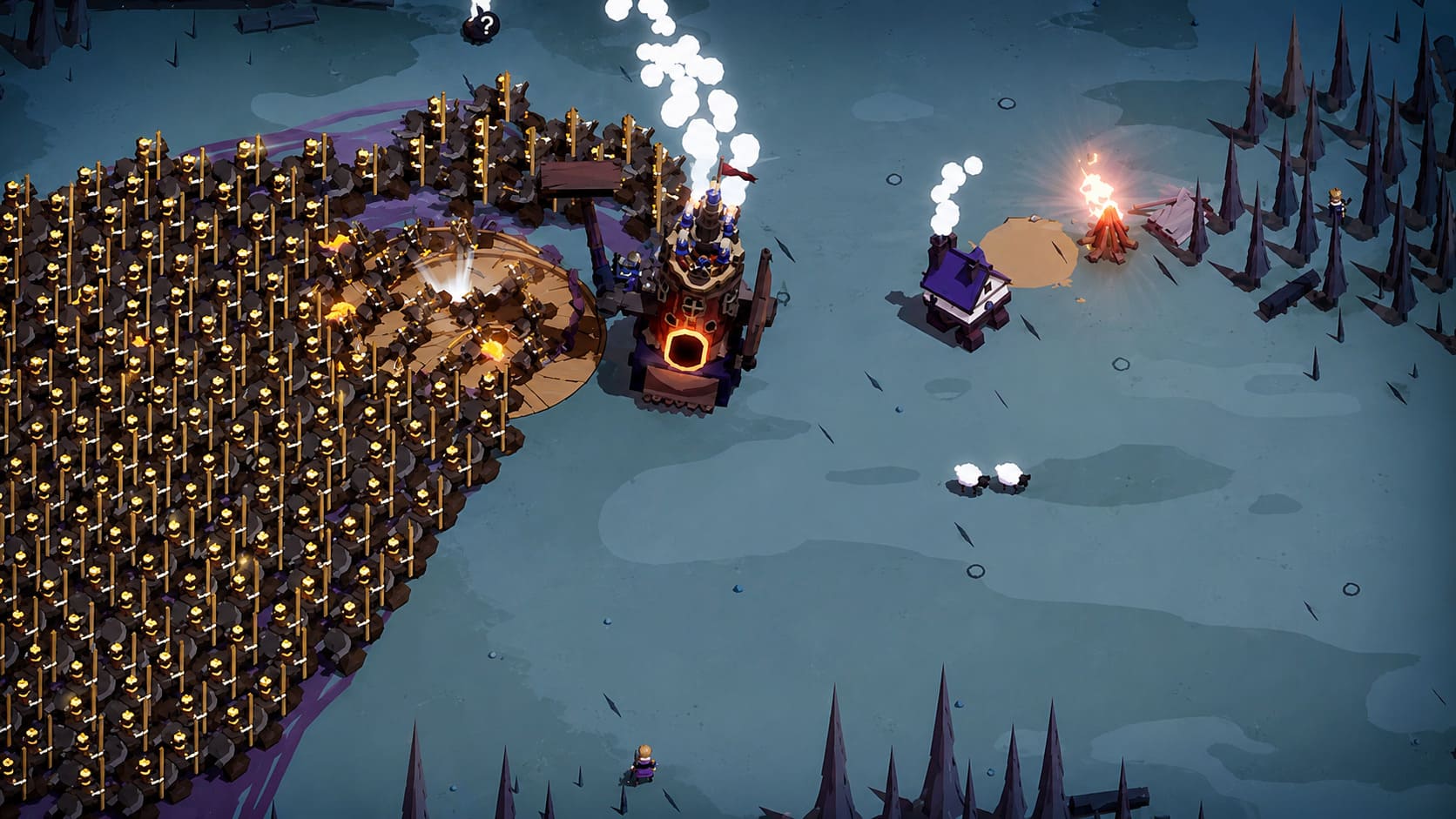
Don’t Ignore Your Resource Economy
A common mistake is building around the assumption that damage solves everything.
It doesn’t.
If you spend every newly unlocked grid slot on offensive equipment, you may end up with an impressive damage output but insufficient support infrastructure. When your resource flow cannot keep pace, your giant castle becomes much less effective.
I prefer a balanced build philosophy.
Think of your castle as a machine with several jobs:
- Weapons need to kill threats.
- Defense needs to protect your increasingly large hitbox.
- Mobility needs to keep the fortress moving.
- Resource systems need to pay for the whole operation.
If one of those areas falls badly behind, the entire build can start collapsing.
Captains Can Change the Scaling Equation
Your choice of Captain can make a major difference when building around castle size.
Some bonuses are particularly useful for larger fortresses because they can compensate for the weaknesses created by additional mass. Mobility improvements, resource efficiency, defensive bonuses, and other complementary effects can make a heavy build considerably easier to manage.
This is where I would avoid blindly choosing whatever looks strongest on paper.
A Captain that gives a fantastic offensive bonus might be incredible for an aggressive medium-sized castle but less useful for a gigantic fortress struggling with maneuverability and resource consumption.
Build your Captain choice around the castle you actually want to create.
Artifacts Become More Interesting as You Scale
Artifacts add another layer to the size system because some bonuses can interact particularly well with larger builds.
Anything that rewards additional grid space, physical dimensions, armor, or growth milestones can become increasingly valuable as your fortress expands.
This creates some fun build possibilities where your goal isn’t simply to obtain the strongest individual artifact. Instead, you’re trying to assemble several effects that reinforce one another.
For example, a build focused on occupying more grid space can turn castle expansion itself into an offensive or defensive advantage.
That’s the kind of synergy I love in roguelikes. You start with a relatively ordinary upgrade and, several decisions later, realize you’ve accidentally created something completely ridiculous.
How I Handle a Maximum-Size Castle
Once the castle becomes enormous, I change the way I play.
Keep Moving
First, I stop treating speed as an escape button. A massive fortress isn’t going to dodge everything like a small vehicle. Instead, I focus on positioning before the fight begins.
Protect the Vulnerable Sides
Second, I protect the vulnerable sides. The bigger your castle gets, the harder it becomes to cover every angle. Defensive systems on the flanks and rear can prevent enemies from turning your size against you.
Plan Your Routes
Third, I plan routes. Tight terrain can be brutal for a giant fortress, so I prefer open spaces whenever possible. If a location looks like a place where I won’t be able to turn around, I’m already looking for another route.
Keep the Economy Healthy
Finally, I keep the economy healthy. There is no point building the ultimate rolling fortress if you cannot afford to keep it operating.
Is Going Maximum Size Always Worth It?
Not necessarily, and that’s what makes the system work.
A huge castle is spectacular. There is something deeply satisfying about watching an enormous mobile fortress roll across the map while smaller structures simply disappear under its weight.
But bigger isn’t automatically better.
A smaller, faster castle can exploit mobility, avoid attacks, navigate difficult terrain, and maintain lower operating costs. A massive fortress trades those advantages for raw durability, space, weapon capacity, and destructive potential.
The best size depends on your build and the way you like to play.
If you enjoy aggressive combat and want to turn the map into a demolition site, scaling as hard as possible can be incredibly rewarding. If you prefer mobility and tactical positioning, staying smaller for longer can actually give you more control.
Final Thoughts
Wanderburg’s castle size scaling is more than a progression mechanic—it is the system that ties the entire game together.
Every additional chunk of mass changes the way your fortress behaves. More space gives you stronger builds, but greater size creates handling problems. More weapons increase your damage, but they also increase your resource demands. More mass lets you crush smaller targets, but it makes you a much larger target yourself.
That push and pull is what makes the system so addictive.
The ultimate goal isn’t simply to create the biggest castle possible. It is to create a fortress whose weapons, defenses, mobility, economy, Captain bonuses, and artifacts all work together.
Get that balance right and Wanderburg starts feeling less like a conventional roguelike and more like you’re commanding your own absurd medieval war machine.
And honestly, watching that thing grow from a pathetic little rolling fort into a screen-filling monster never gets old.