Virtua Fighter Crossroads Open World Gameplay: Ryu Ga Gotoku Revolutionizes the Iconic Fighting Series
The fighting game scene doesn’t usually get shaken like this. Most of the time it’s balance patches, new guest characters, maybe a flashy trailer with slow-motion punches. But what SEGA and Ryu Ga Gotoku Studio are doing with Virtua Fighter: Crossroads feels closer to someone cracking open a sealed arcade cabinet and rebuilding it into something half fighting game, half full-blown narrative RPG.
And honestly? It’s equal parts exciting and slightly terrifying. This isn’t just “Virtua Fighter is back.” It’s Virtua Fighter getting dragged through a decade of open-world design philosophy, soaked in Unreal Engine 5 lighting, and rebuilt into something that looks like it could sit next to modern cinematic RPGs while still trying to throw hands like a purebred arcade fighter.
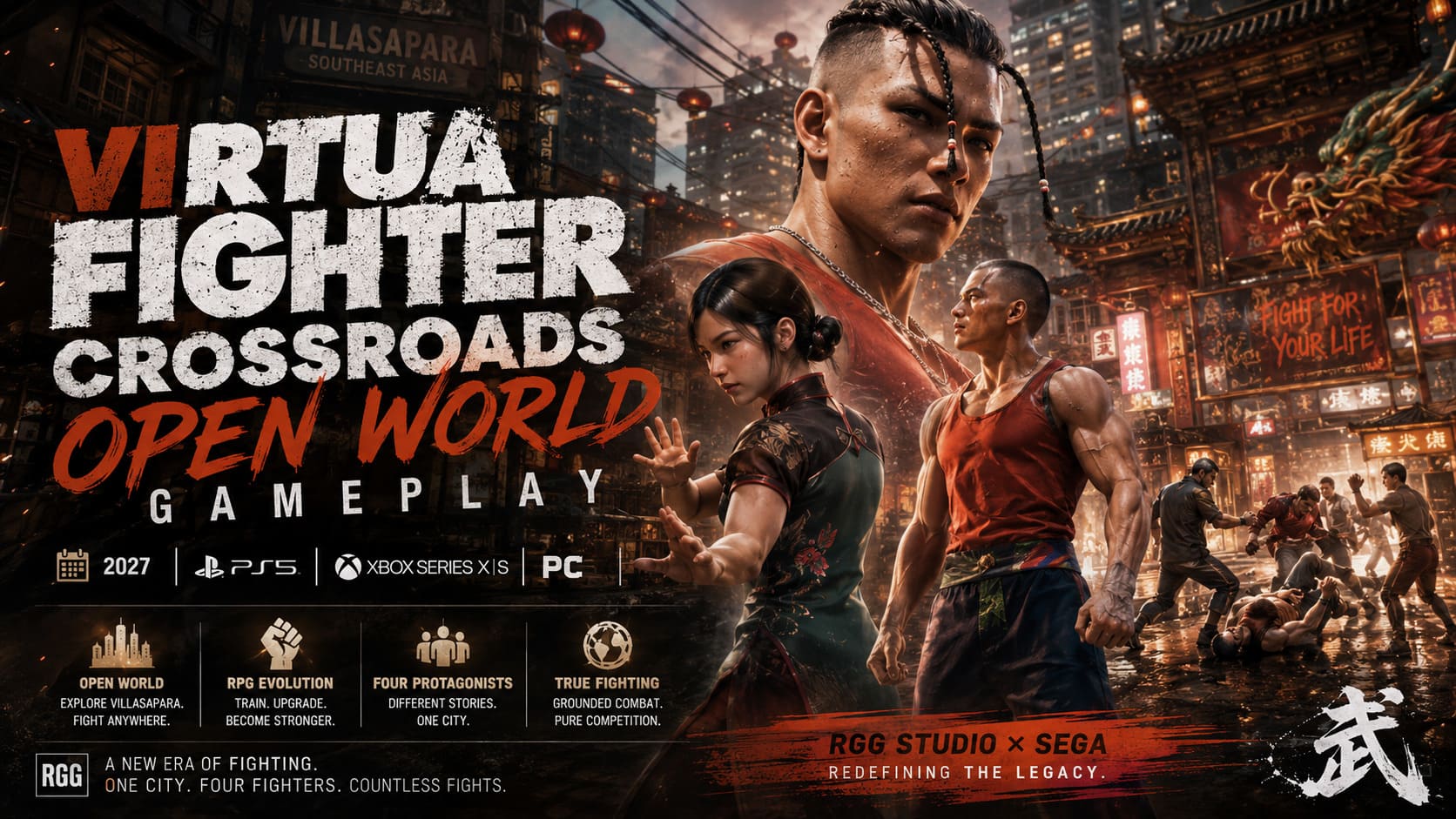
We’re looking at a 2027 release window on PS5, Xbox Series X|S, and PC, but the conversation already feels like it’s out of control—in a good way.
Assassin’s Creed Black Flag Resynced: How to Get All Ship Pets (Rare Cat & Monkey Guide)
A Fighting Game That Refuses to Stay in the Ring
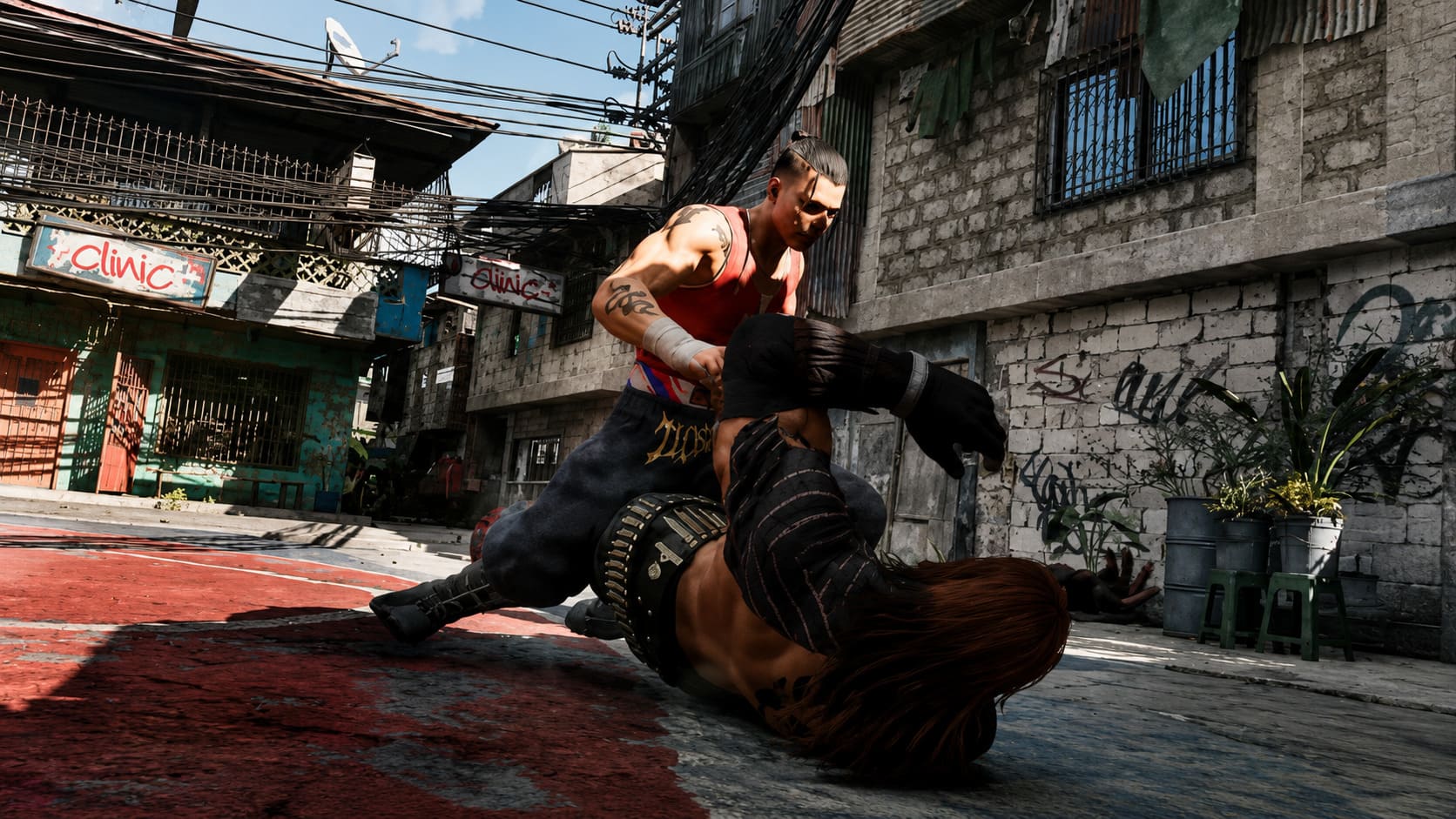
What immediately separates Crossroads from anything the franchise has done before is its structure. Instead of menus → fight → win → cutscene, RGG Studio is building a full open-world single-player campaign set in a Southeast Asian metropolis called Villasapara.
And this city isn’t just background decoration. It’s the actual game. You walk. You talk. You get into street brawls that don’t politely reset after a ring-out. You explore shops, take side jobs, and drift into fights the same way you’d accidentally start chaos in a Like a Dragon alley—but now those fights actually matter to your progression as a fighter.
The shift is huge: Virtua Fighter is no longer just about mastery in isolated arenas. It’s about living inside a fighting ecosystem. And that alone is going to divide people. Some players will love it. Others will absolutely hate that their sacred competitive franchise is now sharing DNA with open-world RPG design.
But RGG Studio doesn’t seem interested in playing it safe.
Villasapara: A City Built for Violence and Personality
Villasapara isn’t your typical glossy, sterile open-world setting. From what we’ve seen, it’s dense, noisy, and culturally layered. Think crowded markets, narrow alleys, rooftop routes, and social spaces that feel like they were designed for arguments that inevitably turn into fistfights.
Instead of scripted story encounters, you’ll run into organic street fights—sometimes outnumbered, sometimes chaotic group skirmishes that feel closer to survival scraps than tournament matches. It’s a deliberate shift away from “1v1 purity” into something messier and more grounded.
And that’s where RGG’s influence really shows. They’ve always been great at making cities feel alive, but here they’re applying that philosophy directly to combat design.
Multiple Protagonists, One City, Different Fights
The story doesn’t lock you into a single hero. Instead, Crossroads follows four different protagonists, each tied to their own narrative threads inside Villasapara.
One of the confirmed characters, Cielo, is an American expat who mixes boxing with MMA fundamentals. He’s not a flashy anime-style fighter—he’s built more like someone you’d actually see in a rough street gym who learned to survive before learning to style.
This multi-character approach reframes fighting styles as identity rather than just mechanics. You’re not just switching movesets—you’re switching perspectives on the city itself. And yes, that also means branching narratives, moral choices, and storylines that apparently shift based on how you engage with the world.
RPG Systems Inside a Fighting Game (Yes, Really)
This is where things get controversial. Crossroads introduces RPG progression systems—stat growth, training regimes, gear-like customization elements, and cosmetic evolution tied to your journey. It’s not just about learning combos anymore; it’s about building your fighter over time like a long-term character build.
That immediately raises eyebrows in the competitive scene, because the moment you hear “leveling up,” every fighting game veteran starts thinking about balance nightmares.
But SEGA and RGG are clearly aware of this tension, and they’re splitting the experience in two.
Old Legends, New Lives
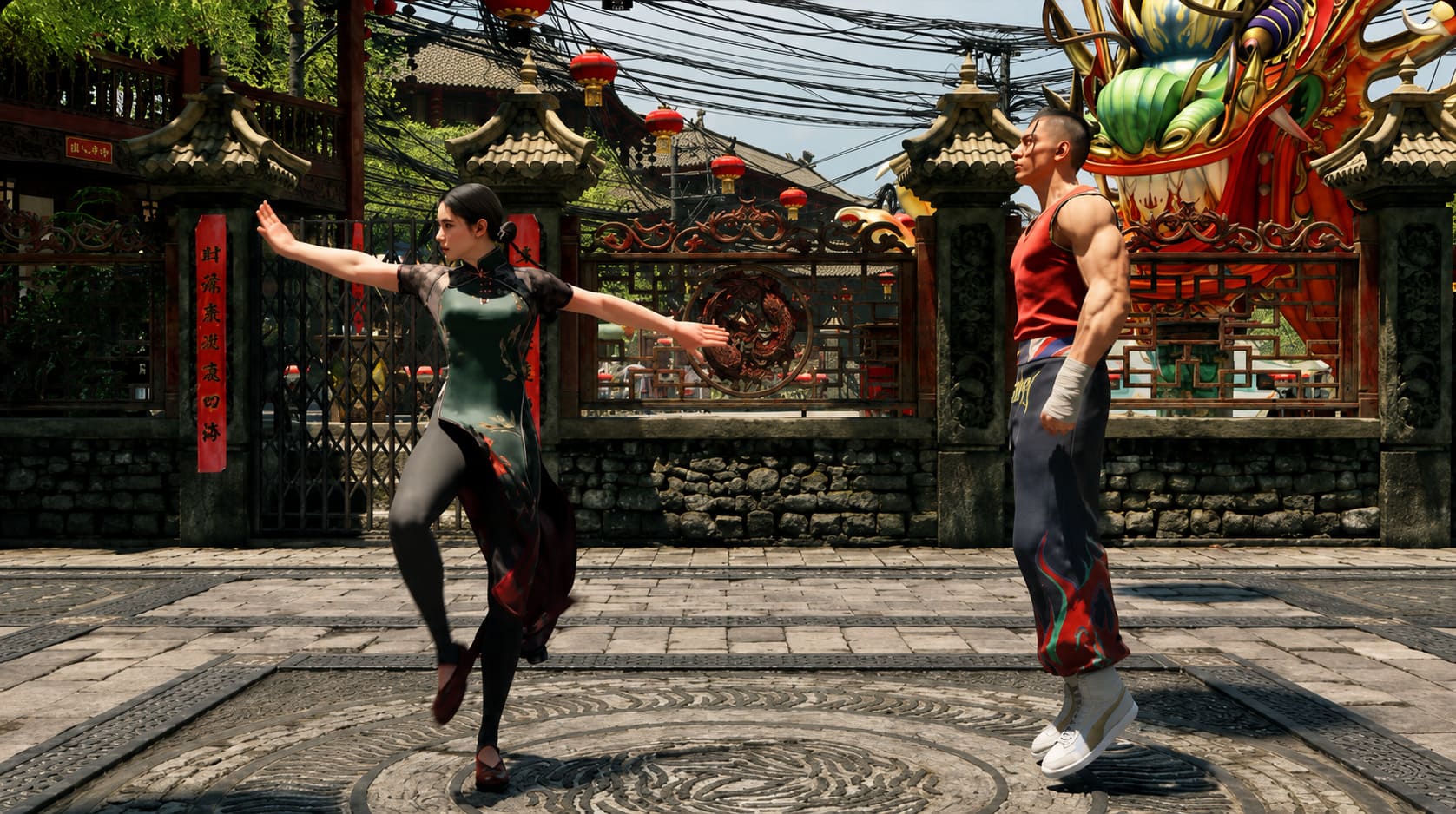
One of the more interesting narrative decisions is how the game treats legacy characters. The era of constant global tournaments is over. Fighters aren’t just returning—they’re aging, changing, and living outside the ring.
Take Pai Chan, for example. Instead of being stuck in perpetual tournament mode, she’s now running a restaurant in the city. That’s not just cosmetic storytelling—it’s a full tonal shift. These characters are no longer just combat avatars. They’re people with lives that exist outside your combo strings.
The Brutal Realism of Next-Gen Combat Mechanics
The combat engine, built in Unreal Engine 5, is being described as heavy, grounded, and almost unsettlingly physical compared to modern fighting games. This isn’t the air-juggle circus you see in many contemporary titles.
Instead, Crossroads emphasizes positioning, grounded exchanges, and pressure-based engagements. The game moves away from endless aerial combos and instead pushes weight, timing, and defense.
Core Combat Systems
- Stunner System: Opponents enter a vulnerable crouched state, opening them for grounded punishment and follow-ups.
- Real-Time Damage Effects: Injuries appear dynamically—bruises, broken teeth, and targeted limb damage affecting performance.
- Cinematic Camera Integration: Slow-motion and dynamic zooms highlight critical strikes and whiff punishes.
It’s clearly trying to make every hit feel meaningful, not just mechanically, but emotionally. Every exchange feels like it carries weight beyond just health bars.
Maintaining Competitive Integrity
One of the biggest concerns in the community is whether RPG progression will ruin competitive balance. RGG Studio’s answer is a strict separation of systems.
The single-player RPG campaign handles leveling, exploration, and customization. But Battle Mode is completely isolated from all of that.
Game Mode Structure
| Mode | Focus | Systems |
|---|---|---|
| Story Mode | Open-world RPG experience | Leveling, exploration, narrative progression |
| Battle Mode | Competitive fighting | Pure skill-based mechanics, no stat influence |
| Training/Arcade | Practice and classic gameplay | Traditional Virtua Fighter systems |
This separation is the safety net that might keep the entire experiment from collapsing under its own ambition. Whether it actually holds up in practice is another story entirely.
Controls and Accessibility Shift
The control system still revolves around punch, kick, and guard, but it’s being optimized for modern controllers with smoother execution pathways. This is important because Virtua Fighter has always had a reputation for being brutally technical.
If done right, this could finally open the door for new players who bounced off the franchise in the past. If done wrong, it risks flattening the depth that defines it.
Final Thoughts
Virtua Fighter: Crossroads isn’t playing it safe. It’s not a nostalgia remake, and it’s not a straightforward competitive reboot either. It’s something far more chaotic—a hybrid experiment built on the idea that fighting games can be more than isolated battles.
Whether it becomes a breakthrough or a beautifully messy experiment depends entirely on execution. But one thing is certain: RGG Studio is treating Virtua Fighter like a living system instead of a museum piece.
And in 2027, we’ll find out if that gamble pays off or crashes spectacularly.