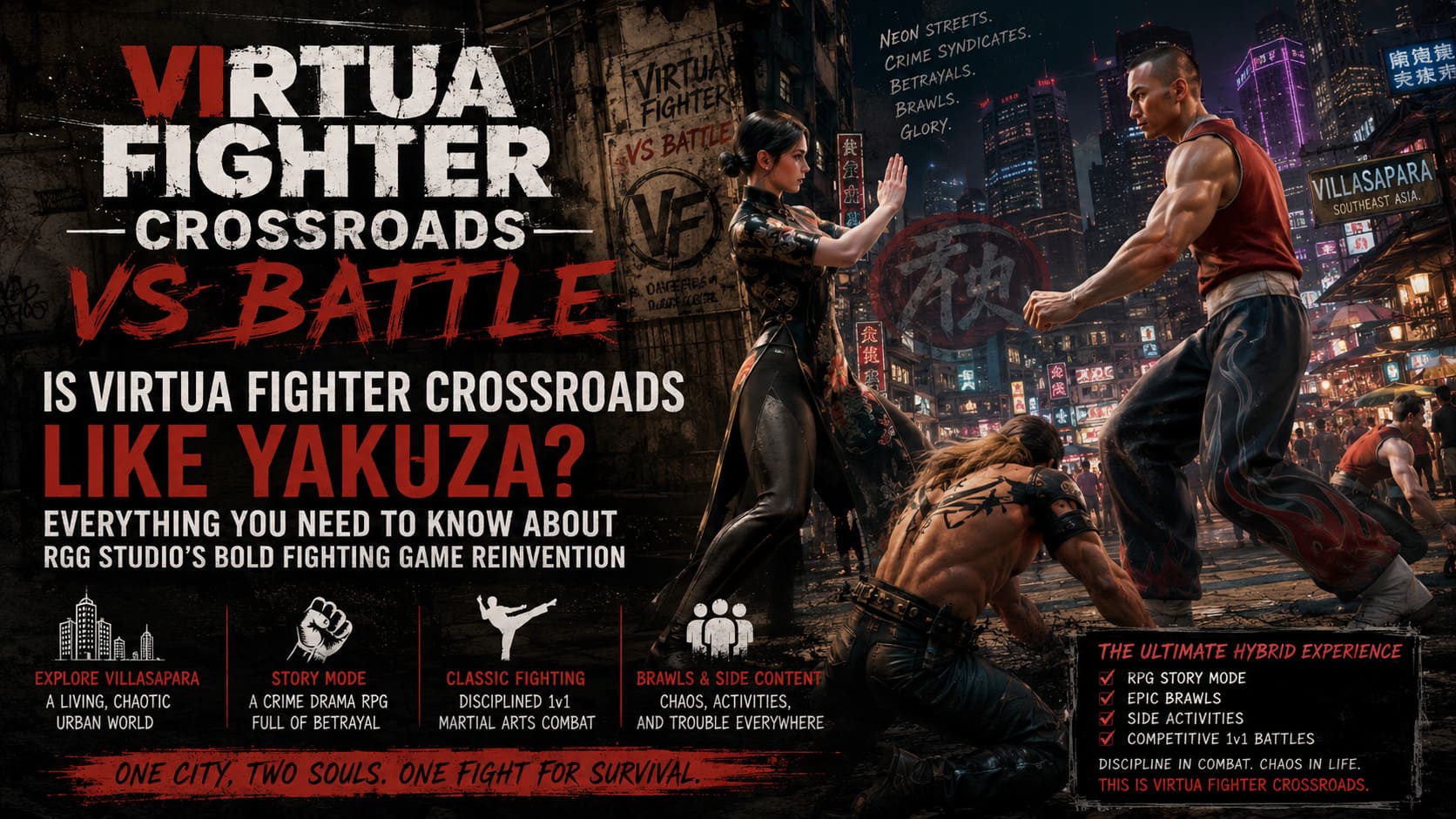
Is Virtua Fighter Crossroads Like Yakuza? Everything You Need to Know About RGG Studio’s Bold Fighting Game Reinvention
The moment Ryu Ga Gotoku Studio got attached to Virtua Fighter Crossroads, the fighting game community basically lost its collective balance. And honestly? I get it. This isn’t just “Virtua Fighter is back.” It feels like someone took a disciplined martial arts fighter, dropped them into a neon-soaked crime drama, and said: “Yeah, figure it out.”
After digging through trailers, developer notes, and the usual chaos of Reddit threads and YouTube breakdowns, one question keeps popping up: is this basically a Yakuza game wearing Virtua Fighter clothes?
Short answer: yes… and also absolutely not. And that contradiction is exactly why this project feels so dangerous in the best possible way.
RGG Studio DNA Everywhere You Look
Let’s not pretend this is subtle. You can feel the influence of Ryu Ga Gotoku Studio in every frame of Virtua Fighter Crossroads.
This is the studio that turned city streets into playgrounds of chaos, drama, and absurd side stories. Now they’re applying that same philosophy to a fighting franchise that used to be laser-focused on pure 1v1 competition.
And surprisingly, it works.
What instantly feels “Yakuza-coded”
- A dense, living urban hub instead of menu-based progression
- Cinematic storytelling with crime syndicates and betrayals
- Side activities that feel like full games inside the game
- NPCs that clearly exist just to drag you into trouble
It’s like Virtua Fighter suddenly got a social life… and maybe a criminal record.
A City That Feels Like a Character (and a trap)
Instead of arenas stitched together like traditional fighting games, Crossroads drops players into a full-scale environment called Villasapara, a chaotic Southeast Asian metropolis where every district feels like it’s one bad decision away from exploding.
This is where RGG’s signature design philosophy really shows up. The city isn’t just decoration—it actively pulls you into its chaos.
You’ve got neon-lit entertainment districts, slums that feel unpredictable, high-security zones, and markets packed with life. Every corner feels like it was designed to start a fight or a story.
Where It Still Feels Like Virtua Fighter (thankfully)
Now here’s the important part: beneath all the cinematic chaos, this is still a fighting game with a serious identity crisis—in a good way.
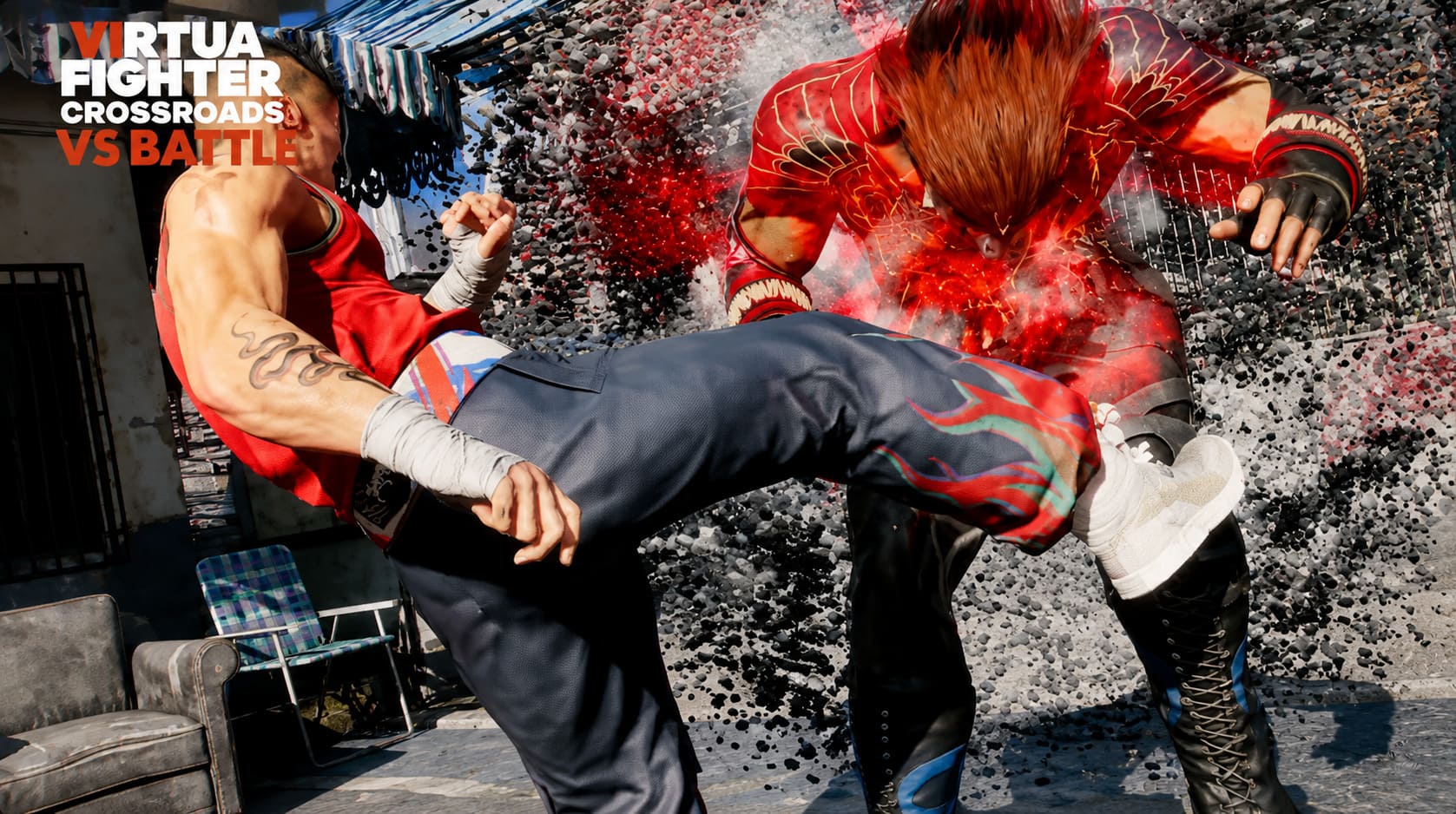
When you step into competitive modes, everything snaps back into discipline. No open-world distractions, no RPG fluff. Just pure execution.
Core combat identity remains intact
- Strict 1v1 competitive structure
- Classic Punch / Kick / Guard system
- Emphasis on spacing and timing
- Grounded martial arts realism
This is where long-time fans can breathe again. The game still respects precision over spectacle.
The Real Experiment: Story Mode as an Action RPG
The single-player campaign of Virtua Fighter Crossroads basically feels like someone asked: “What if a fighting game had a full Yakuza-scale RPG campaign… but also stayed a fighting game?”
You’re not just queuing matches anymore. You’re living inside a crime story filled with interconnected characters and escalating conflicts.
Key features of the campaign
- Multi-character narrative structure
- Interconnected crime drama arcs
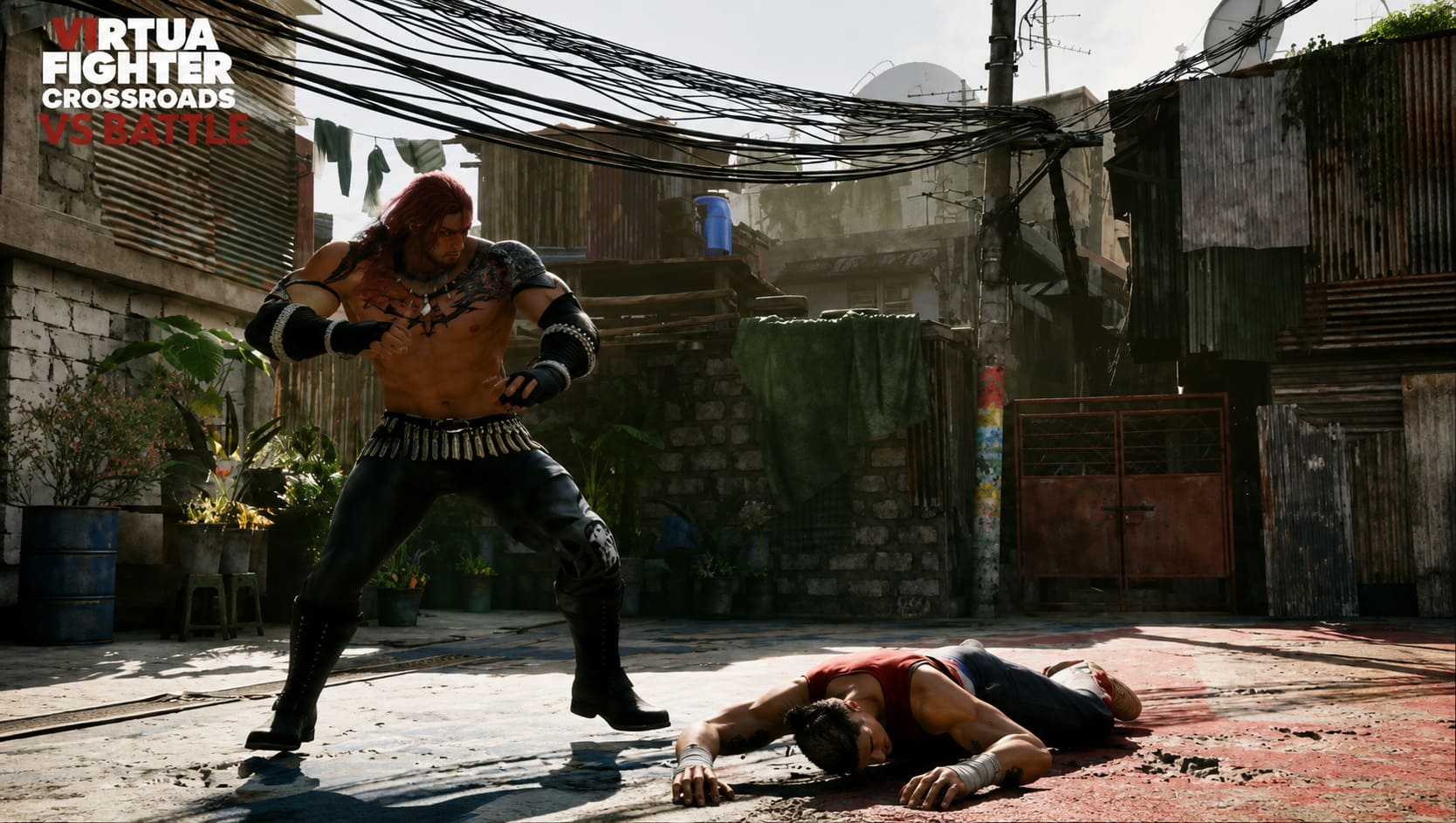
- Real-time group brawls
- Seamless exploration-to-combat transitions
- Progression systems tied to abilities and gear
The tone is less tournament arc and more “you got dragged into international crime by accident and now everyone wants you gone.”
Combat Philosophy: Precision vs Chaos
What makes this hybrid interesting is the constant tension between structured fighting mechanics and chaotic RPG encounters.
In group fights, you’re juggling multiple attackers and environmental interactions. In 1v1, the game becomes surgical and intensely technical.
Design tension breakdown
| Aspect | Story Mode | Competitive Mode |
|---|---|---|
| Structure | Freeform RPG chaos | Strict 1v1 duels |
| Combat Style | Multi-enemy brawls | Technical martial arts |
| Player Focus | Exploration and narrative | Frame-perfect execution |
| Tone | Crime drama cinematic | Competitive discipline |
Accessibility Without Dumbing It Down
One of the more controversial additions is the “Uprising” system, designed to help newcomers avoid the usual fighting game wall.
Instead of forcing players into a steep mechanical climb, the game gradually introduces complexity. But the high-level ceiling remains intact for veterans who want pure mastery.
That balance is rare in fighting games, and it could be one of Crossroads’ strongest features if executed properly.
Community Reaction: Chaos, Memes, and Genuine Excitement
The reaction across Reddit, YouTube, and fighting game communities has been a mix of confusion and hype.
Some players call it the evolution of single-player fighting game content. Others think RGG Studio simply injected its signature chaos into Virtua Fighter’s DNA.
Common community takes include comparisons to World Tour-style modes, praise for cinematic ambition, and memes about the game feeling like a crime drama simulator with punches.
So… Is It Actually Like Yakuza?
Yes—but only in structure, not identity.
The influence of Ryu Ga Gotoku Studio is undeniable in world-building, storytelling, and side content design. But when combat begins, everything snaps back into Virtua Fighter’s disciplined core.
It’s not a clone. It’s a collision. And neither side fully dominates the other.
Final Thoughts: A Dangerous but Exciting Evolution
There’s real risk in a hybrid like this. Too much chaos and it loses identity. Too much discipline and it loses innovation. But the ambition alone makes it worth watching closely.
If it works, this could redefine how fighting games handle single-player content. If it doesn’t, it will still be one of the boldest experiments in Sega’s modern lineup.
Virtua Fighter Crossroads isn’t playing safe—and that alone makes it interesting in a landscape full of predictable sequels.