Vapor World: Over The Mind Beginner’s Guide – Tips, Tricks, and Combat Strategies to Survive the Nightmare
If you come into Vapor World: Over The Mind expecting a typical 2.5D action platformer where you can mash your way through enemies, the game is going to humble you pretty quickly. This is one of those experiences that seems manageable for the first few minutes, then suddenly puts a grotesque creature in front of you and asks a very simple question: did you actually learn how to defend yourself?
Developed by ALIVE Inc., Vapor World: Over The Mind combines hand-painted visuals, surreal psychological horror, Souls-like combat, platforming, exploration, and a surprisingly deliberate approach to enemy encounters. Its nightmare setting is built around sorrow, trauma, regret, and fractured memories, but the real challenge comes from learning how the game expects you to move and fight.
The protagonist feels heavy. Attacks have commitment. Dodging is not something you can spam without consequences. Enemies can punish careless aggression brutally. Personally, I think this deliberate pacing is one of the game’s strongest ideas, although it can feel downright awkward until the combat finally clicks.
If you’re starting your first run, these Vapor World: Over The Mind beginner tips should save you a lot of unnecessary deaths and help you understand the systems that matter most.
Learn the Game’s Core Loop Before Chasing Progress
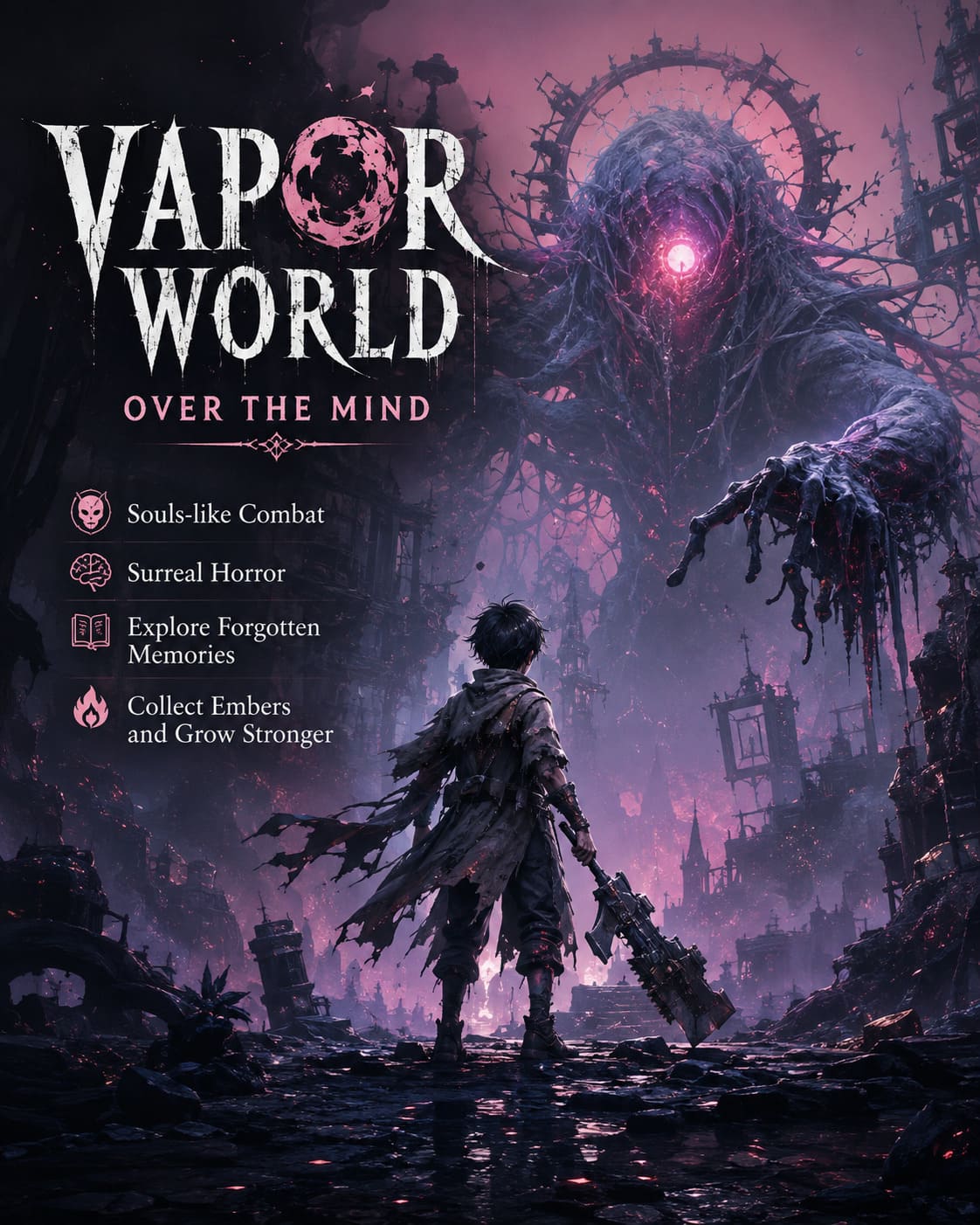
The story places you in the Vapor World, a strange dreamscape connected to human suffering and buried memories. You take control of the Last Awakened One, a boy trapped inside this surreal realm.
Your larger objective is to find and awaken the Sleeping Ones. The problem is that their psychological trauma has taken physical form. Those manifestations appear as dangerous enemies and powerful Traumas, essentially the game’s major boss encounters.
That means exploration, combat, and story progression are constantly tied together. You’re not simply clearing rooms because the game needs something to put between checkpoints. Every area is part of the larger mystery.
There are two systems you should understand immediately:
- Embers act as an important resource for progression and upgrades.
- Workbenches provide safe points where you can recover, save progress, and make use of the things you’ve discovered.
Don’t treat Embers like some sacred treasure that must sit untouched in your inventory forever. If you have enough resources to improve your character, spend them. A stronger character and better understanding of your abilities will help far more than an enormous pile of unused currency.
Embers Are Your Lifeline, So Spend Them Wisely
Defeated enemies and certain environmental interactions can leave behind Embers. These resources are extremely valuable because they contribute to your long-term progression.
When you reach a workbench or another safe location, take a moment to review what you’ve accumulated.
I know the gamer instinct: “I’ll save this for later because there might be something better.” That’s usually how you end up carrying a mountain of currency while getting destroyed by the next serious enemy.
Your upgrades should support the way you actually play. If you’re struggling with survivability, prioritize improvements that make mistakes less punishing. If you’re already comfortable defending yourself, investing into offensive potential can help you shorten difficult encounters.
The important thing is to avoid hoarding resources simply because you’re afraid of making the wrong choice.
Workbenches Are More Than Checkpoints
Workbenches are some of the most important locations you’ll encounter during exploration.
They act as recovery and progression points, but they also give you opportunities to interact with the systems surrounding the game’s strange lore. You’ll find journals, records, memories, and other pieces of information throughout the world.
Don’t ignore them.
The environmental storytelling in Vapor World: Over The Mind isn’t just decoration. Discovering forgotten information can connect the game’s psychological themes with its mechanical progression and help reveal more about the world you’re trapped inside.
Whenever you reach a workbench, make it a habit to:
- Recover and prepare for the next section.
- Spend useful Embers instead of unnecessarily hoarding them.
- Review discovered records and memories.
- Think about which abilities and tools best fit your current combat problems.
That short routine can make a surprisingly big difference.
Deflection Is the Most Important Combat Skill
Here’s the biggest piece of advice I can give a new player: stop thinking of combat as an attack-first system.
The game wants you to watch enemies.
The combat design has obvious Souls-like DNA, but Vapor World: Over The Mind places a particularly heavy emphasis on defensive timing. Your block button isn’t just an emergency tool. A properly timed block can become one of your most powerful offensive weapons.
When an enemy attacks, pressing the block command at the correct moment can trigger a Deflection. Successful defensive timing gradually disrupts the enemy’s structural stability.
Eventually, repeated pressure can trigger a Crack Break.
This is where the fight can swing dramatically in your favor.
Once an enemy enters this vulnerable state, you have an opportunity to unleash significantly more effective attacks and exploit its exposed core. In other words, you’re not simply blocking until you survive. You’re building toward a punish window.
That changes the rhythm of almost every serious fight.
Watch the enemy.
Wait.
Deflect.
Deflect again.
Create the opening.
Then absolutely wreck them.
That’s the mindset.
Don’t Fight the Controls
One of the biggest adjustments for newcomers is the protagonist’s movement.
The character doesn’t move with the instant responsiveness you might expect from a faster platformer. Heavy weapons, especially equipment such as Crevice, make attacks feel weighty and committed.
At first, this can be frustrating.
You swing, realize you’ve made a mistake, and suddenly you’re standing there watching an enemy prepare to ruin your entire afternoon.
But the weight is intentional.
Every attack is a decision.
If you mash the attack button, you’re effectively volunteering to get punished. Instead, approach encounters almost like a turn-based exchange. You attack when the enemy gives you room, then return to defense.
Always keep enough stamina or breathing room for a defensive response.
The worst possible habit is spending everything on a long attack sequence and discovering halfway through that the enemy has started a counterattack.
Ranged Weapons Are Tactical Tools, Not Magic Solutions
The Vapor World isn’t exclusively filled with enemies who want to get into your face. You’ll also encounter threats capable of attacking from a distance.
Your ranged equipment, including weapons such as vintage muskets, can make these encounters considerably easier.
But don’t treat them as your primary damage source.
Ranged weapons are much more useful when you use them tactically:
- Interrupt a dangerous enemy’s attack or casting animation.
- Stagger a distant target.
- Pull one enemy away from a group.
- Create an opening before entering melee range.
- Finish an already weakened opponent without taking unnecessary risks.
If three enemies are standing together in a cramped area, charging straight into the middle of them is usually a terrible plan.
Shoot one.
Make it come toward you.
Deal with it separately.
Then repeat.
It’s basic tactical thinking, but it works.
Stealth Can Save More Health Than Any Upgrade
One of the easiest mistakes to make in Vapor World: Over The Mind is assuming that every enemy must be fought immediately.
They don’t.
The game gives you stealth options for a reason.
Crouching, using environmental cover, and approaching enemies from advantageous positions can dramatically change difficult encounters. Pillars, debris, shadows, architectural elements, and other environmental structures can break enemy sightlines.
If you’re entering an unfamiliar area with limited health, don’t sprint directly into the nearest group.
Scout first.
Look for patrol patterns.
Check whether enemies are positioned above or below you.
Identify which target is isolated.
Then decide whether the fight is actually worth taking.
This becomes particularly useful in narrow corridors where getting surrounded can turn a manageable encounter into a disaster.
Stealth Ambushes Are Excellent Openers
Approaching an unaware enemy from behind while crouching can give you an opportunity to launch a powerful ambush attack.
This is especially useful against enemies that would otherwise require a long defensive exchange.
A good ambush can deal significant damage before the enemy has even properly entered the fight. More importantly, it can help destabilize an opponent and potentially push them closer to a Crack Break.
Think of stealth as your way of choosing the first turn.
Instead of allowing the enemy to dictate the opening, you decide how the fight begins.
That’s a huge advantage.
Explore Everything Because the World Rewards Curiosity
The world design is one of the reasons I wouldn’t recommend rushing through Vapor World: Over The Mind.
Its interconnected environments hide optional routes, collectibles, lore, shortcuts, and useful upgrades. The game frequently encourages you to look vertically instead of simply moving left or right.
If you see a suspicious ledge, window, ladder, broken wall, or seemingly unreachable platform, remember it.
Seriously.
Remember it.
A location that looks irrelevant during your first pass can become extremely important later.
Some barriers and environmental obstacles are designed to make you reconsider previous areas. If you encounter a locked route or a seemingly impossible obstacle, don’t automatically assume you need to brute-force your way through.
Backtracking can reveal another route.
And sometimes that route is dramatically safer.
Pay Attention When the Environment Changes
The Vapor World doesn’t exactly respect normal rules of reality.
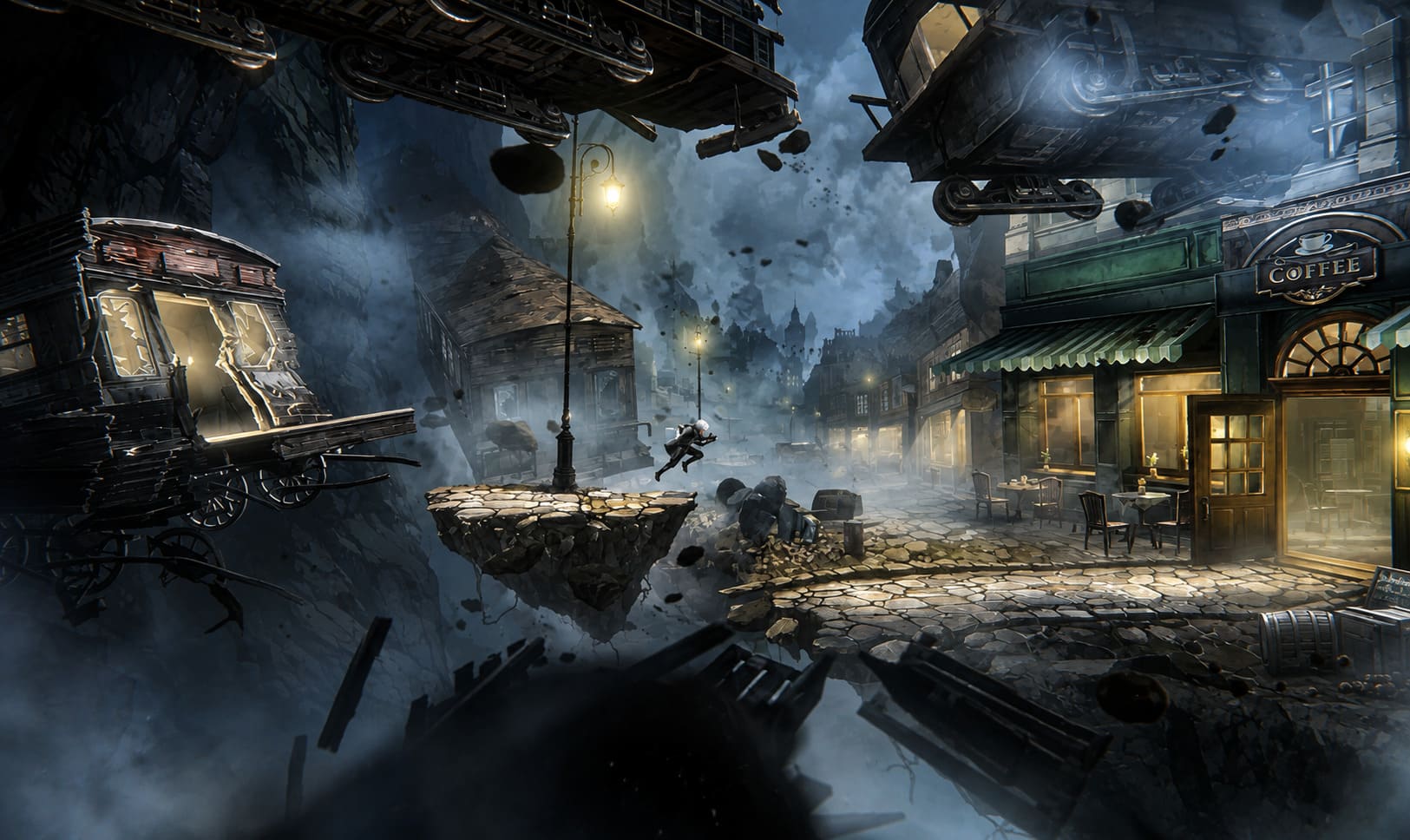
Its surreal environments can shift dramatically, sometimes changing the layout of an area and creating entirely new traversal opportunities.
A train can crash into an environment. Gravity can change. Structures can become inverted. Familiar spaces can suddenly look completely different.
When one of these major environmental events happens, don’t panic and immediately start running.
Stop.
Look around.
Study the new layout.
Check platforms, debris, ledges, windows, and newly accessible structures.
The game’s visual chaos can make these moments feel overwhelming, but the changes often exist for a reason. A previously inaccessible path may suddenly be open.
Memories Are Worth Hunting Down
The game’s memories aren’t just collectibles for completionists.
Fragments scattered throughout locations such as cemeteries, ruined streets, industrial areas, and train stations can provide additional context about the mysterious world and the forces behind it.
They can also connect with progression systems and unlock useful passive effects or information.
So if you’re the type of player who normally runs past every journal because “I’ll read it later,” I’d strongly recommend changing that habit here.
The story is built around memory, trauma, and the subconscious. Ignoring those pieces means you’re deliberately skipping some of the game’s most interesting material.
Audio Cues Can Prevent Surprise Attacks
The sound design deserves more attention than it initially gets.
Enemies frequently reveal themselves through footsteps, mechanical noises, groans, movement, or other environmental sounds before they become visible.
If you’re wearing headphones, use them.
Seriously.
A player who constantly watches the screen but ignores the audio can walk directly into an ambush that another player could hear coming several seconds earlier.
Sound can tell you that something is nearby even when the environment is visually confusing.
That information is especially valuable in dark areas where enemies can blend into the background.
Use the Tutorial as a Training Ground
Don’t rush through the tutorial simply because you want to reach the “real” game.
The early sections teach fundamental movement and defensive mechanics that become increasingly important later.
The tutorial mini-boss, often referred to by players as the undertaker, is particularly useful.
Instead of trying to destroy this enemy as quickly as possible, use the encounter to practice.
Learn the timing of heavy attacks.
Watch the animation before the strike lands.
Practice your Deflection.
Experiment with how much aggression you can safely use after a successful defensive move.
If you can consistently deal with this encounter without panic rolling or button-mashing, you’re building skills that will carry over into much harder fights.
Skip Boss Cinematics When You Need to
Dying to a boss and having to watch the same introduction again can be irritating enough to destroy your concentration.
Thankfully, major cinematic sequences can be skipped during repeat attempts.
Use that option.
There’s no prize for sitting through the same boss entrance animation ten times.
The important part is getting back into the fight quickly and maintaining your mental rhythm. Boss combat in Vapor World: Over The Mind rewards concentration, and anything that helps you avoid unnecessary downtime is worth using.
Vapor World Over The Mind Xbox Game Pass Day One Release: Everything You Need To Know
Quick Survival Reference
| System | Best Beginner Approach | Common Mistake |
|---|---|---|
| Embers | Spend them on useful progression | Hoarding everything |
| Deflection | Learn enemy attack timing | Panic blocking |
| Crack Break | Build toward vulnerability before attacking aggressively | Constantly mashing attacks |
| Stealth | Use it to isolate dangerous enemies | Fighting every target head-on |
| Ranged Weapons | Use them for stagger and positioning | Treating them as the main damage source |
| Exploration | Check vertical paths and suspicious areas | Rushing straight toward objectives |
Final Tips for Surviving Vapor World
The most important thing to understand is that Vapor World: Over The Mind isn’t really asking you to become faster. It’s asking you to become more deliberate.
Slow down.
Watch enemies instead of immediately attacking them.
Learn the timing behind Deflections.
Use stealth when the situation is ugly.
Spend your Embers instead of carrying them around forever.
Listen for enemies before you can see them.
Explore suspicious corners.
And when the world suddenly turns upside down, don’t assume the game has lost its mind. Look for the new route.
Once the combat starts clicking, the heavy movement that initially feels clumsy begins to make sense. Every swing carries weight. Every successful Deflection feels earned. A Crack Break becomes less like a random mechanic and more like the reward for reading your opponent correctly.
That’s where Vapor World: Over The Mind starts getting really good.
It isn’t a game that rewards frantic button presses. It rewards patience, observation, and the confidence to stand your ground when every instinct tells you to run.
Master that mindset, and the nightmare becomes considerably less terrifying.