Valheim 1.0 Deep North Prep Guide: Ultimate Strategy, Best Items & Tips
There is something special about the moment a Valheim map stops feeling familiar. You know where the Black Forest begins, you have learned how to deal with the Swamp, you can walk through the Mountains without immediately getting bullied by a wolf, and then you look toward the far north and realize that the game still has one final nightmare waiting for you.
Valheim 1.0 is set to arrive on September 9, 2026, bringing the game out of Early Access and introducing the Deep North as its final biome. For anyone who has spent hundreds of hours building castles, farming resources, fighting bosses, and getting absolutely wrecked by enemies that looked harmless from a distance, this is a huge moment.
The Deep North is not simply another place to visit, grab a few resources, kill a boss, and leave. The biome is designed to push Valheim’s survival systems much harder, with freezing conditions, difficult terrain, new resources, new tools, and dangerous encounters. If you want to walk into Version 1.0 prepared instead of becoming another frozen corpse on the map, the work starts before launch day.
Wanderburg Early Access Review 2026: Is This Rolling Castle Roguelike Worth Your Money?
When Does Valheim 1.0 Release?
The full Version 1.0 release is scheduled for September 9, 2026. The update represents the end of Valheim’s long Early Access period and introduces the Deep North as the game’s final major biome.
The launch also expands Valheim’s platform presence with releases on PlayStation 5 and Nintendo Switch 2, alongside crossplay support across supported platforms. That means the final chapter is not just a major update for veteran PC players; it is effectively the moment when a much larger audience gets to experience Valheim’s complete survival adventure.
| Feature | Valheim 1.0 |
|---|---|
| Release Date | September 9, 2026 |
| Final Biome | Deep North |
| New Platforms | PlayStation 5, Nintendo Switch 2 |
| Crossplay | Supported across compatible platforms |
| Early Access | Ends with Version 1.0 |
| Main Focus | Deep North and final progression |
For longtime players, the date matters because your current preparation can make the difference between an exciting expedition and hours of unnecessary grinding.
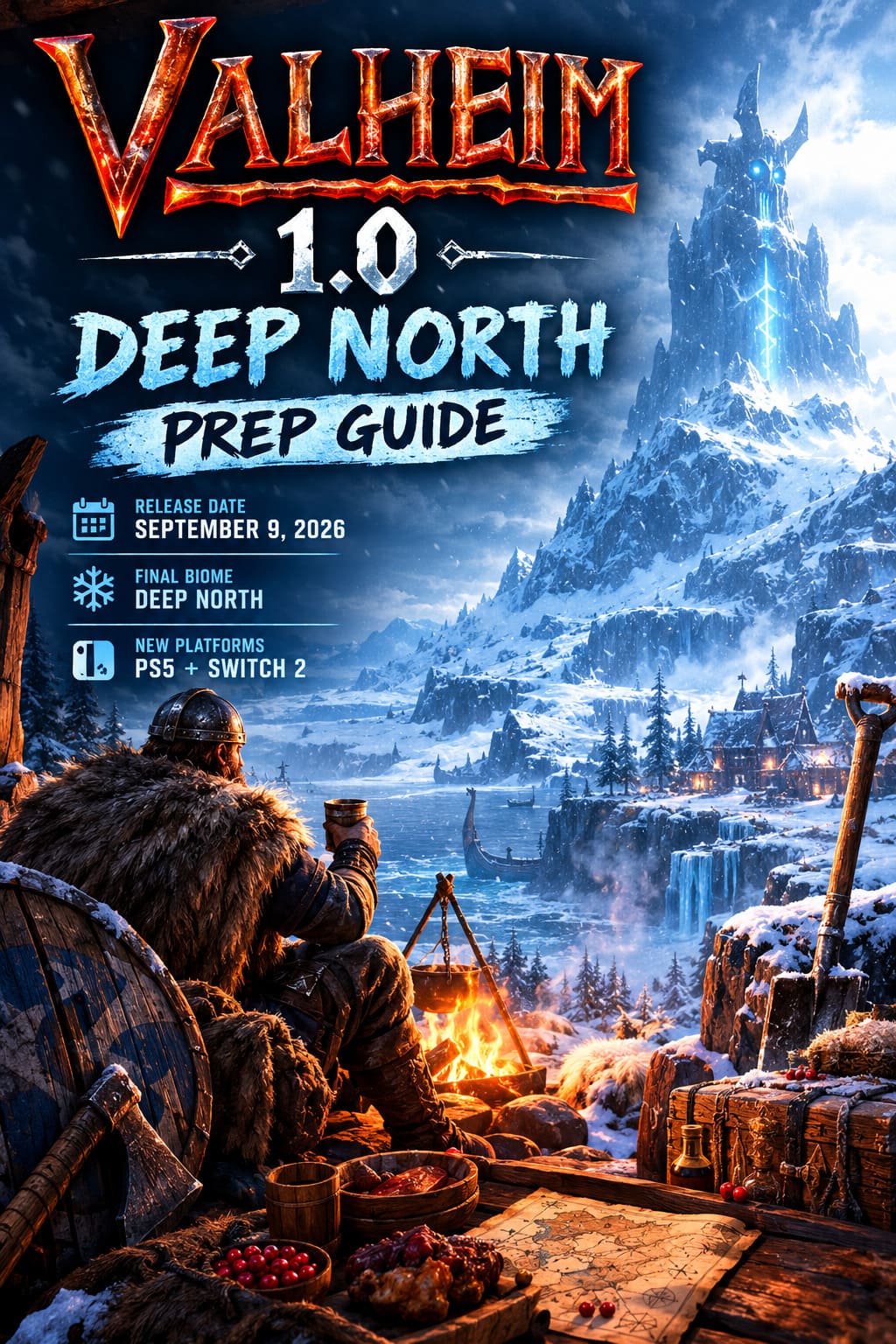
What Makes the Deep North Different?
Iron Gate has kept many of the Deep North’s secrets under wraps, and honestly, that’s exactly how I want it. Valheim is at its best when you sail into an unexplored area without knowing whether the next hill contains a useful resource, a new enemy, or something that is about to turn your perfectly planned expedition into a corpse run.
What we do know is enough to start preparing.
The Deep North is a heavily frozen environment filled with snow, ice, harsh weather, and terrain that can interfere with movement. The biome introduces new survival considerations rather than simply increasing enemy health and damage.
Snow Is More Than Decoration
Deep snow can accumulate across the landscape, while icy surfaces create additional problems with movement and positioning. That matters more than it sounds.
Valheim combat already punishes careless positioning. Add slippery terrain, poor visibility, difficult elevation changes, and enemies attacking from the snow, and suddenly even a fight you would normally consider easy can become dangerous.
This is one reason I would avoid treating the Deep North like another resource-gathering trip. You are going to want an actual expedition plan.
The Shovel Changes Base Building
One of the most interesting additions is the shovel, which allows players to clear deep snow.
For builders, this could become one of the most important tools in the entire update. Snow isn’t just something that makes the biome look cold; it can interfere with construction and settlement preparation. Being able to dig through accumulated snow should make it much easier to create foundations, paths, defensive positions, and functional outposts.
If you’re the kind of Valheim player who spends three hours building a beautiful fortress before remembering that you were supposed to be hunting a boss, the shovel is probably going straight into your hotbar.
New Resources and Food
The Deep North also introduces resources tied specifically to its frozen ecosystem. One confirmed example is Lingonberry, which can be harvested in the snowy forests.
Don’t underestimate new food ingredients. In Valheim, food isn’t a side mechanic you occasionally remember when your health bar gets low. Your food setup determines how much health, stamina, and survivability you bring into dangerous territory.
Should You Start a New Valheim World?
This is probably the biggest decision facing returning players.
You do not have to start over. Existing worlds and characters remain usable, and your stored equipment and inventory are not simply going to vanish when Version 1.0 arrives.
But there is a major catch involving procedural world generation.
Valheim doesn’t magically rebuild areas you’ve already explored every time new content appears. If you have already traveled deep into the northern portions of your seed, those areas may have been generated before the Deep North content existed.
That means your old world can remain perfectly playable while still being a less-than-ideal place to experience the new biome.
Why a Fresh Seed Could Be Better
If you’re serious about seeing the Deep North exactly as intended, I would personally lean toward a fresh world.
The biggest advantage is untouched terrain. A new seed gives the procedural generation system room to create the new content naturally, rather than forcing you to sail or run ridiculously far beyond territory you’ve already explored.
There is a huge difference between:
‘Let’s explore the new final biome.’
and:
‘Let’s spend an evening sailing around the edge of the world because we accidentally generated the northern area six months ago.’
I’ve played enough survival games to know which one sounds more fun.
When Keeping Your Old World Makes Sense
Starting over isn’t automatically the right answer. Some Valheim worlds are basically digital family homes at this point.
If you’ve spent hundreds of hours building enormous halls, roads, farms, docks, warehouses, and portal networks, throwing everything away just to see the Deep North can feel ridiculous.
Keep your existing world if:
- Your main base is something you genuinely don’t want to abandon.
- You play on a long-running multiplayer server with friends.
- Your northern regions remain largely unexplored.
- You want to continue existing progression rather than replaying the entire game.
- Your world contains infrastructure that would take dozens or hundreds of hours to rebuild.
The important part is understanding what has already been generated. If your group intentionally avoided the far north, you may be in an excellent position to experience the new content without creating a new seed.
Don’t Explore the Deep North Before 1.0
This is the preparation tip I’d take most seriously.
Do not go sightseeing in the northern edge of your map before the update.
Exploration can effectively lock terrain into the world generation state that existed when the area was first generated. If you travel into regions that should have contained future Deep North content, you can potentially end up with terrain that doesn’t contain the new features you were hoping to find.
You don’t gain anything by scouting those areas early.
Instead, spend the remaining preparation time somewhere safe. Upgrade equipment. Cook food. Build portals. Organize storage. Farm materials. Make backup gear.
Leave the northern frontier alone.
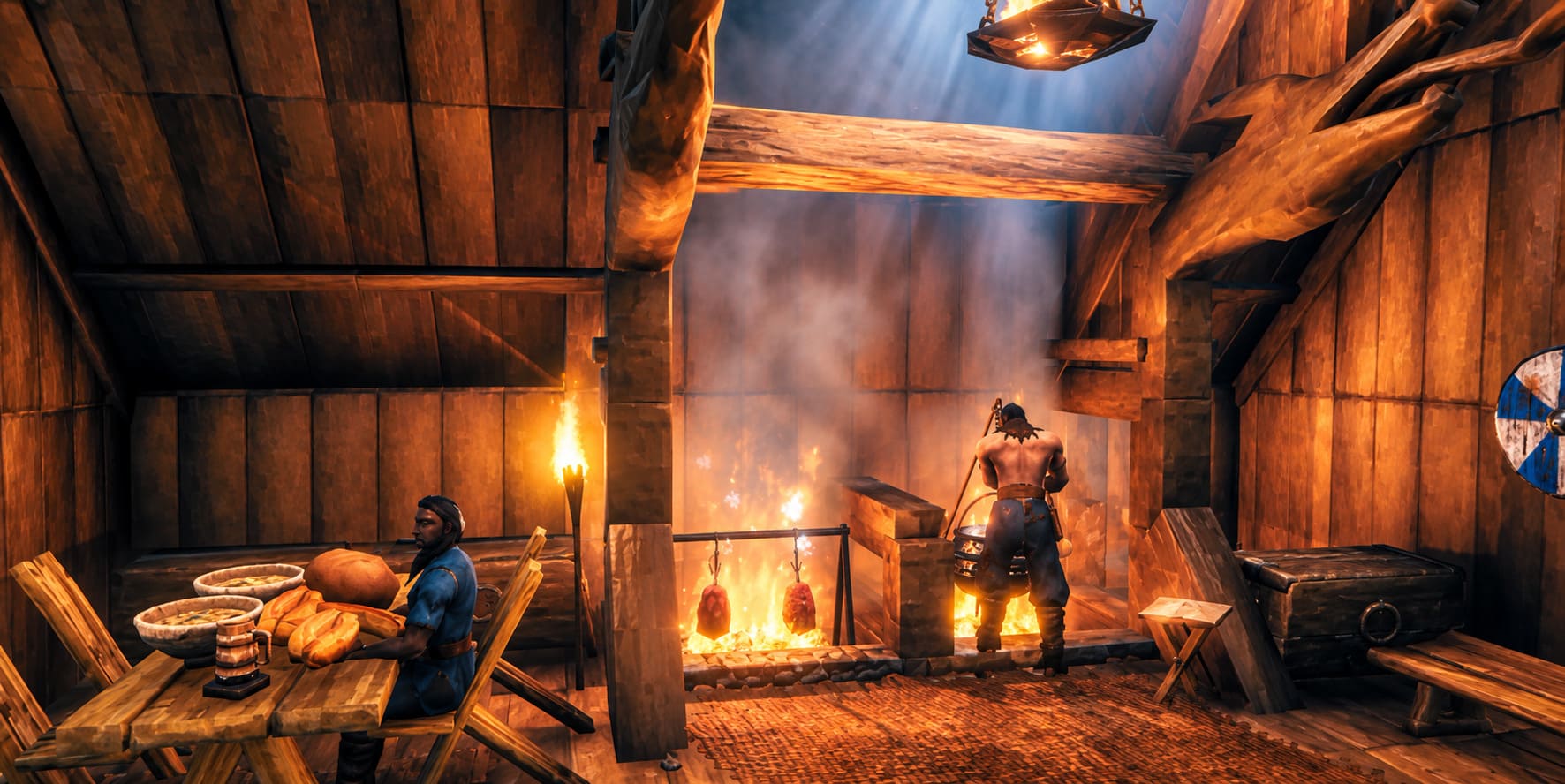
Build a Serious Food Stockpile
If you’ve been playing Valheim for a while, you already know that food is basically another piece of armor.
Going into the Deep North with mediocre meals is asking for trouble. The final biome is expected to put considerable pressure on both health and stamina, so you want multiple food options rather than filling your inventory with whatever happens to be sitting in your kitchen.
I would prepare dedicated storage for:
- High-health meals for difficult combat encounters.
- High-stamina foods for exploration, climbing, sprinting, and digging.
- Late-game meals suitable for extended expeditions.
- Eitr-focused food if you’re playing a magic-oriented build.
- Extra meals specifically reserved for corpse recovery runs.
That last category matters. Never eat your emergency food before the emergency happens.
Stockpile Meads Before You Leave
Meads are another thing I would overprepare rather than underprepare.
The Deep North’s environmental hazards make consumable buffs particularly valuable, especially before you have completely optimized your gear for the biome.
Keep a dedicated mead chest containing:
| Mead Type | Why You Want It |
|---|---|
| Healing Mead | Emergency recovery during combat |
| Stamina Mead | Long fights, climbing and exploration |
| Frost Resistance Mead | Protection against freezing conditions |
| Eitr Recovery Mead | Sustaining magic-focused builds |
Frost Resistance Mead deserves special attention. Even if your equipment eventually provides better protection, having emergency resistance available is cheap insurance.
A few extra potions taking up chest space are nothing compared with losing an entire expedition because you couldn’t survive the environment.
Create a Proper Portal Network
This is one of those Valheim systems that feels optional until you start traveling enormous distances.
Then suddenly you realize that portals are the difference between an efficient expedition and a miserable commute.
Before Version 1.0 launches, connect your major bases, farms, crafting locations, and resource hubs. Your main base should also contain several spare portal materials ready to deploy.
I’d keep emergency portal supplies available, including:
- Greydwarf Eyes
- Fine Wood
- Surtling Cores
The moment you establish a safe foothold near the Deep North, build an outpost and connect it to your existing network.
Don’t carry every valuable item across the entire map when the portal system can do most of the logistical work for you.
Prepare a Corpse Recovery Kit
Here’s my favorite piece of practical Valheim advice: assume you’re going to die.
Not because you’re bad at the game. Because you’re entering a brand-new endgame biome and learning its enemies, terrain, environmental hazards, and combat patterns.
Your first expedition might go brilliantly. Your second might end with you getting launched down a snowy slope while three monsters take turns beating you into the ground.
Build a recovery chest at your main portal hub.
Put inside:
- A spare armor set.
- A backup weapon.
- Basic food.
- Frost resistance.
- A shield or other reliable defensive equipment.
- Enough equipment to survive the trip back to your corpse.
This turns a devastating death into an annoying detour instead of a complete disaster.
How to Prepare If You’re Starting a New World
If you’re creating a brand-new 1.0 seed but want your existing character to get a head start, don’t arrive empty-handed.
Equip your Megingjord to maximize carrying capacity and fill your inventory with items that save time during early progression.
Useful items include:
- Strong food and useful meads.
- The Swamp Key.
- A Cultivator for immediate farming.
- High-tier pickaxes and axes.
- Fishing equipment and bait.
- Portal components.
- Other progression-critical equipment you don’t want to grind for again.
The goal isn’t to trivialize the new world. It’s to remove repetitive chores.
There is a difference between replaying Valheim because you enjoy it and chopping the same pile of early-game wood for the 400th time because you forgot to bring an axe.
Upgrade Your Gear Before Version 1.0
If you’re keeping your established character and world, this is the perfect time to finish your equipment upgrades.
Don’t wait until the Deep North arrives to discover that your favorite weapon is still sitting at an outdated quality level.
Spend your remaining time upgrading:
Armor → Weapons → Shield → Pickaxe → Axe → Essential tools
Your strongest equipment should be ready before you cross into the final biome.
Also check your durability. Walking into a massive endgame expedition with nearly broken gear is one of those mistakes that feels hilarious until you realize you’re 20 minutes from your base and surrounded by enemies.
What About Achievements and Console Commands?
Players chasing every new achievement should pay attention to their existing character and world history.
If you’ve used console commands or development cheats, achievement tracking can potentially be affected. Anyone who wants a completely clean achievement run should consider creating a fresh character and fresh world without administrative commands.
That might sound extreme, especially after hundreds of hours, but completionists know the pain of discovering that one achievement won’t unlock after you’ve already invested an entire weekend into the run.
If achievements matter to you, treat the final playthrough like a clean save from day one.
My Ideal Deep North Preparation Checklist
If I were sitting down with my main Valheim character the night before Version 1.0, this is the checklist I’d follow.
| Preparation | Priority |
|---|---|
| Avoid unexplored northern regions | Critical |
| Max out important equipment | Critical |
| Stockpile high-tier food | Critical |
| Prepare healing and resistance meads | Critical |
| Organize portal network | High |
| Build corpse recovery chest | High |
| Gather portal materials | High |
| Prepare backup armor and weapons | High |
| Decide between old world and fresh seed | High |
| Prepare achievement-safe character/world | Optional |
The biggest mistake would be assuming that having the strongest sword and armor automatically means you’re ready.
Valheim isn’t just an equipment-check game. Preparation, logistics, food, terrain awareness, portals, and knowing when to retreat are what keep you alive.
Final Thoughts: Don’t Rush the Deep North
After years of Early Access, Valheim reaching Version 1.0 is a big deal. The Deep North has the opportunity to become the kind of final biome that makes you forget about the hours you’ve already spent building and forces you to learn the game again.
That’s exactly what I want from it.
My biggest recommendation is simple: don’t spoil the experience for yourself by overexploring the northern frontier before launch. Prepare everything you can without touching the territory that needs to remain fresh.
Get your food sorted. Fill the mead chests. Upgrade your gear. Build a portal network. Prepare a corpse recovery kit. Then decide whether your beloved old world is worth keeping or whether it’s finally time to roll a fresh seed.
When September 9 arrives, you don’t want to be the Viking standing in the snow wondering why you didn’t bring enough Frost Resistance Mead.
You want to be the Viking who arrives with a full inventory, a spare portal, top-tier gear, enough food to survive a siege, and absolutely no idea what is hiding behind the next mountain.
That’s when Valheim is at its best.