Valheim Beginner’s Guide (2026): Best Starting Strategy, Boss Order, and Survival Tips for 1.0 Release
Valheim is one of those survival games that looks deceptively simple during the first few minutes. You wake up in a strange Viking afterlife, pick up a few branches and stones, punch some trees, and assume you have already figured out the basics. Then a boar charges at you, the weather turns miserable, your stamina disappears at exactly the wrong moment, and suddenly you are reconsidering every decision that brought you into the forest.
That rough beginning is a huge part of Valheim’s appeal. The game does not constantly hold your hand, and learning its systems through experience is far more satisfying than following a glowing objective marker every few minutes. After hundreds of hours in survival games, I can say that Valheim rewards preparation more than raw skill. You can absolutely survive dangerous encounters with good reflexes, but a properly prepared character makes the entire journey dramatically easier.
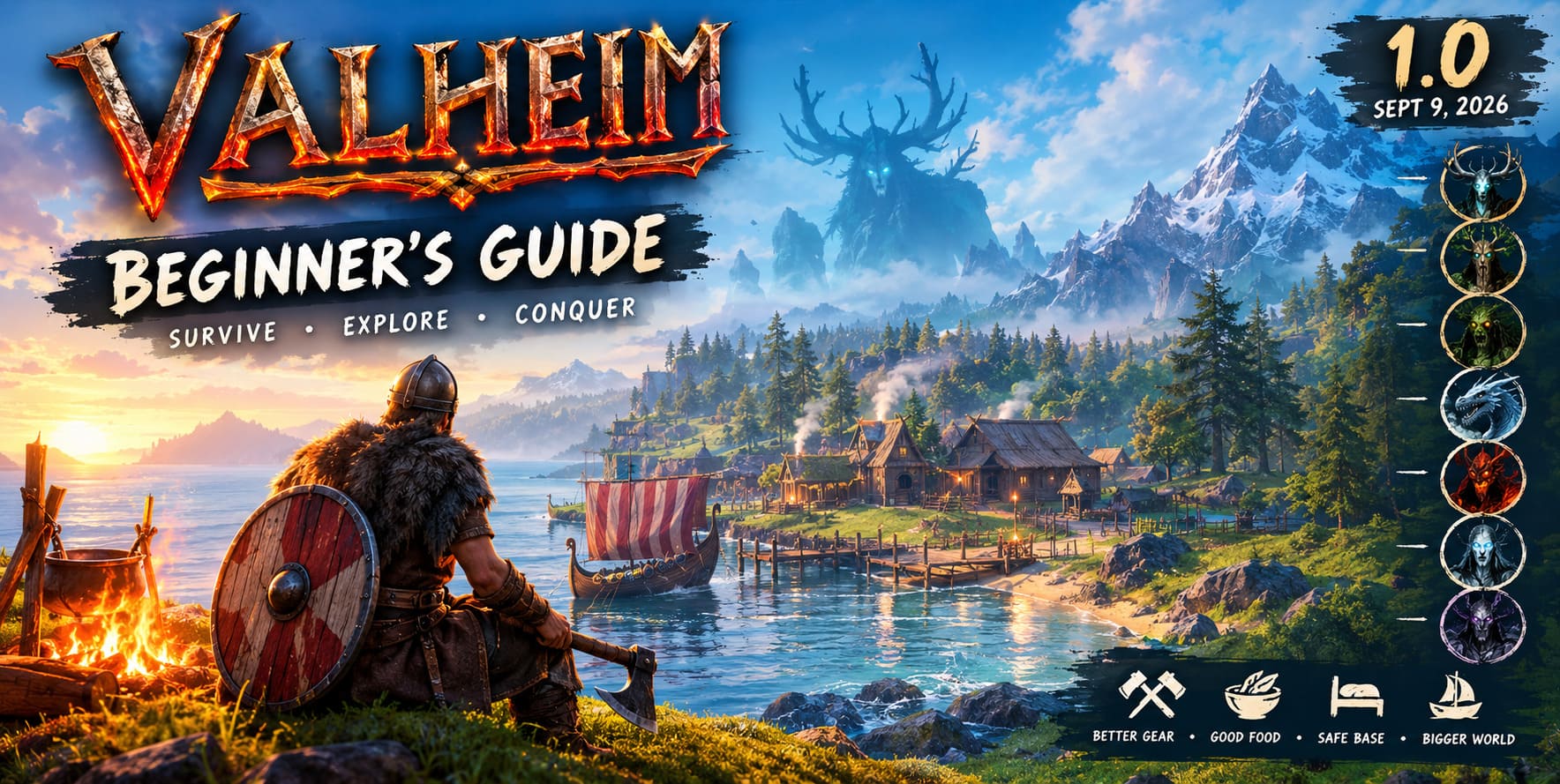
With the Valheim 1.0 release scheduled for September 9, 2026, the game is entering an important new chapter. The finished version adds the long-awaited Deep North content and crossplay functionality while allowing existing progression to continue. If you are starting your first world around the 1.0 launch, this guide covers the things I wish every new Viking understood before heading too far from the Meadows.
Valheim 1.0 Deep North Prep Guide: Ultimate Strategy, Best Items & Tips
Your First Hours in Valheim: What Actually Matters
The opening area can feel almost peaceful, but do not mistake the Meadows for a tutorial zone that you can ignore. This is where you establish the habits that will carry you through every later biome. Your first objective should be getting a Workbench, basic tools, reliable food, a bed, and a safe place to return to after exploration.
I would not waste time trying to build a gigantic Viking hall immediately. Your first shelter only needs to be functional. Put down a Workbench, build a roof over your important stations, place a bed, and make sure you have a covered campfire nearby. Once you have reliable crafting and a respawn point, the world becomes much less intimidating.
Your early equipment should include a Stone Axe, Club, wooden shield, Hammer, and basic armor as soon as the required materials become available. The shield deserves special attention because Valheim’s combat is built around timing rather than simply stacking damage. Learning to block early will save you from countless unnecessary deaths later.
Do Not Ignore the Rested Buff
If there is one beginner mistake I see constantly in survival games, it is treating temporary buffs as optional. In Valheim, the Rested effect is incredibly important. It improves your ability to recover health and stamina and makes exploration and combat feel substantially better.
Keep your base comfortable enough to maintain the buff and refresh it before long expeditions. I personally treat leaving home without being Rested the same way I would treat entering a boss arena with half my equipment missing: technically possible, but completely unnecessary.
Food Is Your Real Health Bar
Valheim does not use a traditional starvation system where your character simply dies because you forgot to eat. Instead, food determines the size of your health and stamina pools, and later your available Eitr for magic-focused builds. This makes food one of the most important parts of character progression rather than a simple survival chore.
You can have up to three different food effects active at the same time. The smart approach is to combine foods according to what you are doing. A dangerous combat expedition may call for high-health meals, while exploration and construction can benefit heavily from additional stamina.
| Activity | What to Prioritize | Why It Matters |
|---|---|---|
| Exploration | Stamina + balanced health | More running, climbing, swimming, and escaping danger |
| Boss Fight | High health + strong stamina | Survive heavy attacks while maintaining mobility |
| Building | Stamina-focused meals | Useful for sprinting and repeatedly placing structures |
| Magic Builds | Eitr-focused food | Increases your available magical resource |
Another important habit is keeping several food options stocked at your base. Running out of your best meal before an expedition is exactly the kind of mistake that sounds harmless until you are standing in a hostile biome with dramatically reduced health.
Learn Valheim’s Combat Before You Need It
Combat in Valheim can look basic on the surface, but there is more depth here than the early enemies suggest. Simply swinging your weapon repeatedly works against weak creatures, but it becomes a terrible strategy once enemies start hitting harder.
Blocking, parrying, positioning, and dodge-rolling are the skills worth practicing. A well-timed parry can completely change an encounter by creating an opening for a powerful counterattack. Stamina management is equally important because being out of stamina while an enemy is charging at you is one of the fastest ways to turn a routine fight into a corpse run.
Pay attention to enemy weaknesses as well. Different creatures respond differently to damage types, and choosing the right weapon can make a fight dramatically shorter. Once you stop thinking of every enemy as something that simply needs more sword swings, Valheim’s combat starts feeling much more deliberate.
Adrenaline and Aggressive Play
Modern Valheim combat also gives players more ways to reward confident play through systems such as Adrenaline. The important lesson is not to become reckless. Aggression works best when it is controlled, and experienced players learn when to push an advantage and when to disengage.
My biggest combat tip for beginners is brutally simple: never spend your entire stamina bar just because you can. Always leave yourself enough energy to block, dodge, or sprint away. That tiny habit will probably save your life more often than a better weapon.
The Forsaken: Understanding Valheim’s Boss Progression
Valheim’s progression is heavily tied to its bosses, known as the Forsaken. Defeating one is not merely a victory screen moment. Bosses unlock access to materials, abilities, and mechanics that allow you to progress toward increasingly dangerous biomes.
The progression traditionally begins with Eikthyr in the Meadows and moves through the game’s increasingly hostile environments until Fader in the Ashlands. The 1.0 release also brings the final Deep North content and its associated progression.
| Boss | Associated Biome | Main Progression Role |
|---|---|---|
| Eikthyr | Meadows | Unlocks the next stage of progression |
| The Elder | Black Forest | Provides tools for advancing into harsher regions |
| Bonemass | Swamp | Major step toward stronger equipment and Mountain progression |
| Moder | Mountain | Opens the path toward Plains progression |
| Yagluth | Plains | Major late-game progression milestone |
| The Queen | Mistlands | Unlocks progression deeper into the late game |
| Fader | Ashlands | Late-game progression and access to powerful equipment |
After defeating a Forsaken, remember to return to the Sacrificial Stones and hang the appropriate trophy. These trophies grant powerful passive abilities that can be activated for temporary advantages. They are easy to forget about, especially when you are excited about all the new equipment you just unlocked, but the abilities are absolutely worth using.
Do Not Rush Into the Next Biome
Valheim’s biome progression is not just a suggestion. The environment itself tells you when you are underprepared. The Meadows are forgiving, the Black Forest starts testing your combat skills, the Swamp introduces poison and miserable terrain, and the Mountains add freezing temperatures and some seriously nasty enemies.
Then things get even more aggressive in the Plains and Mistlands. The later areas can punish a careless player almost instantly, which is why preparation becomes increasingly important as you progress.
Never enter a new biome simply because you are curious about what is there. Curiosity is great, but bring the correct food, armor, weapons, environmental protection, healing supplies, and a reliable escape plan. Valheim is perfectly happy to let you discover that you were not ready.
Why Boats Become Essential
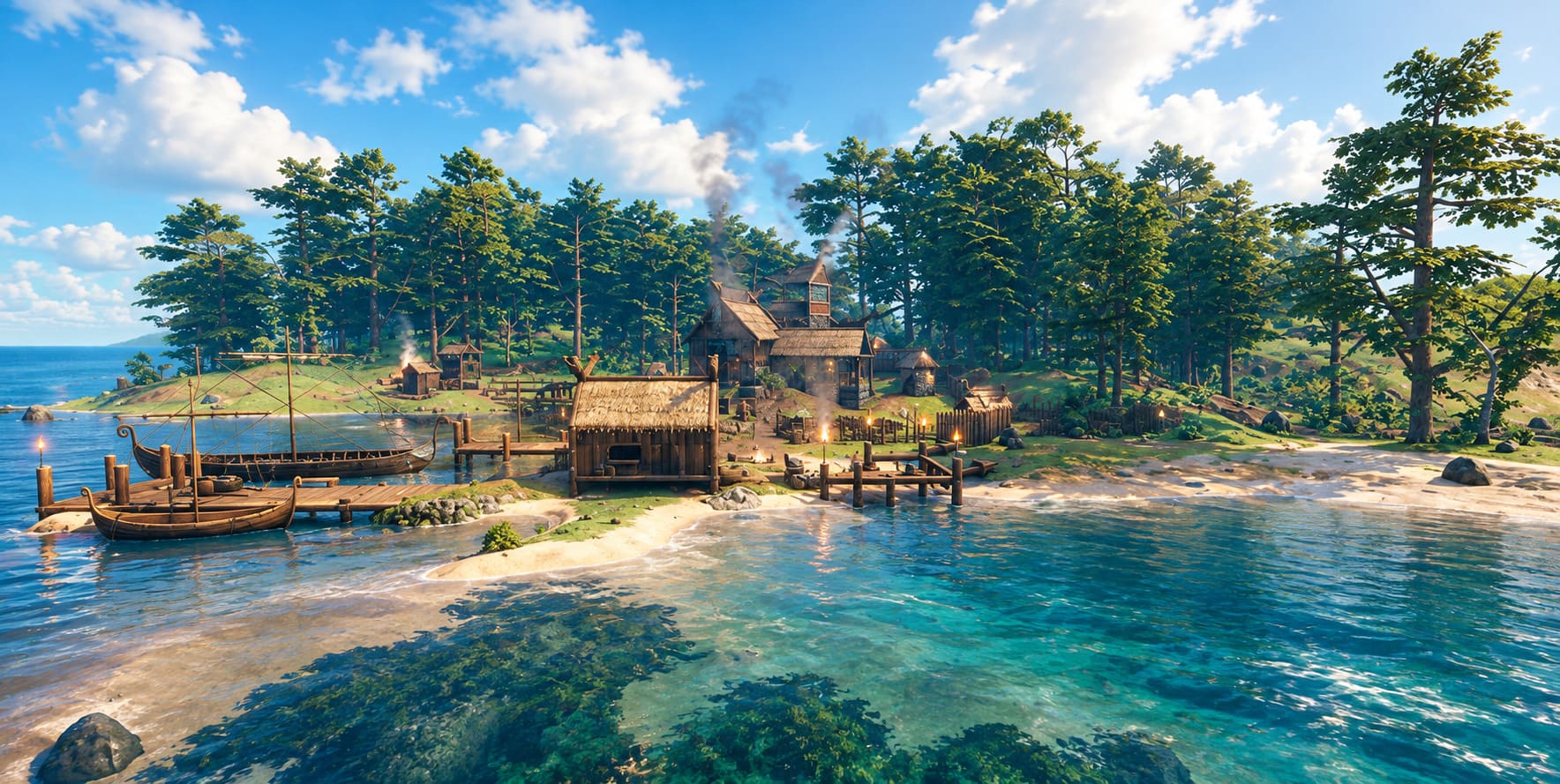
One of the coolest parts of Valheim is how the world gradually opens up. The starting region is only a small piece of the overall adventure, and many advanced biomes are separated by huge bodies of water. Eventually, walking everywhere becomes completely impractical.
Your first real boat gives you freedom, but stronger vessels such as the Karve and Longship make serious exploration much more comfortable. Sailing is not just transportation; it becomes a major part of your progression, especially when establishing distant bases or searching for specific resources.
Always think about where you are going to land before sailing into unfamiliar territory. A beautiful coastline can quickly become a death trap if you arrive at night and discover a group of hostile creatures waiting directly on the beach.
Base Building: Build Smart Before You Build Huge
Valheim’s building system is one of the reasons I keep coming back to the game. There is something ridiculously satisfying about starting with a crooked wooden shack and eventually turning the same world into a sprawling Viking settlement.
But building a giant fortress too early is usually wasted effort. Start with a compact base that gives you everything you need: crafting stations, storage, sleeping space, food production, fire, and basic defenses.
Once your progression stabilizes, expand. Create dedicated storage areas, workshops, farms, portals, defensive walls, and eventually larger halls. The Hammer and Workbench are your foundation for practically everything, so keeping your crafting infrastructure organized will save a surprising amount of time.
Environmental Damage Can Be Embarrassingly Dangerous
Valheim has a habit of killing players in ways that feel almost insulting. Falling trees are a classic example. You can spend twenty minutes preparing for an enemy encounter, only to get flattened by a log because you were standing in the wrong place.
Watch your surroundings while harvesting resources, building structures, or working near cliffs. Environmental hazards are part of the game, and the world does not care how expensive your armor is.
Preparation Is Better Than Grinding
Valheim can tempt you into thinking that grinding better equipment will solve every problem. It will not. Gear matters enormously, but preparation matters just as much. Having the right food, a Rested buff, appropriate resistance, spare equipment, and a clear route home can be more valuable than squeezing another few points of damage from your weapon.
Before heading into dangerous territory, my personal checklist looks something like this:
- Refresh the Rested buff.
- Carry three useful food types.
- Repair your equipment.
- Bring healing and resistance items when appropriate.
- Know where your escape route and nearby shelter are.
- Keep enough stamina for emergencies.
It sounds excessive when you are standing safely inside your base. It feels much less excessive when a group of enemies is chasing you through a swamp and your health bar is disappearing.
Exploration Tips That Save Hours
Valheim generates enormous worlds, and wandering without a plan can consume ridiculous amounts of time. Mark important locations on your map. If you discover a useful resource deposit, dungeon, trader, crypt, abandoned structure, or promising building location, put down a marker immediately.
I also recommend establishing small outposts as your journeys become longer. A tiny shelter with a bed, Workbench, fire, and storage can turn a dangerous expedition into a manageable one. You do not need another magnificent castle; sometimes a miserable little wooden hut in the middle of nowhere is the best investment you can make.
Valheim Beginner Mistakes You Should Avoid
The most common mistakes are rarely complicated. They come from assuming that Valheim works like a conventional action game or another survival title. It doesn’t, and adapting to its rules is part of the fun.
- Ignoring the Rested buff and wondering why exploration suddenly feels exhausting.
- Using only one food type instead of building a balanced food setup.
- Entering a new biome without resistance gear or appropriate preparation.
- Fighting everything you see instead of choosing when to engage.
- Spending all your stamina before an enemy has even attacked.
- Building too far from useful resources without considering transportation.
The biggest mistake, though, is rushing. Valheim is not at its best when you sprint through progression just to reach the next boss. Some of my favorite moments have come from completely pointless detours: finding a strange shoreline, building a temporary camp, sailing into a storm, or spending an evening making a base look far better than it actually needed to be.
How I Would Start a Fresh Valheim World in 2026
If I were starting from zero on the 1.0 release, I would keep the opening hours extremely focused. I would establish a small Meadows base, gather enough materials for reliable tools and weapons, secure good food, get leather armor, and prepare carefully for Eikthyr rather than rushing straight toward the altar.
After that, I would use each boss as a checkpoint rather than treating the game like a race. Every new biome deserves its own preparation phase. Build the equipment, resistance, food supply, transportation, and infrastructure you need before making the next major push.
The progression becomes much smoother when you think of Valheim as a chain of preparation cycles: explore, gather, craft, improve, fight, unlock, and repeat. Trying to skip several steps at once is usually when the game starts collecting your gravestones.
Final Thoughts
Valheim remains one of the most rewarding survival games for players who enjoy earning their progress. It does not shower you with instructions or constantly tell you what to do. Instead, it gives you a dangerous world, a few tools, and enough freedom to make your own stories.
The best beginner strategy is not some secret weapon or perfect build. It is learning the fundamentals: keep yourself Rested, eat intelligently, manage stamina, respect each biome, prepare for bosses, build useful bases, and never underestimate the environment. Once those habits become second nature, Valheim stops feeling like a hostile survival simulator and starts feeling like a huge Viking playground.
And that is where the game really clicks. The first few hours are about trying not to die. Later, you are sailing across oceans, building ridiculous fortresses, hunting bosses, experimenting with weapons, and wondering how it is somehow three in the morning. That transformation from helpless Viking to experienced survivor is what makes Valheim so damn good.