Resonance A Plague Tale Legacy Full Story Explained: The Ending and Lore Breakdown
I’ll be honest: when I first heard that Resonance: A Plague Tale Legacy would move away from Amicia and Hugo, I had mixed feelings. Those two characters carried so much emotional weight that following another protagonist could easily have felt like a side quest nobody asked for. Then Sophia stepped into the spotlight, and suddenly the whole idea started making sense.
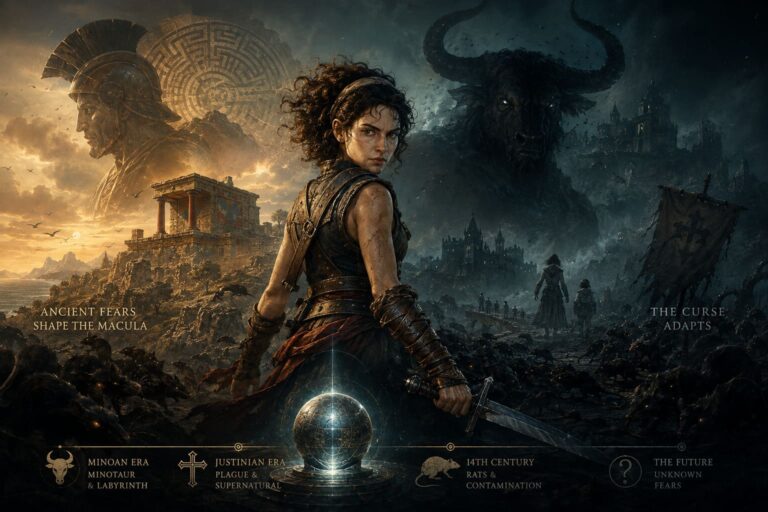
This isn’t simply another chapter wearing the A Plague Tale name. Resonance digs into the mythology behind the Macula and gives Sophia a past that makes her actions in Requiem hit much harder. Instead of medieval France, we are thrown onto the dangerous ruins of Minotaur’s Island in Crete, where ancient mythology, psychological horror, and the supernatural collide.
The result is a surprisingly ambitious prequel. It answers questions I didn’t even realize I had about Sophia while also making the Macula feel far older and stranger than the original games suggested.
Sophia Before She Became the Captain We Know
Sophia wasn’t always the tough, sarcastic smuggler who crosses paths with Amicia and Hugo. In Resonance, she is younger, more reckless, and frankly much more damaged than the character we eventually meet in Requiem.
Her childhood was shaped by violence and crime. She was raised around people who taught her to survive rather than trust, while her connection to a criminal group led by the ruthless Pharaoh left deep scars. Sophia eventually runs from that world, but escaping physically proves much easier than escaping mentally.
She has been plagued by disturbing dreams and visions for years. She sees fragments of ancient battles, hears mysterious voices, and experiences moments that feel completely disconnected from reality. The more she tries to understand them, the clearer it becomes that something is reaching through history toward her.
That is where the story’s central mystery begins.
Sophia possesses an ancient artifact and a strange handwritten notebook, both of which seem connected to the visions. Alongside Leni, her trusted companion, she travels toward the forbidden island because she believes the answers to her past are buried somewhere beneath its ruins.
And, naturally, this turns out to be an absolutely terrible place to go looking for answers.
The Dual Timeline Is More Than a Cool Gimmick
The thing I enjoyed most about Resonance is its use of two different eras.
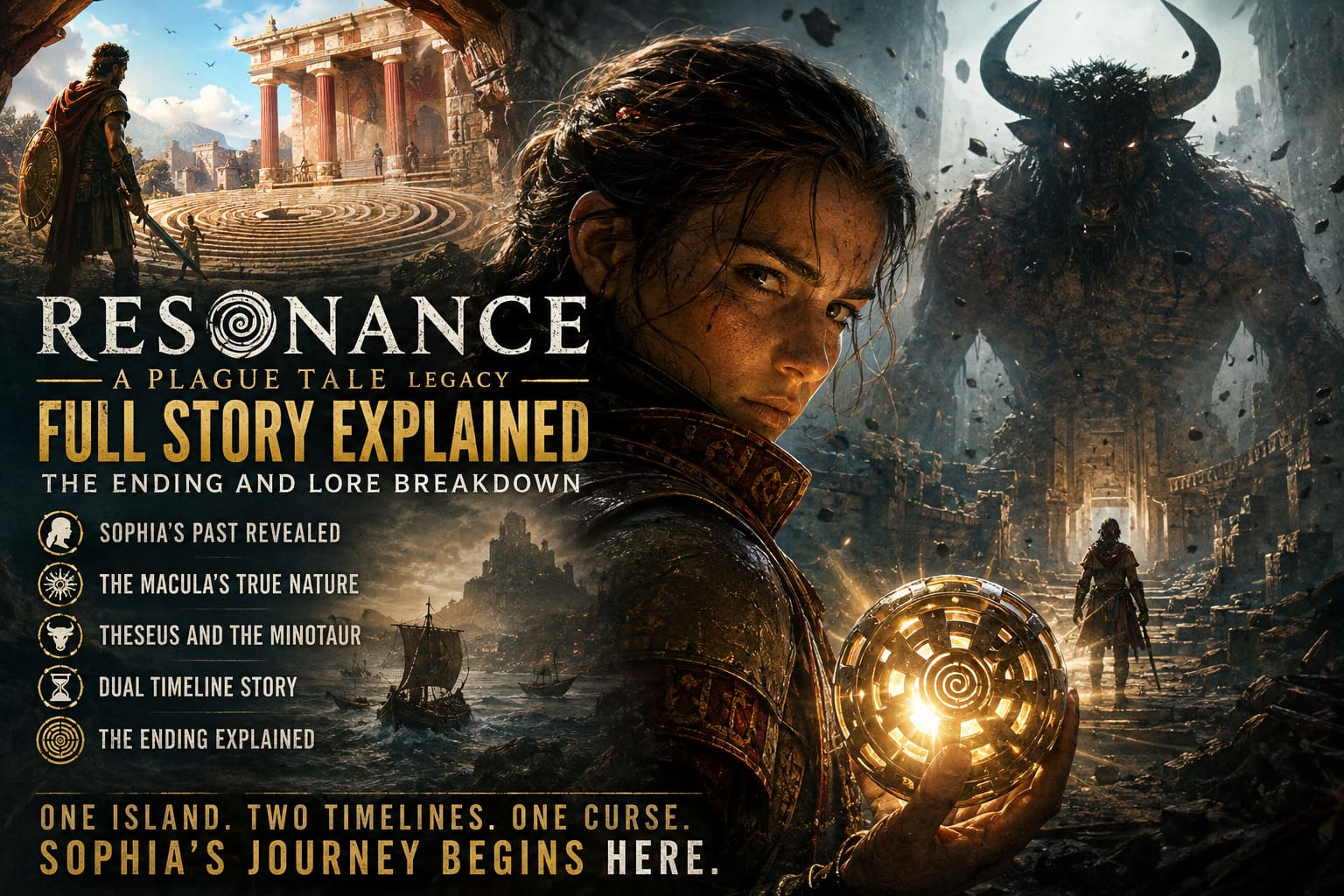
The main story follows Sophia in the medieval period, but the game constantly reaches backward more than two thousand years into the ancient Minoan world. This is where Theseus enters the picture.
Through Sophia’s connection to the Macula, she can experience fragments of Theseus’s memories. Players actually get to control him during portions of the adventure, witnessing the labyrinth before centuries of decay and darkness transformed it into the nightmare Sophia encounters.
That structure gives the game a very different flavor from the previous A Plague Tale titles. You aren’t simply exploring ruins and reading descriptions about what happened there. You experience pieces of the past directly and use them to survive the present.
The idea is especially clever when the labyrinth’s puzzles are involved. Ancient mechanisms, traps, and architectural challenges that seem impossible to Sophia can be understood by watching how Theseus encountered them centuries earlier.
It turns the island into one giant historical puzzle.
How the Two Timelines Work
| Story Element | What It Adds to the Game |
|---|---|
| Sophia’s timeline | Explores her traumatic past and connection to the Macula |
| Theseus’s timeline | Reveals the ancient history of the curse |
| Minoan labyrinth | Connects mythology with the supernatural lore |
| The Macula | Shows that its manifestations extend far beyond rats |
| The Restless Presence | Reimagines the Minotaur as a supernatural threat |
| The ending | Explains Sophia’s transformation into a protector |
The Macula Was Never Just About Rats
This is probably the biggest lore bomb in the entire story.
For years, fans naturally associated the Macula with the plague of rats. The swarms, the blood, the darkness, the overwhelming scale of the infestation — all of that became inseparable from the identity of A Plague Tale.
Resonance suggests that the underlying phenomenon is much bigger.
The Macula can manifest differently depending on the fears, beliefs, and emotional landscape of the people connected to it. In medieval France, it appears through rats and plague. In the ancient Minoan setting, it takes on a completely different form.
That form is the Restless Presence.
And yes, it is essentially the game’s horrifying version of the Minotaur.
But calling it a simple monster would undersell what the game is doing. The creature feels less like an ordinary physical beast and more like a manifestation of accumulated fear, trauma, and the supernatural force buried beneath the island.
That makes it much creepier.
There isn’t an army of monsters to fight. Instead, there is one presence that seems to understand the environment, manipulate darkness, and relentlessly hunt Sophia. The threat becomes psychological as much as physical.
Light Becomes Sophia’s Best Weapon
The gameplay reflects the mythology surprisingly well.
Sophia eventually gains access to a Minoan sphere, an ancient device capable of manipulating and focusing light. Considering that the labyrinth is packed with reflective surfaces, mirrors, pillars, and elaborate mechanisms, the artifact becomes essential to surviving the island.
I really like this design choice because it makes the environment itself part of the confrontation.
Instead of simply pulling out a stronger weapon whenever the monster appears, Sophia has to understand the architecture around her. Redirecting beams, activating ancient mechanisms, and manipulating sources of light become ways of controlling the battlefield.
It feels very A Plague Tale: desperate, clever, and just barely enough to keep something horrible away.
Pharaoh Is the Human Monster
Of course, Sophia has another problem.
Pharaoh and his mercenaries are chasing her through the island, and their motivations couldn’t be more different from hers. Sophia wants answers about her past. Pharaoh wants the treasure hidden inside the labyrinth.
He sees the island as an opportunity for wealth and power.
That contrast is important because Resonance constantly places human greed beside supernatural horror. The Macula may be terrifying, but people are perfectly capable of making everything worse on their own.
Pharaoh also refuses to believe that some things should remain buried. His obsession pushes him deeper into the labyrinth, eventually bringing everyone toward the same catastrophic confrontation.
The Ending Explained
The final act is where all the game’s major threads finally crash together.
Sophia and Leni reach the deepest part of the labyrinth after surviving the ancient trials and navigating the increasingly dangerous ruins. Pharaoh catches up with them, convinced that the legendary treasure is waiting at the center.
Instead, they discover something far more important.
The real secret of the labyrinth is the history of the Macula and the fate of Theseus.
Theseus wasn’t simply the heroic figure from mythology who defeated a monster and walked away victorious. His story is much darker. He was connected to the same supernatural force that Sophia has been encountering, eventually becoming another victim of its influence.
The Minotaur wasn’t merely some independent creature lurking underground.
It was a manifestation of the Macula.
That revelation completely changes the meaning of the ancient legend. What humanity remembered as mythology was actually a distorted memory of something real.
And honestly, this is exactly the kind of lore twist I wanted from an A Plague Tale prequel.
Pharaoh’s Greed Triggers the Disaster
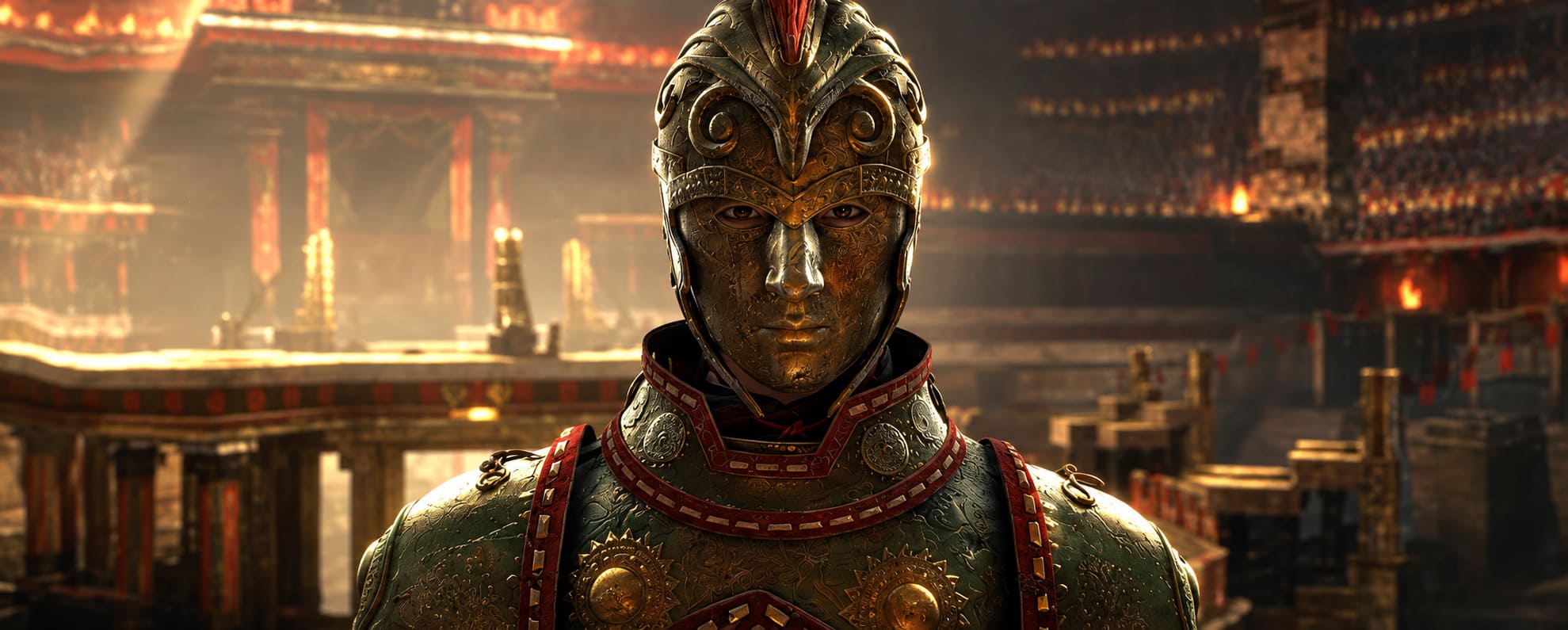
Pharaoh attempts to claim the central power of the labyrinth, and his greed ultimately brings everything crashing down.
The Restless Presence is unleashed with devastating consequences. Pharaoh and his remaining soldiers are overwhelmed, proving that all their weapons and numbers mean absolutely nothing against something that doesn’t play by human rules.
Sophia, meanwhile, has to confront the creature herself.
Her Minoan sphere becomes the key. She manipulates the ancient light structures and exposes the creature to concentrated light, weakening the manifestation of the Macula.
But the physical fight isn’t the only battle happening.
Sophia finally understands the truth about her visions.
The voices weren’t random supernatural noise. They were fragments of the Macula’s influence, attempting to reach her and turn her into another vessel — another anchor for the ancient force.
For years, Sophia believed that something was wrong with her.
Now she realizes that something was trying to use her.
Sophia Refuses to Become Another Victim
This is where the ending becomes much more personal.
Sophia doesn’t defeat the Macula simply because she is stronger. She refuses to surrender her identity to it.
She accepts the trauma that shaped her rather than allowing that trauma to define her future. The psychological connection is broken, and Sophia turns everything she has learned against the creature.
Using her sword, grappling hook, and the ancient architecture itself, she brings down the structure around the Restless Presence. The labyrinth collapses, burying the creature and sealing the ancient horror beneath the ruins.
Sophia survives.
But she doesn’t leave with the treasure Pharaoh wanted.
She leaves with something much more valuable: understanding.
Why This Makes Requiem Better
This is where Resonance really earns its place in the franchise.
By the time Sophia appears in A Plague Tale: Requiem, she is already someone who understands the horror of the Macula. She knows what happens when an innocent person becomes trapped in its influence. More importantly, she knows that the person carrying the curse isn’t necessarily the monster.
That completely changes how I look at her relationship with Hugo.
Sophia isn’t just helping Amicia and Hugo because she happens to be a decent person. She recognizes Hugo’s situation because she has already seen another human being consumed by the same kind of supernatural horror.
Her experience with Theseus and the Restless Presence taught her exactly how dangerous the Macula can become when fear and suffering take control.
That’s why her willingness to risk her ship, crew, and even her own life in Requiem suddenly feels much more meaningful.
She has been there before.
She knows what is waiting at the end of that road.
Final Thoughts
Resonance: A Plague Tale Legacy works best when it stops trying to imitate the original games and embraces its own identity. The switch from plague-ridden France to ancient Crete is bold, the dual timeline adds genuine mystery, and turning the Minotaur into another manifestation of the Macula gives the franchise’s mythology a much wider scope.
For me, the biggest victory is Sophia herself.
She begins the story as someone running from her past and ends it as someone capable of confronting it. She doesn’t become a hero because destiny tells her to. She becomes one because she finally decides that her trauma doesn’t get to decide who she is.
And that makes her later role in A Plague Tale: Requiem feel less like a convenient character connection and more like the culmination of a journey that started long before Amicia and Hugo ever met her.
If you’re invested in A Plague Tale lore, the Macula, Sophia, Theseus, or the mythology behind the series, this prequel adds some seriously fascinating pieces to the puzzle. It also leaves the door open to an even bigger question: if the Macula has appeared in radically different forms throughout history, just how many civilizations have already faced it — and how much of that history has humanity simply mistaken for legend?