Is The Severed Gods Worth Buying? 2026 Review & Gameplay Analysis
The Severed Gods is the kind of indie RPG that immediately caught my attention for one simple reason: it is not trying to be another straightforward turn-based fantasy game.
After playing a lot of tactical RPGs, roguelites, JRPGs, and strategy-heavy indie titles over the years, I’ve become fairly skeptical when a game advertises itself as a “deep tactical experience.” Usually, that means a familiar turn-based system wrapped in a different art style. The Severed Gods, however, has at least one mechanic that genuinely changes the way I approach combat: you can target and destroy individual parts of powerful enemies.
That idea sounds like a gimmick on paper. After spending time with the game’s systems, though, I think there is considerably more to it.
The game combines turn-based strategy, roguelite progression, character builds, reincarnation, and a dark fantasy setting. It is also launching in Steam Early Access in August 2026, which is important because this is not a finished, perfectly polished RPG yet.
So, is The Severed Gods worth buying in 2026?
For the right type of player, absolutely. But I wouldn’t recommend it blindly to everyone.
What Is The Severed Gods?
Developed by Topebox, The Severed Gods is a tactical, turn-based roguelite RPG built around a party of eight heroes trapped in an endless cycle of reincarnation.
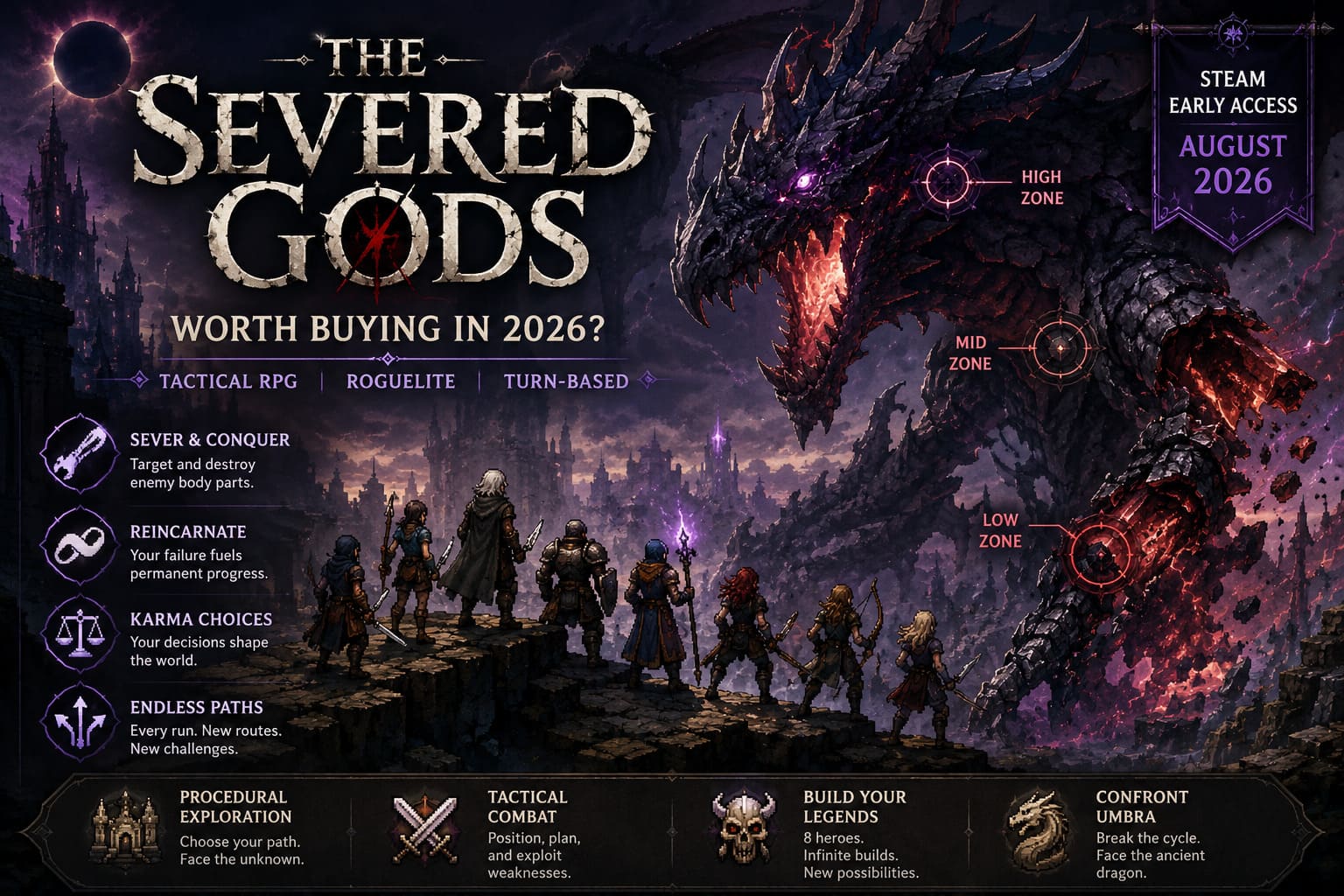
The main objective is to eventually confront Umbra, an ancient mystical dragon, but reaching that point isn’t as simple as following a traditional RPG campaign from beginning to end.
Instead, the game is structured around repeated runs.
You explore different routes, fight enemies, encounter random events, develop your characters, make decisions, and eventually face situations that can end your run. When that happens, the reincarnation system allows your progress to continue in a different form.
That structure immediately puts The Severed Gods closer to games where failure is part of progression rather than something you simply reload and forget.
And personally, that’s one of the things I like most about this type of RPG.
The Reincarnation System Makes Death Matter
I’ve played plenty of roguelites where dying eventually starts feeling routine.
You lose a run, restart, collect some currency, unlock another upgrade, and repeat the same process. It works, but after dozens of hours the loop can become predictable.
The Severed Gods tries to make reincarnation feel more connected to the actual world and characters.
When a party is defeated, the heroes aren’t simply erased from the experience. Reincarnation feeds into the game’s meta-progression, allowing players to unlock permanent improvements, abilities, characters, and modifiers.
This creates an important psychological difference.
You’re not necessarily thinking:
“I wasted an hour.”
You’re more likely to think:
“That run failed, but what did I learn from it?”
That’s exactly the mindset a good roguelite should encourage.
The system also works alongside the game’s Karma mechanics, which give your decisions during exploration more weight than I initially expected.
Karma Choices Give Exploration More Personality
Procedural maps can sometimes feel lifeless.
You see a random event, pick option A or B, receive some currency or an item, and move on. After a while, these events become background noise.
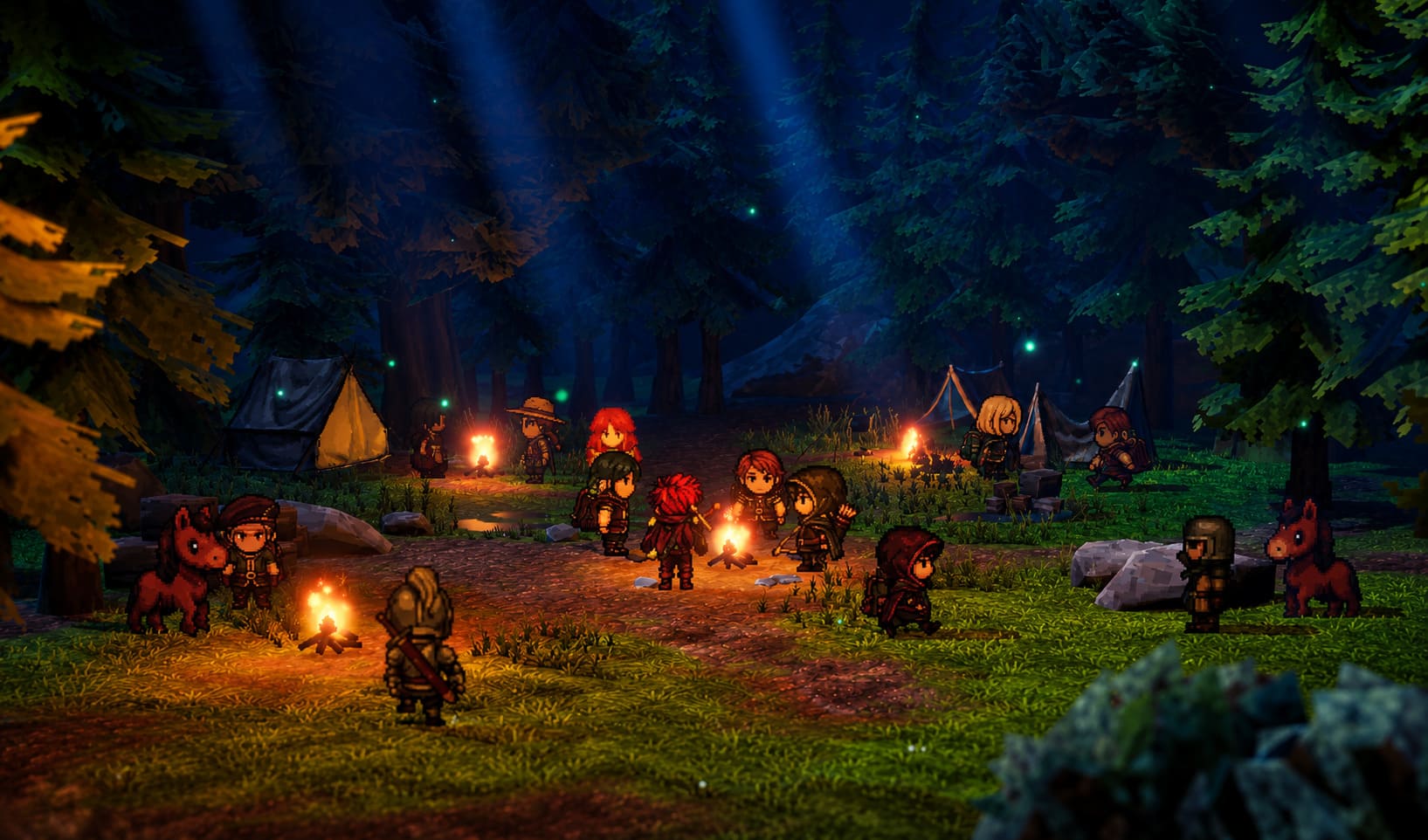
The Karma System in The Severed Gods attempts to avoid that problem by making decisions influence your alignment and potentially affect how the world responds during later runs.
For example, helping someone in trouble may produce a completely different outcome from taking advantage of their situation.
What I appreciate here is the idea that your decisions aren’t completely isolated from the rest of the game.
The system gives the exploration layer a little more personality and makes me more willing to stop and read what an event is actually asking instead of immediately choosing whichever option provides the best reward.
It’s not revolutionary storytelling, but it is a smart fit for a roguelite structure.
The Combat System Is Where The Game Gets Interesting
If I had to choose one reason to keep an eye on The Severed Gods, it would be the combat.
The basic foundation is familiar: turn-based battles, positioning, abilities, elemental interactions, defensive mechanics, and character combinations.
But the game adds height-based positioning and body-part targeting.
Enemies can have different target zones, including Low, Mid, and High areas. These sections can have their own defensive properties and weaknesses.
Against larger enemies, breaking specific shields can eventually allow you to sever individual limbs or body parts.
And this isn’t just there for visual spectacle.
Removing a particular part of an enemy can change its behavior, eliminate an ability, or expose another weakness.
That turns some battles into miniature tactical puzzles.
Instead of asking:
“How quickly can I kill this boss?”
You’re asking:
“Which part should I destroy first, and what happens if I do?”
That is a much more interesting question.
Why Dismemberment Works Better Than I Expected
I’ve seen plenty of games introduce complicated combat mechanics that look impressive in trailers but become irrelevant once you start playing.
The dismemberment system has the potential to avoid that problem because it directly affects tactical decision-making.
Imagine you’re fighting a giant enemy that has a devastating attack connected to one of its limbs. You could simply attack its main health pool, but perhaps removing that limb first disables the attack.
Now you’re making a strategic trade-off.
Do you spend several turns breaking the limb?
Or do you ignore it and try to burst the boss down?
That’s the sort of decision that can make turn-based combat memorable.
Good tactical combat is rarely about having the most abilities. It’s about making the player care which ability they use right now.
The Severed Gods seems to understand that principle.
The Roguelite Structure Keeps Every Run Different
The game doesn’t follow the traditional JRPG formula of walking through a fixed sequence of towns, dungeons, and story battles.
Instead, each run can take different routes and lead you toward different encounters.
You may encounter specialized camps, elite enemies, mini-bosses, or random narrative events depending on the route you choose.
That makes the map itself part of the strategy.
And this is where the game reminds me of the better tactical roguelites I’ve played: the most interesting decisions often happen before the battle even starts.
Do you take the safer route?
Do you risk an elite encounter for better rewards?
Do you visit a camp to improve your party?
Or do you push forward because you’re confident your current build can handle whatever comes next?
Those decisions create the kind of tension that a linear RPG simply can’t reproduce in the same way.
The Art Style Looks Familiar, But The Systems Are Different
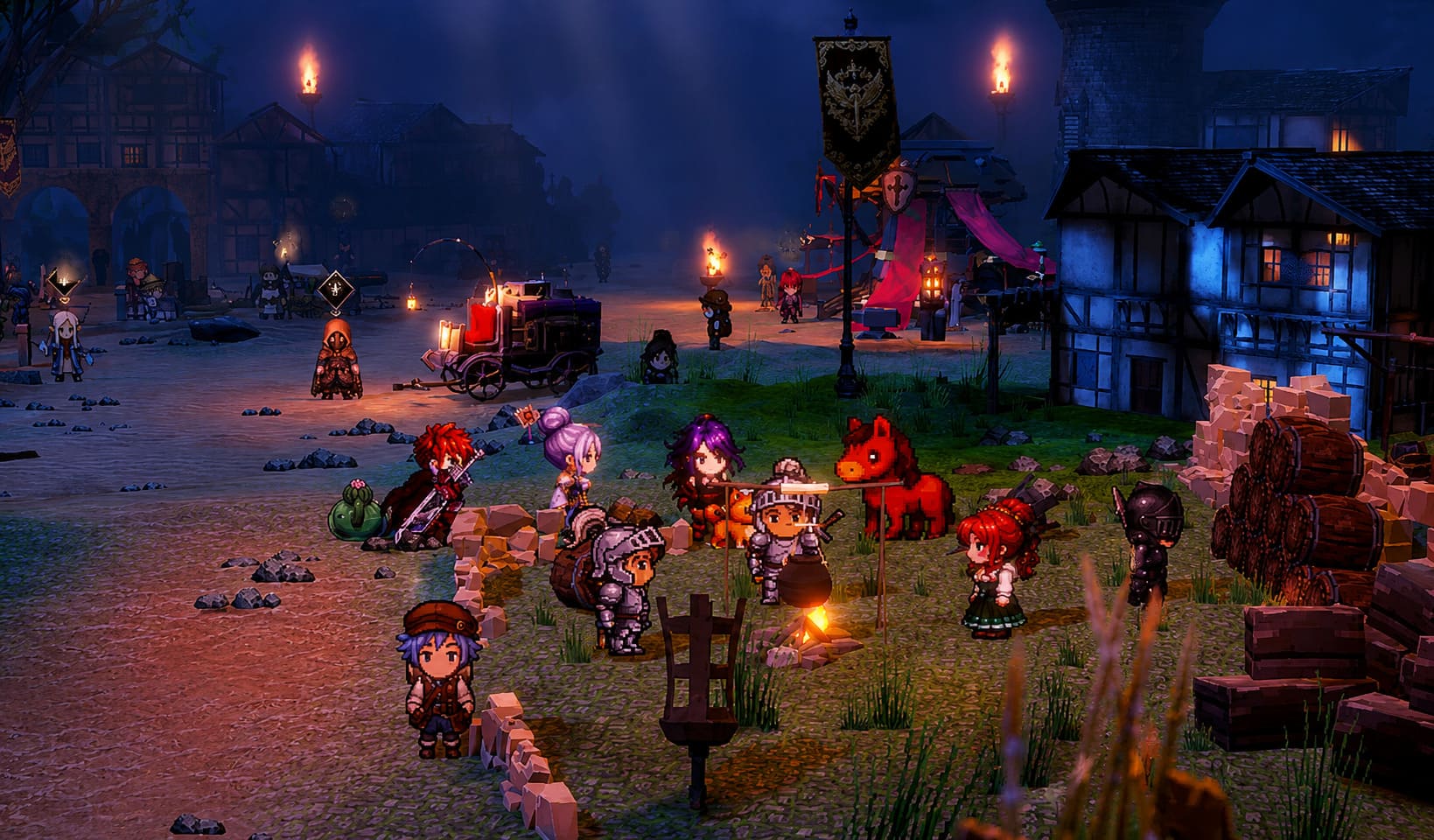
Visually, The Severed Gods can immediately remind players of modern HD-2D RPGs.
If you’ve played games influenced by the visual style of titles such as Octopath Traveler, you’ll probably recognize the general philosophy: detailed pixel-art characters, atmospheric environments, dramatic lighting, and flashy combat effects.
But I wouldn’t call The Severed Gods a clone.
The difference is what happens underneath the presentation.
Traditional HD-2D RPGs usually put much more emphasis on handcrafted storytelling, character arcs, exploration, and a predetermined campaign.
The Severed Gods is built around repetition, experimentation, builds, tactical encounters, and procedural progression.
That changes the entire rhythm of the game.
| Feature | The Severed Gods | Traditional HD-2D RPG |
|---|---|---|
| Progression | Roguelite runs and permanent upgrades | Linear character progression |
| Combat | Tactical positioning and body-part targeting | Turn-based weakness systems |
| Story | Dynamic events and Karma choices | Mostly predetermined narrative |
| Replayability | High, built around repeated runs | Usually focused on one campaign |
| Development | Steam Early Access | Typically completed release |
For me, this distinction is important.
If you’re buying The Severed Gods expecting another big traditional JRPG, you may come away disappointed.
If you’re looking for a tactical roguelite with RPG progression, the concept becomes much more appealing.
Where The Severed Gods Still Needs Work
This isn’t a perfect game, and pretending otherwise would make the review less useful.
The biggest issue is that we’re talking about an Early Access release.
That comes with certain expectations.
Some of the game’s interfaces and quality-of-life features still need refinement. Earlier versions reportedly had problems involving mouse support and gamepad navigation, while later updates introduced improvements to these areas.
Even with those changes, the UI can occasionally feel like it hasn’t received the same level of attention as the combat mechanics.
That’s a shame because the underlying systems are complicated enough that the interface needs to communicate information extremely clearly.
Audio and Presentation Need More Polish
The combat effects are generally more impressive than some of the supporting presentation.
The music and audio design don’t always create the same level of atmosphere that the game’s visual style suggests they should.
This isn’t a deal-breaker for me, but it is noticeable.
When a game has a strong dark-fantasy identity, sound design becomes an important part of selling that world.
I’d also like to see continued improvements to skill descriptions, menus, tooltips, and general quality-of-life features as development continues.
Is The Early Access Version Worth Buying?
This is probably the most important question.
Early Access changes the value proposition significantly.
You’re not buying a finished RPG. You’re buying into a game that already has its core mechanical identity but is still being developed and refined.
That means you’re potentially getting a lot of entertainment for your money, but you also need to accept bugs, balance changes, incomplete polish, and systems that may evolve over time.
Personally, I’m comfortable with that when the core gameplay loop is already strong.
And that’s where The Severed Gods has an advantage.
Its combat concept is interesting enough that I can forgive some rough edges.
If the developers continue improving the interface, audio, balance, descriptions, and overall presentation, the final version could become considerably stronger than its Early Access starting point.
Who Should Buy The Severed Gods?
I’d recommend it particularly to players who enjoy:
- Turn-based tactical combat where positioning actually matters.
- Roguelite games with meaningful permanent progression.
- Experimenting with different character builds and party combinations.
- Boss fights that require understanding enemy mechanics rather than simply maximizing damage.
- Dark fantasy games with procedural exploration and replayability.
On the other hand, I’d wait if you’re primarily looking for a polished, traditional JRPG with a huge linear story, cinematic presentation, extensive voice acting, and dozens of hours of carefully scripted content.
That’s simply not what this game is trying to be.
The Severed Gods Nintendo Switch Release Date: Is It Coming to Xbox Game Pass in 2026?
My Verdict: Is The Severed Gods Worth Buying?
After looking at what The Severed Gods is actually trying to accomplish, I’d say yes — with one major condition: you need to be comfortable with Early Access.
What makes the game stand out isn’t its art style or fantasy setting alone. It’s the combination of systems.
The reincarnation loop gives failure a purpose.
The Karma system gives procedural events more weight.
The height-based combat adds another layer to positioning.
And the dismemberment mechanics can turn boss encounters into tactical puzzles rather than simple damage races.
That’s a strong foundation.
There are still areas that need work, particularly around UI polish, audio, quality-of-life features, and the general refinement you’d expect from a finished RPG. But I would much rather play an ambitious game with a genuinely interesting combat system than another technically polished RPG that feels like I’ve played it ten times before.
And that’s ultimately why The Severed Gods caught my attention.
It has an identity.
For a 2026 indie RPG market crowded with familiar formulas, that matters.
Is The Severed Gods Coming to PS5 and Xbox? Platform Release Details Explained
Final Score
| Category | Verdict |
|---|---|
| Combat | Very Strong |
| Replayability | Strong |
| RPG Progression | Strong |
| Visual Style | Very Good |
| Story & World | Promising |
| UI / Quality of Life | Needs More Polish |
| Audio | Needs More Work |
| Early Access Value | Good For The Right Player |
Overall: Recommended for tactical RPG and roguelite fans.
If you’re the type of player who enjoys figuring out the best way to dismantle a boss rather than simply watching its health bar disappear, The Severed Gods is absolutely worth putting on your radar.
I wouldn’t call it a must-buy for every RPG fan yet. But for players who enjoy deep turn-based strategy, roguelite progression, experimental combat mechanics, and replayable runs, this is one of those indie games that could become significantly better with continued development.
And honestly, after playing so many games built around familiar formulas, that’s exactly the kind of gamble I don’t mind taking.