
HUNGER Combat Guide: Methodical Melee and Ranged Strategies (2026)
If there is one thing that surprised me most about HUNGER, it wasn’t the dark Napoleonic setting or the horrifying infected. It was how quickly the game punished every bad habit I had learned from years of playing traditional shooters.
Most extraction games reward fast reactions and aggressive aim. HUNGER asks for something completely different. It rewards patience, discipline, and calculated decisions. After spending time watching experienced players, following community discussions, and analyzing how combat actually works, I realized that every victory comes from controlling yourself before controlling your opponent.
That’s exactly why I believe HUNGER has one of the most refreshing combat systems released in recent years. It constantly reminds you that survival isn’t about firing first—it’s about making fewer mistakes than everyone else.
In this guide, I’ll share what I consider the biggest lessons every player should learn before stepping into another expedition.
HUNGER Isn’t About Speed — It’s About Control
The first few matches can be misleading.
You spawn with weapons, enemies appear quickly, and instinct tells you to attack immediately. That mindset usually ends with your character lying dead on the ground while someone else walks away with your equipment.
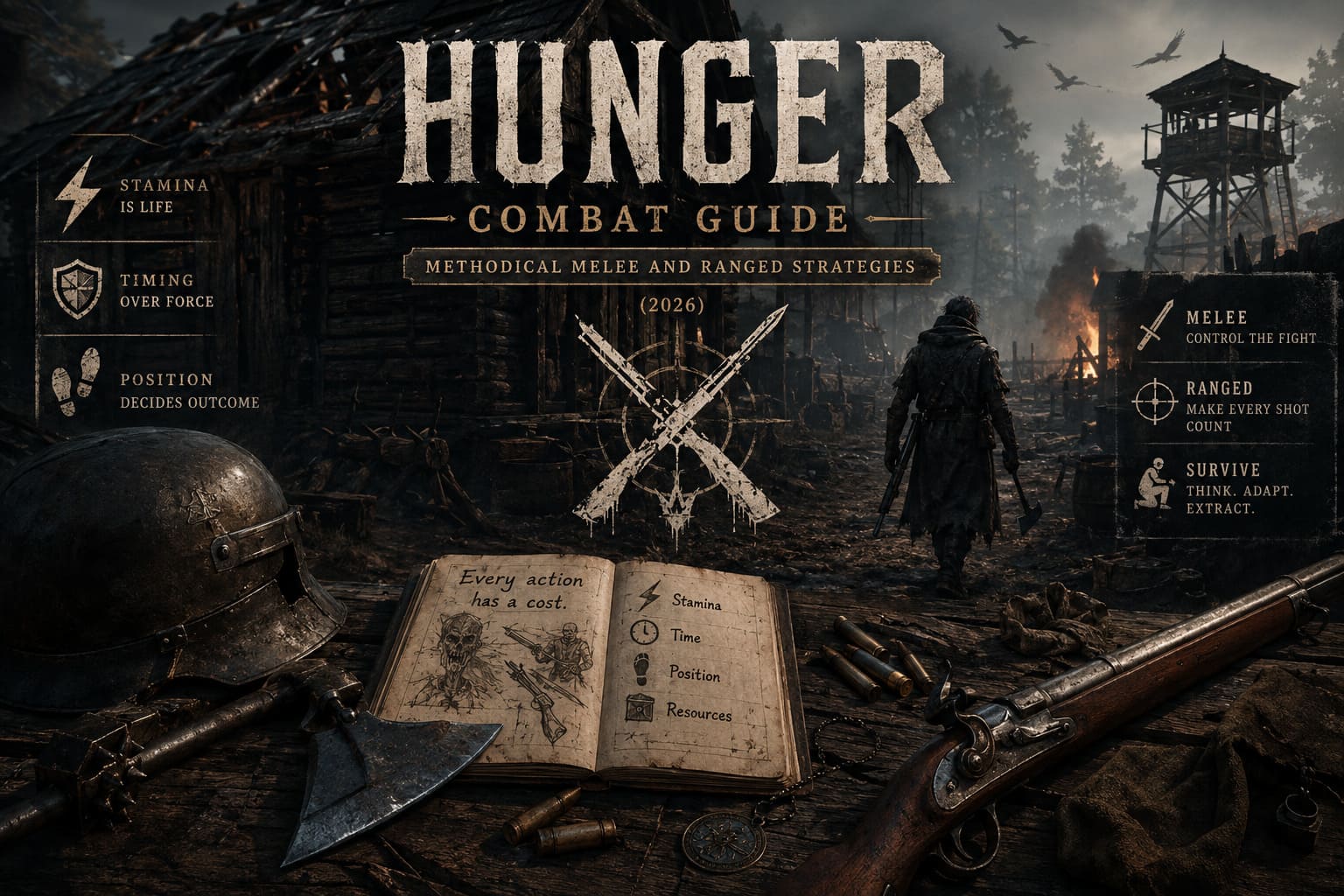
Every mechanic in HUNGER seems designed around one simple philosophy:
Every action has a cost.
Swinging your weapon costs stamina.
Blocking costs stamina.
Dodging costs stamina.
Reloading costs valuable time.
Even moving carelessly can put you into situations where you’re forced to waste resources before the real fight even begins.
Unlike arcade shooters where constant aggression often pays off, HUNGER constantly rewards players who slow the pace and think one move ahead.
Your Stamina Is More Valuable Than Your Health
If I had to give only one piece of advice to a new player, it would be this:
Never let your stamina reach zero.
Many people look at the health bar first.
Experienced players look at the stamina bar.
Once your energy disappears, everything becomes worse:
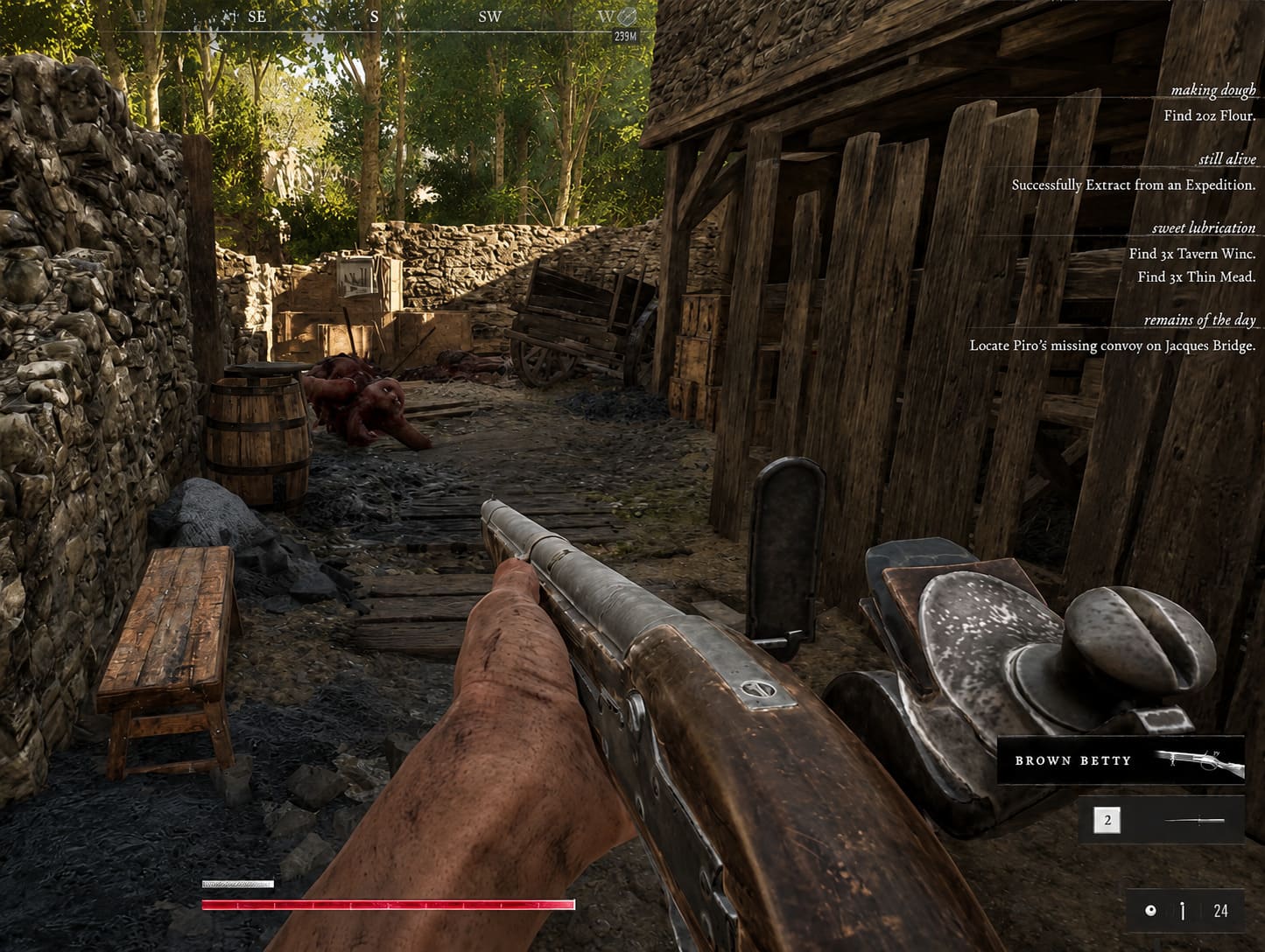
- attacks lose efficiency;
- movement slows down;
- defensive options become weaker;
- escaping dangerous situations becomes much harder.
Technically, you’re still capable of fighting while exhausted, but the difference feels enormous.
I started treating stamina like a second health bar, and my survival rate improved immediately.
Sometimes refusing to swing is actually the strongest move you can make.
Melee Combat Feels Like a Duel Instead of Button Mashing
One reason I enjoy HUNGER so much is that melee combat actually feels personal.
Instead of pressing one attack button repeatedly, every strike depends on camera movement and positioning.
The direction of your weapon matters.
The timing matters.
Distance matters.
Against infected, wide attacks can keep multiple enemies under control.
Against real players, every movement becomes psychological warfare.
You begin watching shoulders, weapon animations, footwork, and spacing rather than simply waiting for an opening.
That’s where HUNGER separates itself from many modern survival games.
Light Attacks Win More Fights Than Heavy Swings
At first glance, heavy attacks look amazing.
They’re powerful.
They stagger enemies.
Landing one feels incredibly satisfying.
The problem is that missing one feels even worse.
Heavy swings consume a huge amount of stamina and leave you exposed for several moments.
Good players know exactly how to punish that mistake.
Because of that, I actually rely on light attacks much more often.
They allow me to:
- pressure opponents;
- interrupt enemy actions;
- test defensive reactions;
- preserve stamina for emergencies.
Heavy attacks still have their place, but I prefer using them only after I’ve forced my opponent into a predictable response.
Blocking Is More Complicated Than It Looks
Many newcomers think holding block makes them safe.
It doesn’t.
The longer you stay behind your guard, the more energy disappears.
Even worse, blocking heavy weapons drains stamina incredibly fast.
What really changed my fights was learning to block at the exact moment of impact instead of holding the button continuously.
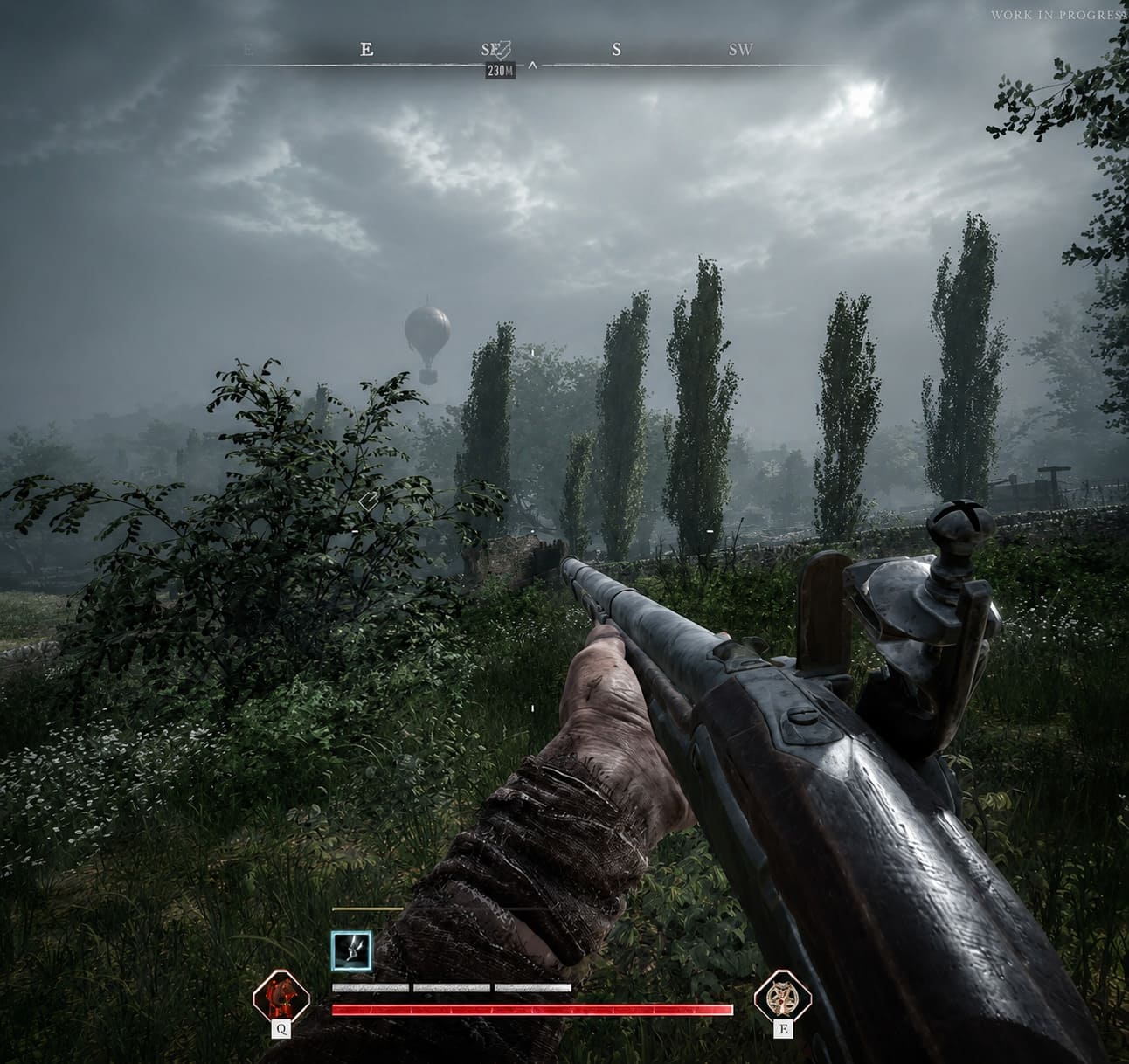
That tiny adjustment saves surprising amounts of stamina during longer encounters.
Eventually, you realize that successful defense isn’t about hiding behind your weapon.
It’s about knowing exactly when to defend.
Smart Players Attack Your Mind Before Your Character
One feature I absolutely love is the feint system.
Experienced players rarely commit to their first attack.
Instead, they’ll begin a powerful overhead strike only to cancel it halfway and immediately transition into another angle.
The goal isn’t simply dealing damage.
The goal is making you react incorrectly.
Once your stamina starts disappearing because you blocked too early, you’ve already begun losing the duel.
That psychological layer makes PvP much deeper than simple reaction speed.
Dodging Should Feel Expensive
Many games allow endless rolling across the battlefield.
Thankfully, HUNGER avoids that trend.
Dodging costs a significant amount of stamina, making every evasive movement meaningful.
Because of that, I rarely dodge unless:
- a heavy attack is clearly coming;
- I’m avoiding a narrow thrust;
- repositioning will immediately give me an advantage.
Using dodge as basic movement usually creates more problems than it solves.
Firearms Are Powerful—but They’re Never Convenient
The guns in HUNGER don’t feel like modern military weapons.
They’re loud.
They’re slow.
They’re awkward.
And honestly…
That’s exactly why they feel satisfying.
Landing a perfect musket shot carries weight because every reload is a commitment.
You aren’t simply inserting another magazine.
You’re performing a lengthy sequence that leaves you vulnerable.
Every missed shot creates genuine tension.
The Reload System Is One of the Best Features
The staged reload mechanic deserves far more attention than it gets.
Instead of restarting the entire reload animation after switching weapons, your progress is remembered.
That sounds simple on paper.
In practice, it changes everything.
Imagine beginning to reload your rifle when several infected suddenly rush your position.
Instead of panicking, you can:
| Situation | Better Decision |
|---|---|
| Enemy rushes during reload | Switch to melee immediately |
| Area becomes safe again | Continue the reload from where you stopped |
| Another player appears | Stay ready with melee instead of greedily finishing the animation |
This system encourages smart decision-making rather than punishing players for reacting to danger.
Environment Can Be a Weapon
One lesson I learned surprisingly late was that bullets aren’t useful only against enemies.
The environment often provides opportunities.
Certain objects can be penetrated.
Thin barriers don’t always provide real protection.
Explosive infected can become improvised traps.
Instead of wasting precious ammunition fighting an entire group directly, sometimes one carefully placed shot creates complete chaos among nearby monsters.
Moments like these make combat feel dynamic rather than repetitive.
Always Carry a Reliable Melee Backup
I’ve watched countless players panic after missing their opening rifle shot.
Instead of switching weapons, they desperately try to finish another reload.
Most of them never survive long enough to do it.
HUNGER constantly rewards players who transition smoothly between ranged and melee combat.
Once someone closes the distance, firearms instantly become secondary.
Keeping a dependable axe, mace, or sword ready often decides whether you extract with valuable loot—or lose everything.
Your Build Should Match Your Personality
One thing I appreciate is that HUNGER doesn’t force everyone into identical playstyles.
Permanent mastery progression allows you to specialize naturally.
Here’s how I personally see the major approaches:
| Build | Best For | Main Strength |
|---|---|---|
| Melee Specialist | Aggressive front-line players | Superior stamina management |
| Marksman | Patient long-range fighters | Better weapon handling and reload efficiency |
| Stealth Survivor | Solo explorers | Quiet movement and avoiding unnecessary battles |
None of these paths feels objectively stronger.
They simply reward different mindsets.
That’s much healthier than games where one “meta build” dominates every season.
Hunger Game 2026: Best Starter Weapons Guide – Rifle vs Pistol Meta Analysis
Small Habits Separate Survivors from Victims
After watching experienced players for hours, I noticed they all shared similar habits.
They weren’t necessarily aiming better.
They simply made smarter decisions.
Some examples include:
- Waiting for opponents to commit first instead of attacking immediately.
- Listening carefully for footsteps, gunfire, and proximity voice chat.
- Treating every gunshot like an announcement to every nearby squad.
- Watching extraction zones patiently instead of rushing inside.
- Backing away to recover stamina instead of chasing reckless kills.
None of these habits look exciting.
All of them win games.
HUNGER Game Lore Explained: The Napoleonic Plague, Bacterium Origins, and Survivor Backstories
My Biggest Takeaway After Following HUNGER’s Community
The more I watched skilled players, the more one idea became obvious.
HUNGER isn’t trying to make combat realistic.
It’s trying to make every decision meaningful.
Every swing matters.
Every bullet matters.
Every block matters.
Every mistake matters.
That creates tension that’s difficult to find in modern multiplayer games.
Winning doesn’t usually happen because someone has incredible reflexes.
It happens because one player stayed calm while everyone else panicked.
For me, that’s exactly what makes HUNGER special.
Instead of rewarding mechanical chaos, it rewards discipline.
Instead of encouraging endless aggression, it encourages intelligent survival.
And in an extraction game where losing your equipment actually hurts, I honestly think that’s the perfect direction for combat design.
If HUNGER continues expanding this philosophy with future updates, it has every chance to become one of the most memorable hardcore extraction experiences available. The world is brutal, every expedition carries real risk, and no weapon guarantees victory. In the end, the players who consistently return to the Chateau won’t necessarily be the fastest or the deadliest—they’ll be the ones who know when to fight, when to retreat, and when patience is worth far more than pulling the trigger.


