
God of War Laufey Trailer Breakdown: State of Play Reveals Faye Gameplay, New Mythologies, and Release Window Rumors
I’ve been playing action-adventure games long enough to remember when “cinematic gameplay” meant fixed cameras and stiff controls, so when discussions about a potential God of War: Laufey project started circulating, I didn’t treat it like typical hype.
I treated it like an interesting thought experiment about where the franchise could realistically go next if Santa Monica Studio decided to take a bigger creative risk.
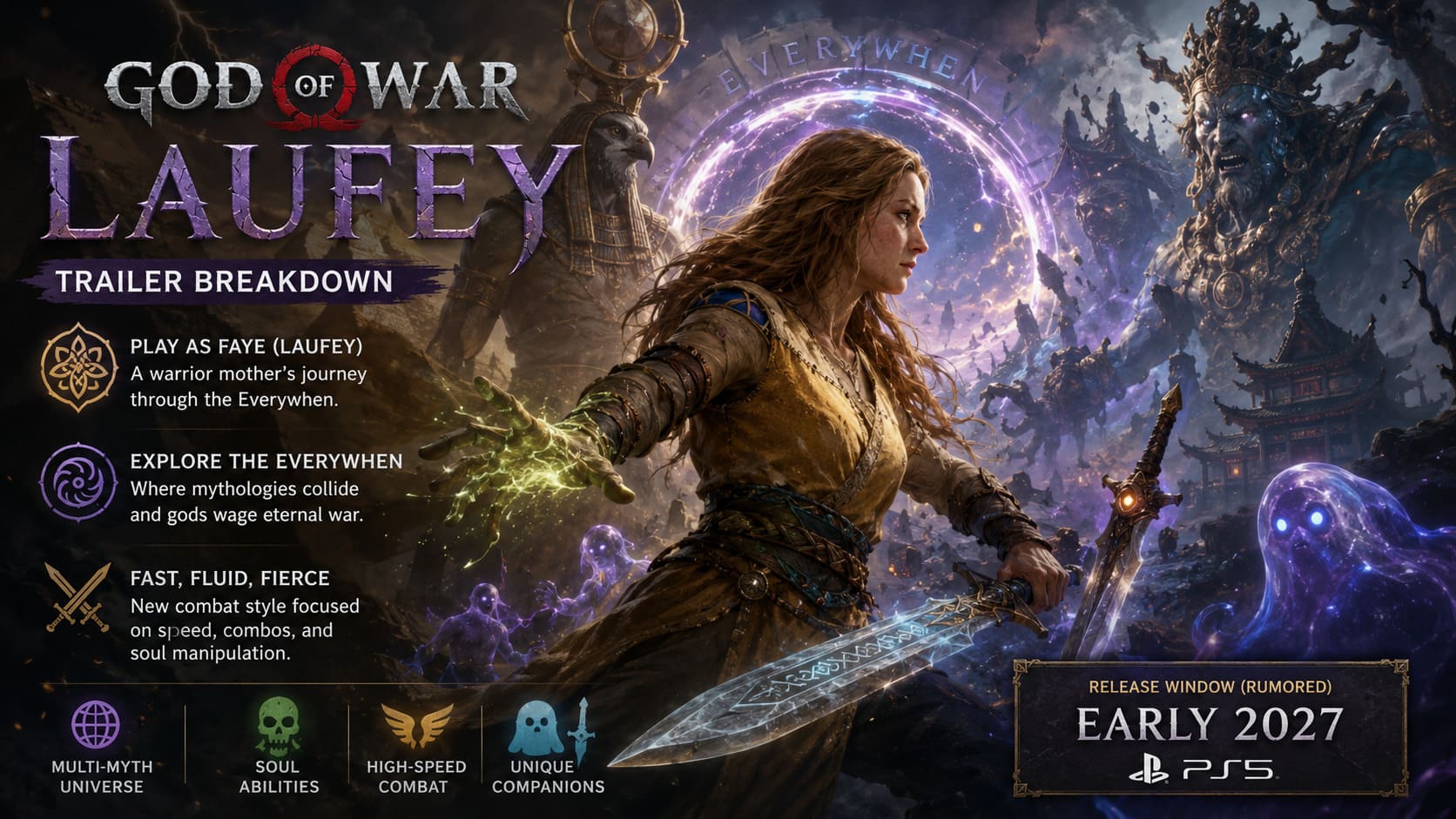
Even as a rumor or concept, the idea is hard to ignore. Shifting the focus away from Kratos and Atreus and placing it on Faye (Laufey) is already a major narrative pivot.
In the existing games, she is one of the most important unseen influences in the entire story, yet she’s also one of the least directly explored characters. That alone makes her an intriguing candidate for a standalone experience.
PC Gaming Show 2026: Schedule, and What to Expect
A Story Built Around Myth and Afterlife Chaos
The central narrative idea revolves around Faye awakening after death in a strange metaphysical realm known as the “Everywhen.” Instead of a simple afterlife concept, it is imagined as a collision point where multiple mythologies and divine systems overlap and interact.
From a storytelling perspective, this is both ambitious and risky. On one hand, it expands the franchise beyond the limitations of Norse mythology and opens the door for truly global mythological storytelling. On the other hand, I’ve seen games struggle when they try to handle too many mythological frameworks at once without a strong narrative anchor.
Still, the concept of a warrior mother fighting through a fractured afterlife to protect her family adds a strong emotional core that could keep the story grounded even in a chaotic setting.
Upcoming RPGs 2026: Most Anticipated Role-Playing Games
The Everywhen Concept
The Everywhen is described as a universal afterlife where gods from different pantheons exist in conflict. This allows for encounters with deities from Egyptian, Mongolian, and other mythological traditions, turning the world into a multi-layered battlefield rather than a single cultural setting.
In theory, this expands the scale of the franchise in a way we haven’t seen before. It also raises questions about tone and consistency, which will be critical for maintaining the emotional weight the series is known for.
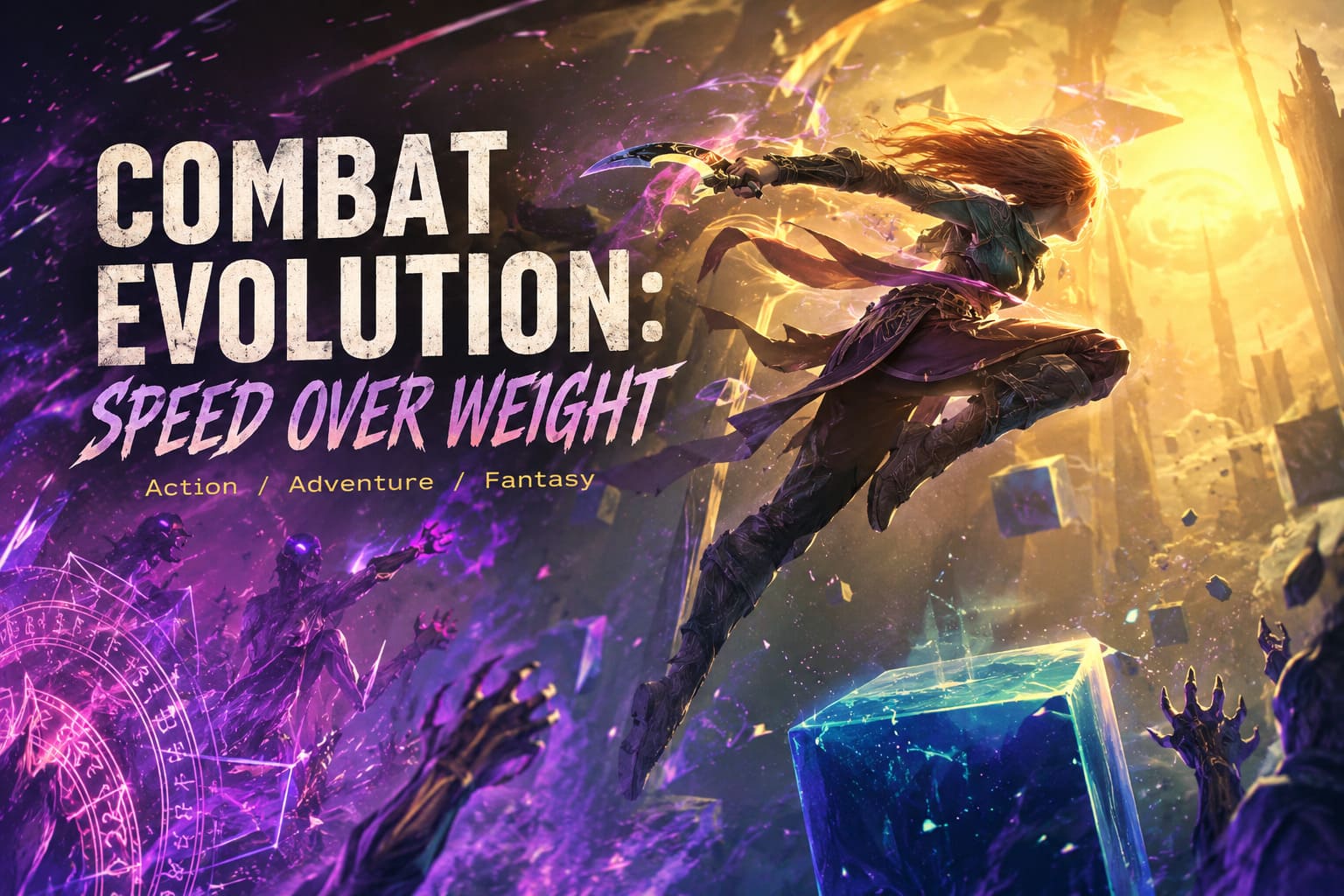
Combat Evolution: Speed Over Weight
One of the most striking changes in this concept is the shift in combat philosophy. While the modern God of War games focused on heavy, grounded combat with deliberate impact, Faye’s gameplay is imagined as fast, aerial, and highly mobile.
This represents a return to a more aggressive combat style, closer in spirit to earlier entries in the franchise, but updated with modern systems and mechanics.
Key Gameplay Differences
Faye’s combat style is centered around speed, combo chaining, and magical mobility. Instead of relying on raw strength and defensive timing like Kratos, she focuses on momentum, positioning, and rapid execution.
Her abilities reportedly include soul manipulation mechanics, allowing her to extract and control enemy spirits. This introduces a layer of tactical depth where defeated enemies can be turned into tools or weapons within combat scenarios.
Combat Comparison Overview
| Feature | Kratos (Modern Era) | Faye (Laufey Concept) |
|---|---|---|
| Combat Style | Heavy, grounded, tactical | Fast, aerial, combo-focused |
| Mobility | Moderate | Very high |
| Magic System | Runic abilities | Soul-based manipulation |
| Weapon Feel | Weight-driven impact | Fluid and expressive |
Characters and Companion Design
Another notable aspect is the introduction of unconventional companions. Instead of traditional grounded allies, the concept leans into surreal and unusual character design choices.
One companion is a sentient cosmic gelatin-like entity, while another is an enchanted sword-bound consciousness. These characters are designed to provide both narrative contrast and gameplay utility.
From my experience with narrative-driven games, companions like these are always a gamble. They can either become standout fan favorites or feel tonally disconnected depending on execution. However, they do bring originality, which is increasingly important in modern AAA design.
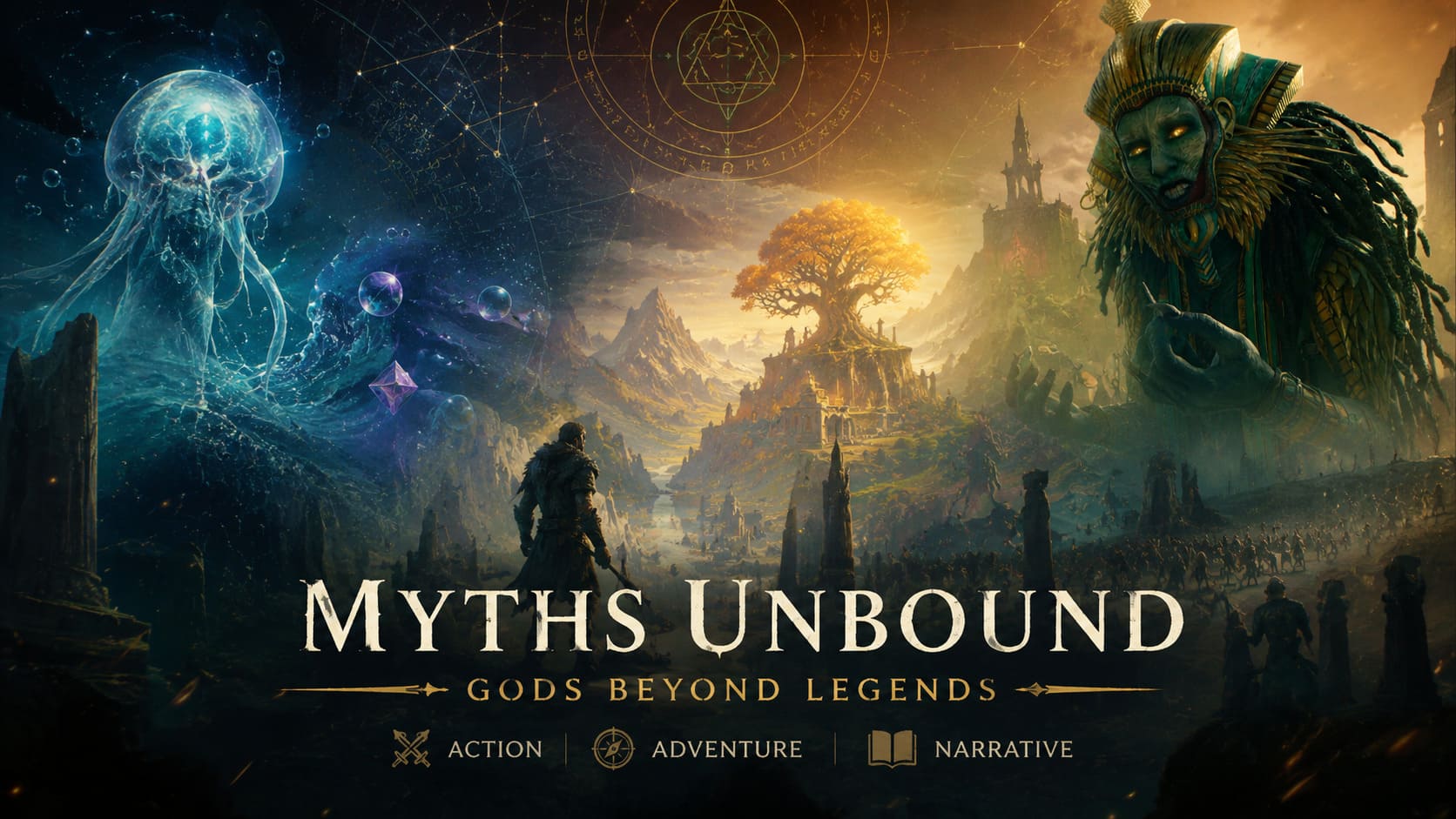
Mythology Expansion and Franchise Identity
The biggest long-term implication of this concept is the expansion beyond Norse mythology. For years, God of War has been defined by tightly focused mythological storytelling. Expanding into a multi-myth universe fundamentally changes that structure.
This could transform the franchise into something closer to a mythological anthology series, where each entry explores different divine systems while sharing thematic continuity rather than strict narrative continuity.
That approach has potential, but it also risks losing the grounded emotional storytelling that made the recent entries so impactful.
Release Window and Real-World Expectations
Speculated release timelines point toward an early 2027 window, which would align with typical AAA development cycles for major PlayStation exclusives. While this timing feels plausible in theory, it is important to treat all current information as speculative rather than confirmed.
Large-scale projects like this often evolve significantly during development, and what begins as a bold concept can change dramatically before release.
Final Thoughts
As someone who has followed the evolution of this franchise for years, I find the idea of God of War: Laufey both exciting and uncertain. It represents a clear attempt to push boundaries, both in narrative structure and gameplay design.
The shift toward a faster combat system, a new protagonist, and a multi-mythological setting shows ambition. At the same time, it raises legitimate questions about focus and tonal consistency.
Still, it’s exactly the kind of bold direction that keeps long-running franchises alive. Whether it becomes a defining evolution or an experimental detour depends entirely on execution.


