Cheap Car Repair Game Guide: Balancing Costs and Quality in 2026
The simulation genre has evolved dramatically over the last decade. We’ve seen farming simulators become global hits, truck simulators attract millions of players, and mechanic games reach levels of realism that rival professional training software. Because of that, I thought I had already seen everything the genre had to offer.
Then I played Cheap Car Repair.
At first glance, it looked like another budget mechanic simulator trying to ride the popularity wave created by larger automotive franchises. After spending dozens of hours with it, however, I realized this game is doing something very different. Instead of focusing on perfection, precision, and spotless garages, it embraces chaos, creativity, and the constant struggle between profit and quality.
As someone who has played countless simulation games over the years, I can confidently say that Cheap Car Repair delivers one of the most entertaining and memorable garage-management experiences I’ve seen in a long time.
A Mechanic Simulator That Doesn’t Care About Perfection
Most modern car repair games push players toward becoming professional technicians. You buy the correct parts, follow procedures, and aim for factory-level repairs.
Cheap Car Repair takes the opposite approach.
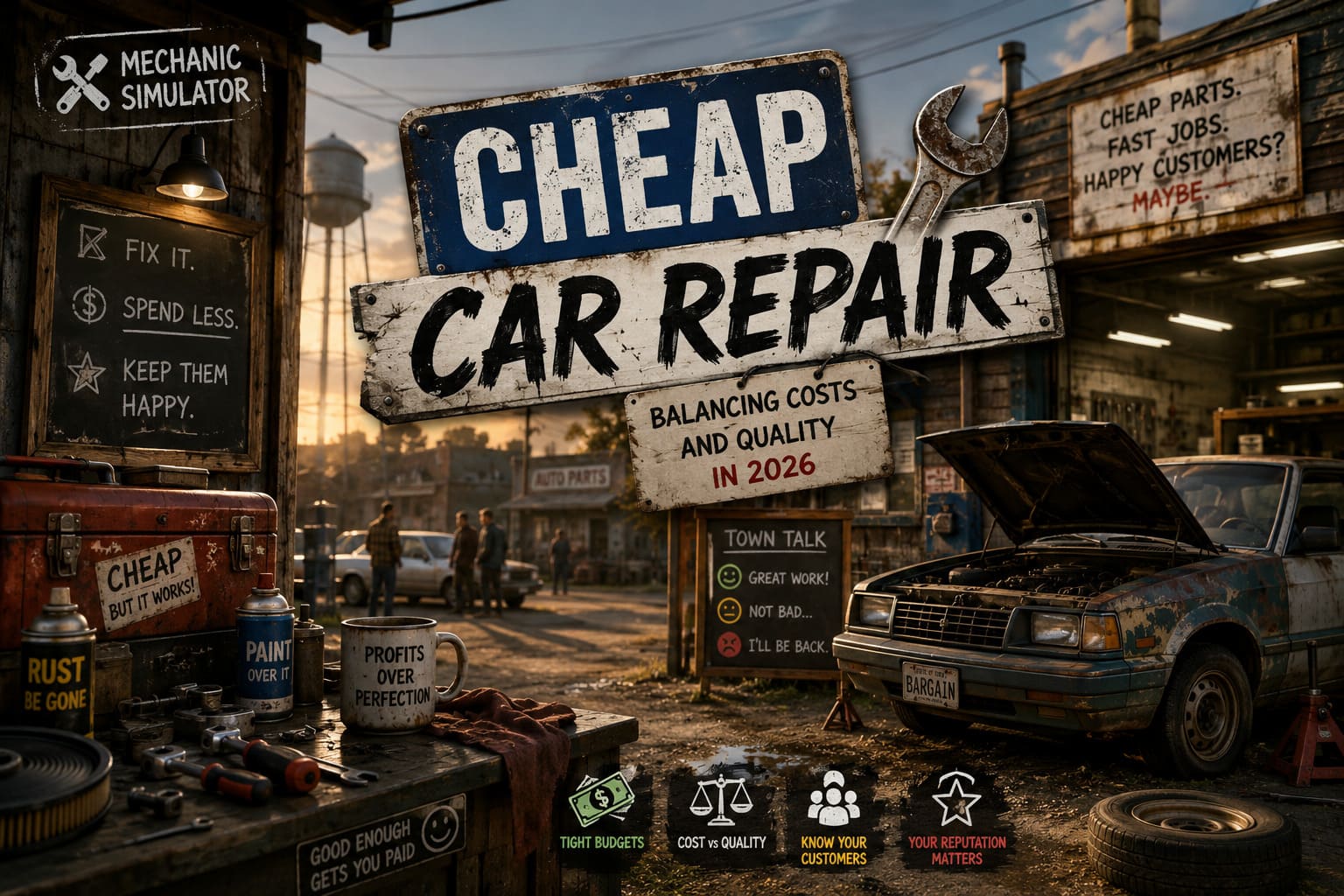
You play as a backyard mechanic operating in a rough environment where money is always tight and customers often want miracles for almost nothing. Every repair job feels less like following a service manual and more like solving a business puzzle.
The question isn’t:
“Can you fix the car?”
The real question is:
“How cheaply can you fix the car before the customer notices?”
That simple idea completely changes the gameplay loop.
Instead of automatically purchasing premium components, you’re constantly evaluating risks. Is the customer likely to inspect the repair carefully? Can a cheaper replacement part survive long enough to avoid complaints? Is it worth sacrificing a little reputation for a larger profit margin?
These decisions create a surprisingly addictive experience.
The Genius Behind the Cost vs Quality System
The strongest feature in Cheap Car Repair is undoubtedly its reputation system.
Every repair affects how customers view your workshop. The interesting part is that reputation isn’t determined by a simple success-or-failure formula. The game constantly evaluates how much effort and money you invested compared to the quality of the final result.
During my playthrough, I experimented with several approaches.
The Honest Mechanic
This strategy focuses on quality repairs and customer satisfaction.
Advantages:
- Consistent reputation growth
- Fewer angry customers
- Better long-term stability
Disadvantages:
- Slow financial progression
- Expensive inventory costs
- Lower short-term profits
While this approach works, I honestly found it less exciting. The game almost feels designed to tempt players into taking shortcuts.
The Complete Scammer
This is where things get hilarious.
Using the cheapest parts available, hiding rust, cutting corners, and maximizing profits can generate enormous income early on. Unfortunately, success doesn’t last forever.
Before long, customers start returning with complaints, and the consequences can become surprisingly severe.
What begins as easy money eventually turns into damage control.
The Balanced Approach
After many hours, I found the most effective strategy sits somewhere in the middle.
Invest money where failures would be catastrophic, such as braking systems or critical engine components. Save money on cosmetic elements, minor bodywork, and non-essential upgrades.
This method delivers strong profits without turning the entire town against you.
Why Every Repair Feels Like a Business Decision
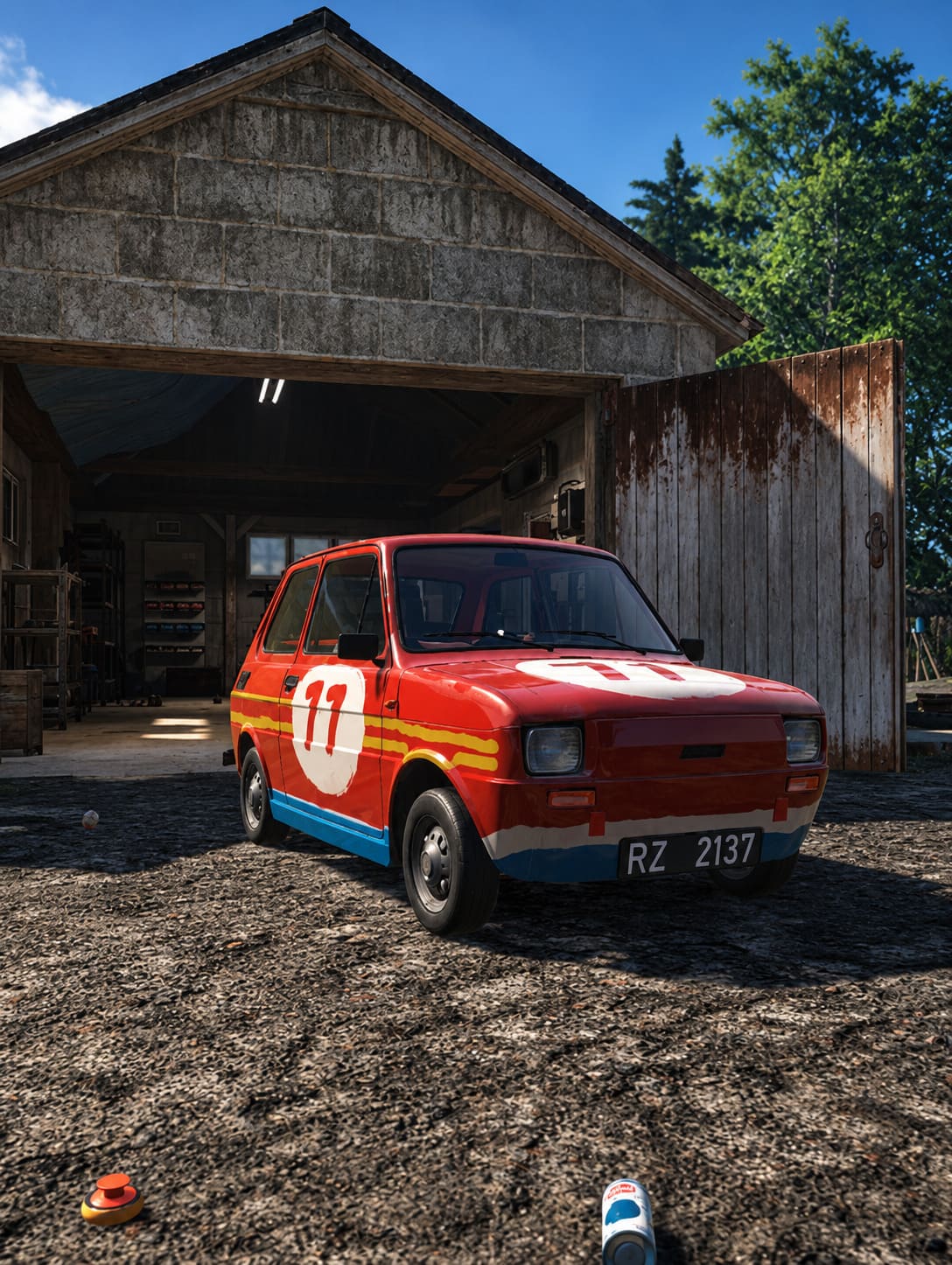
One aspect that keeps the gameplay fresh is how customers differ from one another.
Not every client behaves the same way.
Some are extremely observant.
Others barely understand cars at all.
Learning to read customer personalities becomes just as important as understanding vehicle mechanics.
A nervous customer asking dozens of questions probably deserves better-quality components. Meanwhile, someone who simply wants the cheapest possible repair may never notice a lower-tier substitute.
This adds a psychological layer rarely seen in simulation games.
Rust, Paint, and Creative Problem Solving
Bodywork repairs deserve special mention because they perfectly represent the game’s overall philosophy.
In most mechanic simulators, rust removal follows a predictable process:
- Remove corrosion.
- Apply treatment.
- Repair the panel.
- Repaint properly.
Cheap Car Repair allows players to take a much faster route.
You can cover problems with paint, hide imperfections, and move vehicles out the door quickly.
The temptation is always there.
The problem is that shortcuts often create future consequences.
The game constantly forces players to balance immediate rewards against long-term reputation damage, and that’s what makes every repair interesting.
Open World Elements Add Personality
Many garage simulators focus exclusively on workshop management.
Cheap Car Repair expands beyond the garage itself.
The surrounding environment feels alive and connected to your actions. Local residents remember your behavior, story missions introduce memorable characters, and exploration often leads to valuable opportunities.
Rather than feeling like a collection of menus and repair screens, the game creates a sense of place.
This isn’t just a workshop.
It’s a community.
And your reputation spreads throughout it.
Performance and Optimization
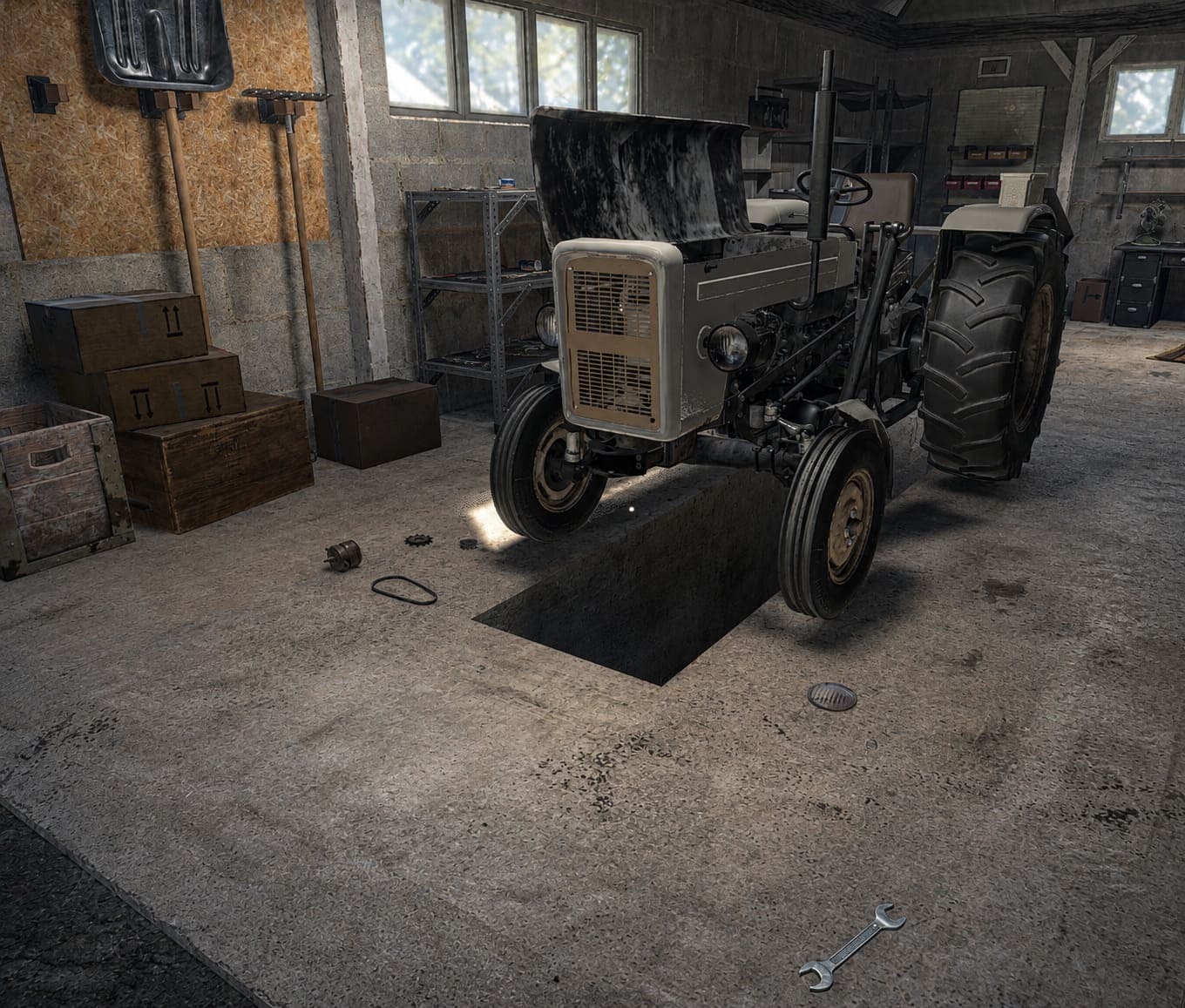
Another pleasant surprise is the game’s technical performance.
Many indie simulation titles struggle with optimization at launch, but Cheap Car Repair runs remarkably well on a wide range of hardware.
| Category | Experience |
|---|---|
| Loading Times | Fast and consistent |
| Frame Rate Stability | Very good |
| Hardware Scaling | Excellent |
| Open World Performance | Smooth |
| Garage Interactions | Responsive |
During my testing, I encountered very few technical issues. Menus remained responsive, vehicle disassembly worked smoothly, and performance stayed stable even after lengthy play sessions.
For a relatively small-scale simulation project, that’s impressive.
Cheap Car Repair Game 2026: Bank Loan, Debt Mechanics, and Budget Sourcing Guide
What Makes Cheap Car Repair Different?
After spending years playing simulation games, I think the biggest reason Cheap Car Repair stands out is because it understands something many modern simulators forget:
Imperfection can be fun.
Most mechanic games focus on doing everything correctly.
Cheap Car Repair focuses on making difficult decisions.
You’re not trying to become the world’s best mechanic.
You’re trying to survive.
That subtle difference creates tension in every repair order.
Every customer becomes a risk assessment.
Every purchase becomes an investment decision.
Every shortcut becomes a gamble.
Those systems combine to create gameplay that remains engaging far longer than I initially expected.
Final Verdict
Cheap Car Repair may not have the biggest budget, the most advanced graphics, or the deepest technical vehicle simulation on the market.
What it does have is personality.
The game successfully captures the feeling of running a small, constantly struggling repair business where every dollar matters. It transforms simple maintenance jobs into strategic choices and rewards players who understand how to balance reputation, customer satisfaction, and profit.
For fans of automotive simulators, management games, and unconventional indie experiences, this is one of the most interesting releases of 2026.
I started playing expecting a funny novelty.
I kept playing because the gameplay systems were genuinely smart.
And that’s probably the highest compliment I can give any simulation game.