Drone Sector Economy Guide: Resource Farming and Management Tips
When I first jumped into Drone Sector, I expected another game where the biggest challenge would be aiming accurately from the sky. Instead, after spending hours experimenting with different campaign approaches, I realized something much more important: the strongest weapon in the game isn’t your cannon, your missiles, or even your gunship.
It’s your economy.
That might sound strange for a game inspired by AC-130 gunships and modern military drones, but after several campaigns, it became obvious that every victory is built on good resource management. Firepower only exists because someone paid for the ammunition, built the weapons, researched the upgrades, and kept the production line running.
Unlike many tactical strategy games where money magically appears every few minutes, Drone Sector constantly reminds you that every missile has a cost and every careless engagement affects your future missions.
This guide isn’t about exploiting bugs or chasing temporary meta strategies. It’s the approach that consistently gave me the smoothest campaigns while allowing steady technological progress without constantly running out of supplies.
The Biggest Mistake New Players Make
My first campaign was a disaster.
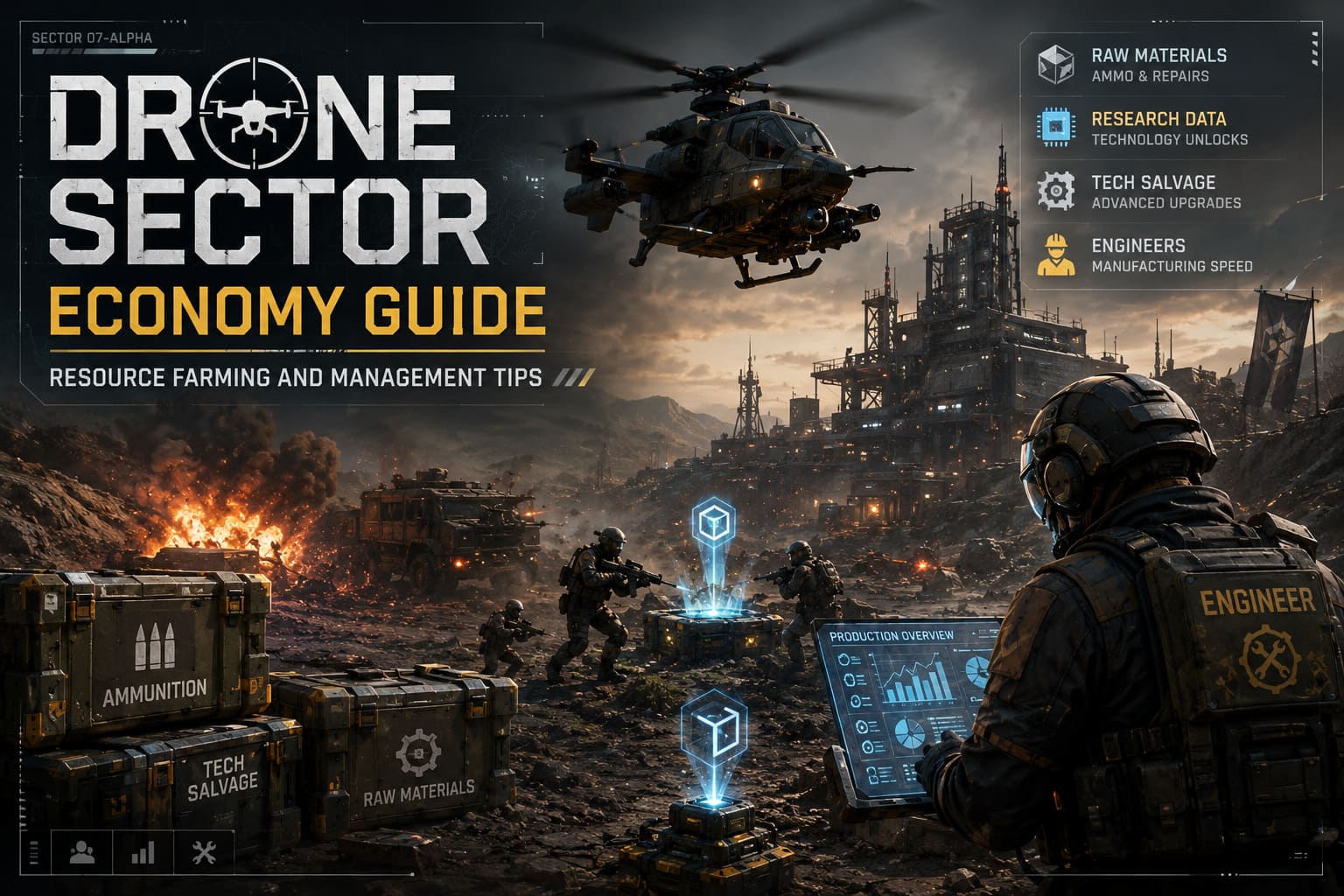
Like many players, I rushed straight toward mission objectives. The thinking was simple: complete objectives quickly, earn rewards, move on.
It didn’t work.
I constantly finished missions with almost no materials, barely enough ammunition for the next deployment, and engineers sitting idle because there wasn’t enough production capacity to keep everything running.
Only later did I realize that Drone Sector rewards preparation far more than speed.
A mission doesn’t truly end when the objective is complete—it ends when you’ve extracted every valuable resource worth the risk.
That mindset completely changed the way I played.
Every Resource Matters
| Resource | Main Purpose | Long-Term Value |
|---|---|---|
| Raw Materials | Ammo production and repairs | Essential |
| Research Data | Technology unlocks | Extremely High |
| Tech Salvage | Advanced upgrades | High |
| Engineers | Manufacturing speed | Critical |
At first glance, raw materials seem like the most important resource because they’re immediately useful.
However, after several hours I found myself valuing engineers even more.
You can have warehouses full of materials, but without enough skilled personnel your entire production chain slows down dramatically.
A weak industrial base eventually becomes a much bigger problem than limited supplies.
Don’t Rush Every Mission
One lesson I learned from strategy games over the years is simple:
Greed is dangerous—but controlled greed wins campaigns.
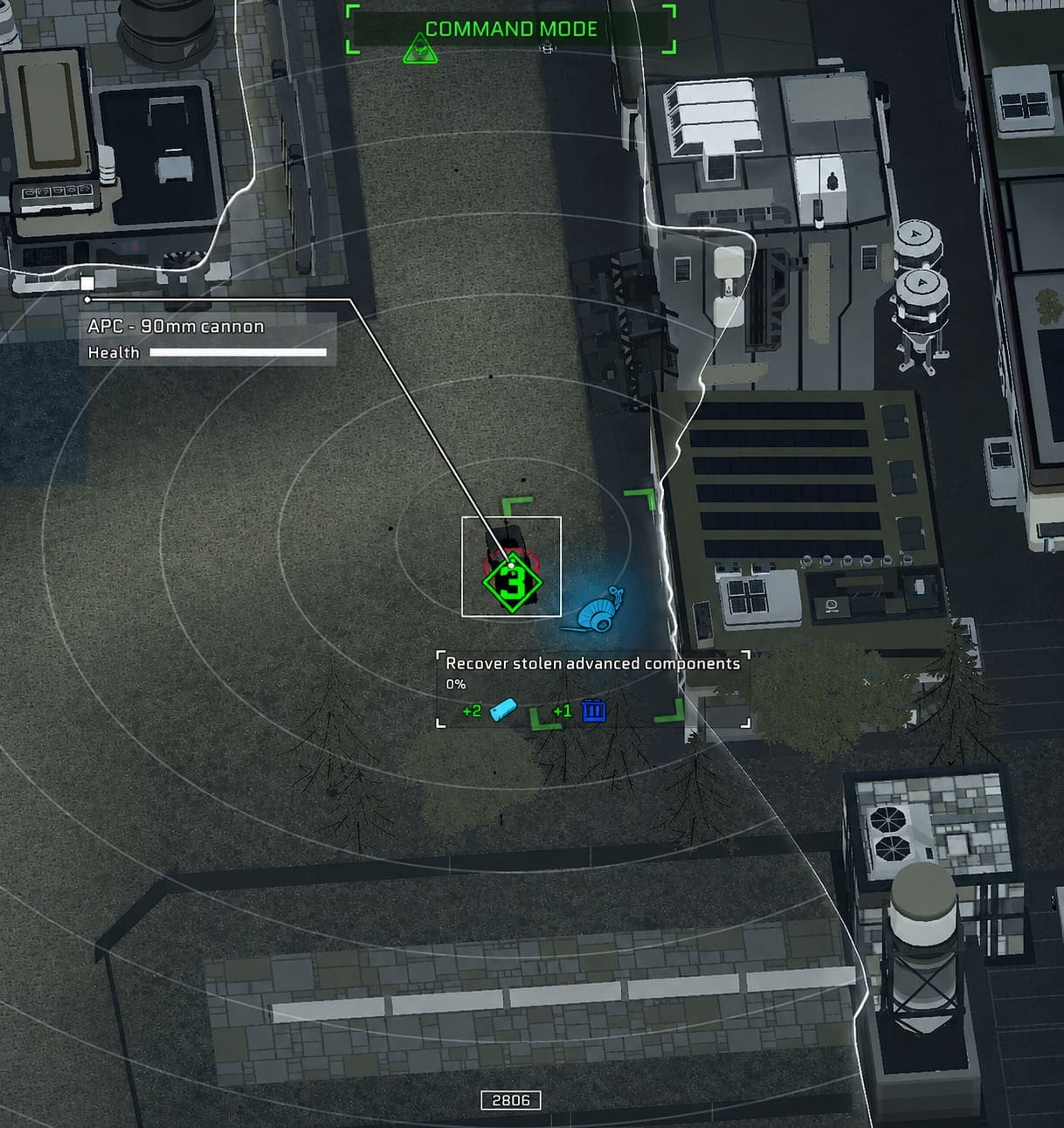
Instead of immediately pushing toward the main objective, I usually spend the opening minutes scanning the battlefield.
The different camera modes become surprisingly valuable here.
Switching between thermal imaging, standard optics, and night vision often reveals abandoned supply caches or isolated enemy logistics positions that would otherwise be easy to miss.
Those small discoveries add up over multiple missions.
A few extra resource pickups today often become an upgraded weapons system five missions later.
Ammunition Is an Investment
Many shooters encourage players to fire first and think later.
Drone Sector punishes that mentality.
Every shell, missile, and rocket represents manufacturing time and valuable resources.
Once I started treating ammunition like an investment instead of unlimited firepower, my campaigns became noticeably more stable.
Rather than using expensive guided missiles against every infantry squad, I relied much more on basic autocannons and lighter weapons whenever possible.
Heavy ordnance should solve expensive problems—not cheap ones.
- Confirm targets before firing.
- Use cheaper weapons against infantry.
- Reserve premium ammunition for armored threats.
- Avoid blind firing into buildings or fog of war.
Those small decisions save a surprising amount of production costs over an entire campaign.
Ground Squads Win the Economy
The gunship gets all the attention.
The infantry actually earns the money.
Without ground troops, resources remain scattered across the battlefield.
That means protecting them becomes one of the highest priorities in every operation.
I quickly learned that extraction phases are usually the most dangerous moments of a mission.
Squads become vulnerable while interacting with supply nodes, making them easy targets for enemy counterattacks.
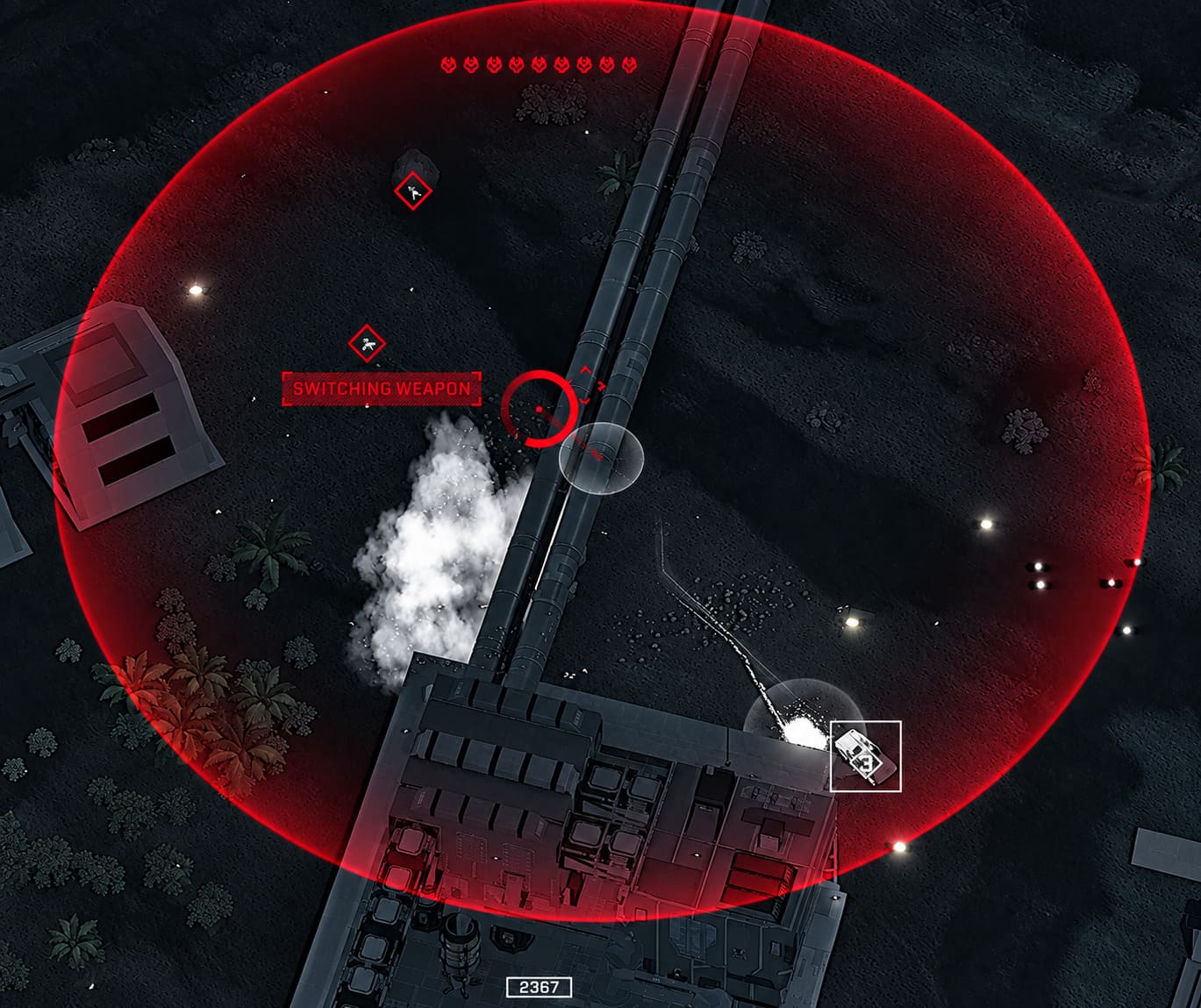
Instead of constantly attacking, I often used the gunship defensively during these moments.
Suppressive fire.
Smoke.
Area denial.
Anything that buys my squads another few seconds to finish gathering materials.
Losing an experienced squad often costs more than whatever resources they’re trying to collect.
Technology Beats Bigger Guns
One temptation every strategy player understands is buying stronger weapons as soon as they’re available.
Drone Sector gives you plenty of exciting options.
The problem?
Many of them are expensive to maintain.
After experimenting with different upgrade paths, I found much better long-term results by investing heavily in economic research before expanding my arsenal.
Upgrades that improve manufacturing efficiency or reduce production costs don’t look exciting on paper.
But their value compounds throughout an entire campaign.
Think of it like this:
- A missile upgrade helps during one battle.
- An industrial upgrade helps during every battle.
That’s an enormous difference over twenty or thirty missions.
My Preferred Mid-Game Production Priorities
| Priority | Reason |
|---|---|
| Basic ammunition | Never start missions understocked. |
| Repairs | Protect long-term investments. |
| Manufacturing upgrades | Increase efficiency. |
| Research projects | Unlock stronger technology. |
| Luxury weapon production | Only after the economy stabilizes. |
Following this order rarely leaves me struggling for supplies later in the campaign.
Knowing When to Retreat
One feature I genuinely appreciate is that Drone Sector doesn’t force players to fight hopeless battles.
Sometimes leaving early is simply the smarter decision.
If anti-air defenses become overwhelming or multiple squads are close to being eliminated, extracting with half the loot is usually preferable to losing everything.
This is especially true on high-risk maps where enemy resistance scales significantly.
I’ve had missions where retreating felt disappointing in the moment but ultimately saved the entire campaign.
Replacing destroyed equipment and rebuilding experienced squads costs far more than accepting a smaller reward.
Learning when not to fight is a surprisingly valuable skill.
Specialization Is Better Than Versatility
I experimented with balanced squads during my early campaigns.
Eventually I abandoned that approach completely.
Specialized teams simply perform better.
- Extraction Team — Fast movement, smoke grenades, light armor.
- Combat Team — Heavy weapons designed to attract enemy attention.
- Support Team — Objective control and defensive positioning.
Each squad has a clear purpose instead of trying to handle every situation equally well.
That division of responsibilities made battlefield management much easier, especially during larger operations.
Never Ignore Enemy Logistics
Destroying enemy soldiers is satisfying.
Destroying their logistics is profitable.
Supply trucks, ammunition depots, and fuel storage frequently create chain explosions that eliminate nearby infantry without spending additional ammunition.
Better yet, these positions often reward you with useful salvage after the battle.
Whenever possible, I prioritize logistical targets before engaging larger enemy formations.
Removing their infrastructure usually makes the rest of the mission considerably easier.
Engineers Are the Hidden MVPs
If I had to choose one asset that consistently determines campaign success, it wouldn’t be an upgraded gunship.
It would be engineers.
They’re easy to overlook because they rarely participate directly in combat.
Yet almost every important system depends on them.
- Manufacturing.
- Repairs.
- Research.
- Production speed.
Lose enough experienced engineers and your entire campaign slows to a crawl.
Whenever missions place them at risk, protecting them becomes my highest priority.
Replacing hardware is expensive.
Replacing experienced personnel can be even worse.
Drone Sector Career Mode Guide: Essential Beginner Tips & Strategies
Build Loadouts Around Sustainability
One lesson I carried over from countless strategy games is that flashy equipment isn’t always the strongest option.
Running an entire gunship with premium missiles may feel powerful for one mission.
It becomes financially painful after several deployments.
Instead, I prefer maintaining a balanced arsenal.
A reliable rotary cannon or light automatic weapon handles ordinary infantry efficiently, while premium ammunition stays reserved for tanks, fortified positions, and emergency situations.
That approach keeps production costs manageable without sacrificing combat effectiveness.
Final Thoughts
After spending considerable time with Drone Sector, I don’t think it’s simply another military action game.
Underneath the explosions lies a surprisingly deep logistical strategy experience.
Success doesn’t come from firing more missiles than the enemy.
It comes from making better decisions before the battle even begins.
Every resource collected, every engineer protected, every unnecessary missile avoided, and every smart retreat contributes to a stronger campaign later on.
That’s what makes the economy so satisfying.
Instead of feeling like background management, it becomes the foundation supporting every tactical victory.
If I could give only one piece of advice to new commanders, it would be this:
Think like a logistics officer first and a gunship pilot second.
Do that consistently, and you’ll discover that the later stages of the campaign become dramatically more manageable—not because the enemies get weaker, but because your military machine has become powerful enough to sustain itself.