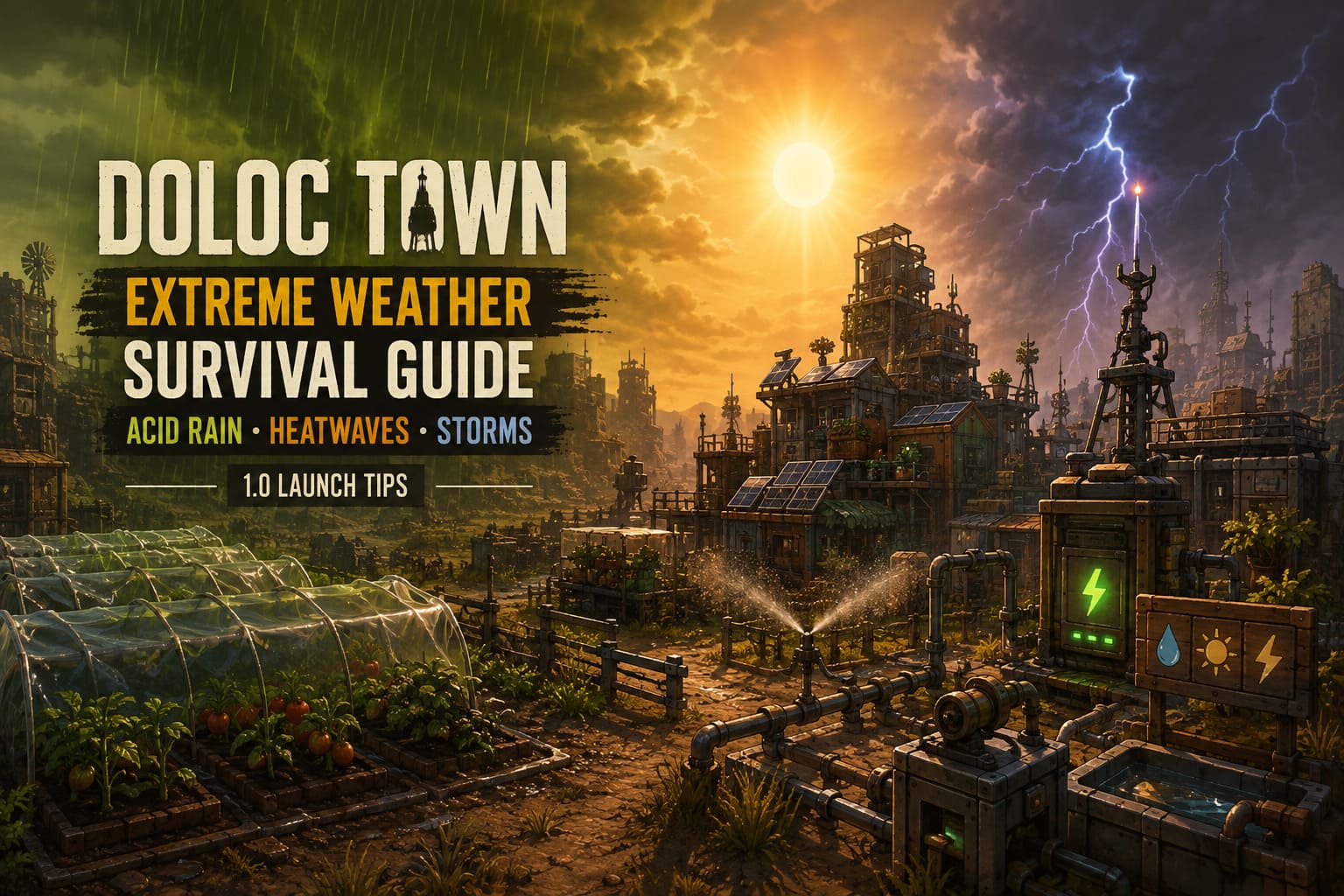
Doloc Town Extreme Weather Survival Guide: How to Survive Acid Rain, Heatwaves, and Storms (1.0 Launch Tips)
There are plenty of farming games where bad weather means nothing more than a slightly annoying forecast and a few crops that need extra attention.
Doloc Town is not one of those games.
After spending time with the 1.0 version, I quickly realized that the weather here isn’t background decoration. It is part of the survival loop. Rain can save me hours of watering. Acid rain can wipe out a field. A heatwave can turn a perfectly healthy farm into a dried-out mess. And then there are thunderstorms, which look fantastic but have a nasty habit of reminding me that my machinery is sitting in a post-apocalyptic wasteland.
That combination is one of the things I genuinely like about Doloc Town. The game takes the familiar farming-sim formula and puts it somewhere much rougher. You still plant crops, gather materials, expand your home, explore, and build up your little operation, but every decision has a bit more weight behind it.
The Doloc Town 1.0 weather system is especially important once your settlement starts getting larger. So, after learning some lessons the hard way, here is how I approach acid rain, heatwaves, thunderstorms, and the changing seasons.
Understanding Doloc Town’s Weather System
Doloc Town uses a four-season cycle, with each season lasting four in-game weeks. The weather essentially moves between four broad conditions: mild rain, heavy rain, mild sunshine, and heavy sunshine.
That sounds simple until you realize that each phase changes how I manage my farm.
| Weather Condition | Main Problem | Best Response |
|---|---|---|
| Mild Rain | Limited farming risk | Save energy and explore |
| Heavy Rain | Acid rain can damage crops | Use Plastic Coverings |
| Mild Sunshine | Soil dries gradually | Normal irrigation |
| Heavy Sunshine | Extreme heat and dry soil | Automation and Greenhouses |
| Thunderstorms | Lightning can damage equipment | Lightning Rods and batteries |
The important thing is not to treat every rainy day or sunny day as dangerous. The real trick is recognizing which weather creates an opportunity and which weather demands preparation.
Normal rain, for example, is fantastic. I can stop worrying about watering and spend that energy exploring ruins, collecting materials, fighting enemies, or working on construction.
Acid rain is a completely different story.
Acid Rain: Protect Your Crops Before It’s Too Late
The first time acid rain hit my farm, I made the classic mistake of thinking I had enough time to react.
I didn’t.
The atmosphere changes noticeably, with the sky taking on a sickly green-yellow appearance. Once the corrosive rain starts falling, exposed crops become a serious liability.
This is where Plastic Coverings become one of the most useful early-to-mid-game investments.
I strongly recommend making crop protection part of your farm design instead of treating it as an emergency upgrade. Once you have permanent coverings installed, an incoming acid storm becomes much less stressful. You’re not running around desperately trying to save whatever you can.
And that’s something I appreciate about Doloc Town. The best solutions aren’t usually about reacting faster. They’re about building your base so that you don’t have to react at all.
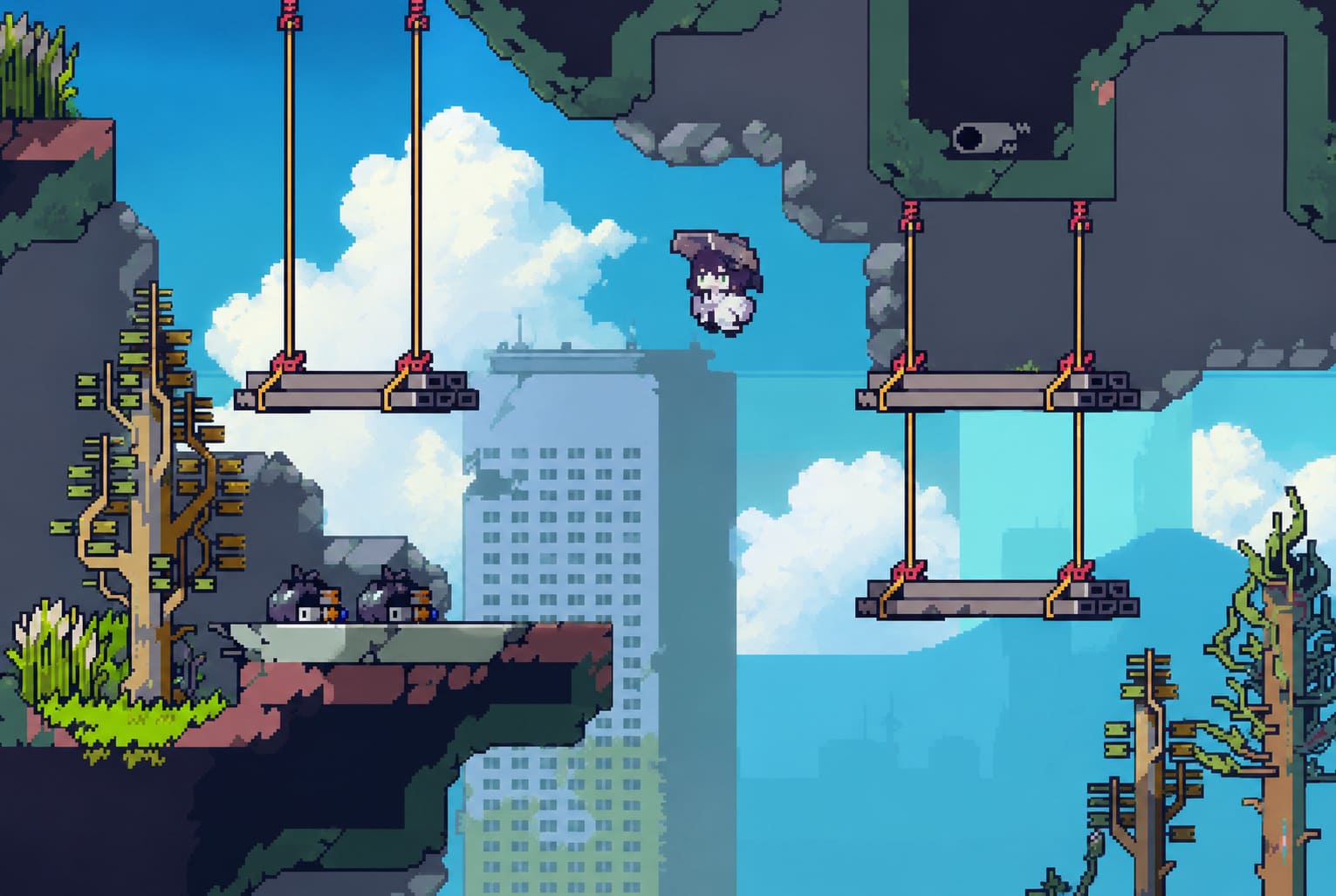
My Acid Rain Priorities
- Protect your most valuable crops first.
- Build Plastic Coverings before relying heavily on expensive crops.
- Keep spare seeds stored safely.
- Use rainy periods to explore and forage.
- Take advantage of mushroom growth after prolonged wet weather.
There is also a nice upside to wet conditions. Mushrooms become much more common, and some of them are useful for cooking or selling.
So when the rain starts, I don’t automatically stay inside. If my farm is protected, rain becomes an excuse to leave the settlement and go hunting for resources.
Thunderstorms Can Actually Make You Richer
Thunderstorms are probably my favorite example of Doloc Town turning a disaster into a mechanic you can exploit.
Lightning can damage equipment and structures if your base isn’t prepared. That becomes increasingly painful once you’ve invested heavily in crafting stations, automated machinery, storage, and farming infrastructure.
The answer is the Lightning Rod.
Once you reach the appropriate technology tier, I would make this one of your major infrastructure priorities. Put lightning protection where it can cover the important parts of your vertical settlement, especially around expensive machinery.
But here’s where things get interesting.
Instead of simply treating lightning as something that needs to be avoided, you can use the right infrastructure to turn storms into an energy opportunity.
Connect your lightning protection system to advanced batteries and power infrastructure, and suddenly that terrifying storm has another purpose.
I love mechanics like this because they reward preparation rather than simply punishing the player.
A thunderstorm should make an unprepared player nervous.
A properly equipped player should be thinking:
“Free power? Let’s go.”
As your automation expands, that electricity becomes even more valuable. Harvesters, seeders, conveyors, drone systems, and other automated equipment all increase the demand on your power network.
The more advanced my farm gets, the more I start looking at storms as part of my energy schedule rather than random interruptions.
Heatwaves Are Where Manual Farming Starts Falling Apart
If acid rain is the weather problem that threatens your crops directly, heatwaves are the weather condition that attacks your entire daily routine.
During heavily sunny periods, soil can dry out incredibly quickly. If you’re still using basic watering equipment, it can feel like your entire day disappears into farm maintenance.
That is exactly when I think Doloc Town starts pushing players toward automation.
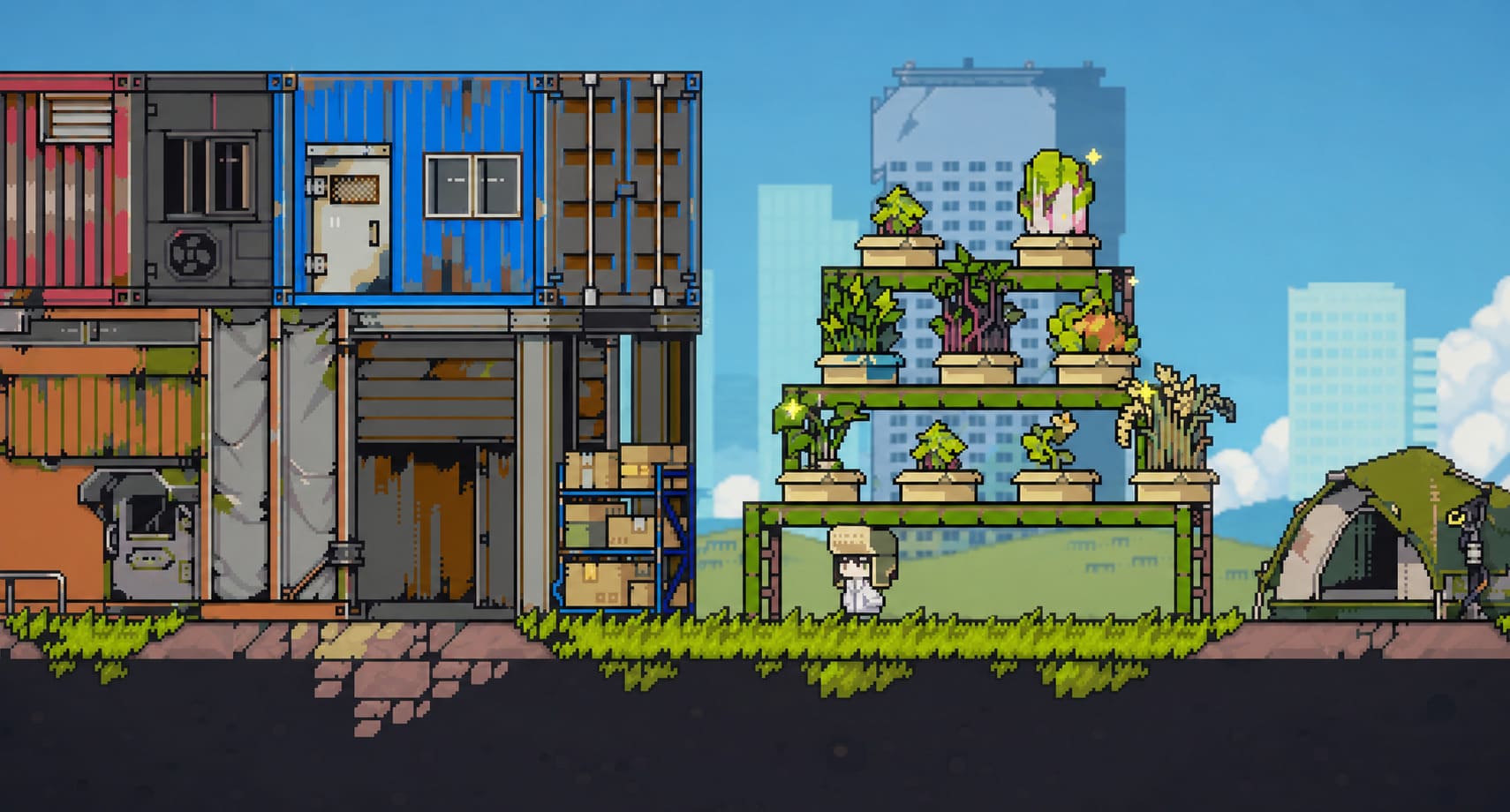
The Best Heatwave Strategy
Automate irrigation as soon as it becomes practical.
Sprinklers, pipes, and other irrigation systems dramatically reduce the amount of time and energy you spend keeping crops alive. This matters even more when your settlement grows because manually watering a few plots is manageable. Manually watering a huge vertical farm is another story entirely.
For particularly valuable crops, I also recommend moving toward Greenhouses.
A greenhouse isn’t just another building to throw onto your farm. It gives you much more control over your growing environment and reduces the impact of external weather.
That’s especially useful if you’re trying to maintain expensive crops or experiment with more advanced farming setups.
For me, this is where the progression feels satisfying. At the beginning, I am worried about whether I have enough water.
Later, I’m designing systems that make the question almost irrelevant.
Don’t Fight the Heat — Use It to Explore
Once your irrigation and greenhouse setup can handle the farm without constant attention, the heavily sunny season becomes a great time to leave home.
This is when I like to push into the wilderness.
The Old City Ruins are particularly interesting once you have better equipment and combat drones. There are stronger enemies, valuable resources, faction-related content, and materials that become increasingly important for advanced technology.
Titanium and Gold are exactly the sort of resources that make an expedition worth the risk.
I wouldn’t recommend heading into dangerous areas with primitive equipment just because the farm is having an easy day, though. Upgrade your tools and combat setup first.
And when you’re exploring desert areas, watch for the hive-like structures.
Those things are not something I want to approach casually.
Time Bombs allow you to destroy them from a safer distance, and the resulting materials can be extremely useful for advanced crafting and drone upgrades.
This is one of the reasons I enjoy Doloc Town more than I expected. The farming isn’t isolated from exploration. Your farm supports exploration, exploration provides materials for technology, technology improves the farm, and eventually the whole thing starts feeding itself.
Early-Game Preparation Saved Me More Than Expensive Equipment
You don’t need an enormous technological empire to prepare for extreme weather.
Some of the most useful habits are incredibly basic.
1. Build Storage Early
Cardboard Boxes are easy to overlook because they aren’t exciting.
Trust me, build them.
Your backpack has limited slots, and Doloc Town throws a ridiculous number of different materials at you. Having storage around the farm means I can separate seeds, crafting materials, tools, and emergency supplies without constantly playing inventory Tetris.
I also recommend placing storage close to the areas where you actually use those resources.
A box near the farming area for seeds and agricultural materials saves a surprising amount of running around.
2. Keep Water Containers
Don’t constantly spend money on processed water if you can collect it yourself.
Keep empty bottles and watering cans available while exploring. Natural water sources can become extremely useful, especially when you are far away from your settlement.
Filled water bottles can also restore health, which makes them useful as emergency supplies during longer trips.
3. Plant Trees Outside Your Main Farm
One of my favorite small efficiency tricks is using the space around the farm for trees.
Tree seeds can be planted outside your main designated farming area, so there’s no reason to waste valuable crop space on your lumber supply.
Create a small external tree farm and maintain it as a renewable wood source.
It’s a simple setup, but wood becomes incredibly important once you start expanding vertically.
4. Use Your Sickle
This sounds almost too basic to mention, but energy management matters.
When clearing multiple plants or crops, the sickle can help you deal with several targets in one sweep.
Those saved energy points are better spent elsewhere, especially during busy days when you’re trying to farm, craft, explore, and complete objectives before nightfall.
Seasonal Planning Makes a Bigger Difference Than You Think
One thing I would strongly recommend is paying attention to the calendar instead of selling everything the moment you collect it.
Certain periods can create much better opportunities for selling resources and food.
The dry part of the year can make farming more difficult, which changes the value of certain goods. That means stockpiling some non-perishable resources during easier periods can potentially give you a much stronger selling position later.
I don’t treat this as a rigid rule where you must hoard everything.
Instead, I think of it as a simple question:
“Do I need the money right now, or could this item be worth more later?”
That mindset alone makes the economy feel more interesting.
My Recommended Weather Strategy
If you’re starting a new Doloc Town 1.0 save, this is the progression I would personally follow:
- Early game: Build storage, secure water, collect wood, and learn your surroundings.
- Before serious rain seasons: Protect valuable crops with Plastic Coverings.
- Mid-game: Start investing in irrigation and better farming infrastructure.
- Before frequent storms become a problem: Build Lightning Rods around important structures.
- During heatwaves: Move toward automated irrigation and Greenhouses.
- During safe rainy periods: Explore, forage, gather mushrooms, and collect materials.
- During manageable sunny periods: Focus on Old City Ruins expeditions and resource hunting.
- Late game: Upgrade your environmental technology and reduce the impact of extreme weather.
The biggest mistake is trying to solve every weather problem manually.
Doloc Town wants you to automate your way out of trouble.
Is Doloc Town 1.0 Worth Buying in 2026? Full Review & Community Verdict
The Environmental Modifier Is the Ultimate Endgame Goal
Eventually, the weather itself becomes something you can influence.
The Environmental Modifier represents one of the most interesting long-term progression systems in the game. Rather than simply surviving whatever the wasteland throws at you, you eventually gain the technology to start changing the conditions around your settlement.
Getting there requires rare components, exploration, faction progression, and plenty of investment, so this isn’t an early-game shortcut.
But once you reach that point, the entire survival loop changes.
You can reduce the frequency and severity of extreme weather, soften the impact of heatwaves, and create longer periods of manageable conditions.
That’s a pretty fitting reward for a game built around rebuilding civilization from scraps.
You start by worrying about whether your crops will survive the next storm.
You end up trying to change the weather itself.
Doloc Town Nintendo Switch Release Date & Best Steam Deck Settings Guide
Final Thoughts
After playing around with the weather mechanics in Doloc Town 1.0, I think they’re one of the game’s strongest ideas.
Not because they’re always comfortable. They aren’t.
Acid rain is annoying when you’re unprepared. Heatwaves can completely destroy a manual farming routine. Thunderstorms are dangerous when your infrastructure is exposed.
But that’s exactly why the system works.
The game gives you a problem, then gradually hands you better tools to make that problem irrelevant.
At first, rain means grabbing a watering can and worrying about your crops.
Later, rain means free irrigation while you’re out exploring.
At first, lightning means protecting your machines.
Later, lightning becomes an energy source.
At first, extreme heat forces you to spend your entire day maintaining crops.
Later, automated irrigation and Greenhouses let you leave the farm and chase rare resources instead.
And eventually, the Environmental Modifier lets you start rewriting the rules of the environment altogether.
That’s the progression I want from a survival farming game. Not endless punishment, but systems that become more manageable as my knowledge and technology improve.
If you’re starting Doloc Town 1.0, my biggest advice is simple: don’t panic when the forecast gets ugly. Prepare your farm properly, protect the important stuff, automate anything repetitive, and learn which disasters can actually become opportunities.
Because once you stop fighting the weather and start building around it, Doloc Town becomes a much smarter and more enjoyable game.