Gothic 1 Remake Lockpicking Guide: How to Open Every Chest Without Breaking a Pick
When I first launched Gothic 1 Remake, I expected dangerous scavengers, ruthless camp politics, and the familiar feeling of struggling through the early game with almost no resources. What I did not expect was spending twenty minutes staring at a single chest while trying to understand one of the most surprisingly complex lockpicking systems I have seen in an RPG in years.
After playing countless role-playing games—from classic Gothic and The Elder Scrolls series to Kingdom Come: Deliverance and modern survival RPGs—I can honestly say that Gothic 1 Remake features one of the most interesting lockpicking mechanics currently available. It is frustrating, unforgiving, occasionally infuriating, but also incredibly rewarding once you understand what is happening behind the scenes.
Many players initially approach lockpicking as if it were the original 2001 Gothic system. That is a mistake. The remake completely reinvents the mechanic and transforms every locked chest into a small logic puzzle that demands observation, patience, and planning.
This guide explains how I learned to consistently open difficult locks while preserving my lockpicks and avoiding unnecessary frustration.
Why the New Lockpicking System Feels So Different
Most RPG lockpicking systems are built around reflexes or random chance. You move a pick, listen for audio feedback, and eventually unlock the chest.
Gothic 1 Remake goes in a completely different direction.
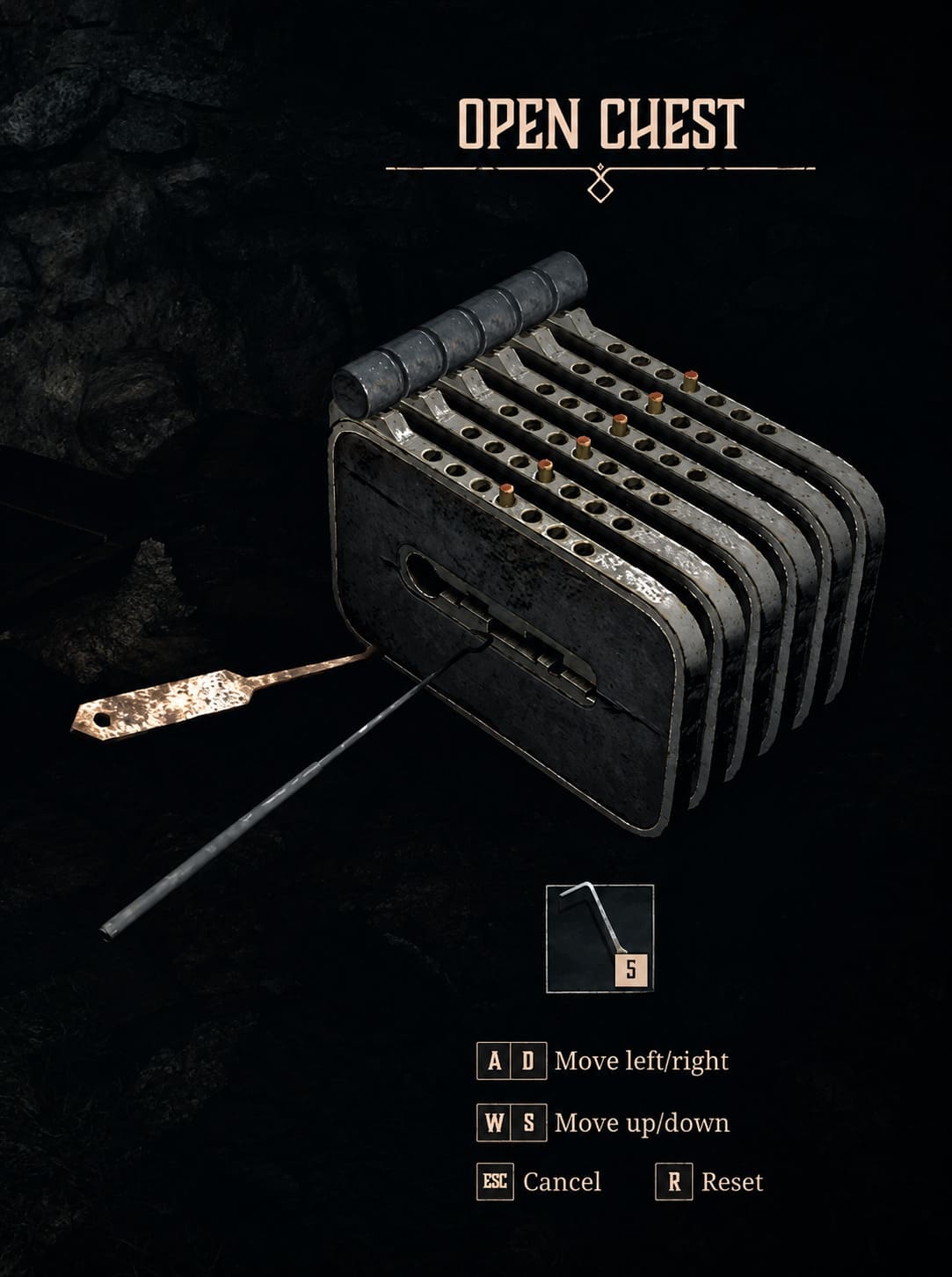
Instead of testing your reaction speed, the game challenges your ability to recognize patterns. Every lock contains multiple sliding layers connected through hidden relationships. Moving one section often affects several others, creating a chain reaction throughout the mechanism.
At first, this feels unfair.
After a few hours, however, you begin to realize that the system is actually highly logical. Every lock follows rules. The challenge is discovering those rules before your lockpick snaps.
That design choice fits Gothic perfectly. The world has always rewarded players who pay attention rather than those who rush through content.
Understanding the Goal
The objective is simple on paper.
Each layer contains a movable pin, and every pin must eventually be positioned in the center slot. Once all layers are aligned correctly, the chest opens.
The complication comes from the fact that layers are connected to each other.
You might move one slider into the correct position only to discover that another layer has shifted unexpectedly. Worse yet, hidden interactions can push plates toward the edges of the mechanism, increasing the risk of breaking your lockpick.
The puzzle is less about finding the correct answer immediately and more about understanding the relationships between the moving parts.
The Biggest Mistake New Players Make
The most common error I see is treating every movement as a guess.
Players often move sliders randomly, hoping the puzzle will eventually solve itself.
That approach almost always ends with broken tools.
Instead, think of each lock as an investigation.
Before trying to solve anything, spend time gathering information.
Ask yourself:
- Which layers move independently?
- Which layers influence others?
- Which sections create the biggest chain reactions?
- Which plates are dangerously close to the edges?
The more information you collect early, the easier the puzzle becomes.
My Favorite Strategy for Difficult Chests
After opening dozens of locks across the Colony, I developed a routine that works surprisingly well.
Step 1: Create a Safety Zone
Before attempting any serious adjustments, look for plates positioned near the extreme left or right edges.
These are the most dangerous parts of the puzzle.
Move them slightly inward whenever possible. Creating extra space dramatically reduces the chances of accidentally causing durability damage later.
Step 2: Test Every Layer
I call this the “probe phase.”
Move each layer slightly and watch what happens elsewhere in the lock.
Some layers barely affect anything.
Others trigger movement across half the mechanism.
By identifying these influential layers early, you gain a mental map of the lock’s structure.
Step 3: Solve Easy Components First
Whenever you find a layer that can be centered without disrupting other sections, lock it into place immediately.
Removing simple problems from the equation makes the remaining puzzle easier to understand.
Step 4: Work Methodically
Many difficult locks become manageable when approached one section at a time.
Instead of trying to solve everything simultaneously, focus on stabilizing individual layers and gradually reducing complexity.
Patience consistently outperforms brute force.
The Save-and-Learn Method
Let’s be honest.
Even experienced players occasionally encounter a lock that seems impossible at first glance.
In those situations, there is absolutely nothing wrong with using a quicksave before beginning.
I personally consider this less of an exploit and more of a learning tool.
The first attempt becomes a scouting mission. You observe interactions, identify dangerous movements, and gather information.
If the lockpick breaks, reload and apply what you learned.
Because chest configurations remain consistent, each attempt gives you additional knowledge.
Eventually, even the most intimidating lock begins to reveal its logic.
Why Training Lockpicking Matters More Than Ever
One aspect I particularly appreciate is how character progression directly impacts the lockpicking experience.
Unlike many RPGs where lockpicking perks simply increase success percentages, Gothic 1 Remake provides tangible mechanical advantages.
Here is a simplified overview:
| Skill Level | Durability | Practical Advantage |
|---|---|---|
| Beginner | Very Low | Little room for mistakes |
| Trained | Moderate | More experimentation allowed |
| Expert | High | Significantly safer puzzle-solving |
| Master | Excellent | Makes advanced locks far less punishing |
This progression feels meaningful because every investment directly improves your ability to interact with the system.
Rather than bypassing the puzzle, skill upgrades encourage deeper engagement with it.
Is the System Too Difficult?
This is probably the most controversial question in the community.
Personally, I would say no.
It is certainly more difficult than most modern RPG lockpicking mechanics, but difficulty alone is not a flaw.
Too many games reduce lockpicking to a repetitive minigame that players stop thinking about after a few hours.
Gothic 1 Remake avoids that trap.
Even after many successful attempts, I still pay attention whenever I encounter a high-level chest. The mechanic remains relevant throughout the game because it demands concentration.
That said, I understand why some players dislike it.
The learning curve is steep.
The game explains very little.
Early lockpick shortages can be frustrating.
But once the system finally clicks, opening a difficult chest feels genuinely earned.
Tips That Saved Me Countless Lockpicks
If I had to give only a few pieces of advice to new players, they would be these:
- Save before attempting valuable chests.
- Never move layers randomly.
- Observe relationships between components.
- Prioritize safety by moving edge-positioned plates inward.
- Upgrade lockpicking skills as early as possible.
- Treat every failed attempt as information gathering.
- Stay patient and avoid rushing solutions.
Following these principles dramatically improves success rates.
Gothic 1 Remake Stat Scaling Guide: Strength vs. Dexterity Explained
Final Thoughts
After spending many hours exploring the Colony, I believe the lockpicking system is one of Gothic 1 Remake’s most underrated features.
Yes, it can be frustrating.
Yes, it will probably destroy several lockpicks before you understand it.
But unlike many modern RPG mechanics that become routine after a few encounters, this system continues to challenge the player long after the tutorial areas are finished.
More importantly, it perfectly captures the spirit of Gothic itself.
Nothing comes easily in the Colony. Every piece of ore, every weapon upgrade, and every hidden treasure must be earned. The lockpicking system embraces that philosophy and turns even the simple act of opening a chest into a rewarding test of observation and problem-solving.
For players willing to slow down, study the mechanics, and learn from their mistakes, some of the richest rewards in Gothic 1 Remake are waiting behind locked lids and rusty iron clasps.