Resonance: A Plague Tale Legacy – Preload Size, Storage Requirements, and Full Gameplay Review (2026)
There are some games I go into with a very specific expectation, and Resonance: A Plague Tale Legacy was absolutely one of them. After A Plague Tale: Innocence and A Plague Tale: Requiem, I expected another slow, uncomfortable journey where every dark corridor makes you question whether you should take another step.
Instead, Asobo Studio basically looked at the formula and said: “What if Sophia had a sword?”
And honestly? I wasn’t sure how I felt about that at first.
Resonance: A Plague Tale Legacy launches on August 27, 2026, published by Focus Entertainment, and it takes the franchise in a noticeably more aggressive direction. This isn’t another Amicia-and-Hugo story. It is a standalone prequel starring Sophia, the smuggler introduced in Requiem, with the adventure taking place 15 years before the events of that game.
After spending a good amount of time with it, my biggest takeaway is pretty simple: this is no longer trying to be the same kind of Plague Tale game. And depending on what you loved about the originals, that’s either going to be incredibly exciting or slightly terrifying.
First Things First: How Much Space Does Resonance Need?
Before getting into the gameplay, let’s talk about the boring stuff that becomes extremely important when you’re staring at a nearly full SSD.
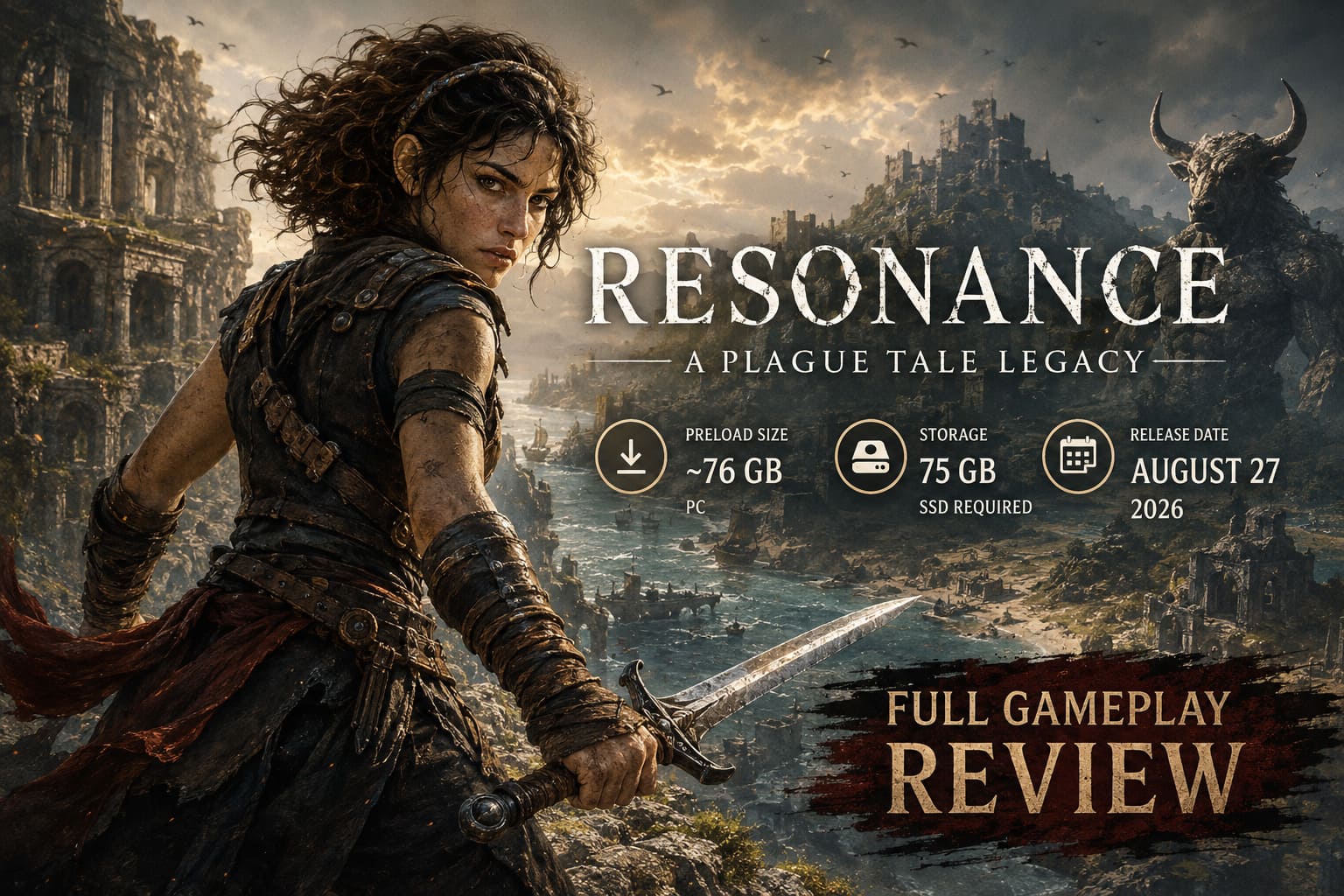
The game is a current-generation-only release, and Asobo is clearly leaning heavily into fast asset streaming, dense environments, and more detailed animation work. That means an SSD is required, particularly on PC.
| Platform | Approx. Download Size | Required Storage | Notes |
|---|---|---|---|
| PC | ~76 GB | 75 GB | SSD Required |
| PlayStation 5 | ~58 GB | 58 GB | Current-Gen Optimized |
| Xbox Series X/S | ~66 GB | 66 GB | Game Pass Day One |
The PC version is the one you’ll want to prepare for most carefully. The active preload is around 76 GB, while the listed storage requirement sits at approximately 75 GB.
Personally, I’d leave considerably more than that free. Games love to surprise us with patches, temporary installation files, shader caches, and post-launch updates. If you’re sitting there with exactly 75 GB available, you’re basically inviting Windows to ruin your evening.
The PS5 version is considerably smaller, while Xbox Series X/S lands somewhere in the middle.
And yes, Xbox Game Pass subscribers get the game on Day One, which makes this one of the more interesting releases for anyone who wants to try the new direction without immediately committing to a full-price purchase.
Preload and Launch Timing
Preloading opened roughly 48 hours before launch, giving players enough time to get the files installed before the adventure officially begins.
For players on the US East Coast, the listed unlock time is 12:00 PM ET on August 27, 2026.
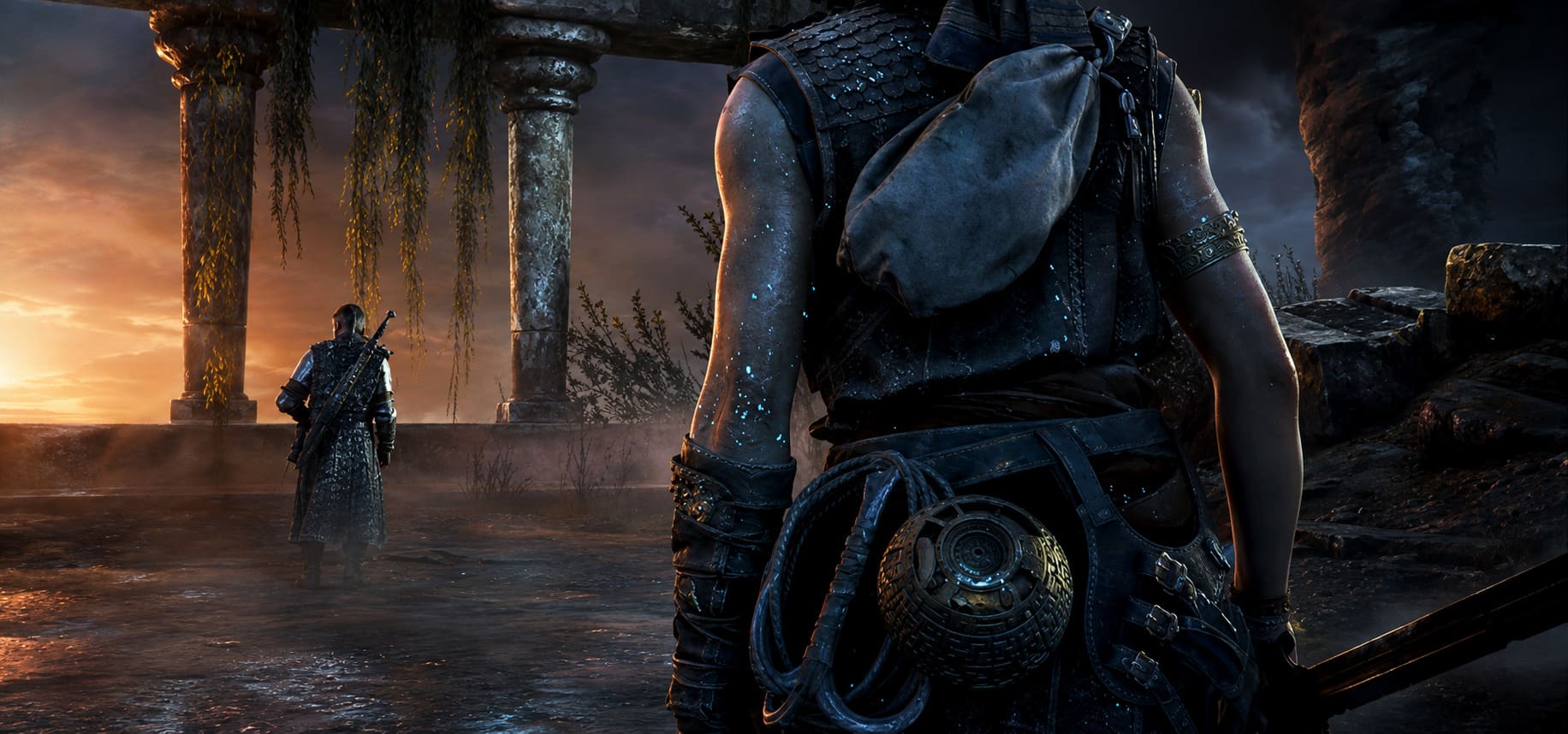
That means you don’t necessarily want to wait until launch day to start downloading. With a 75 GB+ PC installation, your internet connection could easily turn “I’ll play tonight” into “maybe tomorrow.”
There has also been plenty of discussion surrounding leaked developer files appearing before release. Personally, I would avoid those builds completely.
Beyond the obvious security and legitimacy issues, pre-release versions can contain broken scripts, unfinished assets, missing fixes, and progression problems. If you’re going to experience a story-driven game like this for the first time, I’d much rather play the properly patched retail version than spend half the evening wondering why an important quest isn’t triggering.
PC System Requirements: Is Your Gaming PC Ready?
The PC requirements are surprisingly reasonable considering how visually ambitious the game can become.
Minimum Specifications
The minimum configuration targets 1080p at 30 FPS on Low:
- Windows 10/11 64-bit
- Intel Core i3-12100 or AMD Ryzen 3 3100
- 16 GB RAM
- NVIDIA GTX 1060 6GB or AMD Radeon RX 5500 XT
- DirectX 12
- Shader Model 6.6
- 75 GB SSD
Recommended Specifications
For 1080p at 60 FPS on High, Asobo recommends:
- Windows 10/11 64-bit
- Intel Core i5-12400F or AMD Ryzen 5 5600X
- 16 GB RAM
- NVIDIA RTX 3060 Ti 8GB or AMD Radeon RX 6700 XT
- DirectX 12
- 75 GB SSD
The biggest thing I’d pay attention to here is the GPU and SSD combination.
If you’re still using something around a GTX 1060, you can technically enter the game, but don’t expect the same visual experience shown in trailers. Meanwhile, something like an RTX 3060 Ti or RX 6700 XT should provide a much more comfortable starting point.
And 16 GB of RAM is still the baseline. That’s becoming increasingly normal for modern AAA releases.
So, What Actually Changed?
This is where Resonance: A Plague Tale Legacy gets interesting.
The original games were built around vulnerability.
You weren’t supposed to feel powerful. You were supposed to feel like one wrong move could end everything. Amicia wasn’t a warrior charging into groups of soldiers. She was a young woman trying desperately to survive situations that were completely beyond her control.
Sophia doesn’t have that problem.
Sophia is dangerous.
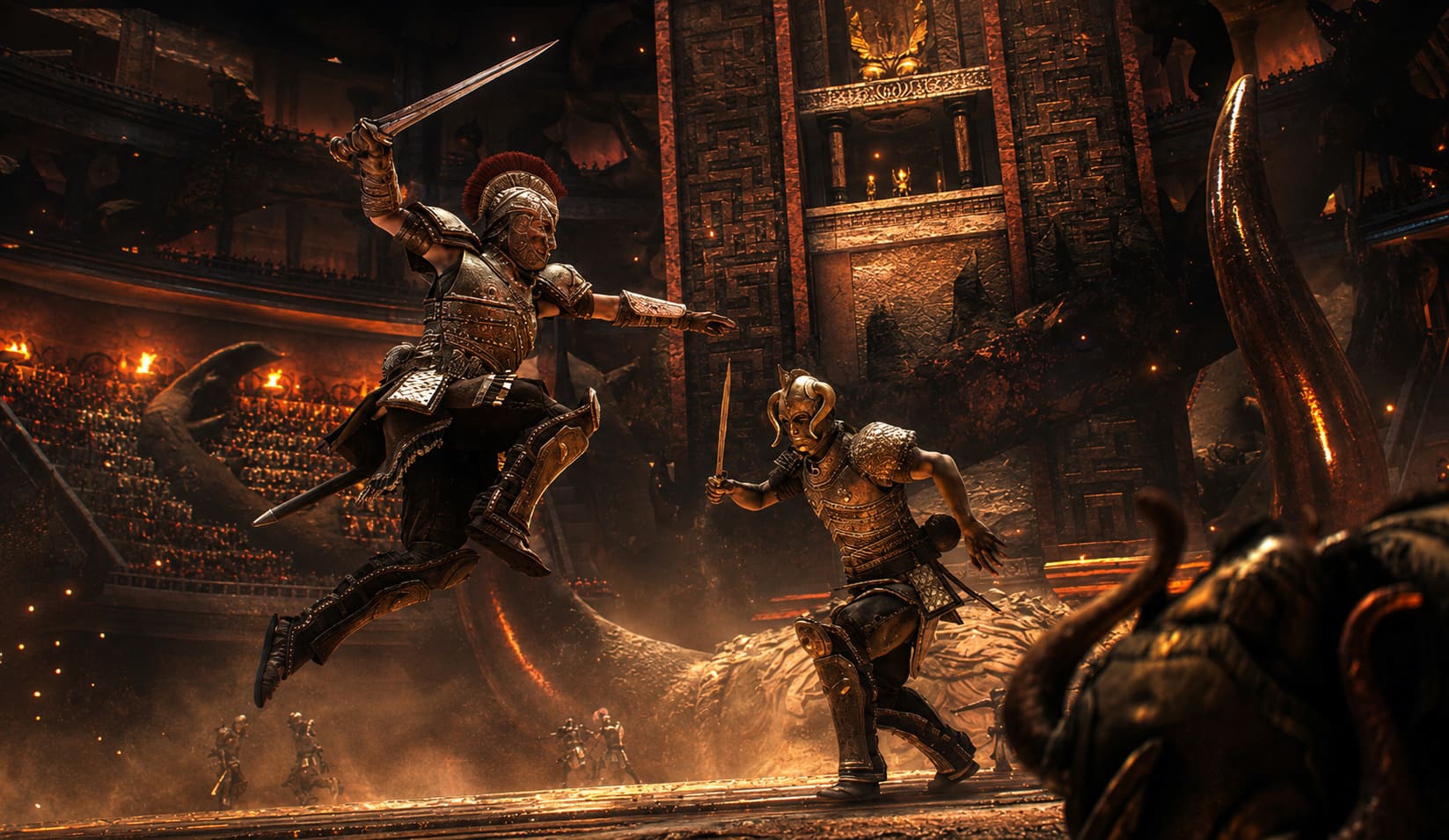
She is experienced, mobile, confident, and much more comfortable getting her hands dirty. Instead of constantly avoiding enemies, you can actually take the fight to them.
That immediately changes the rhythm of the entire game.
Sophia Makes Combat Feel Completely Different
The sword isn’t simply there as a decorative upgrade.
Combat has become a much larger part of the gameplay loop, with parries, dodges, counters, melee combos, and mobility-based attacks giving Sophia considerably more freedom than Amicia ever had.
One of my favorite changes is how encounters can become improvised little action sequences.
An enemy is positioned above you? Use the grappling hook.
An enemy is charging? Counter.
Someone is standing dangerously close to a spike trap? Well… you can probably figure out what happens next.
This creates a completely different fantasy from the previous games.
With Amicia, I often felt like I was trying to escape the situation.
With Sophia, I sometimes felt like I was looking at the environment and thinking, “Okay, how many ridiculous ways can I solve this?”
That empowerment is incredibly satisfying.
But there is a trade-off.
The Price of Feeling Powerful
Here’s where I think longtime fans might have mixed feelings.
The more capable Sophia becomes, the less frightening the world naturally feels.
The original A Plague Tale games were excellent at creating tension because the player was constantly reminded of their limitations. A swarm of rats wasn’t just another obstacle. It could completely dictate how you moved through an area.
Resonance still has rats, but their purpose has changed.
They’re now used more selectively in set pieces, puzzles, environmental sequences, and larger action moments. Instead of constantly dominating the experience, they become another tool in the game’s larger toolbox.
As someone who enjoys modern action-adventure games, I actually had a lot of fun with this.
But if what you specifically loved was the suffocating survival horror atmosphere of the previous games, you’re probably going to notice the difference immediately.
Minotaur’s Island Is the Real Star
The setting is one of the strongest reasons to play this game.
Sophia’s adventure takes place on the mysterious Minotaur’s Island, where medieval history collides with much older mythology.
The game doesn’t simply throw ancient ruins into the background and call it a day. The island is built around exploration, mechanisms, hidden passages, environmental puzzles, and mythology.
You can feel the influence of classical architecture throughout the environment, and that gives the game a visual identity that separates it from the muddy medieval villages and war-torn landscapes we’ve previously explored.
I particularly like the idea of the island functioning almost like one enormous mystery.
You’re not just asking, “How do I get over there?”
You’re asking, “Why was this place built, and what happened here?”
That makes exploration feel worthwhile.
A Story That Connects Mythology and the Macula
The narrative also plays with different historical periods and gradually digs into the mythology surrounding the Macula.
This is one of those areas where I’d recommend going into the game without reading every plot detail beforehand.
The connection between the ancient history of the island and the supernatural elements associated with the wider A Plague Tale universe is much more enjoyable when you can discover it naturally.
Sophia is also accompanied by Leni, and their relationship provides a different emotional dynamic from the sibling-focused stories we’ve had before.
It’s not trying to recreate Amicia and Hugo.
That’s important.
Instead, the game is establishing its own identity while filling in pieces of the larger world.
How Long Is Resonance: A Plague Tale Legacy?
The main story reportedly takes around 8 to 12 hours, depending on your pace.
If you’re the type of player who checks every corner, hunts for secrets, explores optional areas, and spends time with environmental puzzles, you can stretch the experience toward 20 hours.
I think that’s a pretty comfortable length for this type of adventure.
Personally, I’d rather have a tightly paced 10-to-12-hour campaign than a 30-hour open world stuffed with collectibles that exist purely to make the map look busy.
There’s also a skill tree that lets you improve Sophia’s combat abilities, gear, and traversal options.
That progression system works especially well with the new action-oriented design because you’re constantly unlocking small improvements that make Sophia feel even more fluid.
Is Resonance: A Plague Tale Legacy Worth Playing? Full 2026 Review & Gameplay Changes
My Take: Is This Still a Plague Tale Game?
This is the question I kept coming back to.
And my answer is: yes, but it’s a very different one.
If you’re expecting Requiem 2, you may walk away disappointed.
If you’re expecting a cinematic action-adventure set inside the A Plague Tale universe, however, this becomes much easier to appreciate.
The combat is faster.
The traversal is more dynamic.
The puzzles are more elaborate.
Sophia is more capable.
And the world feels much more focused on exploration and adventure than pure survival.
The orchestral score from Olivier Derivière also helps maintain that recognizable emotional identity. Even when the gameplay becomes more action-heavy, the presentation still carries the dramatic weight you’d expect from the series.
Resonance: A Plague Tale Legacy Best Settings for Stable 60FPS on PC
Final Verdict
Resonance: A Plague Tale Legacy isn’t trying to repeat the past. That’s probably its greatest strength.
Asobo Studio could have simply created another stealth-focused sequel and played it safe. Instead, the developers have taken Sophia, moved the story backward in time, dropped her onto a mysterious island, introduced ancient mythology, and transformed the gameplay into something much closer to a modern cinematic action-adventure.
For me, that’s a gamble worth taking.
The 58–76 GB installation size is manageable, the PC requirements are reasonable for a modern AAA game, and the current-generation focus gives the developers room to build significantly denser environments.
The bigger question is whether you personally want to feel vulnerable or powerful.
If you want the helplessness, desperation, and oppressive atmosphere of Innocence and Requiem, this new direction may take some getting used to.
But if you’re like me and enjoy sitting down with a brand-new AAA game, turning the settings up, putting on headphones, and getting completely lost in a beautifully designed world, Resonance: A Plague Tale Legacy is an easy game to recommend.
It feels less like a traditional survival story and more like a treasure-hunting adventure with swords, ancient mysteries, rats, and just enough darkness to remind you where the series came from.
And honestly, after two games centered around survival, I’m perfectly okay with letting Sophia kick a few enemies into a pit.