Assassin’s Creed Black Flag Resynced: Underwater & Harpooning Guide
There are games you remember because of their story, and there are games you remember because they made you feel like you were actually living inside their world. For me, Assassin’s Creed Black Flag has always belonged to the second category. I have replayed the original countless times over the years, and after spending many hours exploring what Black Flag Resynced brings to the table, one thing became crystal clear—the oceans are no longer just beautiful scenery. They’re dangerous, unpredictable, and far more rewarding than ever before.
Ubisoft has rebuilt many of the classic mechanics around modern hardware, and while naval combat still steals the spotlight, I honestly think the biggest improvements happened beneath the waves. Diving feels more immersive, harpooning is considerably more skill-based, and dynamic weather constantly forces you to rethink your strategy.
If you’re planning to collect every rare crafting material, hunt legendary sea creatures, or simply survive underwater expeditions, this guide covers everything I’ve learned along the way.
Why The Ocean Feels Completely Different
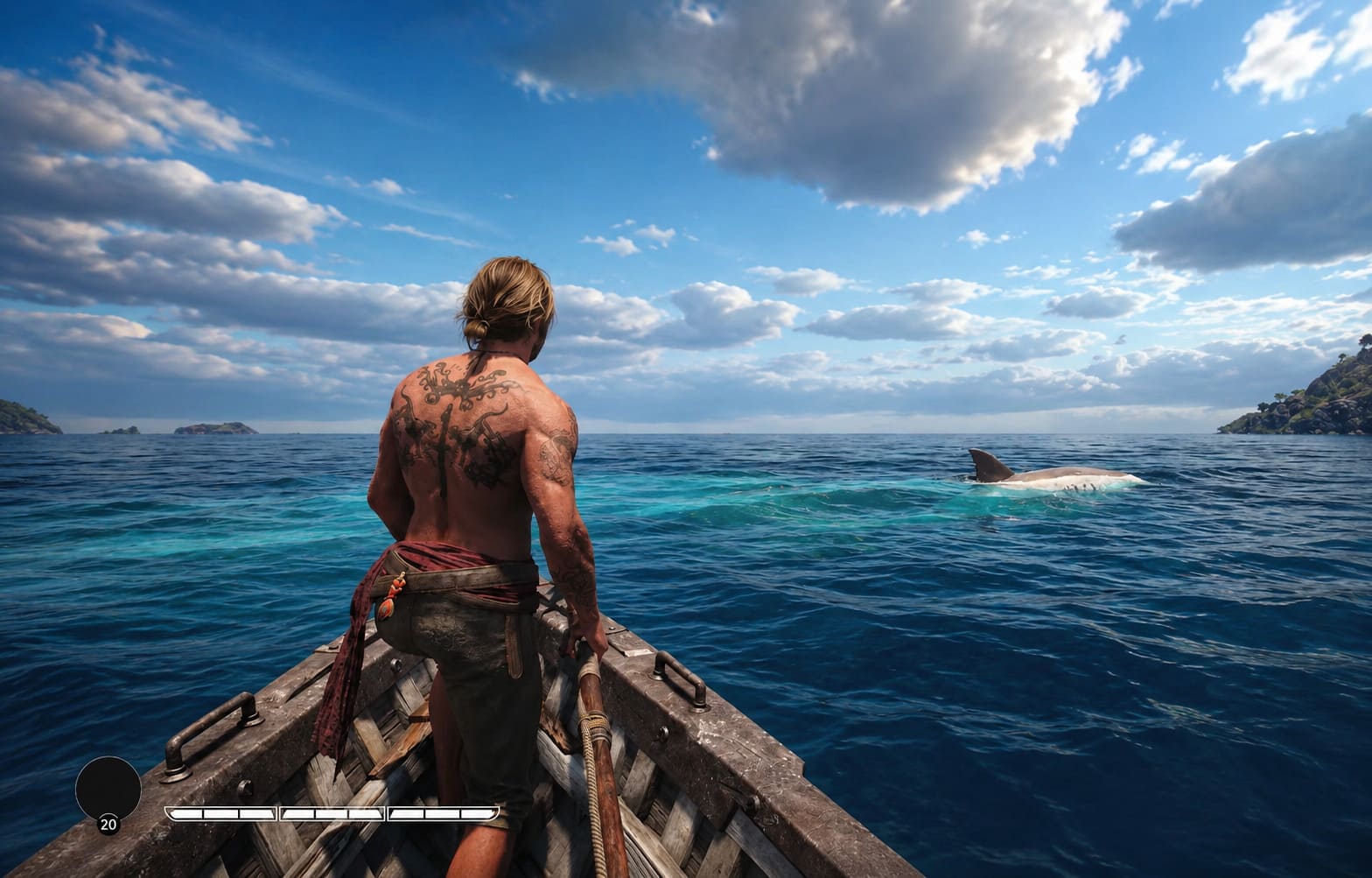
One of the first things I noticed wasn’t the graphics—it was how alive the sea feels.
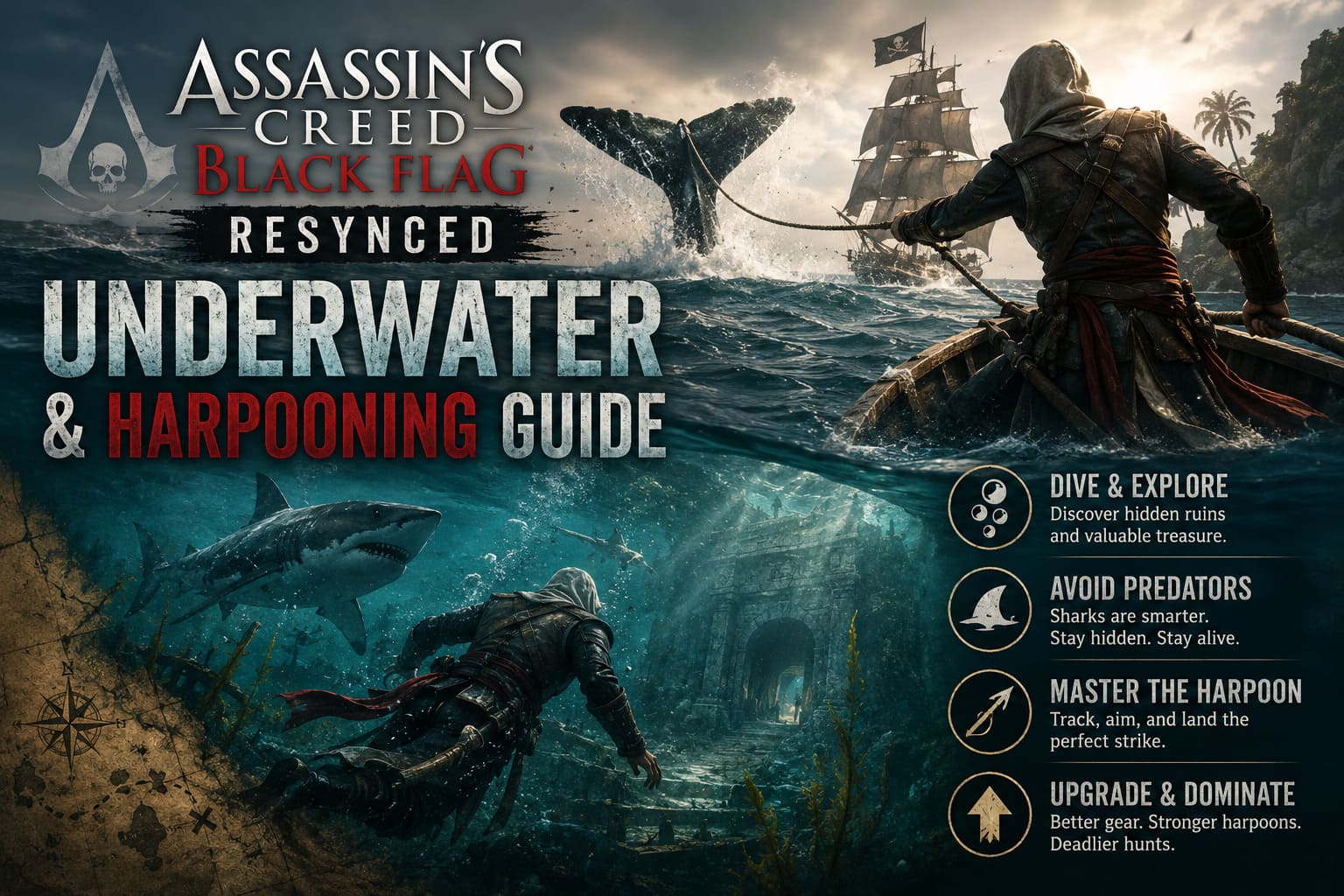
The upgraded engine introduces much more believable water physics. Waves react naturally to storms, visibility constantly changes, and even simple rowing now requires paying attention instead of mindlessly aiming at targets.
Unlike the original release, weather isn’t just cosmetic anymore. It directly affects gameplay.
During calm weather you’ll enjoy:
- Clear underwater visibility
- Easier harpoon accuracy
- Better tracking of large animals
- Safer exploration
Storms, on the other hand, become genuine hazards.
Heavy rain, violent waves, and dense sea foam reduce visibility dramatically. Large predators become much harder to detect, while rough water makes landing harpoon throws noticeably more difficult.
Personally, unless I’m intentionally looking for extra challenge, I always wait for clear skies before starting any major hunt.
Unlocking Underwater Exploration
Diving doesn’t become available immediately.
You’ll first need to progress through the main campaign until Edward receives the Diving Bell upgrade for the Jackdaw.
Once unlocked, diving locations begin appearing across the Caribbean map, each containing valuable treasure, hidden ruins, crafting resources, and dangerous wildlife.
Every dive follows a familiar structure:
| Objective | Why It Matters |
|---|---|
| Search shipwrecks | Valuable loot and collectibles |
| Manage oxygen | Running out means instant failure |
| Avoid predators | Edward cannot fight underwater |
| Reach hidden chambers | Often contain the best rewards |
Although the concept sounds simple, every dive quickly becomes a tense balancing act between exploration and survival.
Oxygen Is Your Most Valuable Resource
The biggest mistake I see players making is treating oxygen like a generous timer.
It isn’t.
You should always know where your next source of air is before committing to exploring another section of the ruins.
There are usually two safe ways to replenish oxygen:
- Returning to the Diving Bell.
- Finding trapped air pockets inside underwater structures.
I strongly recommend planning your route before swimming away from safety.
Nothing feels worse than spotting a treasure chest only to realize your oxygen meter has nearly reached zero.
Sharks Are Smarter Than Before
The underwater predators behave much more aggressively than I expected.
Instead of endlessly circling predictable routes, sharks now feel far more reactive to your movement and positioning.
Among the most common threats are:
- Bull Sharks
- Hammerheads
- Great White Sharks
- Moray Eels
Since Edward has no weapons underwater, avoiding confrontation is always the best strategy.
Fortunately, the environment provides several useful tools.
Dense kelp forests work almost like hiding spots from the land-based stealth system. If a shark begins moving toward you, slipping into thick seaweed often causes it to lose track of your position.
It isn’t guaranteed safety—but it has saved me countless times.
Movement Matters More Than Ever
Swimming feels smoother thanks to the updated movement system.
Edward can now push off rocks, beams, and underwater wreckage to gain short bursts of speed.
These quick accelerations become incredibly useful when escaping predators or crossing dangerous open areas.
One habit I’ve developed is never swimming across wide open water unless I already know where my next cover point is located.
Thinking several moves ahead makes every dive dramatically safer.
Harpooning Has Become Much More Skill-Based
Harpooning remains one of my favorite side activities, but it has definitely evolved.
Instead of feeling like a repetitive mini-game, each encounter now feels closer to an actual boss fight.
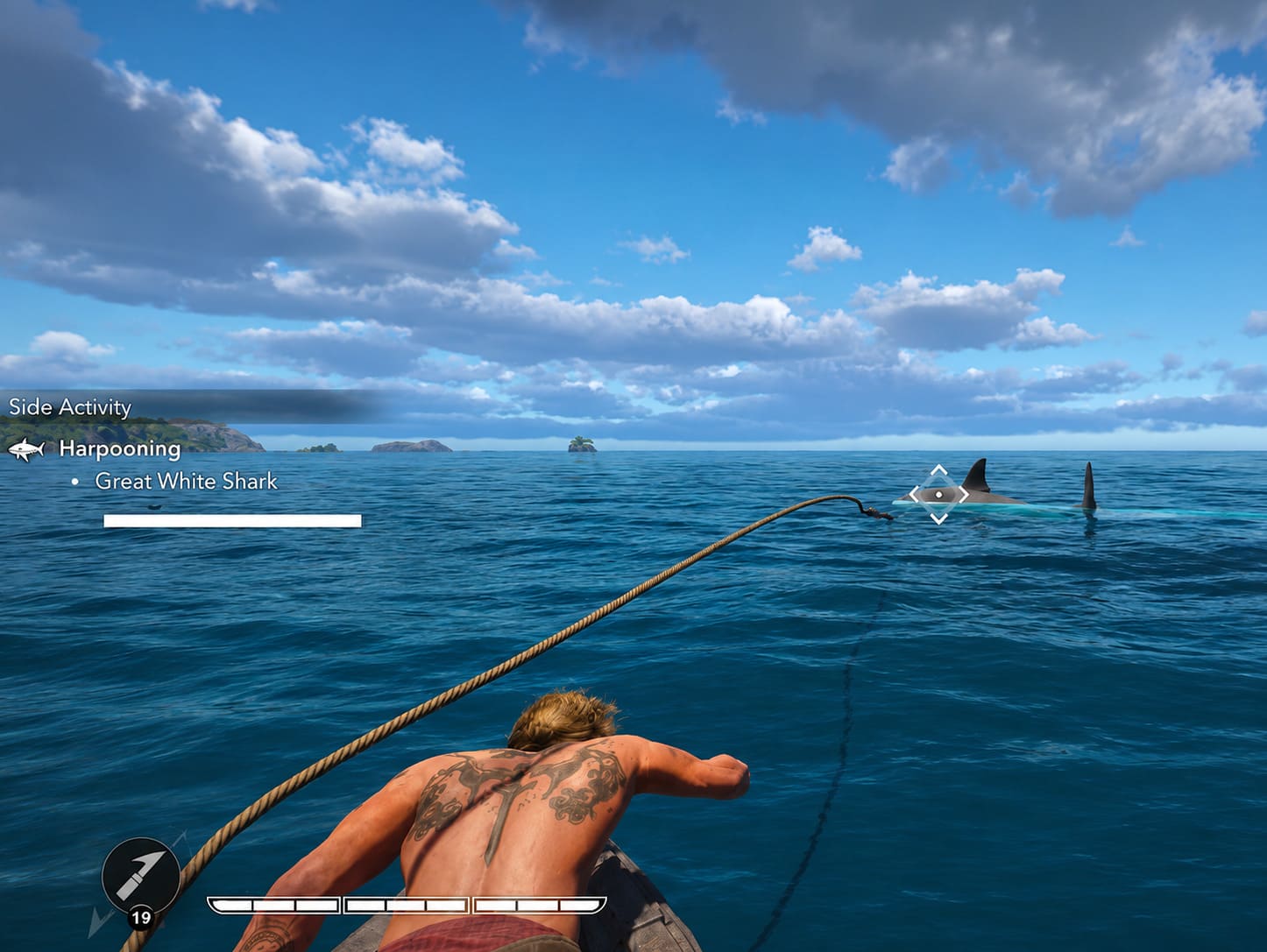
Every hunt follows two repeating stages.
Stage One: Tracking
Locate the creature as it surfaces while keeping your aim steady despite shifting waves.
Stage Two: Towing
After landing a successful harpoon, the animal drags your boat across the sea while you attempt to land additional throws before the rope snaps.
It sounds straightforward on paper.
In practice, large creatures constantly dive, change direction, and attack your boat, forcing you to make split-second decisions.
Upgrade Before Hunting Anything Dangerous
One lesson I learned early was that upgrades matter far more than raw player skill.
Trying to fight stronger sea creatures with basic equipment usually ends in frustration.
The three upgrades I prioritize are:
- Harpoon Damage – Faster kills and shorter encounters.
- Harpoon Capacity – More room for mistakes during extended fights.
- Rowboat Armor – Essential for surviving heavy impacts.
Maximizing these upgrades before challenging legendary creatures saves an enormous amount of time.
Creature Guide
Bull Shark
Difficulty: Easy
This is the ideal starting target.
Its attacks are straightforward, and its charges are easy to interrupt with well-timed harpoon throws.
Perfect for practicing the basics.
Hammerhead Shark
Difficulty: Moderate
Hammerheads move far more unpredictably.
Rather than throwing immediately, I usually wait until the shark commits to its final approach before releasing the harpoon.
Patience produces much more consistent hits.
Great White Shark
Difficulty: Hard
This is where things become serious.
Great Whites hit incredibly hard and frequently disappear beneath the surface before suddenly launching devastating attacks.
Watch the dorsal fin rather than the splashing water.
That tiny visual cue often gives just enough warning to stop its charge.
Humpback Whale
Difficulty: Medium
Unlike sharks, the whale isn’t especially aggressive.
Its greatest strength is simply having an enormous health pool.
Landing accurate throws becomes more important than throwing quickly.
Running out of harpoons before finishing the fight is surprisingly common.
Killer Whale (Orca)
Difficulty: Very Hard
The Orca combines speed, intelligence, and durability.
Its ability to break harpoon lines creates constant pressure throughout the encounter.
Keeping your aim centered on its resurfacing point instead of chasing its wake makes a noticeable difference.
Legendary White Whale
Difficulty: Extreme
Without fully upgraded equipment, I honestly wouldn’t even bother attempting this fight.
The White Whale combines nearly every dangerous mechanic introduced throughout the hunting system.
- Massive breaches.
- Powerful collisions.
- Frequent rope breaks.
- Little room for mistakes.
It’s one of those encounters that feels incredibly satisfying precisely because victory isn’t guaranteed.
Advanced Tips That Actually Help
- Track the rope instead of the animal. Once harpooned, you don’t always need visual contact. The rope often reveals the creature’s exact movement beneath the surface.
- Avoid hunting during storms. The reduced visibility and unstable boat movement simply aren’t worth the added challenge unless you’re specifically looking for it.
- Upgrade early. Investing resources into harpoon equipment before progressing too far through the story makes later hunts significantly easier.
- Observe before moving underwater. Rushing between cover usually attracts unwanted attention. Watching predator patrol routes first almost always leads to safer exploration.
Stardew Valley Secret Marriage Dialogue: Guide to Unlocking Hidden NPC Events
Is Diving Finally Worth Doing?
Absolutely.
In the original game, underwater sections sometimes felt like interruptions between the more exciting pirate gameplay.
That isn’t the case anymore.
Exploration now feels genuinely rewarding because the environments themselves tell stories through abandoned wrecks, forgotten ruins, hidden caves, and environmental hazards.
Combined with improved lighting and realistic water effects, every dive becomes memorable instead of repetitive.
Final Thoughts
After spending a significant amount of time with Assassin’s Creed Black Flag Resynced, I genuinely believe the underwater systems have become one of the remake’s strongest features. The improved swimming mechanics, smarter predator behavior, dynamic weather, and more demanding harpooning encounters make every expedition feel earned rather than routine.
What impressed me most wasn’t simply the visual overhaul—it was how every system works together. Calm seas invite exploration, storms force caution, and upgrading your equipment finally feels meaningful instead of optional. Every successful legendary hunt carries a real sense of accomplishment because preparation matters just as much as quick reflexes.
If I could offer one piece of advice to both newcomers and returning veterans, it would be this: don’t rush through the ocean content. Spend time learning shark patrol routes, invest in your hunting gear early, and choose your battles wisely. The Caribbean rewards patience, and the rare crafting materials you’ll collect along the way make every risky expedition worthwhile.
For players who loved the original Black Flag, this revamped approach to underwater exploration and sea hunting captures the same adventurous spirit while adding enough depth to keep even experienced pirates engaged for dozens of additional hours.