Twisted Tower Playtest Feedback & Changes: Bioshock Meets Disney Horror Evolution
If there is one thing I love about following a new game from its early demo to launch, it is seeing whether the developers actually listen. Plenty of studios collect feedback, post a few optimistic development updates, and then quietly ship the game they were making anyway. Twisted Tower feels like a much more interesting case.
I have been keeping an eye on Atmos Games’ bizarre first-person horror shooter for a while, and honestly, it is one of those projects that gets more fascinating the closer it gets to release. The pitch alone sounds completely ridiculous in the best possible way: imagine BioShock, an old-school amusement park, twisted Disney-style mascots, 1950s cartoon aesthetics, and a healthy dose of nightmare fuel thrown into the same blender.
The result is Twisted Tower, a single-player horror adventure from developer Thomas Brush, the creator known for atmospheric games such as Pinstripe and Neversong. Published by 3D Realms, the game puts players in the role of Tiny, a desperate protagonist climbing through a grotesque amusement resort in search of Charlotte.
And after watching the game’s evolution through its demos and playtesting, I think the most interesting story isn’t simply what Twisted Tower is. It is how much the game appears to have changed because players pushed back on its rough edges.
With the full release scheduled for August 18, 2026, here is my take on the biggest pieces of community feedback, the changes made before launch, and why I think Twisted Tower could end up being one of the more memorable horror shooters of the year.
The First Impression Was Impossible to Ignore
Let’s get the obvious part out of the way first: Twisted Tower has style.
The first time you see its decaying amusement-park environments, you immediately understand why people started comparing it to BioShock. There is that same feeling of entering a place that was designed to make people happy, only to discover that something has gone horribly wrong.
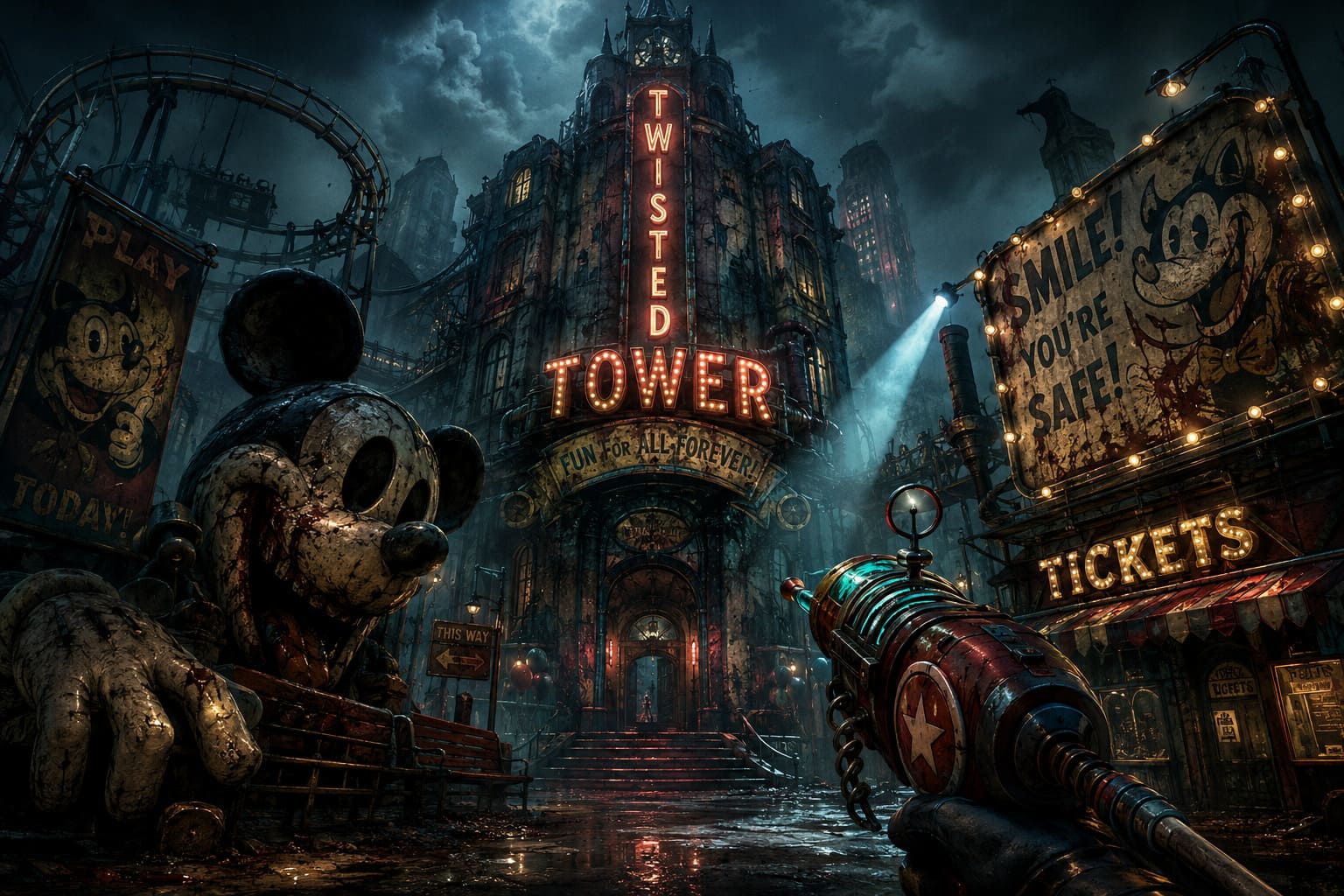
The difference is that Twisted Tower takes that concept into much stranger territory.
Its world combines cheerful 1950s visual design with blood, monsters, broken attractions and corrupted mascot characters. Bright colors and playful shapes sit next to disturbing imagery, creating a contrast that makes the horror considerably more effective.
As someone who plays a lot of new releases, I appreciate this kind of visual identity. There are plenty of horror games that look technically impressive but could be mistaken for ten other games in the same genre. Twisted Tower doesn’t really have that problem.
The soundtrack also deserves attention. During larger enemy encounters, the music becomes much more aggressive and energetic, giving combat a completely different rhythm from the quieter exploration sections.
That contrast between unsettling exploration and chaotic action is one of the game’s strongest ideas.
What Players Loved During the Playtests
The early community response was definitely mixed, but the positive feedback was remarkably consistent in a few areas.
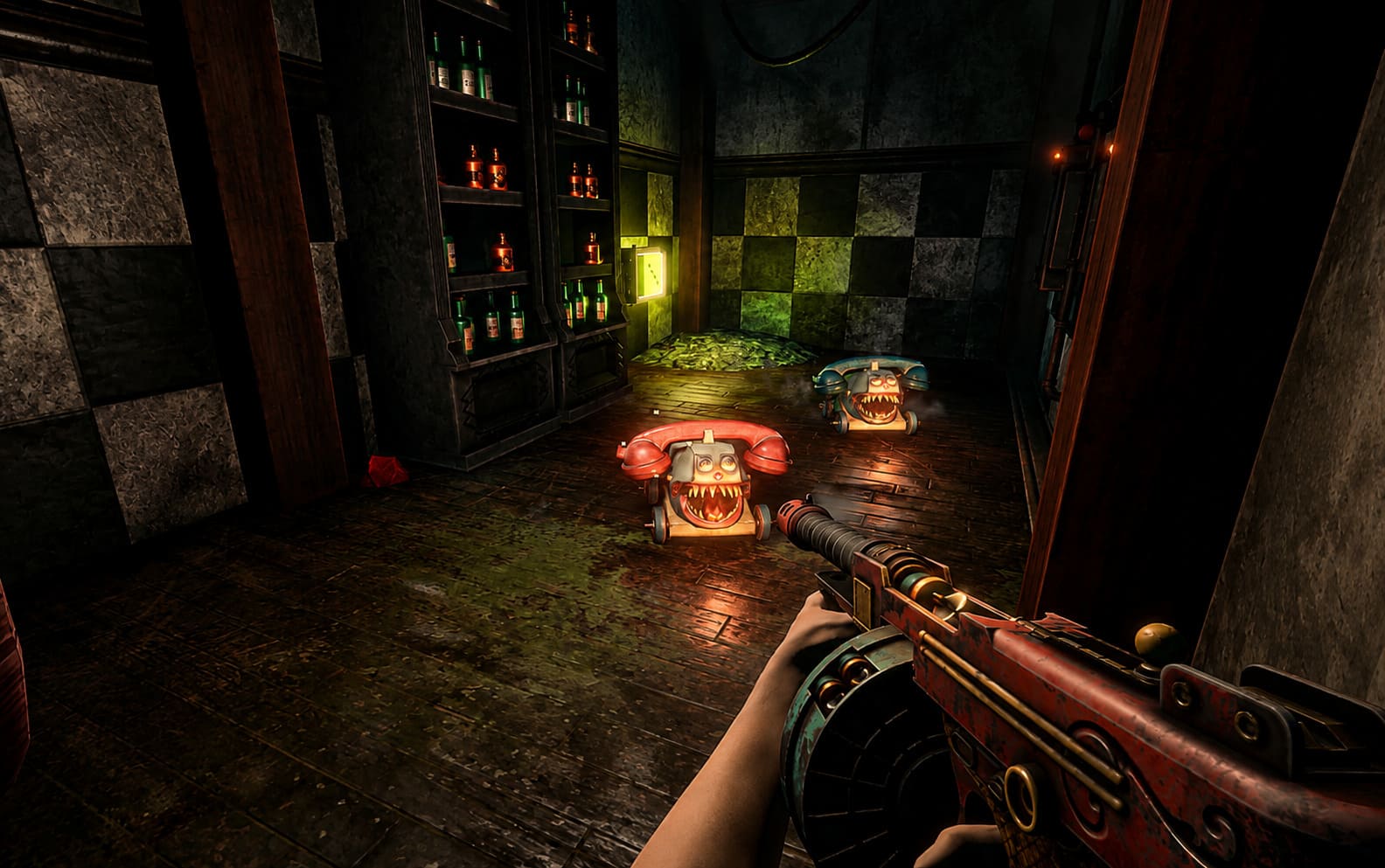
1. The Atmosphere
This was probably the easiest part of the game to praise.
Players responded strongly to the combination of nostalgic amusement-park imagery and grotesque horror. The game manages to make familiar visual ideas feel uncomfortable without relying entirely on darkness and jump scares.
Personally, I think that is important. Good horror design isn’t always about hiding everything in shadows. Sometimes it is much creepier when you can clearly see something that looks completely wrong.
2. The Room-Flipping Mechanic
The room-flipping mechanic immediately caught my attention.
Certain areas can be physically flipped upside down using environmental switches, effectively changing the player’s perspective and transforming familiar spaces into new puzzles.
It is a simple concept on paper, but it gives the level design another dimension.
Instead of simply walking through a corridor and solving the same types of environmental puzzles, you can suddenly find yourself looking at the same location from an entirely different orientation.
That kind of mechanic is exactly what I want from an immersive horror shooter: something that changes how I think about the environment, not just how I shoot enemies.
3. The Weird Weapons
The arsenal is another part of Twisted Tower that refuses to take itself too seriously.
Early builds featured weapons such as:
- A Whac-A-Mole mallet
- A rubber-band pistol
- A dart-firing Tommy Gun
- Other bizarre toy-inspired firearms
Later versions expanded the concept even further with weapons such as a fart-powered shotgun, bubblegum-spitting chain gun, sniper slingshot and magical ray gun capable of spectacular enemy kills.
It sounds stupid.
And I mean that as a compliment.
The weapon design gives Twisted Tower a personality that many horror shooters desperately lack.
Where the Early Builds Struggled
Of course, style can only carry a game so far.
The biggest criticism from early testers was combat feel.
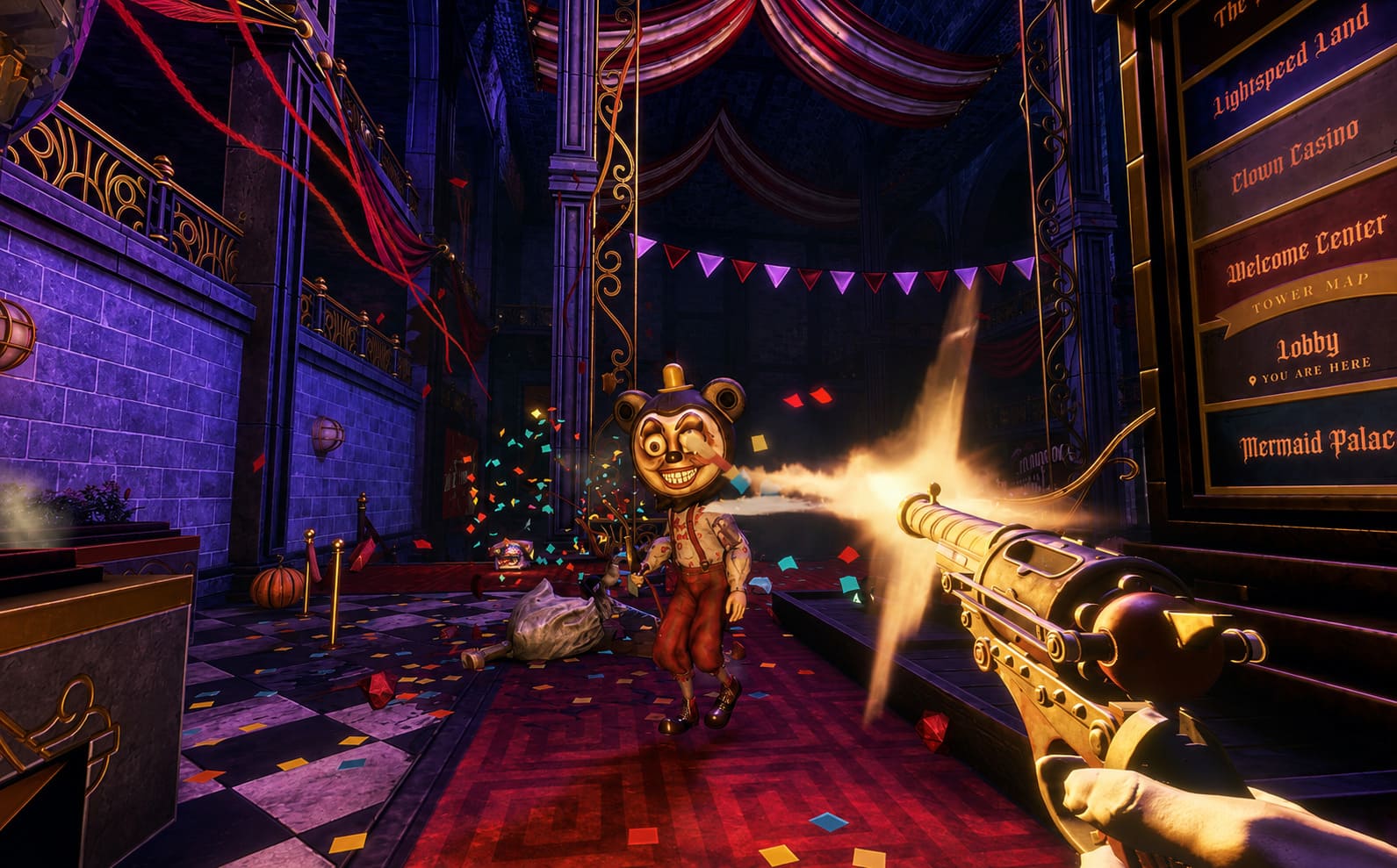
Players liked the creativity behind the weapons, but some felt that shooting enemies simply wasn’t satisfying enough. Certain enemies could absorb too many hits without providing enough physical feedback.
That’s a serious problem in a first-person shooter.
When I fire a weapon, I want to feel that something happened. I want recoil, sound, animation and enemy reactions to work together. Even a ridiculous rubber-band gun needs to feel good when I pull the trigger.
Early feedback also criticized enemy hit reactions, with some players describing opponents as bullet sponges rather than creatures that reacted convincingly to being attacked.
This became one of the most important areas for improvement.
Movement Was Another Major Complaint
The other recurring issue was movement.
Early testers described jumping as floaty and unpredictable, which becomes especially noticeable in a game that includes platforming and vertical exploration.
This is one of those problems that might sound minor until you actually play a game with bad movement.
A horror game can have amazing environments, weapons and monsters, but if jumping feels like Tiny is floating through space, immersion disappears immediately.
The control scheme also became a discussion point, particularly for players who don’t use a traditional WASD setup.
For a PC game launching in 2026, I consider proper key remapping a basic expectation rather than a luxury. Thankfully, the development direction suggests this was taken seriously.
The Story Needed More Emotional Weight
The mechanical complaints were not the only criticism.
Some players felt that the opening of the game did not do enough to establish why Tiny cared so deeply about Charlotte.
The basic objective is straightforward: climb the tower and rescue the person you love.
But the emotional connection needs to be established before the player is expected to care about the outcome.
If I am thrown into a nightmare amusement park five minutes after starting a game, I need some reason to think, “Okay, I have to save this person.”
The early demo apparently moved too quickly through that setup.
That is something I hope the final version improves because Twisted Tower’s bizarre world deserves a protagonist whose motivation feels equally strong.
The Biggest Twisted Tower Changes Before Launch
Based on the development direction leading into release, the final version has received several important revisions.
| Area | Early Feedback | Pre-Launch Direction |
|---|---|---|
| Combat | Weak impact and bullet sponges | Stronger hit reactions and stagger |
| Movement | Floaty jumping | More grounded physics |
| Controls | Limited remapping | Full keyboard and mouse remapping |
| Story | Weak emotional setup | More context around Tiny and Charlotte |
| Exploration | More linear structure | More branching routes and secrets |
Combat Has Received the Most Attention
The weapon system has been refined to make attacks feel more responsive.
Enemy hitboxes and stagger behavior have been improved, allowing attacks to communicate their impact more clearly.
That sounds like a technical adjustment, but it can completely change the experience.
A horror shooter needs to walk a fine line between making enemies threatening and making the player feel powerful enough to fight back. If every monster simply absorbs ammunition, combat becomes frustrating. If enemies die instantly without reacting, encounters become boring.
The ideal solution is responsive combat with meaningful enemy behavior, and that’s where Twisted Tower appears to be heading.
Movement and Accessibility Matter More Than People Think
The movement overhaul could be one of the most important changes despite being less flashy than new weapons.
More responsive jumping and traversal should make the game’s platforming sections feel considerably better, especially when combined with upgrades that improve abilities such as jumping, dashing and grappling.
The addition of full keyboard and mouse remapping is also a welcome improvement.
I always find it strange when modern PC games don’t provide proper input customization. Different players have different setups, different keyboards and different physical needs. Giving people control over their bindings should be standard.
The World Is Bigger Than the Original Demo Suggested
Another reason I am increasingly interested in the full release is the variety of environments.
The campaign is built around several major locations:
- The Hotel
- The Waterpark
- The Clown Casino
- The Carnival Forest
- The Fairy-Tale Castle
That is a pretty wild collection of locations for a single horror game.
The developers are reportedly aiming for a roughly five-to-six-hour campaign, which honestly sounds about right for this kind of experience.
I would rather play a tightly designed five-hour horror game where every area has a distinct identity than a fifteen-hour campaign padded with repetitive combat.
The branching exploration elements are particularly promising. Different choices and exploration paths can lead to additional rooms, hazards and secrets, giving players reasons to revisit locations instead of treating the game as a completely linear corridor.
Twisted Tower Walkthrough: Complete 5 Levels Guide to Survive the Horror
My Biggest Question Before Launch
If I had one concern going into August 18, it would be pacing.
Twisted Tower has so many ideas competing for attention that the final game needs to know when to slow down.
You have horror, comedy, platforming, shooting, environmental puzzles, surreal environments, narrative mysteries and ridiculous weapons. That can create an unforgettable experience, but it can also become chaotic if everything is happening constantly.
The best version of Twisted Tower will be the one that allows the atmosphere to breathe.
Give me a creepy hotel hallway with strange sounds.
Then give me a ridiculous firefight.
Then let me explore.
Then surprise me with something genuinely disturbing.
That rhythm could make the campaign incredibly entertaining.
What I Think of Twisted Tower So Far
After following its playtest evolution, I am more interested in Twisted Tower now than I was when I first saw it.
The original concept was already eye-catching, but the community feedback reveals something more important: the developers appear willing to address the parts that weren’t working.
The atmosphere was already strong.
The room-flipping concept was already interesting.
The weapons were already creative.
But combat responsiveness, movement, controls and narrative setup are the kinds of fundamentals that can make or break a game.
If those systems have genuinely received the attention they needed, Twisted Tower could be much more than another quirky indie horror shooter.
It could be one of those games people remember because the experience is simply different.
And honestly, that’s exactly what I want from a new release.
I’ve played enough horror games where the formula is basically dark hallway + flashlight + monster + jump scare. Twisted Tower looks like it wants to throw that formula out of the window and replace it with something much stranger.
A haunted amusement resort.
A bizarre tower.
A ridiculous arsenal.
Corrupted mascots.
Upside-down rooms.
And a protagonist willing to climb through all of it to find Charlotte.
Twisted Tower launches August 18, 2026, on PC via Steam, and if the final build delivers on the improvements suggested by its playtesting history, I’m absolutely keeping this one on my radar.
It might not be the biggest horror game releasing this year.
But sometimes the strangest games are the ones worth playing.