Survival Log Game Guide: Mastery of the Survival Points System and Hoarding Sim Mechanics
Survival Log is the kind of survival game that looks straightforward until you actually start playing it. On paper, the idea sounds familiar: loot supplies before the apocalypse, barricade your home, and survive the inevitable zombie attacks. After spending time with games built around survival, inventory management, and base defense, though, I found that Survival Log has a much nastier trick up its sleeve.
It makes you think you are playing two separate games when, in reality, every decision in one directly affects the other.
The first part gives you just 10 hours to prepare for the apocalypse. The second asks you to survive for 100 days with whatever you managed to bring home. That creates a constant tension between greed and common sense. Do you make one more trip for medicine? Do you fill the car with food? Do you spend precious time reinforcing the house, or gamble on finding better supplies?
After several runs, my biggest takeaway is simple: Survival Log rewards preparation far more than heroics. You can survive a surprisingly bad zombie encounter. Recovering from a terrible first ten hours is much harder.
If you are looking for Survival Log tips, a practical Survival Log beginner guide, or simply want to understand how the Survival Points system works, here is how I approach the game.
How Survival Log Actually Works
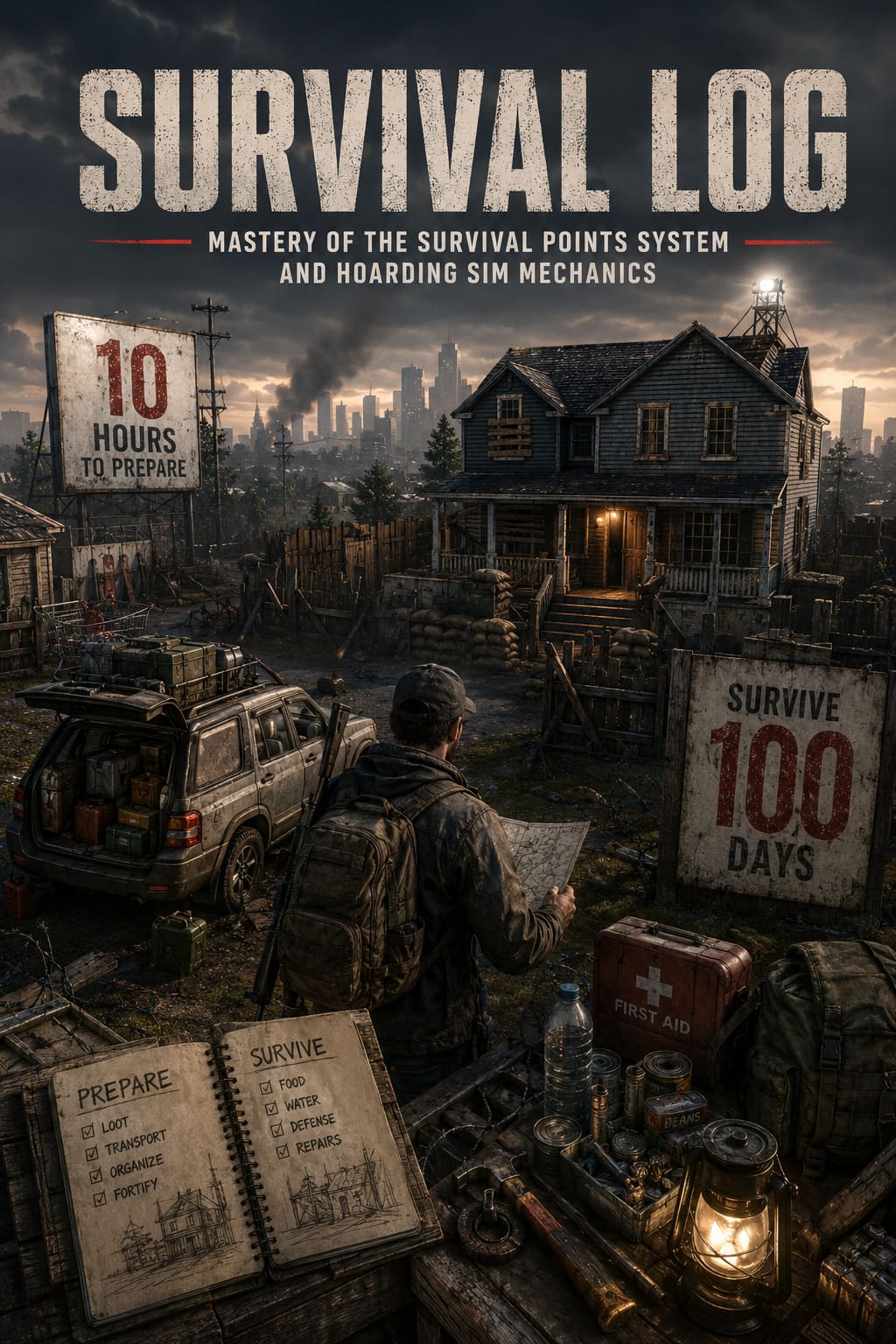
The game is split into two major stages, and understanding that structure is the first thing I would recommend to any new player.
| Phase | Main Goal | Biggest Risk | Priority |
|---|---|---|---|
| Preparation Phase | Gather supplies | Wasting time and inventory space | Food, Water, Tools |
| Stronghold Phase | Survive 100 days | Resource exhaustion and breaches | Repairs, Food, Defense |
The 10-Hour Preparation Phase
The opening countdown is basically a frantic shopping trip where the consequences are much more serious than usual.
You know the apocalypse is coming, but nobody else is properly prepared. The city becomes your giant supply warehouse. Houses, stores, vehicles, and other locations contain resources, and your job is to decide what is actually worth carrying home.
The clever part is that time is effectively another resource.
You cannot simply loot everything. Your character has limited carrying capacity, your vehicle has limited storage, and traveling takes time. Loading yourself down with useless items can be just as damaging as leaving something valuable behind.
I learned this the hard way. Early on, I was obsessed with grabbing anything that looked useful. By the time I returned home, I had spent a ridiculous amount of time transporting low-priority materials while still lacking basic medical supplies.
That is not a mistake I make anymore.
The 100-Day Stronghold Phase
When the countdown reaches zero, the game changes completely.
The frantic scavenging is over. Now you are essentially running a tiny post-apocalyptic settlement from your house.
Food and water have to be managed. Damaged barricades need repairs. Defensive positions must be maintained. Crafting materials become increasingly important, while relationships with other survivors can open up additional resources and opportunities.
And this is where Survival Log becomes much more interesting than a basic zombie survival game.
You are not trying to win every day. You are trying to avoid losing the war of attrition.
Survival Points: The Progression System You Should Understand Early
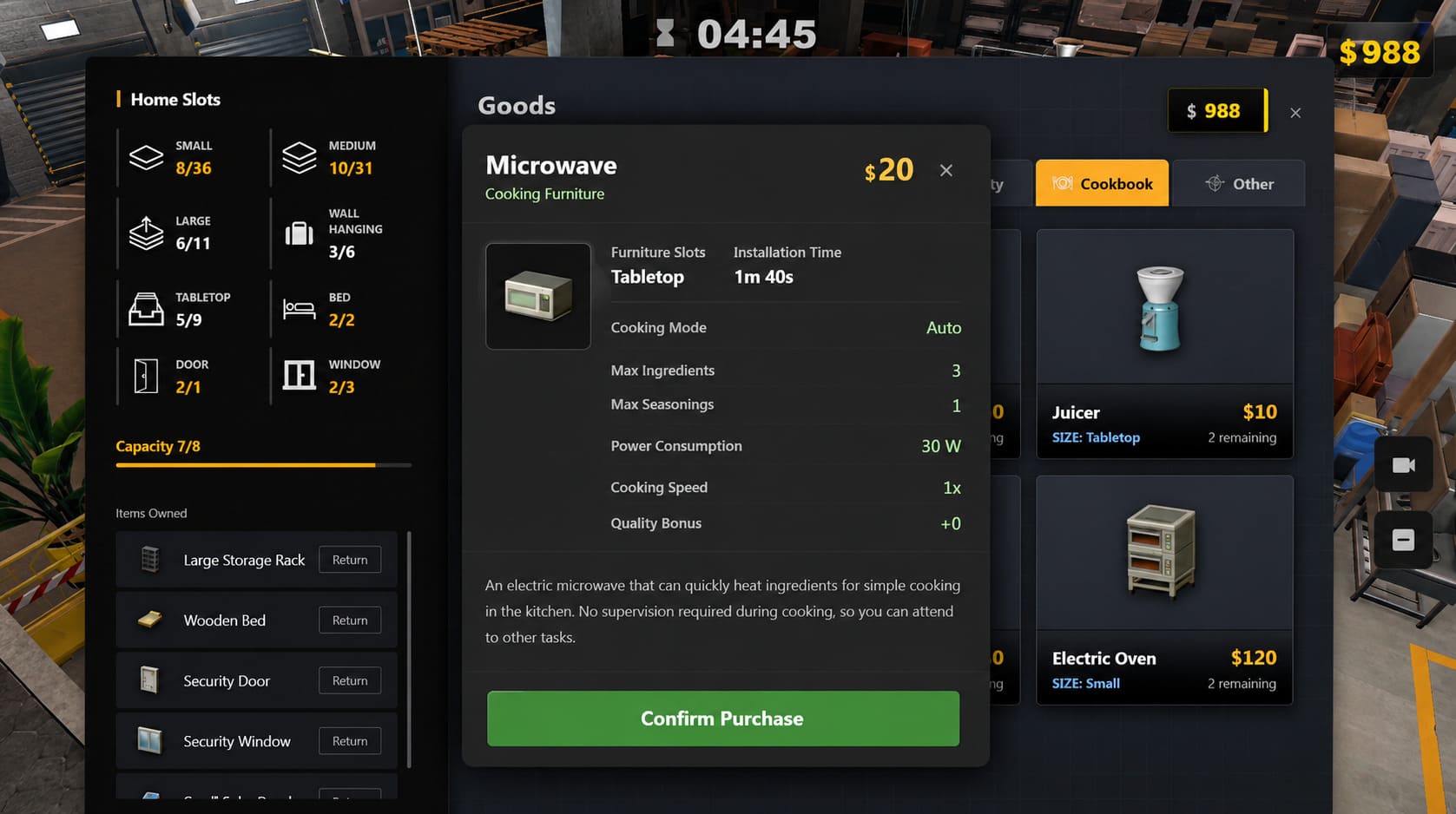
One of the most important long-term mechanics is Survival Points, or SP.
If you come from roguelites, the concept will feel familiar. A run can fail, but your progress does not necessarily disappear with it. Your performance contributes to permanent progression, allowing future attempts to become more efficient.
That changes how I view bad runs.
Dying on Day 12 feels terrible when you are thinking only about the current save. But if that run generated enough SP to unlock a useful permanent upgrade, it becomes part of the learning process.
Survival Points can come from several aspects of your performance, including:
- Survival time
- The value and quality of your stored supplies
- Stronghold improvements
- Interactions with other survivors
- General efficiency during a run
The exact balance can make certain activities more valuable than simply fighting zombies.
That is an important distinction. Combat is not always the best path to progression.
If you spend half a day fighting enemies while neglecting your food stores and barricades, killing those zombies may ultimately accomplish very little.
What Should You Spend Survival Points On?
This is where I would avoid copying a rigid “best build” from another player.
Your first few upgrades should compensate for the mistakes you personally keep making.
For example, if you constantly return from scavenging overloaded, carrying capacity is an obvious investment. If your base repeatedly collapses because repairs take too long, improving construction efficiency makes more sense.
Useful long-term upgrade categories include:
- Increased carrying capacity
- Better vehicle efficiency
- Stronger starting defenses
- Faster crafting and repairs
- Improved starting equipment or utility perks
I generally prefer utility upgrades over flashy bonuses early on.
A small improvement that helps during every single run can easily outperform a specialized bonus that only matters in a handful of situations.
The Most Important Part of the Game: Your Looting Strategy
If I had to give one piece of Survival Log advice to someone starting today, it would be this:
Stop thinking about individual items and start thinking about your entire supply chain.
You are not collecting random loot. You are building the inventory that will eventually determine how comfortable—or miserable—the next 100 days become.
My Loot Priority
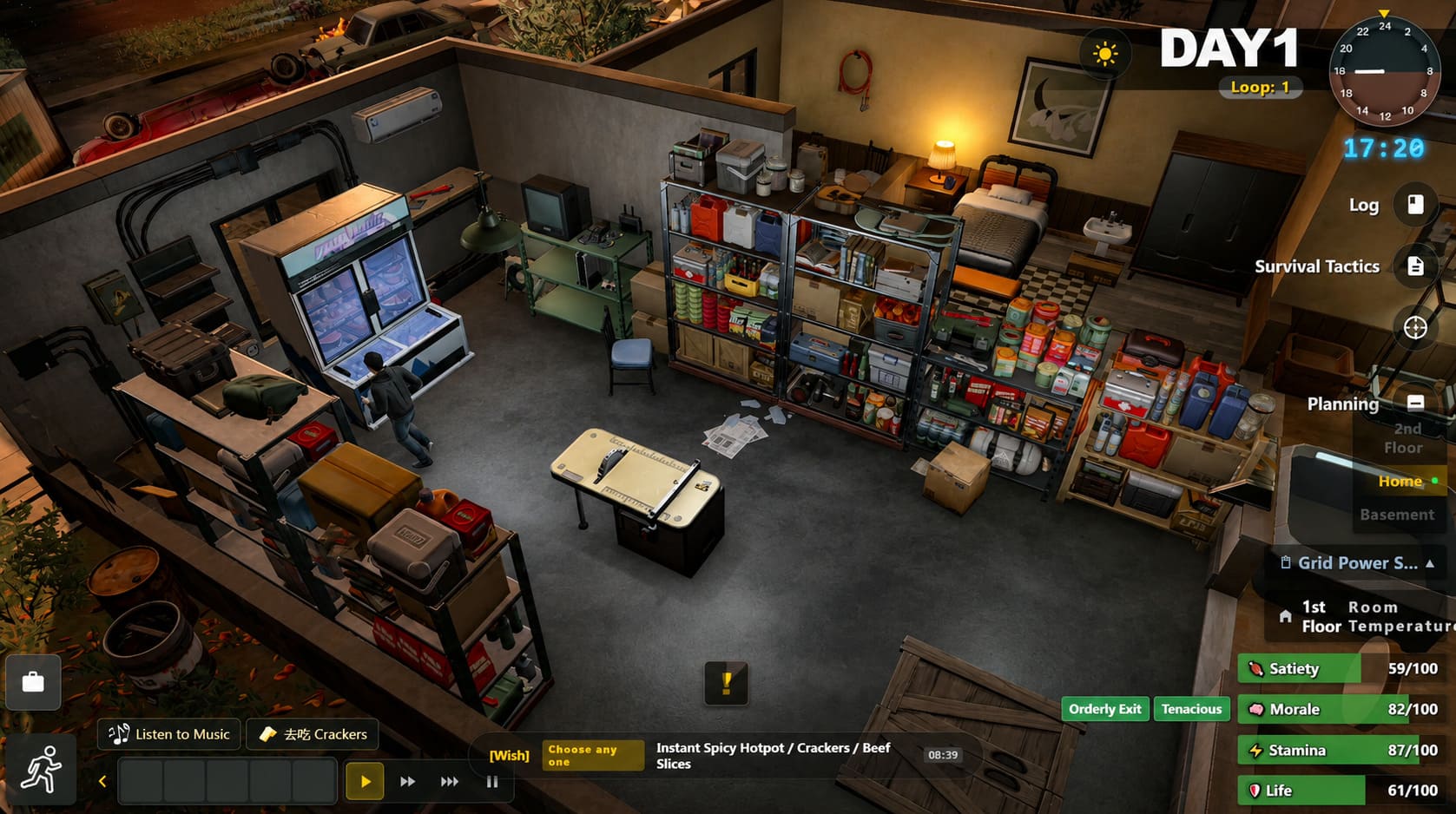
I usually divide resources into three broad categories.
Tier 1: Survival Essentials
Food, clean water, medicine, medical supplies, weapons, and ammunition should always get serious consideration.
Tier 2: Infrastructure
Boards, metal, nails, tools, fuel, and other construction materials are less exciting, but they become extremely important once the outbreak starts.
Tier 3: Trade and Luxury Items
Valuable electronics, barter goods, and other non-essential items can be useful for trading, but I would never sacrifice critical survival supplies just to make room for them.
The biggest mistake beginners make is treating every item as equally valuable.
They are not.
Use Your Vehicle Like a Mobile Storage Chest
Your vehicle is one of the most important logistical tools during the preparation phase.
Instead of repeatedly traveling from a location back to your house, use the vehicle as a temporary warehouse.
A good routine is:
- Park close to the area you want to loot.
- Search buildings systematically.
- Drop heavy items into the vehicle.
- Continue clearing nearby locations.
- Return home when the vehicle is efficiently loaded.
This is much more efficient than constantly walking long distances while overloaded.
And yes, I know the temptation to make “one last trip” is strong.
Sometimes that one last trip is exactly what ruins an otherwise excellent run.
Don’t Waste the Final Hours
I strongly recommend reserving part of the final preparation window for your stronghold.
Personally, I like having roughly two hours available for the final organization and defensive setup, rather than still being somewhere across the map when the apocalypse begins.
Those final hours are useful for:
- Sorting supplies
- Moving resources into storage
- Repairing or reinforcing vulnerable entrances
- Boarding windows
- Preparing defensive positions
- Checking food and water reserves
- Making sure essential crafting materials are accessible
The difference between arriving home early and arriving home at the last possible second can be enormous.
Stronghold Management During the 100-Day Survival
Once the outbreak begins, your priorities change.
I stop thinking like a scavenger and start thinking like a maintenance manager.
That means checking the condition of your defenses regularly instead of waiting for something to break.
Barricades Come First
A damaged barricade is not just a cosmetic problem.
If you allow defensive structures to deteriorate, later attacks can turn a manageable situation into a catastrophic breach.
I prefer to establish a simple routine:
Morning = inspection and repairs.
Check doors, windows, defensive structures, traps, and other vulnerable areas before committing to bigger activities.
It might feel boring compared with exploring, but boring routines are exactly what keep survival games from turning into disaster simulators.
Weather Changes Your Routine
The weather system is another mechanic that is easy to underestimate.
Rain can interfere with certain outdoor defenses while also creating opportunities for water collection. Heat can increase water consumption and put additional pressure on food management. Colder conditions can create their own survival problems.
This means you should not blindly repeat the same daily routine.
Adapt your schedule to the conditions.
If the weather makes outdoor activities more dangerous or expensive, use that time to craft, organize storage, repair defenses, or manage other indoor tasks.
The Phone Is More Important Than It Looks
One of my favorite ideas in Survival Log is the communication system.
Being trapped inside your stronghold does not mean you are completely isolated. Your phone becomes a strange little window into the remaining survivor network.
You can use it to interact with other survivors, arrange trades, receive information, and respond to various situations.
It is tempting to treat these interactions as optional flavor.
I would not.
A useful relationship can become extremely valuable later, particularly when resources are running low or your stronghold is under pressure.
Sometimes the smartest trade is not the one that gives you the most resources immediately. It is the one that creates a reliable relationship for later.
Small Habits That Made My Runs Better
After playing a lot of survival and roguelite games, I have developed a few habits that I now apply almost automatically in Survival Log.
Keep Storage Organized
Do not throw everything into one giant pile.
Separate medical supplies, food, ammunition, construction materials, and trade goods. When something goes wrong, you want to know exactly where everything is.
A messy inventory is manageable when you are relaxed.
It becomes a nightmare when your defenses are collapsing.
Look for Useful Tools Early
Tools that improve access to locked areas or speed up scavenging can save enormous amounts of time during the preparation phase.
The crowbar is particularly valuable if you can secure one early, because access to previously blocked containers can dramatically improve the efficiency of a loot run.
Don’t Waste Food
Food management is about efficiency rather than constantly keeping your hunger meter completely full.
There is little reason to burn through valuable supplies unnecessarily, especially early in a run when you still have plenty of other things competing for your attention.
That said, never push hunger so far that it compromises health, stamina, or your ability to perform essential actions.
The Biggest Mistakes I Would Avoid
If I could restart my first few Survival Log runs, these are the mistakes I would eliminate immediately:
| Mistake | Why It Hurts | Better Approach |
|---|---|---|
| Looting Everything | Wastes time and weight | Prioritize high-value supplies |
| Returning Home Too Late | Leaves no setup time | Reserve the final hours |
| Ignoring Repairs | Creates future breaches | Inspect defenses daily |
| Overusing Food | Burns through reserves | Manage portions carefully |
| Chasing Combat | Consumes time and resources | Fight only when necessary |
| Messy Storage | Slows emergency responses | Organize supplies by category |
Best Supermarket Items to Hoard in Survival Log: Complete 10-Hour Guide (2026)
How I Would Approach a Fresh Run
If I were starting a completely new profile, I would keep the strategy surprisingly simple.
First, I would secure food, water, medicine, and basic tools. Then I would focus on infrastructure materials and fuel. I would use the vehicle aggressively to reduce unnecessary travel and avoid spending the entire preparation period chasing low-value loot.
As the final hours approach, I would return home early enough to organize everything.
Once the outbreak begins, I would establish a strict morning maintenance routine, keep an eye on environmental conditions, and avoid wasting resources on unnecessary fights.
Most importantly, I would accept that the first several runs are supposed to teach me something.
That is where the Survival Points system really works.
How to Fix Survival Log Crash on Launch and DirectX 11 Error on Windows 11
Final Thoughts
Survival Log is at its best when it makes you question your own decisions.
Should you risk another trip? Is that extra weapon worth the inventory space? Do you repair the damaged window now or spend the materials on something else? Should you help another survivor when your own supplies are already running low?
Those decisions are what make the game interesting.
After playing plenty of survival games, I appreciate that Survival Log does not simply throw stronger zombies at you and call that difficulty. Its real challenge comes from planning, logistics, resource management, and knowing when to stop being greedy.
The 10-hour preparation phase is where most runs are won. The 100-day stronghold phase is where those decisions are tested.
Learn to loot efficiently, organize your supplies, invest Survival Points intelligently, maintain your defenses, and treat every failed run as information rather than wasted progress.
Because eventually, the run will click.
You will return home with the right supplies, your stronghold will be ready, your storage will be organized, and the first wave will hit a wall you actually prepared to defend.
And that is when Survival Log stops feeling like a desperate scramble and starts feeling like a survival plan that finally worked.