
Where Winds Meet Homestead Guide: House Building and Farming Tutorial
When I first unlocked the Homestead system in Where Winds Meet, I honestly expected another basic housing feature that would give me a place to dump furniture and collect a few crafting materials. I couldn’t have been more wrong.
After spending dozens of hours experimenting with different layouts, testing farming routes, rebuilding entire structures because I changed my mind halfway through, and comparing strategies with other players, I realized the Homestead system is practically its own game. It’s not just decoration—it becomes your personal economy, resource factory, and one of the most relaxing parts of an otherwise action-packed Wuxia adventure.
If you’re just reaching the point where housing becomes available or you’re wondering how experienced players create those incredible estates that seem impossible to build, this guide should save you a huge amount of trial and error.
Why the Homestead Is Worth Your Time
One thing I appreciate about Where Winds Meet is that the developers didn’t make housing feel disconnected from the rest of the world.
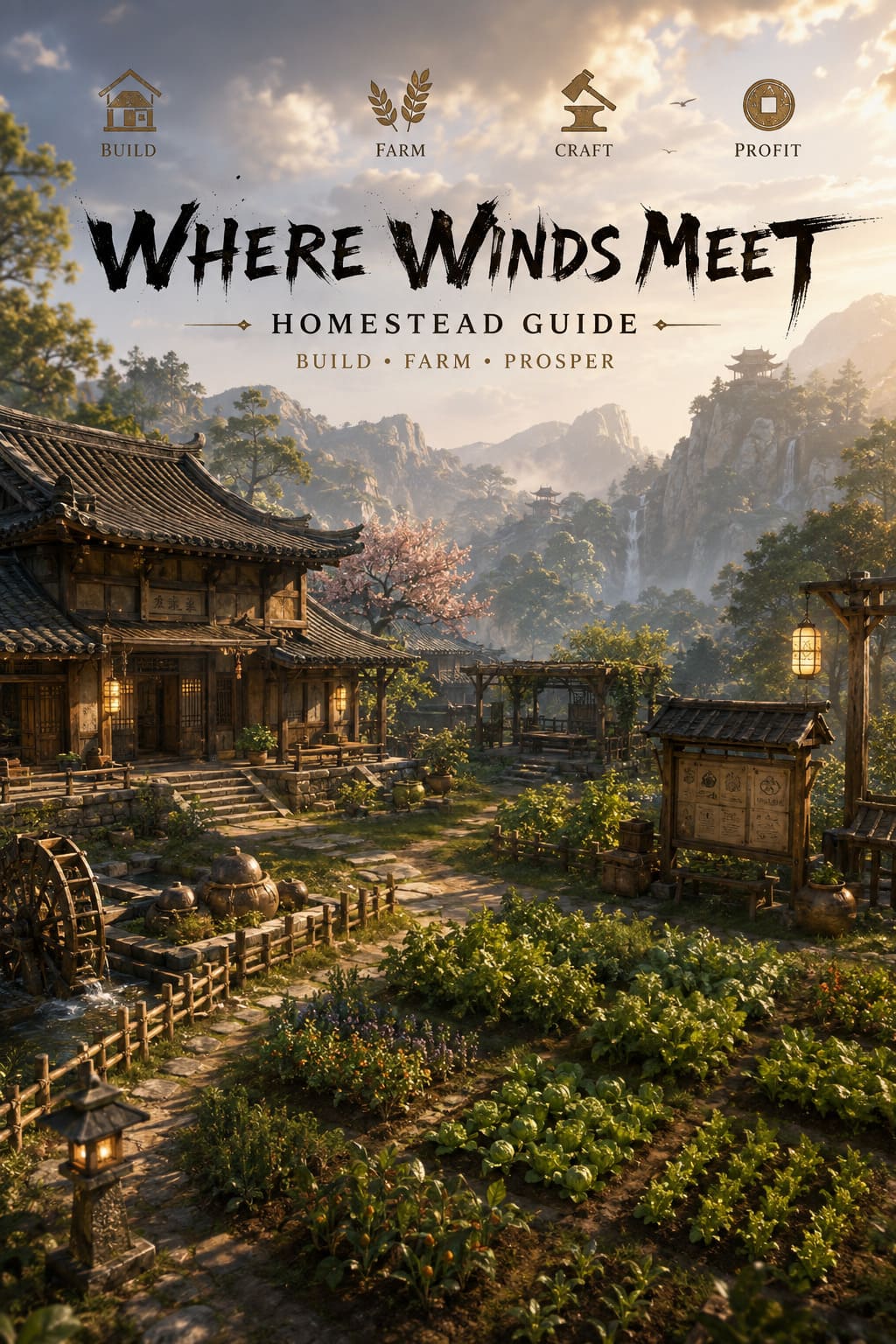
Everything you build has a purpose.
A better estate means:
- More crafting resources
- Easier farming
- Passive income
- Faster material production
- Better worker efficiency
- A beautiful place to return after difficult battles
Instead of feeling like optional side content, your home slowly becomes the center of your entire progression.
Unlocking the Homestead
Before construction begins, you’ll need to progress through the main game.
Here’s what you’ll need first.

| Requirement | Details |
|---|---|
| Character Level | Reach Level 25 |
| Character Progress | Complete Level 15 and Level 20 Breakthroughs |
| Quest | Building: One Last Job |
| NPC | Help Yang Yuan complete his repairs |
Once everything is complete, you’ll receive your first construction blueprints along with access to your own estate.
Personally, I recommend not rushing this process. By Level 25 you’ll naturally have enough materials collected from exploration to begin building immediately instead of constantly stopping to gather wood.
Choosing Where to Build
There are multiple Homestead locations available, but they each have a different atmosphere.
Some players love peaceful mountain retreats.
Others prefer larger open spaces perfect for giant compounds.
I eventually settled on a location with plenty of flat land because I knew farming would become one of my biggest priorities later.
If your goal is simply creating the prettiest home possible, cliffs and elevated terrain can produce some spectacular traditional Chinese architecture.
If efficiency matters more, flatter terrain saves countless headaches.
My Building Strategy
One mistake almost every beginner makes is placing random walls everywhere.
Don’t.
Treat your first build like you’re planning an actual house.
I always follow this order:
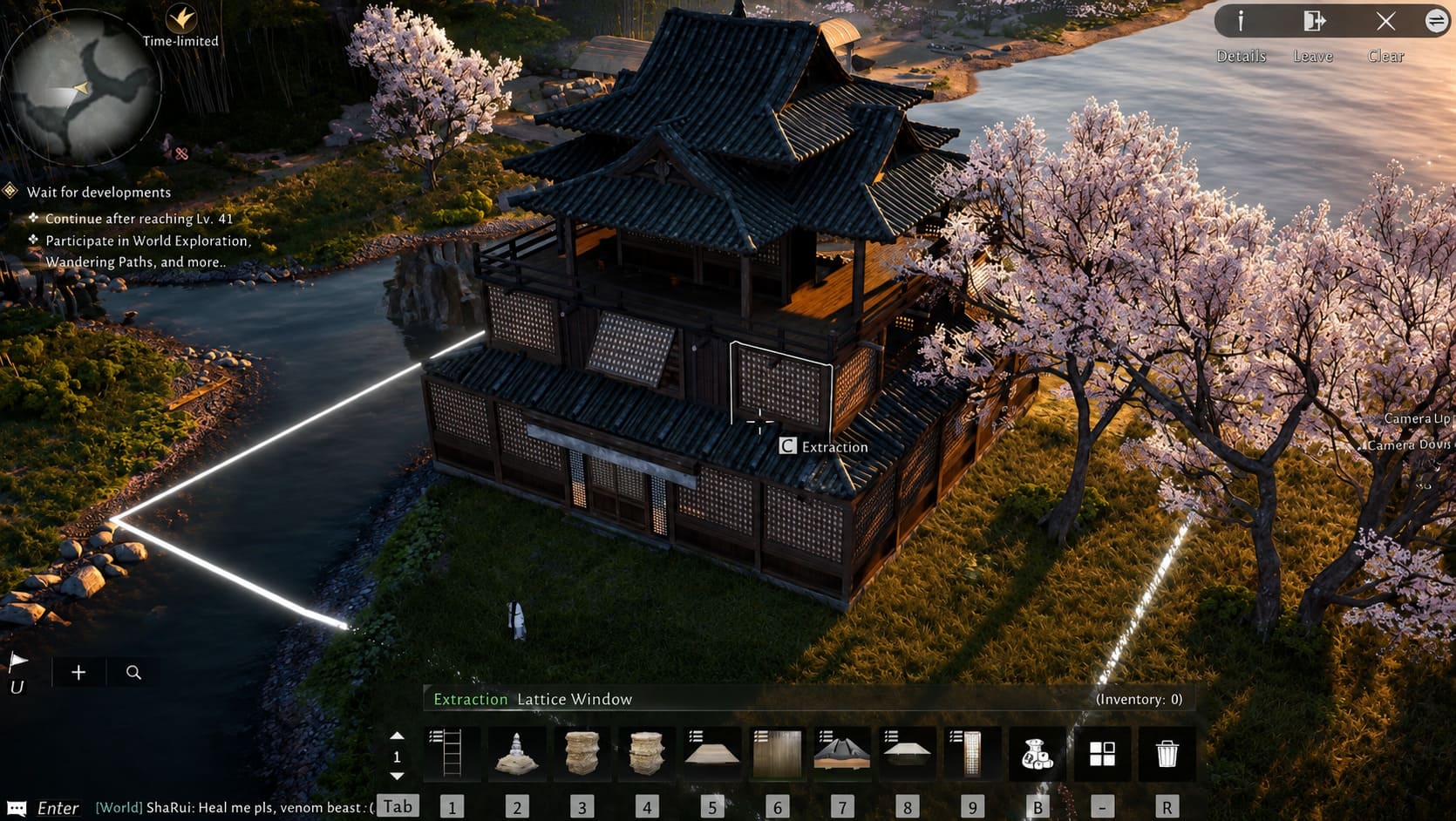
- Build foundations.
- Finish the floor layout.
- Add structural walls.
- Create staircases.
- Install roofing.
- Decorate last.
This simple habit prevents rebuilding the same section multiple times.
Always Save Your Blueprints
This may sound obvious, but I learned this lesson the hard way.
Spend an hour experimenting.
Forget to save.
Accidentally leave build mode.
Everything disappears.
Now I save after almost every major structural change.
The Blueprint system is easily one of the most useful quality-of-life features in the game.
Building Tips That Actually Save Time
After watching experienced builders and testing things myself, several tricks became permanent parts of my routine.
Build smarter instead of harder:
- Use pillars before platforms when building on cliffs.
- Temporary ladders make roof construction dramatically easier.
- Rotate decorative objects before placing them to improve lighting.
- Keep room layouts simple until the structure is finished.
One of my favorite discoveries was hiding light sources behind decorative objects. The room looks naturally illuminated without exposing obvious lantern models everywhere.
Small details like this make an enormous difference.
Gathering Building Materials Faster
Construction consumes ridiculous amounts of resources.
Wood disappears faster than you’d expect.
Stone isn’t much better.
Instead of chopping every tree individually, I started using martial arts traversal abilities.
Jumping from high elevations and slamming into clusters of trees clears entire sections almost instantly.
Compared to swinging an axe over and over, the difference feels incredible.
Another habit I strongly recommend is buying cheap construction materials from merchants whenever you visit a major town.
Even if you don’t need them immediately, you’ll almost certainly need them later.
Farming Is the Real Endgame
I originally thought farming existed only for cooking.
It doesn’t.
The entire Homestead economy revolves around agriculture.
Once I understood that, my estate expanded much faster.
Every crop eventually contributes toward better crafting, stronger infrastructure, worker progression, or additional income.
Ignoring farming simply slows everything else down.
Organizing Farmland Properly
Layout matters more than people realize.
Rather than scattering fields across your estate, keep them grouped together.
Benefits include:
- Quicker watering
- Faster harvesting
- Easier worker management
- Cleaner expansion later
It also simply looks much better.
A well-organized farm gives your estate a believable appearance instead of feeling randomly assembled.
Watering Crops Efficiently
This was probably the biggest quality-of-life improvement I discovered.
Manual watering becomes painfully repetitive.
Fortunately, Where Winds Meet includes Water Mystic abilities that completely transform the process.
Instead of watering individual plots, you can irrigate large sections simultaneously.
Once I unlocked this skill, farming became enjoyable instead of tedious.
If you’re investing in your Homestead, prioritize unlocking this capability as early as possible.
Never Skip Fertilizer
Some players ignore fertilizer because buying it feels expensive early on.
I did the same.
That was a mistake.
The increased harvests easily compensate for the investment.
Whenever my supply gets low, I immediately restock before planting another crop cycle.
Consistent production is much more valuable than trying to save a small amount of currency.
Building an Automated Estate
Eventually you’ll reach the point where manual gathering becomes inefficient.
That’s when NPC workers completely change the experience.
Recruiting workers transforms your Homestead from a personal house into an automated production center.
Assign specialists to different jobs:
| Worker Role | Main Responsibility |
|---|---|
| Farmer | Crop production |
| Lumber Worker | Wood collection |
| Miner | Stone and ore gathering |
| Production Worker | Processing resources |
Once everyone has their own role, your estate practically runs itself while you’re exploring the open world.
Honestly, this is one of my favorite progression systems in the entire game.
Making Money Through Your Homestead
The Homestead isn’t just about collecting materials.
It’s also surprisingly profitable.
As your production increases, you’ll begin generating valuable estate currency through trade and crafted goods.
I focused on producing resources consistently rather than chasing rare items.
Over time, the passive income became much more reliable.
Those earnings eventually funded:
- Premium furniture
- Decorative items
- Advanced blueprints
- Rare seeds
- Worker upgrades
Your estate slowly evolves from a simple house into a fully functioning economic hub.
Don’t Ignore Online Trading
One feature that deserves far more attention is the community trading system.
If you’re missing a handful of materials for your next upgrade, don’t spend hours farming them.
Use the Message Stand.
I’ve saved countless hours by exchanging resources with other players instead of grinding low-level gathering routes.
It’s a surprisingly friendly system that encourages cooperation without forcing multiplayer gameplay.
Where Winds Meet Healer Guide: Master Medicine Skills, Crafting, and Combat Healing
My Biggest Mistakes
Looking back, I wasted a lot of time because I approached the Homestead like a decoration simulator.
If I started over today, I’d avoid these mistakes immediately:
- Building huge houses before securing resource production.
- Ignoring farming until late game.
- Forgetting Blueprint saves.
- Manually watering crops.
- Recruiting workers too late.
- Spending rare materials on unnecessary decorations.
Fixing these habits accelerated my progression dramatically.
Where Winds Meet Goose Mount Guide: How to Find, Beat, and Ride the Mighty Goose Overlord
Final Thoughts
The Homestead system ended up becoming one of my favorite features in Where Winds Meet.
I came for the fast sword combat and cinematic martial arts.
I stayed because I genuinely enjoyed returning home after long adventures, harvesting crops, expanding buildings, assigning workers, and slowly watching my estate become something impressive.
Very few open-world RPGs manage to combine housing, farming, automation, and player creativity this well.
If you’re willing to invest a little time learning how everything connects, your Homestead eventually becomes much more than a house—it becomes the heart of your entire journey through Jianghu.
My biggest piece of advice is simple: don’t rush the process. Build gradually, experiment with different layouts, automate whenever possible, and let your estate grow alongside your character. In the long run, that approach is not only more efficient, but it’s also far more satisfying than trying to finish everything as quickly as possible.


