JWE3 Mutadon Guide: Enclosure Size, Comfort Requirements & Containment Strategies (Rebirth Expansion)
When I first unlocked the Mutadon in Jurassic World Evolution 3: Rebirth Expansion, I thought I already knew everything the game could throw at me. After hundreds of hours spent across the Jurassic World Evolution series, countless challenge mode runs, and more dinosaur escape disasters than I’d like to admit, I figured another hybrid wouldn’t be much different from the others.
I was wrong.
The Mutadon quickly became one of the most demanding creatures I’ve managed in the entire franchise. It’s not simply a flying reptile. It’s not just a clever carnivore. Instead, Frontier created something that combines the worst containment headaches of both categories into a single highly intelligent predator.
After several campaigns, sandbox experiments, and a few catastrophic failures, I’ve developed a reliable approach that keeps these hybrids comfortable while minimizing the risk of devastating breakouts. If you’re struggling with Mutadon management, this guide covers everything I’ve learned through practical gameplay experience.
Why the Mutadon Is Different From Every Other Predator
The first mistake many players make is treating the Mutadon like a standard carnivore.
That approach almost always ends badly.
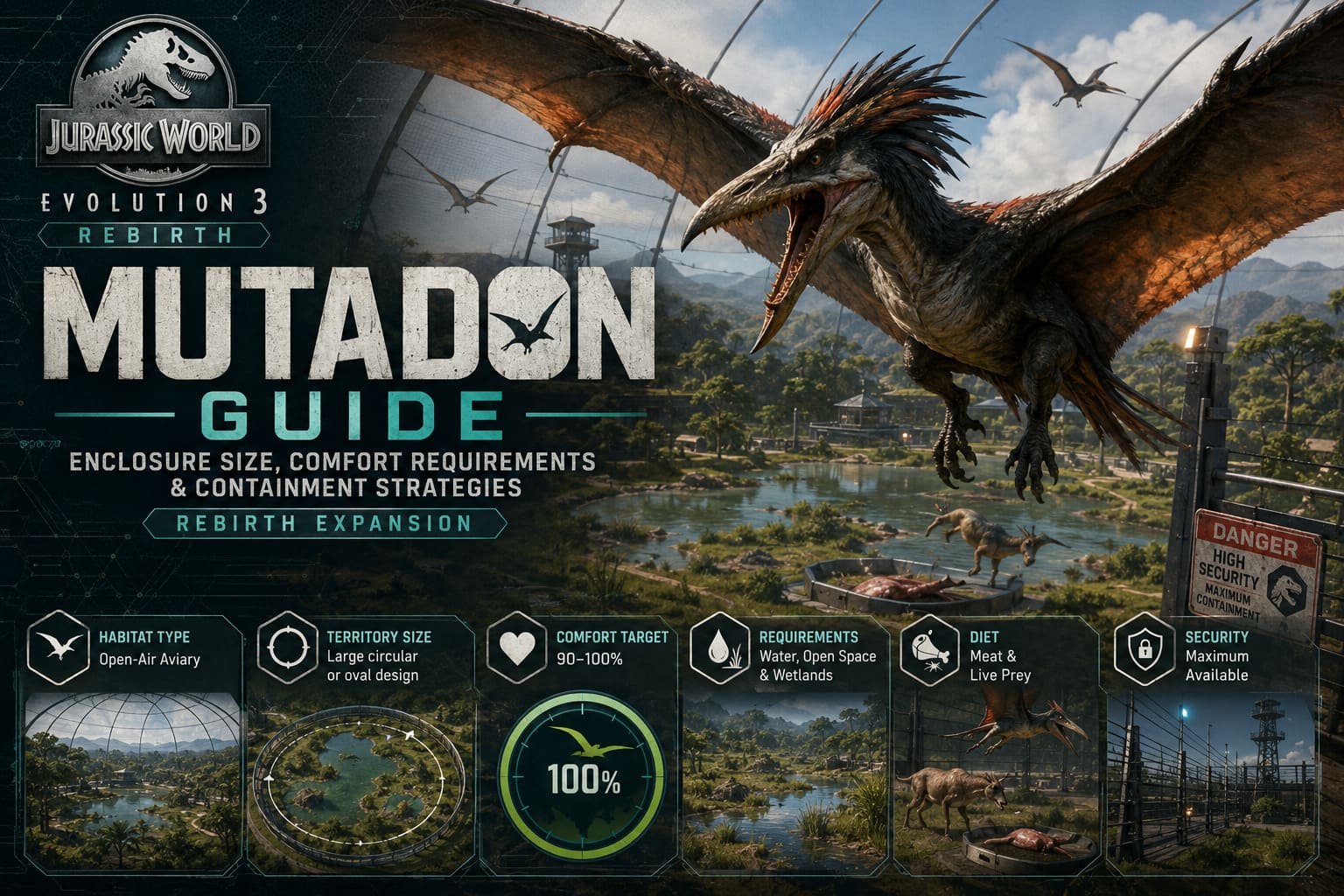
Unlike traditional predators that remain on the ground, the Mutadon constantly shifts between terrestrial movement and aerial navigation. It hunts from above, patrols large territories, and reacts aggressively when its environmental needs aren’t met.
What makes the creature especially dangerous is how quickly its comfort can collapse. Most dinosaurs give players time to react when conditions become unfavorable. The Mutadon often goes from calm to destructive in what feels like minutes.
In my experience, this hybrid rewards proactive management far more than reactive management.
Recommended Mutadon Habitat Overview
Before discussing terrain details, let’s look at the enclosure basics.
| Requirement | Recommendation |
|---|---|
| Habitat Type | Open-Air Aviary |
| Population | 1-2 Mutadons per habitat |
| Territory Size | Large circular or oval design |
| Water Access | Essential |
| Diet | Meat and Live Prey |
| Security Rating | Maximum Available |
| Comfort Target | 90-100% |
The most important rule is simple:
Never place a Mutadon inside a small or outdated aviary design.
The creature performs significantly better when given access to a large open-air environment that allows both flying and ground movement without constant restrictions.
The Open-Air Aviary Advantage
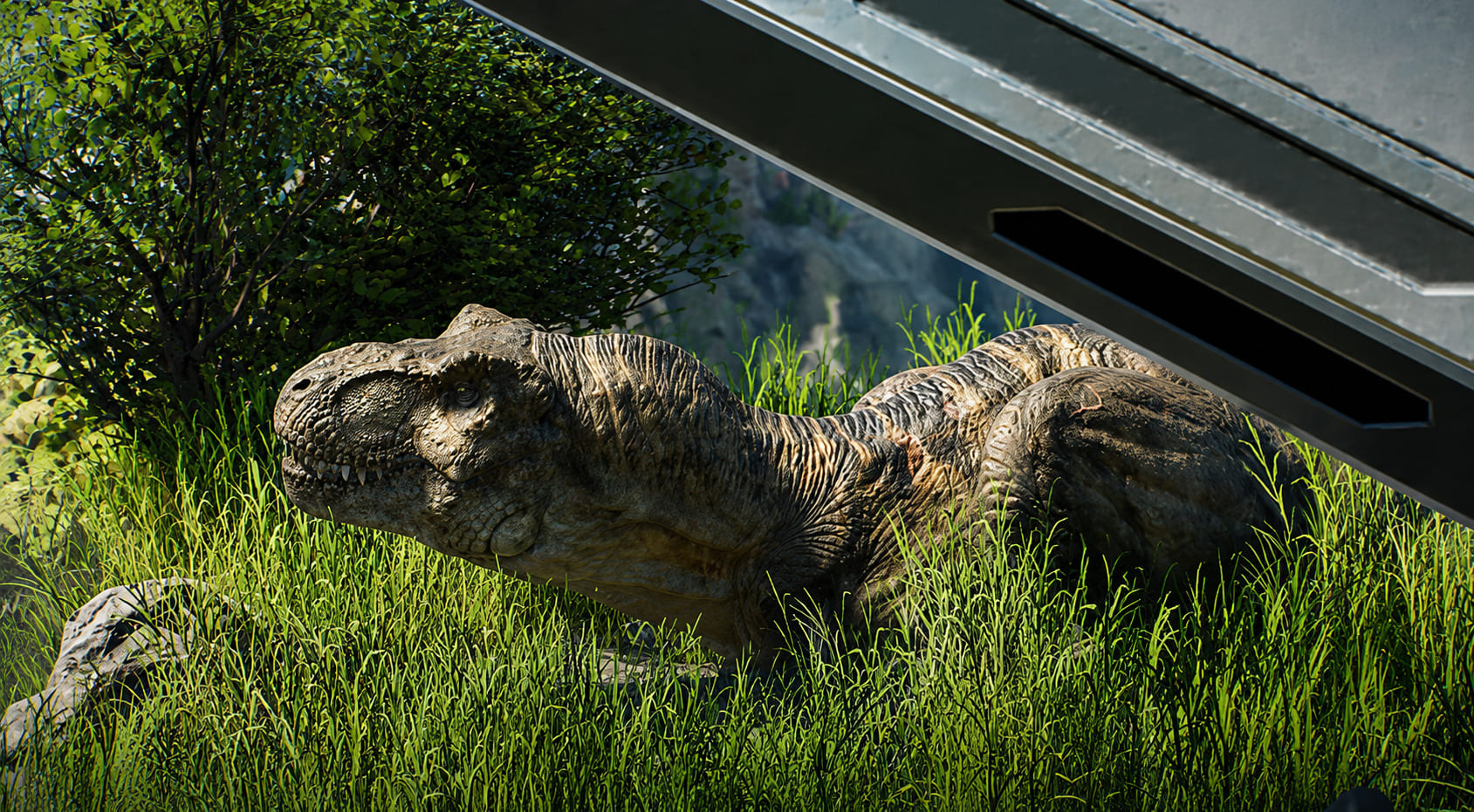
One feature I genuinely appreciate in the Rebirth Expansion is the introduction of Open-Air Aviaries.
Not only do they look better from a visual standpoint, but they also solve several habitat issues that older aviary systems struggled with.
During my first campaign playthrough, I attempted to save space by using a more compact enclosure. The result was predictable: comfort warnings, constant agitation, and eventually a breakout attempt.
After rebuilding the habitat as a large Open-Air Aviary, the difference was immediate.
The Mutadon became noticeably more stable. Its territory calculations seemed more consistent, and it spent less time pacing around enclosure boundaries.
From a gameplay perspective, Open-Air Aviaries feel like the environment these hybrids were specifically designed for.
Finding the Right Enclosure Size
If there’s one lesson I’ve learned from years of management simulators, it’s that giving dangerous animals extra space is almost always cheaper than dealing with escape emergencies.
For a single Mutadon, I recommend constructing an aviary that’s larger than what the game initially suggests.
A wide circular layout works best because it prevents territory calculations from becoming awkward when the animal reaches enclosure edges.
My preferred setup includes:
- Large central flight zone
- Multiple landing areas
- Open pathways for ground movement
- Water positioned near the center
- Feeding stations separated from resting areas
This design encourages natural movement patterns and reduces the chances of comfort fluctuations.
For multiple Mutadons, expand the habitat considerably. Crowding these creatures is one of the fastest ways to create management problems.
Creating the Ideal Environment
Habitat customization matters far more than many players realize.
The Mutadon clearly favors environments that blend wetlands with open hunting territory. Through experimentation, I found the most reliable formula combines several terrain types rather than focusing entirely on one.
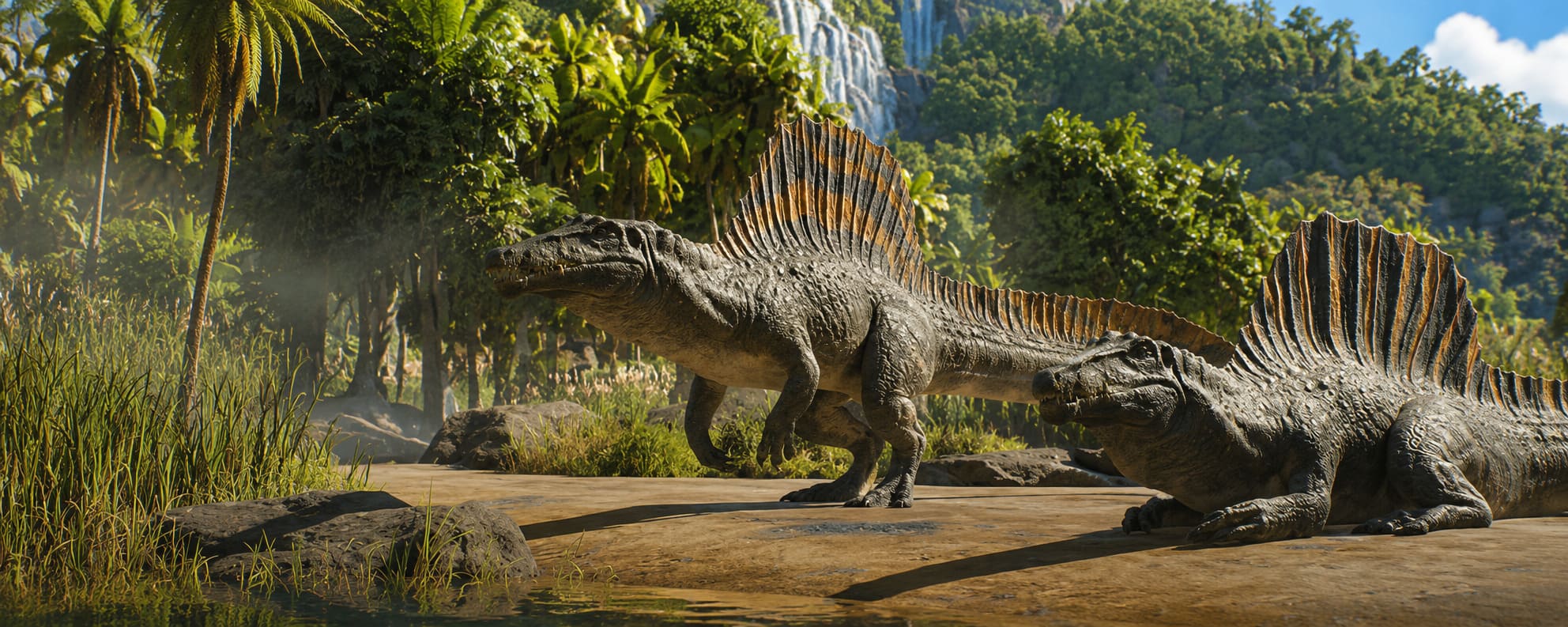
Wetland Coverage
A significant portion of the habitat should contain wetland terrain.
These areas appear to support the creature’s preferred environmental conditions while also making the enclosure feel more natural and visually impressive.
Open Ground
The second key component is open terrain.
Mutadons need room to run before taking flight, and overcrowding the enclosure with decorative objects can reduce movement efficiency.
Avoid turning the habitat into a dense forest.
A few scenic sections are fine, but the creature performs best when it has large unobstructed spaces available.
Water Sources
Water is absolutely non-negotiable.
I prefer placing a large water feature through the center of the enclosure because it helps satisfy environmental requirements while creating a visually appealing centerpiece for guests.
Feeding Strategies That Actually Work
Feeding a Mutadon isn’t complicated, but ignoring dietary variety can create unnecessary issues.
My standard setup includes:
- One carnivore feeder
- One live prey feeder
- Backup feeder capacity during storms
The live prey feeder serves an additional purpose beyond nutrition.
Guests love watching hunting behavior.
From a park rating perspective, few attractions generate the same level of excitement as a Mutadon performing an aerial strike on prey.
It’s one of those moments that perfectly captures why Jurassic World Evolution remains such an entertaining management series.
Can Mutadons Live With Other Species?
Technically, yes.
Should they?
Usually not.
I’ve tested numerous combinations, and the results are often expensive.
Smaller animals rarely survive long-term coexistence. The Mutadon is aggressive, territorial, and extremely efficient at eliminating weaker neighbors.
If you want mixed-species habitats, focus on larger, more resilient aerial creatures and ensure the enclosure is significantly larger than normal.
Even then, monitor behavior carefully.
Personally, I prefer dedicated Mutadon habitats. They are easier to manage, easier to secure, and far less likely to turn into a disaster zone.
Security Tips From Experience
After several unfortunate incidents, I’ve developed a few habits that dramatically improve containment reliability.
Prioritize Power Stability
Every major breakout I’ve experienced involved infrastructure failure.
Backup power systems should never be optional when housing high-risk hybrids.
Investing in redundant energy networks may seem expensive initially, but it costs far less than repairing a destroyed park section.
Monitor Storm Conditions
Storms remain one of the biggest threats to enclosure stability.
Whenever severe weather approaches, I immediately increase monitoring and ensure ranger teams are ready to respond.
The Mutadon becomes significantly more dangerous when external systems begin failing.
Leave Expansion Space
One common mistake is building habitats too close to other attractions.
Always leave room for future expansion.
You’ll appreciate the flexibility later if population requirements change or additional security measures become necessary.
Is the Mutadon Worth the Trouble?
Absolutely.
Despite its demanding management requirements, the Mutadon is easily one of the most impressive additions introduced in the Rebirth Expansion.
Its animations are fantastic, its behavior feels unique, and it creates memorable moments that few other creatures can match.
Yes, it requires more planning than many traditional dinosaurs.
Yes, it can become a containment nightmare if neglected.
But that’s exactly what makes it fun.
For veteran Jurassic World Evolution players looking for a genuine challenge, the Mutadon delivers some of the most engaging habitat management gameplay currently available in Jurassic World Evolution 3.
Jurassic World Evolution 3 Distortus Rex Guide: Enclosure Security & Containment Strategies
Final Thoughts
After spending dozens of hours experimenting with different enclosure designs, my biggest recommendation is simple: build bigger than you think you need.
Most Mutadon problems originate from limited space, poor environmental balance, or insufficient security infrastructure.
Provide a large Open-Air Aviary, maintain strong power redundancy, offer plenty of wetlands and open ground, and keep feeding systems fully operational.
Do that consistently, and you’ll transform one of the game’s most dangerous hybrid predators into a profitable centerpiece attraction instead of a recurring park-wide emergency.
For players seeking the ultimate challenge in the Rebirth Expansion, mastering the Mutadon may be the closest thing Jurassic World Evolution 3 currently offers to running a true high-security prehistoric containment facility.