How to Paint Fast in Meccha Chameleon: Speed Painting Guide for Hiders
When I first launched Meccha Chameleon, I expected another fun little hide-and-seek game to kill an evening. A few matches later, I realized I had stumbled onto one of the most creative multiplayer experiences released on Steam this year.
Unlike traditional prop hunt games where the game transforms you into an object automatically, Meccha Chameleon puts the entire responsibility on the player. You begin as a blank white figure and must manually paint yourself to blend into the environment before hunters start searching.
That sounds simple on paper.
It isn’t.
After dozens of matches, embarrassing early eliminations, and a lot of experimentation, I discovered that the difference between surviving for two seconds and surviving an entire round comes down to one thing: painting efficiently under pressure.
This guide covers the techniques I personally use to create convincing camouflage as quickly as possible and explains why many players spend too much time focusing on details that seekers never notice.
Why Fast Painting Matters More Than Perfect Painting

One mistake I see constantly is players trying to create a masterpiece.
They zoom in, carefully paint every tiny detail, and attempt to reproduce a texture with pixel-perfect accuracy. Meanwhile, the preparation timer is disappearing.
The reality is that seekers rarely have enough time to inspect every surface in detail. What they notice first is:
- Color mismatch
- Strange reflections
- Human-shaped silhouettes
- Movement
If your overall appearance matches the environment, you don’t need museum-quality artwork. You need camouflage that works at a glance.
That’s a huge difference.
My Three-Step Speed Painting Method
After experimenting with different approaches, I settled on a simple system that consistently gives me enough time to find stronger hiding positions.
Step 1: Cover Every White Surface Immediately
The default white character model is your biggest enemy.
As soon as the round starts, I sample a dominant color from my intended hiding location and apply it across the entire body.
I don’t worry about details yet.
The goal is simple:
Remove every visible white pixel as fast as possible.
Even a tiny patch of white can stand out when you’re hiding against dark furniture, walls, or flooring.
Think of this stage as laying the foundation.
Step 2: Build Large Shapes Before Small Details
Once the base color is complete, I focus on major patterns.
| Surface Type | What I Paint First |
|---|---|
| Brick Wall | Horizontal color bands |
| Marble Counter | Large veins and streaks |
| Wooden Shelf | Main wood grain direction |
| Tile Floor | Major tile divisions |
Most players waste time painting micro-details immediately.
I do the opposite.
Large visual features are what seekers notice first, so matching them provides the biggest return on investment.
Step 3: Add Quick Contrast
This is where many players accidentally give themselves away.
Real environments aren’t flat.
Light creates highlights and shadows everywhere.
I usually spend the final seconds adding:
- Slightly brighter tones where light hits
- Slightly darker shades underneath
- Additional contrast around edges
This trick makes the character feel like part of the environment rather than a painted mannequin.
The Secret Weapon Most Players Ignore
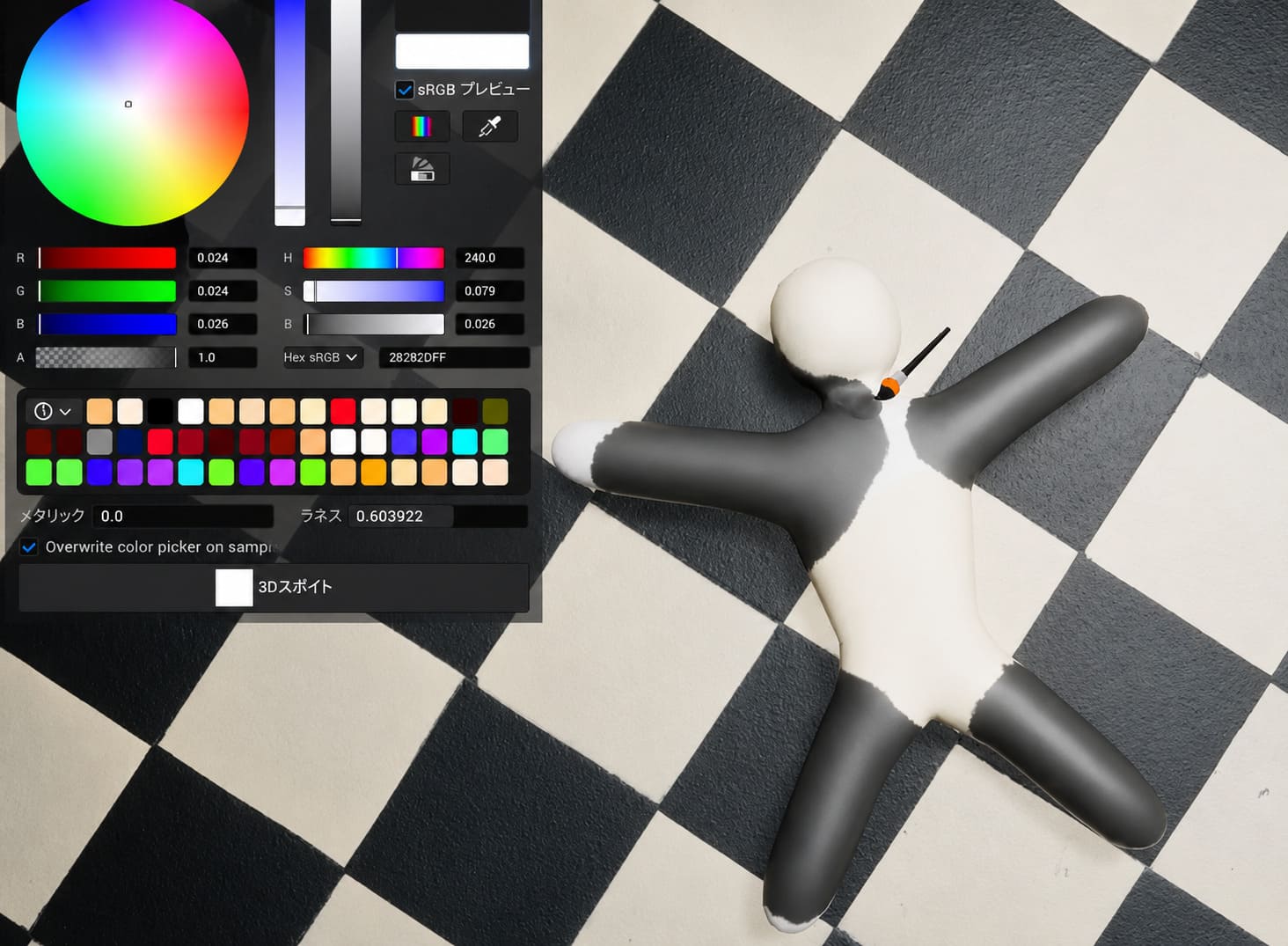
If there’s one feature I believe separates experienced players from beginners, it’s not the paintbrush.
It’s the eyedropper tool.
I almost never touch the color wheel anymore.
Why guess when the game lets you sample exact colors directly from the map?
Walls, furniture, decorations, floors, paintings—everything can be copied instantly.
Besides improving accuracy, it saves valuable seconds during the preparation phase.
The less time you spend choosing colors, the more time you have for positioning.
Reflections Can Ruin Everything
One of the funniest mistakes I made early on involved perfectly matching a kitchen counter.
The colors were flawless.
The texture looked convincing.
I felt invisible.
Then a seeker walked into the room and instantly found me.
Why?
Because my character was reflecting light like polished metal while the countertop had a completely matte finish.
That’s when I learned how important material settings are.
Always adjust:
- Roughness
- Metallic values
- Surface shine
Even excellent paint jobs can fail if your character reflects light differently than nearby objects.
Many seekers actively look for unusual glints and reflections because they know inexperienced players forget these settings.
Shape Matters More Than Color
Here’s my controversial opinion:
Pose selection is often more important than painting.
Human brains are incredibly good at recognizing human forms.
Even if your colors are perfect, standing upright makes you easy to identify.
Whenever possible, I try to destroy my silhouette completely.
Some of my favorite techniques include:
- Curling into corners
- Flattening against walls
- Lying alongside furniture edges
- Using awkward emotes to create irregular shapes
A slightly imperfect paint job with a great silhouette often survives longer than perfect camouflage attached to an obvious human shape.
My Favorite Hiding Spots by Map Type
Different maps reward different strategies.
Understanding the environment can save a tremendous amount of preparation time.
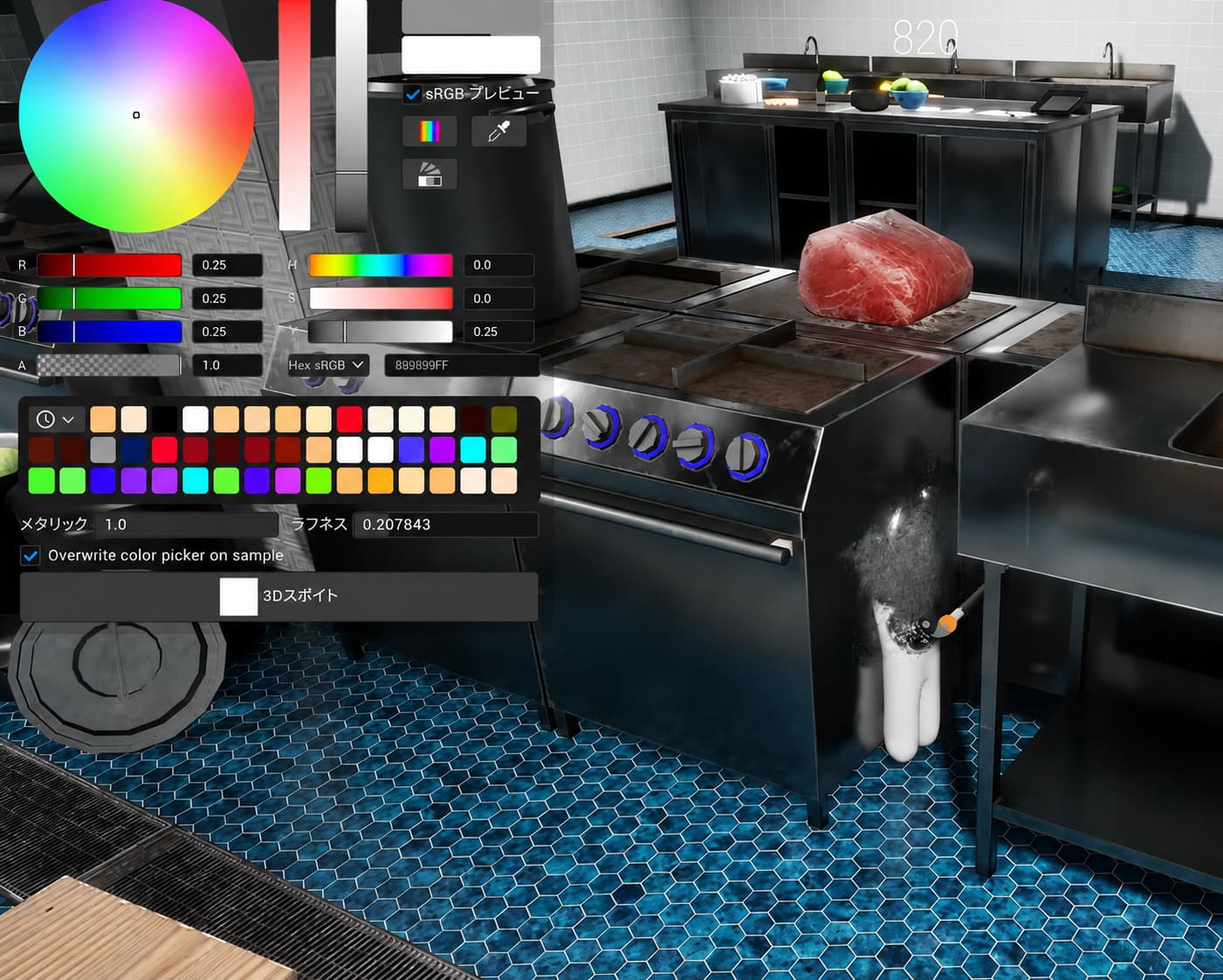
Kitchens and Storage Areas
These maps are usually packed with visual noise.
Counters, cabinets, food items, containers, and textured flooring create a chaotic environment that works in your favor.
My strategy:
- Match broad colors first
- Reproduce major texture patterns
- Hide near visually busy objects
Players scanning a cluttered room often overlook small inconsistencies because there is simply too much information to process.
Gallery Maps
Art galleries are almost the opposite.
The environments are cleaner and more organized.
Here I focus on:
- Straight lines
- Flat colors
- Frame edges
- Wall transitions
Sometimes I can blend into a framed artwork so effectively that seekers walk directly past me multiple times.
Party-Themed Maps
Bright decorations create excellent camouflage opportunities.
Balloons, banners, gifts, and colorful props naturally break up visual patterns.
These maps reward creativity more than technical painting skill.
I often spend less time painting here and more time finding unusual positions that distort my outline.
MECCHA CHAMELEON Color Match Guide: Advanced Painting Tips & Camouflage Strategies
Common Mistakes That Get Hiders Eliminated
After watching countless public matches, I keep seeing the same errors.
Avoid these and your survival rate will improve dramatically.
Spending Too Long Painting
A good hiding position with an 80% paint job beats a perfect paint job in a bad location.
Ignoring Lighting
The environment’s lighting should influence your color choices.
Flat painting stands out more than players realize.
Leaving White Areas Visible
Even tiny exposed patches can attract attention from across the room.
Standing Normally
Nothing screams “player” louder than a recognizable human posture.
Forgetting Material Settings
Wrong reflections instantly expose your position.
MECCHA CHAMELEON Hider Guide: Camouflage Tips and Tricks to Win More Games
Final Thoughts
What makes Meccha Chameleon special isn’t just its painting system—it’s how the game forces players to think differently about stealth.
Success isn’t about becoming invisible.
It’s about becoming forgettable.
The best hiding spots aren’t necessarily the most detailed or artistic. They’re the positions where seekers stop paying attention because your character feels like a natural part of the environment.
After spending many hours with the game, my biggest advice is simple:
Work fast, match the big shapes first, break your silhouette, and trust the environment to do the rest.
The more matches you play, the more you’ll realize that great camouflage isn’t about painting every detail perfectly. It’s about understanding what the human eye notices first—and making sure your opponents never notice you at all.
If you can master that mindset, you’ll start watching seekers stare directly at your hiding spot and walk away without a clue.