Corsair Cove Crew Management Guide: Specialists List & Happiness Strategies
I’ve played more colony simulators and city-building games than I can count. From managing frozen survivors in Frostpunk to optimizing factories in Anno and building ridiculous vertical settlements in other strategy titles, I’ve learned one thing: people are always harder to manage than resources.
Corsair Cove follows exactly that philosophy.
At first glance, it looks like another pirate-themed city builder where you throw together some docks, construct a few houses, and send ships to plunder enemy fleets. But after spending dozens of hours with the game, I realized that the real challenge isn’t building a beautiful settlement on cliffs—it’s keeping your pirates satisfied long enough to stop them from turning against you.
The deeper you progress, the less this becomes a simple resource management game and the more it feels like balancing dozens of interconnected systems. Every new crew tier introduces additional expectations, and ignoring even one supply chain can quickly snowball into unhappy workers, poor production, and eventually mutiny.
This guide isn’t just a list of specialists. It’s my own take on what actually matters if you want a thriving pirate empire.
Why Crew Happiness Matters More Than Gold
One mistake I made during my first campaign was focusing entirely on expansion.
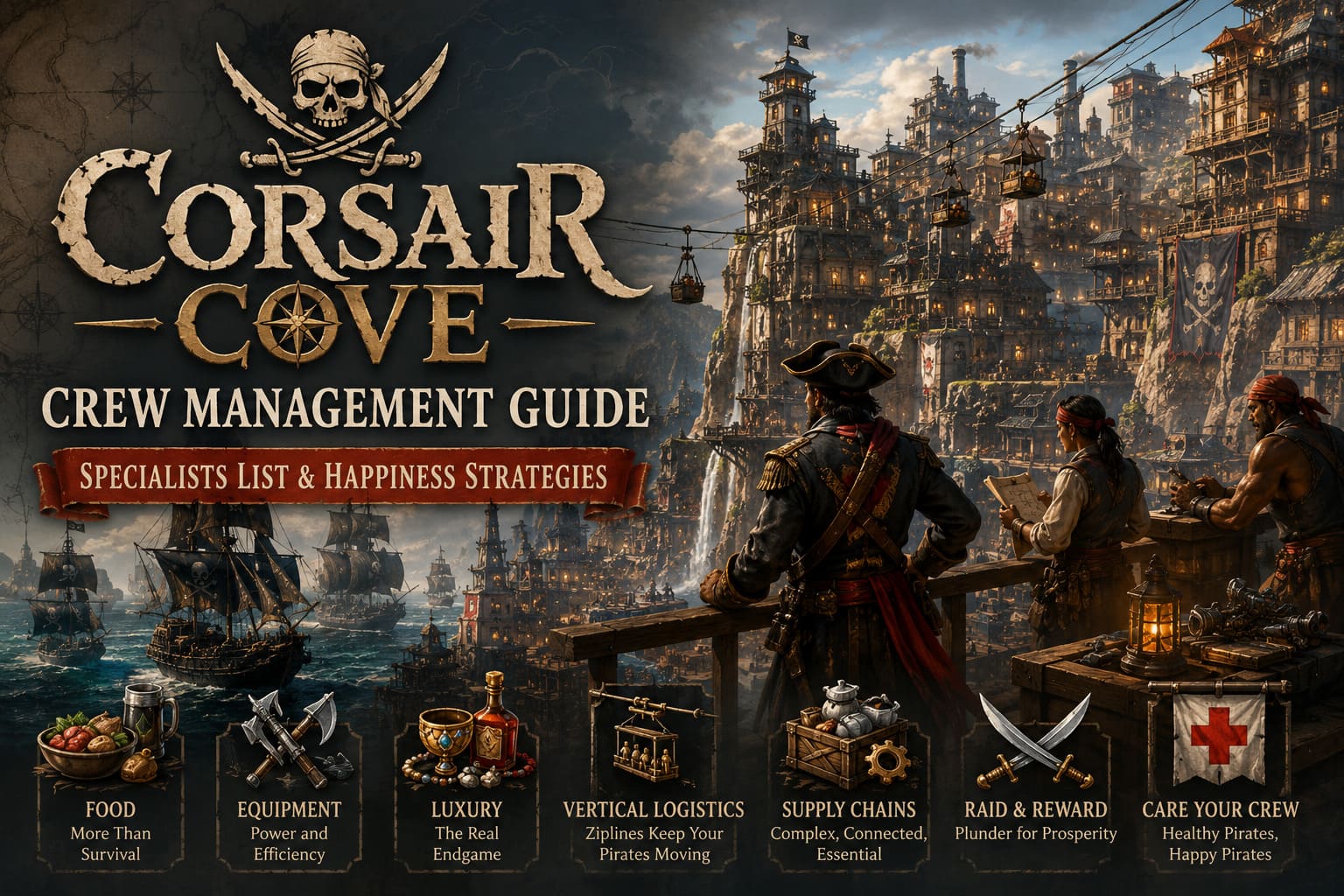
More buildings.
More ships.
More production.
Everything looked perfect—until suddenly my economy stalled.
The reason wasn’t a shortage of resources.
It was unhappy pirates.
Unlike many strategy games where happiness simply provides a small bonus, Corsair Cove makes morale feel like one of the central mechanics. Pirates who lack food, proper equipment, or luxury goods don’t simply complain—they become noticeably less efficient.
Your settlement starts slowing down in subtle ways:
- workers spend longer completing tasks;
- production chains become inconsistent;
- military efficiency drops;
- logistics begin falling apart.
Eventually, the situation can spiral into full-scale rebellion.
That makes crew management just as important as economic planning.
Every Crew Tier Has Different Expectations
One thing I genuinely appreciate is that Corsair Cove doesn’t simply introduce stronger pirates with bigger numbers.
Every promotion feels like hiring a completely different class of worker.
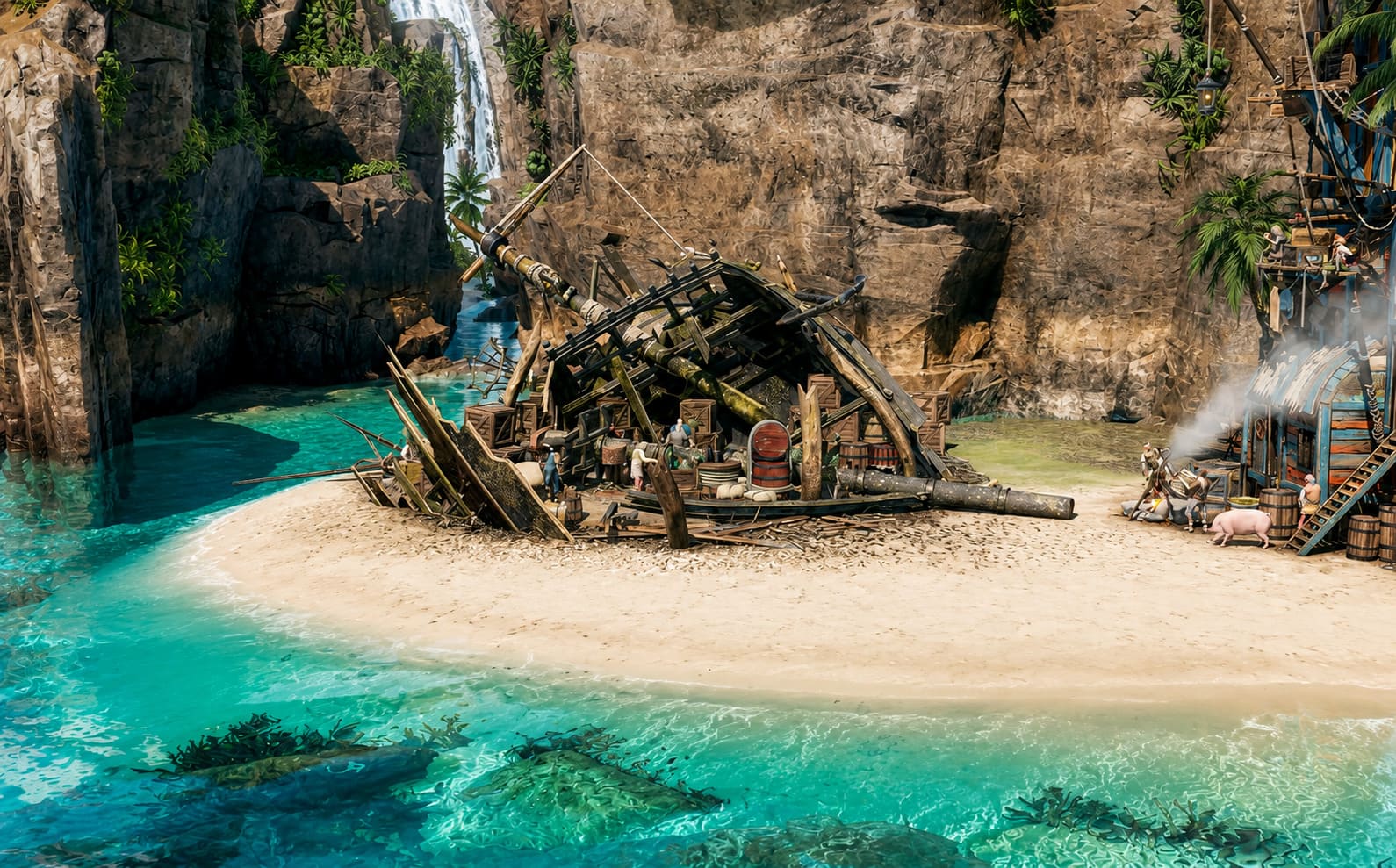
| Crew Tier | Primary Role | Difficulty to Maintain | Personal Opinion |
|---|---|---|---|
| Swabby | Basic labor and ship crews | Very Low | Perfect for learning the game. |
| Picaroon | Early combat specialists | Low | First crew that teaches you comfort matters. |
| Bombardier | Heavy artillery experts | Medium | Expensive, but incredibly useful during naval battles. |
| Marauder | Elite raiders | High | Powerful enough to justify the investment. |
| Renegade | Tactical support | Very High | Demands constant attention and planning. |
| Corsair | Master sailors and commanders | Extreme | The ultimate late-game goal, but never cheap. |
The jump between each tier feels meaningful because every upgrade increases your logistical responsibilities.
Instead of simply producing more food, you suddenly need entirely new industries.
The Three Systems You Can Never Ignore
1. Food Is More Than Survival
Early pirates are easy to satisfy.
Give them basic meals and a drink, and they’ll happily work all day.
Late-game veterans are far more demanding.
Once elite crews enter your settlement, ordinary food stops being enough. You suddenly need advanced recipes that combine several ingredients, imported goods, and dedicated production chains.
I actually enjoyed this progression because it forces your economy to evolve naturally instead of endlessly producing the same supplies.
2. Equipment Isn’t Optional
Many management games treat equipment like optional upgrades.
Corsair Cove doesn’t.
A Bombardier without proper tools isn’t just weaker—they’re practically wasting their potential.
Likewise, elite crews expect increasingly sophisticated gear, including better weapons, navigation equipment, and specialized clothing.
Ignoring equipment shortages has a surprisingly noticeable effect across the entire settlement.
3. Luxury Is the Real Endgame
This is probably my favorite system.
Once your pirate empire becomes successful, survival stops being the objective.
Comfort takes over.
High-ranking pirates want quality clothing, tobacco, jewelry, expensive drinks, and entertainment.
At first this seemed excessive.
Later, it became one of the most enjoyable parts of the game because it transforms your island into a living economy rather than a simple production grid.
Luxury goods finally give long-distance raids an actual purpose.
Vertical Logistics Is the Hidden Challenge
The game’s biggest selling point is its vertical construction.
That sounds like a visual gimmick until you actually begin playing.
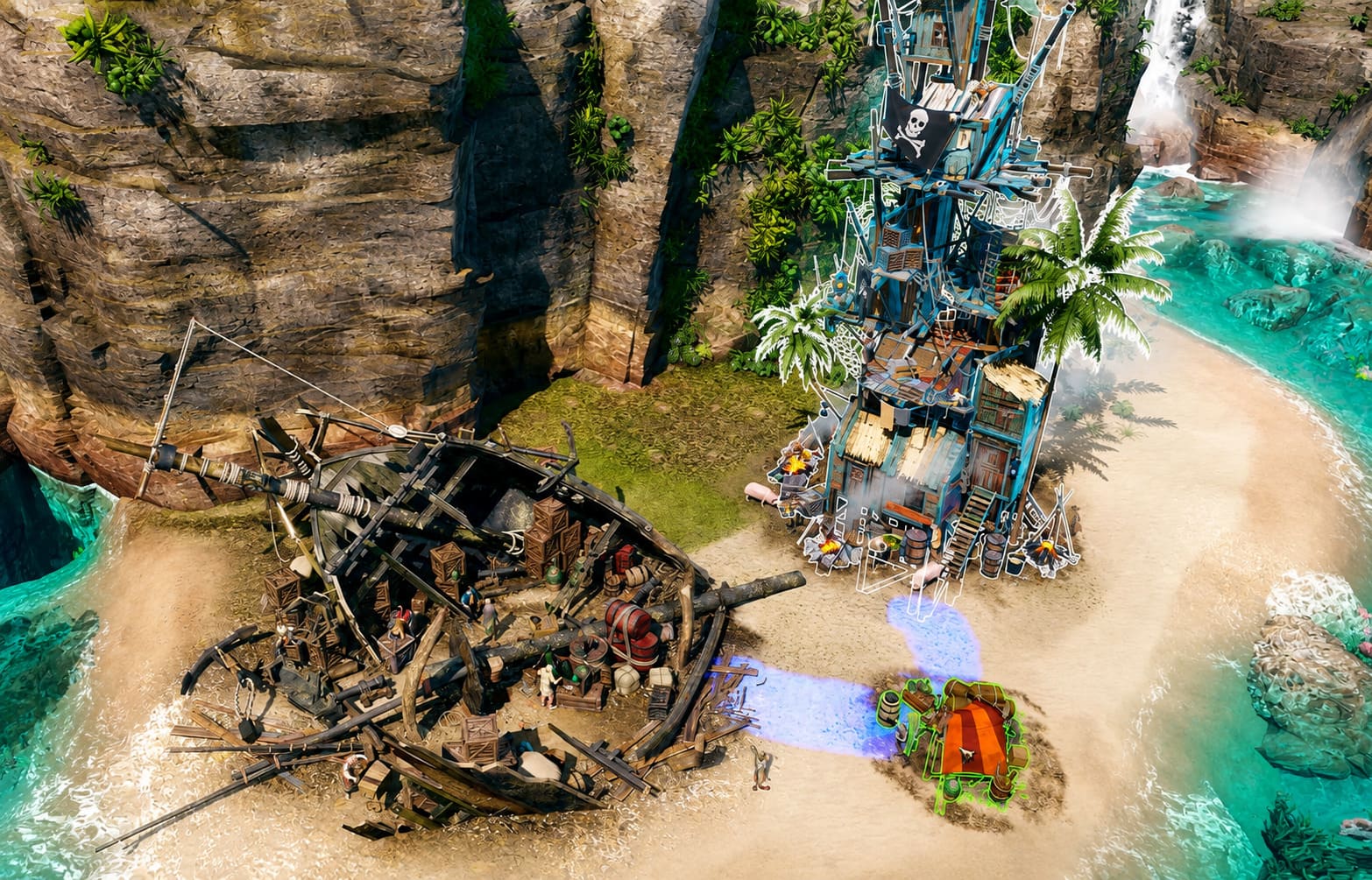
Building upward changes everything.
Workers constantly travel between housing, production buildings, warehouses, and docks.
If those routes become inefficient, pirates spend more time walking than working.
That’s where ziplines become incredibly valuable.
I underestimated them during my first campaign.
Later I realized that efficient transportation indirectly improves happiness because pirates spend less time trying to satisfy their daily needs.
Small improvements in travel time produce surprisingly large economic benefits.
Supply Chains Become the Real Puzzle
One aspect I genuinely enjoyed was how interconnected production becomes.
Creating one advanced product often requires several earlier industries working together.
For example, supplying artillery crews isn’t simply about producing ammunition.
You first need reliable sources of raw materials, processing facilities, storage, transportation, and finally delivery to the correct workers.
Multiply that by dozens of different goods, and suddenly your pirate colony feels more like an industrial machine than a simple settlement.
Players who enjoy optimization will probably spend hours redesigning entire districts just to eliminate a single bottleneck.
I certainly did.
Raiding Finally Feels Worthwhile
Many pirate games include raiding simply because it’s expected.
Corsair Cove gives raids genuine economic importance.
Some valuable resources simply cannot be produced at home.
Instead of becoming repetitive combat missions, expeditions become essential parts of your economy.
Whenever I noticed shortages of luxury goods or rare crafting materials, I actually looked forward to preparing another fleet instead of seeing it as busywork.
That balance between domestic production and overseas plundering keeps the gameplay fresh much longer than I expected.
Don’t Forget Your Injured Crew
This is one mechanic I almost ignored.
Big mistake.
Combat injuries don’t just reduce military strength—they slowly hurt morale as well.
Once I established proper medical production and started replacing injuries with prosthetics where necessary, overall stability improved much faster than expected.
It’s one of those small systems that’s easy to overlook until it suddenly becomes a serious problem.
Tips That Made My Settlements Much More Stable
If I had to start a completely new campaign today, these would be my priorities:
- Expand slowly instead of recruiting every available specialist immediately.
- Build transportation first before production bottlenecks appear.
- Keep warehouses nearby to reduce unnecessary travel time.
- Maintain food reserves even when supplies look stable.
- Invest in luxury production early rather than waiting for problems.
- Raid consistently so rare resources never become a crisis.
These habits prevented most of the problems I experienced during my first playthrough.
Corsair Cove Guide: Pirate Needs & Demands Chart and How to Get More Drifters Fast
Is Crew Management Actually Fun?
Surprisingly, yes.
On paper, maintaining dozens of different needs sounds exhausting.
In practice, it’s what gives Corsair Cove its identity.
Every new specialist changes your priorities.
Every successful supply chain feels rewarding.
Every logistics improvement has visible consequences across your settlement.
The game constantly asks you to think several steps ahead instead of simply reacting to shortages.
That’s exactly the kind of management challenge I enjoy.
Corsair Cove Campaign Story Paths Guide: Skull Mountain Secrets & Best Choices (2026)
Final Thoughts
Corsair Cove isn’t just another pirate city builder with ships and treasure maps.
It’s a surprisingly deep colony simulation where your greatest enemy often isn’t the Crown fleet—it’s poor planning.
Managing six increasingly demanding crew tiers creates a satisfying progression that rewards organization far more than rapid expansion. Food, equipment, transportation, luxury production, overseas raiding, and medical care all connect into one large economic network, and that’s where the game truly shines.
If you’re someone who enjoys optimizing production lines, solving logistics puzzles, and watching a carefully planned settlement run like clockwork, Corsair Cove offers far more depth than its pirate theme might initially suggest.
After spending plenty of time with the game, I’d say the happiest pirate isn’t the one carrying the biggest sword—it’s the one whose rum, dinner, and favorite luxury goods always arrive exactly on time.