Ground Branch 1.0 Release Date & Full Campaign Walkthrough Guide (2026)
After spending years jumping between hardcore tactical shooters—from the original Rainbow Six and Ghost Recon to modern titles like Ready or Not, Insurgency: Sandstorm, Escape from Tarkov, and Squad—it’s rare that a game genuinely surprises me. Most military shooters promise realism, but many eventually fall back into familiar run-and-gun habits once players learn the mechanics.
Ground Branch 1.0 is different.
The official 1.0 release marks more than the end of Early Access—it feels like the moment the game finally discovered its identity. Instead of simply adding more weapons and maps, BlackFoot Studios rebuilt many of the systems that define every firefight. The result isn’t necessarily a faster or more accessible shooter. In fact, it’s slower than before. But that slower pace is exactly what makes every successful mission satisfying.
Below are my impressions after exploring everything the new release brings to the table.
A Long Road to Version 1.0
Ground Branch has been in development for years, and many players—including myself—have followed its progress since the early alpha builds. Back then, the game was impressive as a sandbox but lacked structure. It offered excellent gun handling and customization, yet missions often felt like isolated training exercises.
Version 1.0 changes that philosophy.
Rather than simply throwing players into disconnected scenarios, the game introduces a campaign framework called Operations. Instead of feeling like random missions, deployments now have context, progression, and narrative purpose.
This alone makes Ground Branch feel much more complete than previous versions.
What Makes Ground Branch Different?
One thing I’ve always appreciated is that Ground Branch refuses to copy mainstream military shooters.
There are no cinematic slow-motion moments.
No endless enemy waves.
No magical health regeneration.
Every decision matters.
Walking through a doorway carelessly can end a thirty-minute mission in less than a second. That’s frustrating at first—but also exactly why victories feel earned.
The game rewards patience instead of reflexes.
The Biggest Improvements in Version 1.0
Instead of dozens of small cosmetic additions, BlackFoot Studios focused on systems that affect every mission.
| Feature | Why It Matters |
|---|---|
| Operations Campaign | Adds connected missions with narrative progression. |
| New AI System | Enemies behave more intelligently instead of simply rushing the player. |
| Armor Simulation | Plate carriers protect realistically rather than acting like traditional health bars. |
| Locomotion Update | Movement now depends heavily on carried equipment and positioning. |
| Door Interaction | Manual opening and breaching dramatically improve room clearing. |
None of these changes sound revolutionary on paper.
Together, however, they completely transform the pacing of combat.
Smarter AI Changes Every Encounter
The AI overhaul is probably the biggest improvement.
Older builds occasionally felt predictable. Once you understood enemy behavior, firefights became routine.
That isn’t the case anymore.
Enemies now react naturally to noise, movement, light sources, and gunfire. They communicate with nearby teammates, reposition behind cover, and sometimes attempt flanking maneuvers if you remain in one location too long.
One firefight during my playthrough perfectly demonstrated this.
I eliminated a sentry near a compound entrance using a suppressed rifle. Instead of every enemy instantly knowing my exact location—as happens in many shooters—the nearby guards entered a cautious search state. Flashlights appeared in the darkness, voices echoed across the valley, and small patrol groups spread out instead of charging directly toward me.
It created genuine tension rather than artificial difficulty.
Movement Finally Feels Weighty
Another welcome improvement is the completely redesigned movement system.
Many shooters let players carry absurd amounts of equipment with almost no penalty.
Ground Branch doesn’t.
Load yourself with heavy armor, extra ammunition, grenades, and breaching gear, and you’ll immediately notice slower movement, increased weapon sway, and reduced stamina.
Initially this feels restrictive.
After several missions, though, I realized it encourages smarter planning instead of excessive preparation.
Sometimes carrying less equipment is actually the safer decision.
That design philosophy fits the game’s overall realism.
The New Armor System Is Surprisingly Brutal
Forget traditional health bars.
Ground Branch now treats ballistic protection much more realistically.
A bullet striking your armor plate may save your life, but it won’t leave you unaffected. Heavy impacts reduce stamina, blur vision, and make follow-up engagements more difficult.
Shots that bypass armor can immediately cripple limbs or end the mission.
Because of this, firefights become shorter and much more intense.
Winning isn’t about absorbing damage.
It’s about avoiding damage altogether.
Door Mechanics Add Unexpected Depth
This might sound like a small feature, but it became one of my favorites.
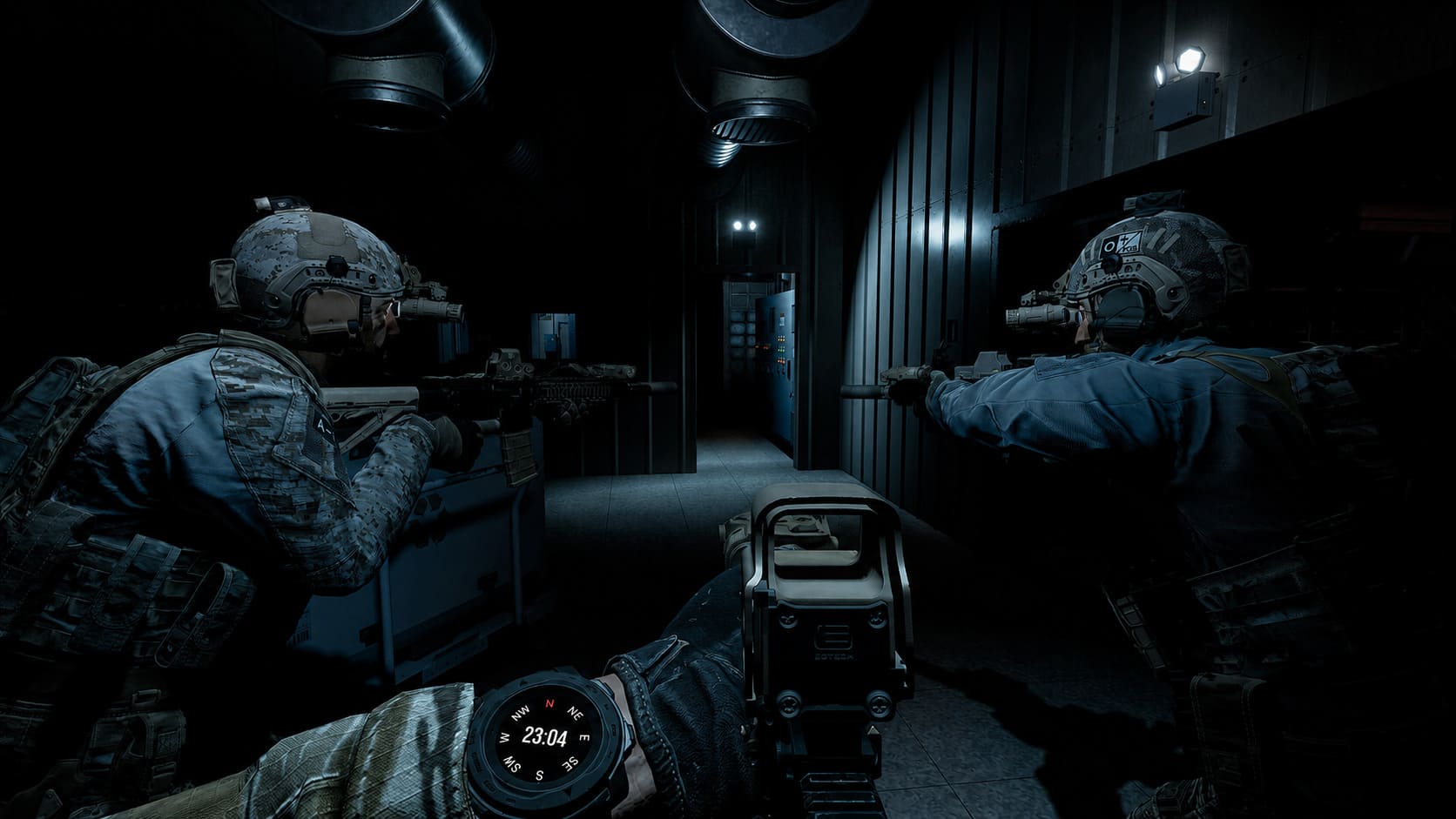
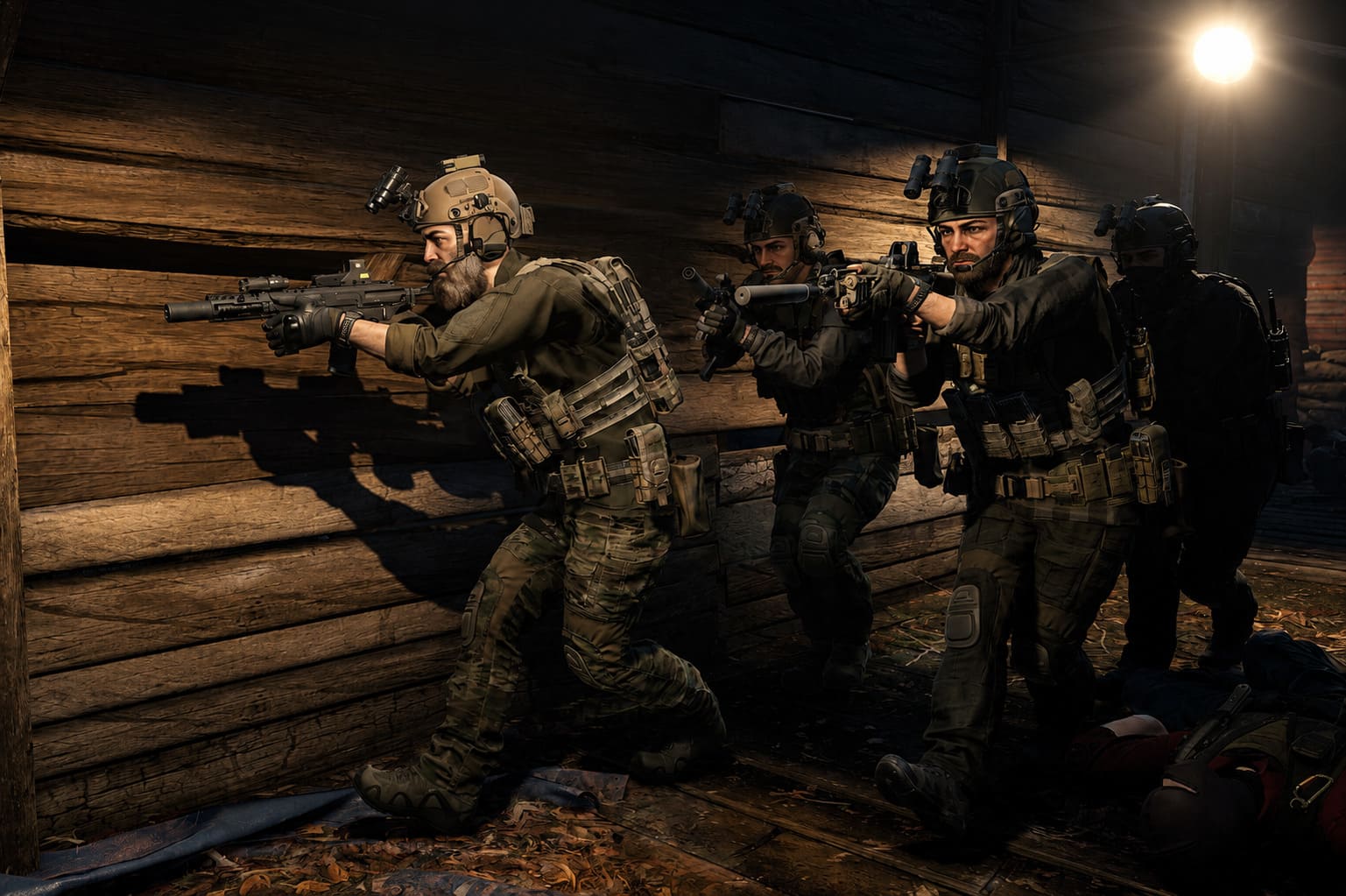
Instead of pressing a button to instantly swing every door open, players now control how far a door moves.
That creates entirely new tactical possibilities.
- Peek through narrow openings before committing.
- Throw flashbangs through partially opened doors.
- Check for traps or waiting enemies.
- Perform quiet entries or loud explosive breaches depending on the situation.
It sounds simple.
In practice, it fundamentally changes how you approach indoor combat.
Every room becomes a small tactical puzzle.
Exploring the Pakistan Prologue
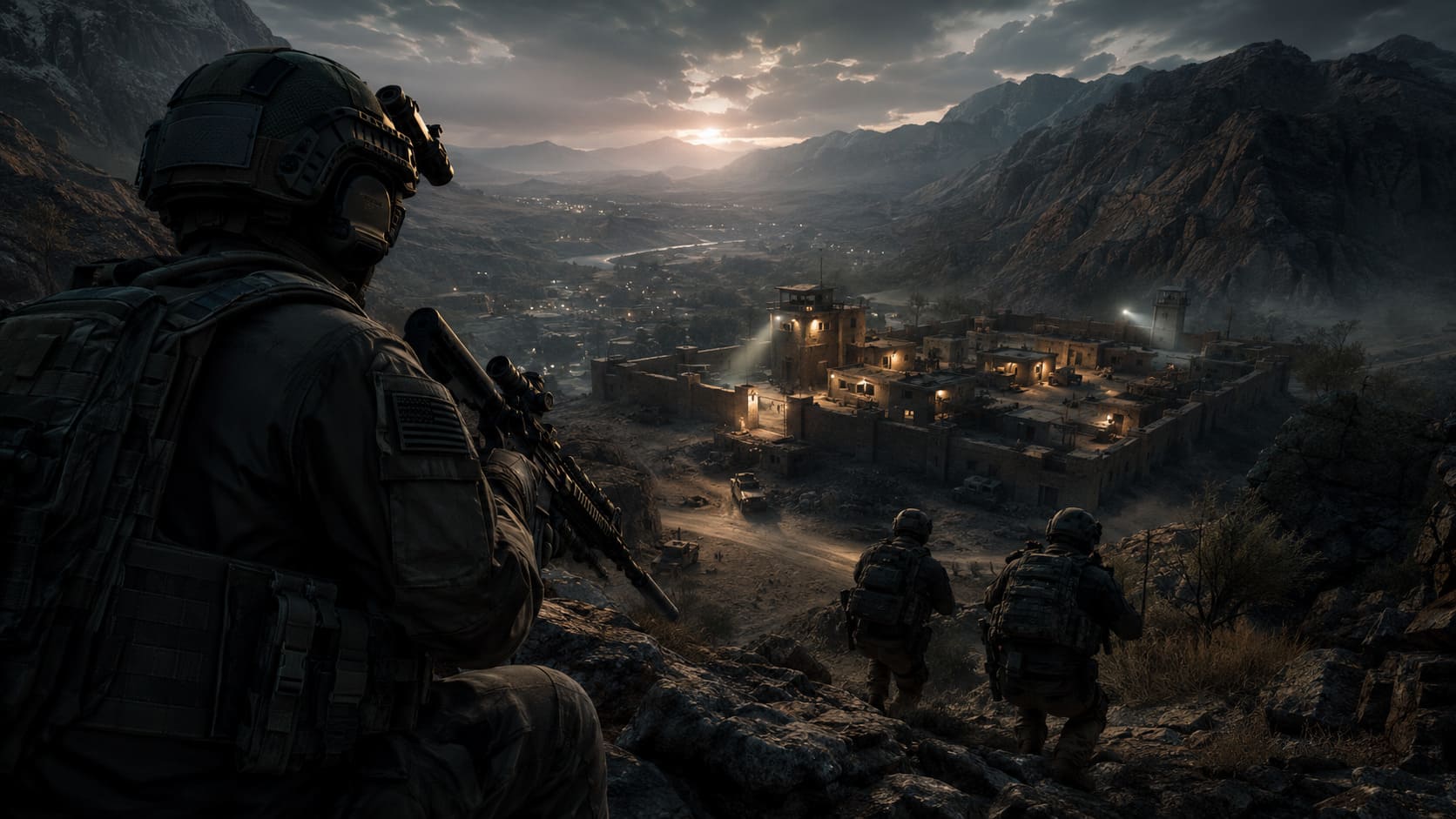
The opening campaign missions take place in mountainous terrain before shifting into heavily fortified compounds.
Both environments showcase the game’s strengths.
The first mission emphasizes reconnaissance.
Instead of sprinting uphill looking for targets, I found myself constantly stopping to observe ridgelines, listening for footsteps, and scanning distant rocks through magnified optics.
That slower rhythm reminded me of older tactical shooters from the early 2000s—something surprisingly rare today.
The second operation shifts the focus entirely.
Here the challenge isn’t spotting enemies across valleys.
It’s surviving cramped hallways, staircases, and overlapping fields of fire inside mud-brick buildings.
The contrast keeps both missions fresh despite being relatively short.
Building an Effective Loadout
One lesson I learned quickly is that versatility matters more than specialization.
| Equipment | Recommendation |
|---|---|
| Primary Rifle | M4A1, HK416, or AK-105 with variable optic. |
| Optics | LPVO or 1x/4x scope for both indoor and outdoor engagements. |
| Suppressor | Strongly recommended for stealth approaches. |
| Flashlight | Essential inside caves and compounds. |
| Laser Device | Very useful during night operations. |
| Armor | Level IV front and back plates without excessive extra weight. |
Trying to maximize every equipment slot only slowed me down.
A lighter operator consistently felt more effective.
Teamwork Still Matters Most
Ground Branch can absolutely be played solo.
However, it clearly shines in cooperative play.
Simple communication dramatically increases survival chances.
- “Watching left.”
- “Door opening.”
- “Contact upstairs.”
- “Reloading.”
Even basic callouts like these can completely change the outcome of an engagement.
Unlike many cooperative shooters where teammates mostly increase firepower, Ground Branch rewards coordination far more than raw numbers.
Small Details That Make a Big Difference
Some of my favorite improvements aren’t flashy marketing features.
They’re the subtle touches you only notice after several hours.
- Weapon barrels collide with walls, forcing better positioning.
- Lighting affects visibility in meaningful ways.
- Audio provides valuable tactical information rather than simple atmosphere.
- Enemy reactions feel believable instead of scripted.
- Every piece of equipment influences movement and endurance.
These details combine to create immersion that many larger-budget shooters struggle to achieve.
Is Ground Branch for Everyone?
Honestly, no.
Players expecting fast progression, constant unlocks, or arcade-style action may find it frustrating.
Ground Branch demands patience.
Failure is common.
Mistakes are punished immediately.
But for players who enjoy realistic military simulations, careful planning, and methodical teamwork, Version 1.0 represents the strongest version of the game yet.
It finally delivers on the vision that longtime fans have been waiting to see.
Final Thoughts
After years of watching Ground Branch evolve, Version 1.0 feels like the release the project deserved.
The new Operations campaign provides direction, the redesigned AI makes every firefight unpredictable, and the updated movement, armor, and breaching systems create a level of tactical depth rarely found in modern shooters.
What impressed me most wasn’t any single feature.
It was how naturally everything works together.
Every mechanic supports the same philosophy: slow down, think ahead, and execute with precision.
As someone who has spent countless hours across nearly every major tactical shooter released over the last two decades, I can confidently say Ground Branch has carved out its own identity. It doesn’t try to outdo blockbuster military games with spectacle. Instead, it focuses on authenticity, communication, and rewarding disciplined play.
If you’ve been waiting for a shooter where positioning matters more than reflexes, where every bullet counts, and where clearing a single building can be more satisfying than winning an entire multiplayer match, Ground Branch 1.0 is finally ready to justify that investment.
It’s not the easiest tactical shooter available—but it may now be one of the most rewarding.