Why Humphry Might Be the Best New Character in Fable
The new chapter of Fable already feels different from most modern fantasy RPGs, and honestly, that is exactly why I am excited about it.
After spending years jumping between massive open-world games filled with overly serious dialogue, dark prophecy clichés, and emotionally exhausted heroes, seeing Fable return with personality again feels refreshing.
And the biggest reason for that, at least from everything shown so far, is Humphry.
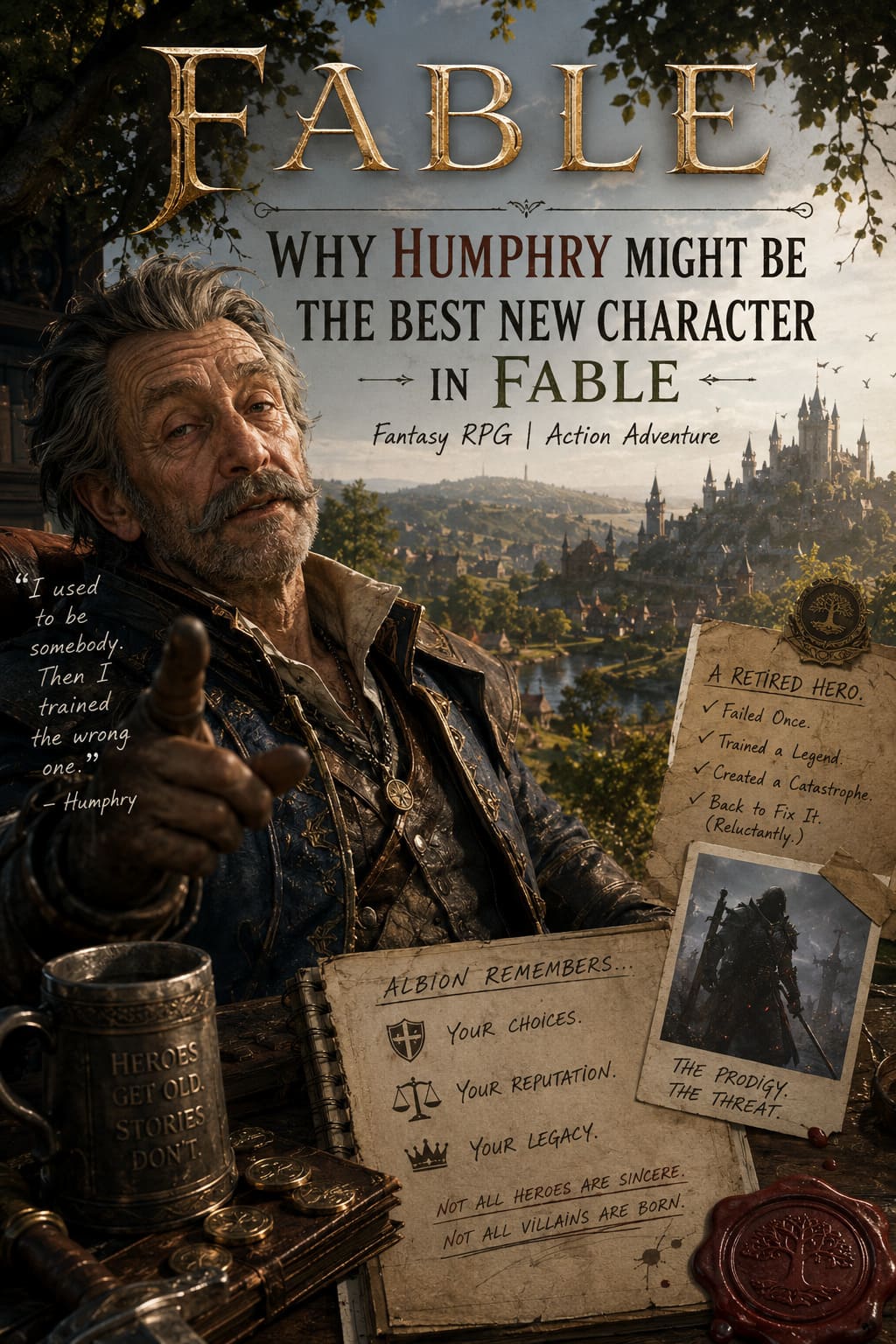
At first glance, he looks like another classic retired mentor archetype. We have all seen this character before in RPGs. The old warrior. The legendary hero. The sarcastic veteran dragged back into conflict one last time.
But after watching every trailer multiple times, digging through fan discussions, and comparing him to mentors from other fantasy franchises, I genuinely think Humphry may become one of the strongest characters the series has ever had.
Not because he is perfect. Because he clearly is not.
Fable on PC Game Pass Feels Like a Huge Win for RPG Fans
A Hero Who Already Failed Once
What instantly separates Humphry from generic fantasy mentors is the fact that his greatest legacy appears to be his biggest mistake.
The reboot introduces him as a retired hero living among trophies, relics, and stories from the past. He talks like a man who spent decades convincing himself that his glory days mattered more than the damage left behind. That already makes him far more interesting than the average “wise old mentor” we usually get in modern RPGs.
The core conflict of the game revolves around a former student he once trained — someone incredibly talented who later became the primary threat to Albion. That setup immediately gives the story emotional weight.
Instead of ancient evil returning, random dark lord invasions, or another magical apocalypse with no personal stakes, the entire disaster feels deeply connected to Humphry himself.
And honestly, that is smart writing.
Fable’s Biggest Problem Isn’t Development — It’s GTA 6
One thing many modern RPGs forget is that villains become memorable when they are tied directly to character failure. The reason characters like Darth Vader, Handsome Jack, or even some older BioWare antagonists worked so well is because their stories were personal. Humphry’s situation feels similar. He is not trying to save the world because destiny chose him. He is trying to clean up a catastrophe he helped create.
That changes everything.
Matt King Was a Brilliant Casting Choice
The second the trailers dropped, I recognized the voice immediately. Matt King has that perfect delivery style for Fable’s tone.
His performance reminds me why the original Fable games stood apart from other fantasy franchises in the first place. The series never treated itself too seriously. Even during darker moments, there was always awkward humor, sarcasm, and weird British absurdity hidden underneath the fantasy.
Modern RPGs often chase cinematic realism so aggressively that they forget games are supposed to have personality. Fable never had that problem.
Matt King absolutely understands the assignment here. His version of Humphry sounds tired, arrogant, funny, experienced, secretly guilty, and emotionally exhausted all at once.
That balance is difficult to pull off.
The funniest thing is that Humphry’s dialogue does not sound like somebody trying to be funny. It sounds like somebody genuinely annoyed that heroism interrupted retirement. That dry delivery makes every line land harder.
The Mockumentary Style Could Either Be Genius or a Disaster
One of the boldest things Playground Games is doing with the new Fable is the documentary-style presentation. Characters directly addressing the camera is not something we usually see in AAA fantasy RPGs.
At first, I honestly thought it sounded terrible on paper.
But the more footage I watched, the more I started understanding why it could actually work for Fable specifically.
This franchise has always been weird. Albion was never meant to feel like a traditional Tolkien-style universe. It is messy, sarcastic, theatrical, and sometimes intentionally ridiculous. Having Humphry narrate events almost like a frustrated storyteller gives the world a distinct identity modern fantasy games often lack.
If the writing stays sharp, this could become one of the reboot’s defining strengths.
If the jokes miss too often, though, it could become exhausting very quickly.
That is the risk.
Humphry Feels Like a Character From Older RPG Eras
What I personally love most is that Humphry reminds me of characters from older fantasy games — before every protagonist and mentor became emotionally identical.
Back in the early 2000s, mentors were strange, morally questionable, sometimes selfish, occasionally hilarious, and often unreliable.
That unpredictability made RPG storytelling more memorable.
Today, too many games write characters as if they were created by committee. Everyone talks carefully. Everyone sounds emotionally optimized. Nobody says anything weird anymore.
Humphry already feels messy in the best possible way.
There is even a growing theory among fans that he may not be entirely truthful about his past. And honestly, I hope that turns out to be real.
An unreliable narrator would fit Fable perfectly.
Imagine discovering halfway through the game that Humphry’s legendary reputation was partially exaggerated. Imagine learning his former protégé did not become evil entirely on her own. Suddenly the entire mentor relationship becomes morally gray instead of simplistic fantasy storytelling.
That would fit the reboot’s modern morality approach far better than a standard “good hero versus evil villain” structure.
The New Morality Direction Actually Makes Sense
One thing I always loved about the original Fable games was how ridiculous the morality system became.
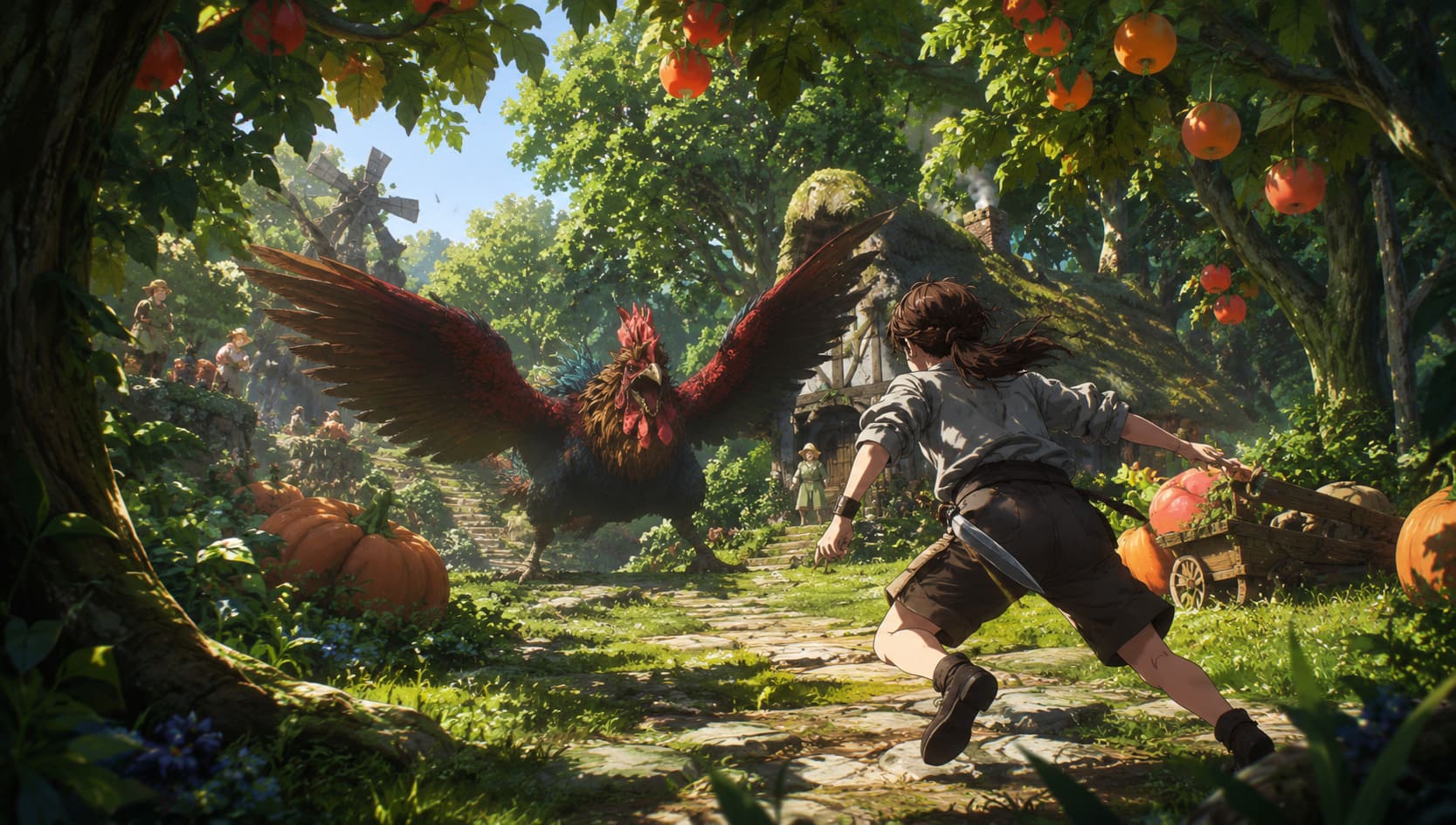
You kicked chickens, stole property, and suddenly your hero looked demonic.
It was hilarious.
But it was also extremely binary.
The reboot appears to be moving toward a more grounded reputation system where choices affect how society sees you instead of magically transforming you into fantasy Satan.
Honestly, I think that is the correct decision.
Games have evolved. Players expect more nuance now. Humphry himself represents that shift perfectly. He was supposedly one of Albion’s greatest heroes, yet his actions indirectly created catastrophe. That alone already proves morality in this world is no longer black and white.
And that opens the door for far more interesting storytelling.
Humphry Could Carry the Entire Game
I genuinely think Playground Games understands something important: players remember characters more than mechanics.
Sure, the combat looks smoother. Yes, the world looks gorgeous. And the upgraded engine clearly gives Albion more scale than ever before.
But none of that matters if the characters are forgettable.
Humphry does not feel forgettable.
He already has a recognizable personality, distinct dialogue delivery, emotional baggage, strong narrative importance, mystery surrounding his past, and a believable connection to the main antagonist.
That is a very strong foundation.
Honestly, some recent RPGs spent 100+ hours building giant open worlds while completely failing to create a single memorable companion or mentor. Fable seems to be doing the opposite. The developers appear focused on making Albion feel human first.
That matters more than map size.
Comparing Humphry to Other RPG Mentors
| Character | Strength | Weakness |
|---|---|---|
| Vesemir | Emotional wisdom | Less comedic personality |
| Solas | Complex philosophy | Too serious at times |
| Obi-Wan Kenobi | Mentor tragedy | More traditional archetype |
| Humphry | Humor, failure, and mystery | Still unproven |
That combination of comedy and guilt is rare in fantasy RPGs. Most games lean too heavily into one side.
Humphry seems balanced.
Final Thoughts
After years of increasingly safe AAA fantasy storytelling, Humphry feels unpredictable again. That alone gives the new Fable a massive advantage.
He captures the absurd British humor of classic Fable, the emotional scars of modern storytelling, and the morally gray themes modern RPG audiences now expect.
If Playground Games delivers strong writing around him, Humphry could easily become the defining face of the reboot.
Not the protagonist.
Not the villain.
Humphry.
And honestly, that feels very Fable.