Mandate Order Guide: Best Early-Game Philosophers to Recruit First
There are some strategy games where the first few hours feel like a tutorial you are simply waiting to escape. Mandate Order isn’t really like that. From the moment I started building my first settlement, I had the feeling that almost every decision was going to come back and matter later.
Digital Sky’s ancient Chinese city-builder is currently in Early Access, and what immediately grabbed me was how many systems are connected. You are not just placing houses, watching numbers go up, and waiting for the next technology unlock. Roads affect logistics. Food production is tied to seasonal planning. Defensive structures matter because your settlement isn’t isolated. And then there is the Retainer System, which might be my favorite part of the whole game.
The philosophers you recruit aren’t just decorative historical figures sitting in a menu. They actually shape how your settlement develops.
That is why I would strongly recommend thinking about your first philosophers before you start spending resources randomly. A good early roster can make the opening feel surprisingly smooth. A bad one can leave you wondering why you suddenly have no food, no materials, and a suspiciously large enemy army standing outside your walls.
After spending time experimenting with the different schools of thought, these are the philosophers and roles I would prioritize during the opening stages of Mandate Order.
Why Philosophers Matter So Much in Mandate Order

The easiest mistake to make is treating philosophers like simple passive bonuses. They are much more important than that.
Your retainers influence the way different parts of your state operate, and their philosophical backgrounds naturally push your settlement toward different priorities. The game essentially asks you to balance several major pillars of statecraft:
- Construct — infrastructure, buildings, roads, and defensive works.
- Govern — administration, population management, and general stability.
- Campaign — military recruitment, training, and battlefield preparation.
- Worship — ideological and cultural development.
- Reform — broader changes to how your state operates.
The five major schools also have their own identities. Legalists are about discipline and administration, Confucians favor social harmony, Mohists lean heavily into engineering, Military Strategists improve warfare, and Agrarians focus on food and farming.
Personally, I wouldn’t try to build a perfectly balanced philosophical court right away.
Early on, survival is more important than ideological perfection.
The Five Schools at a Glance

| School | Main Strength | Best Early Use |
|---|---|---|
| Legalism | Administration & Efficiency | Logistics and Governance |
| Confucianism | Population & Harmony | Stability and Satisfaction |
| Mohism | Engineering & Defense | Construction and Fortifications |
| Military Strategists | Recruitment & Warfare | Conscription and Training |
| Agrarianism | Farming & Food | Crops and Food Security |
This is also why I like the early game in Mandate Order. You aren’t simply asking, “Which character has the biggest number?” You are asking, “What problem is my settlement actually facing right now?”
1. Recruit a Legalist Administrator for Your Economy
If I had to pick one philosophy to stabilize the basic economy, Legalism would be very high on my list.
Mandate Order doesn’t make logistics feel like some invisible spreadsheet in the background. Resources actually have to move through your settlement. Timber, stone, and other materials need sensible transportation routes, and inefficient roads can turn what should be a simple construction project into a painfully slow chain of deliveries.
This is where a strong Legalist retainer becomes incredibly useful.
I like putting this type of philosopher somewhere connected to my central administration or storage infrastructure. Their strengths can improve the efficiency of resource transportation while also helping reduce some of the pressure created by your early workforce costs.
And that matters more than it sounds.
During the opening stages, you don’t have a huge population producing an endless stream of resources. You are working with a small workforce, limited storage, and several buildings that all want the same basic materials.
A logistics bottleneck can therefore hurt three different systems at once.
My advice is simple: get your transportation network under control before you start expanding aggressively.
A Legalist administrator is particularly valuable if you notice that workshops are constantly waiting for materials.
2. Mohist Engineers Are My Favorite Early Defensive Pick
If you watch me play Mandate Order, you’ll probably notice that I become slightly obsessed with walls.
That’s not because I enjoy staring at dirt barriers. It’s because I have learned the hard way that expanding too quickly without thinking about defense is an invitation for trouble.
The Mohist school is especially useful here.
Mohist retainers are closely associated with engineering, practical construction, and defensive infrastructure. That makes them an excellent fit for the stage when your settlement is rapidly transforming from a tiny village into something that actually needs to defend itself.
I would prioritize a Mohist engineer when you are preparing to build:
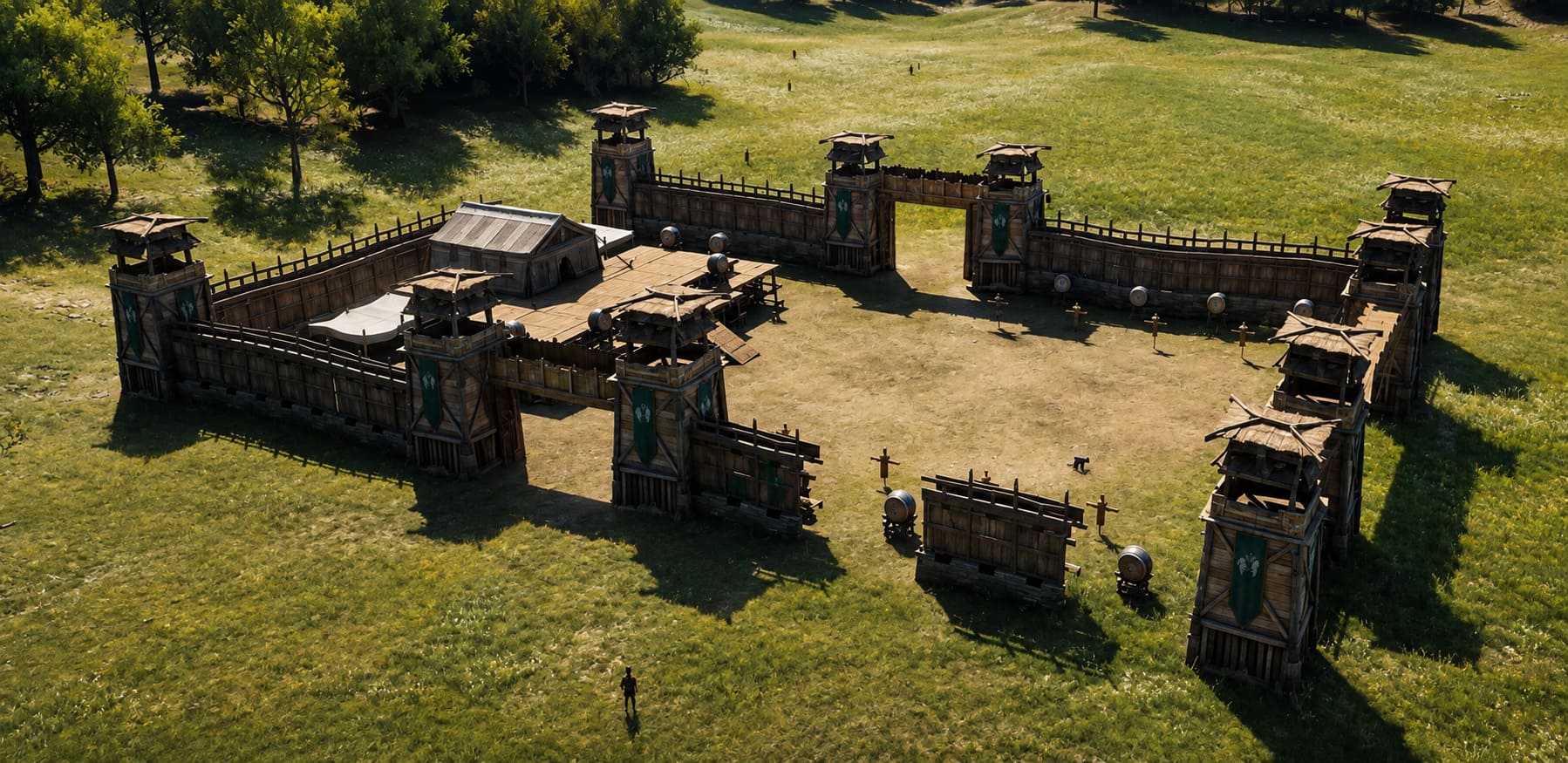
- Defensive walls and earthworks
- Watchtowers
- Beacon systems
- Early workshops
- Other infrastructure-heavy projects
The big advantage is not just getting a wall on the map.
It is getting your defensive network established before you desperately need it.
This is one of those strategy-game lessons that sounds obvious until you ignore it. When an enemy is already approaching your settlement, that’s a terrible time to discover that your defensive construction is going to take forever.
I would rather spend the early peaceful period improving infrastructure and preparing a defensive perimeter than scramble when the first serious attack arrives.
3. Put an Agrarian Philosopher in Your Court Early
Of all the mistakes I’ve made in strategy games, underestimating food is probably somewhere near the top.
Players love talking about armies, technologies, and giant fortifications. Nobody gets excited about grain storage until the grain storage isn’t full anymore.
In Mandate Order, agriculture deserves serious attention because your fields aren’t simply infinite food generators. Seasonal conditions, fertility, harvest timing, and storage all play into your long-term survival.
That makes an Agrarian philosopher one of the safest early recruits you can make.
I especially like bringing one into the court during the first spring cycle. Their bonuses are aimed directly at the thing your settlement cannot afford to get wrong: maintaining a reliable food supply.
The ideal early-game sequence for me is pretty straightforward:
- Establish your initial farming operation.
- Bring in an Agrarian retainer.
- Improve production and seasonal efficiency.
- Build enough storage to survive poor conditions.
- Enter winter with a comfortable food reserve.
That final point is critical.
If you reach winter with barely enough food to survive, you’re already playing catch-up. A strong harvest gives you breathing room for construction, population growth, and military preparation.
And honestly, having a healthy food reserve makes the entire settlement feel less stressful.
4. Recruit a Military Strategist Before You Actually Need an Army
This is where I usually tell newer players to stop thinking about their army as something they can build later.
You probably won’t begin Mandate Order with a massive professional force. Instead, your ordinary workers become an important part of your military manpower. They can eventually be turned into soldiers such as spearmen, archers, and other battlefield units depending on your available infrastructure.
The problem is timing.
If an enemy faction suddenly decides that your settlement looks delicious, you don’t want to discover that your recruitment system takes forever.
That’s why I like having a Military Strategist ready before the situation becomes dangerous.
Their strengths are especially useful around training facilities, armories, and military preparation. Faster conscription and improved training efficiency can make a huge difference when you need to turn a peaceful settlement into a defensive army quickly.
I wouldn’t necessarily make military expansion your first priority, though.
There is a difference between preparing an army and spending your entire early economy on an army.
The first is smart.
The second can leave you starving behind your impressive-looking walls.
My Recommended Early Philosopher Priority
If I were starting a completely new Mandate Order settlement today, this would be my general priority order:
| Priority | Philosopher | Why I Want Them |
|---|---|---|
| 1 | Agrarian | Secure food production before winter |
| 2 | Legalist | Improve logistics and administration |
| 3 | Mohist | Accelerate infrastructure and defenses |
| 4 | Military Strategist | Prepare for raids and future campaigns |
| 5 | Confucian | Improve stability and population satisfaction |
That order isn’t carved into stone.
If I’m playing on a map where hostile factions are extremely aggressive, I’ll move the Military Strategist higher. If resources are taking forever to reach my workshops, Legalism becomes my immediate priority. And if my settlement has plenty of food but terrible infrastructure, the Mohist is suddenly much more attractive.
That’s the beauty of the system.
The best philosopher isn’t always the one with the strongest theoretical bonus. It’s the one who solves your biggest problem right now.
Don’t Ignore Retainer Satisfaction
Recruiting talented philosophers is only half the job.
You also have to keep them happy.
Your retainers have their own expectations, and your court needs to provide suitable housing, resources, salaries, and a political environment they can tolerate. This becomes especially important when you start mixing different schools of thought.
And yes, philosophical disagreements can become a real headache.
Putting a strict Legalist next to a harmony-focused Confucian administration may sound like an interesting experiment. In practice, you can end up creating unnecessary political friction when what you really needed was a functional government.
I recommend looking at your court as a team rather than collecting philosophers simply because they are available.
Ask yourself what each retainer is actually doing.
Is your Mohist engineer improving construction?
Is your Agrarian actually helping your farming operation?
Is your Legalist improving the logistical network?
Is your Military Strategist contributing to recruitment and training?
If the answer is no, move them.
Don’t be afraid to reorganize your court when the settlement enters a new phase.
Match Your Philosophers to the Season
One of the more interesting ways to play Mandate Order is to think about your retainers as part of a seasonal strategy rather than permanent appointments.
Spring is a great time to emphasize Agrarian bonuses. Get your fields operating efficiently and make sure you are building toward a strong harvest.
During summer, I like shifting attention toward construction. This is where a Mohist engineer can become extremely valuable as you expand your walls, workshops, roads, and other infrastructure.
When autumn arrives, food storage becomes increasingly important, but military preparation should also start moving up your priority list.
Then comes winter.
If you have done your job properly, winter should feel like a test of your preparation rather than a complete disaster.
That is when a good early-game foundation really pays off.
Mandate Order Retainer System Guide: Mechanics, Schools, and Strategy Explained
The Biggest Early Mistake to Avoid
If there’s one thing I’d warn new players about, it’s trying to build everything at once.
You don’t need a massive army, huge city, perfect philosophical court, advanced workshops, and enormous defensive perimeter during your first few turns.
Your settlement needs a foundation.
Get food under control.
Make resource transportation efficient.
Build basic defenses.
Then prepare your military.
After that, you can start thinking about more ambitious expansion.
I’ve played enough city-builders to know that the most satisfying saves are rarely the ones where everything goes perfectly from turn one. They are the ones where a small problem gets solved, then another, and eventually you look at the settlement and realize you’ve built something that can actually survive.
Mandate Order Fortress Guide: How to Build the Military Stronghold
Final Thoughts
Mandate Order has the kind of early game that rewards players who pay attention to systems rather than simply chasing expansion.
The Retainer System is a huge part of that experience. Your philosophers aren’t just names attached to bonuses. They influence the way your settlement develops, and choosing the right specialist at the right time can make the difference between a smooth opening and a constant struggle for resources.
For my own early-game approach, I would start with an Agrarian philosopher for food security, bring in a Legalist for logistics, recruit a Mohist engineer for construction and defense, and then add a Military Strategist once the settlement has enough economic stability to support serious military preparation.
Confucian retainers still have an important place, especially once population growth and satisfaction become bigger concerns, but I wouldn’t make them my first priority unless the specific situation calls for it.
And that’s ultimately what I like about Mandate Order.
There isn’t one magical recruitment order that will win every map. The strongest player is the one who looks at the settlement, understands what is going wrong, and appoints the philosopher who can actually fix it.
Build the farms before the grand palace. Fix the roads before expanding across the map. Put engineers on the walls before the enemy arrives.
Do that, and your tiny settlement starts feeling less like a desperate survival camp and more like the beginning of a real dynasty.
The Mandate of Heaven won’t wait for you. So I’d make sure your first philosophers are ready.