Terrinoth Heroes of Descent Guide: The First Tactical RPG in the Descent Universe
There are games you casually install for a weekend, and then there are games that immediately pull you into their world and refuse to let go.
After diving into gameplay previews, Steam demo impressions, and community discussions surrounding Terrinoth: Heroes of Descent, it became obvious that this upcoming tactical RPG is trying to deliver something many modern strategy games have forgotten — meaningful teamwork, satisfying tactical combat, and the feeling of an old-school fantasy adventure night brought into the digital era.
Developed by Artefacts Studio and published by New Tales, Terrinoth: Heroes of Descent is scheduled to launch in Spring 2026 for PC, PlayStation 5, Xbox Series X|S, and Mac.
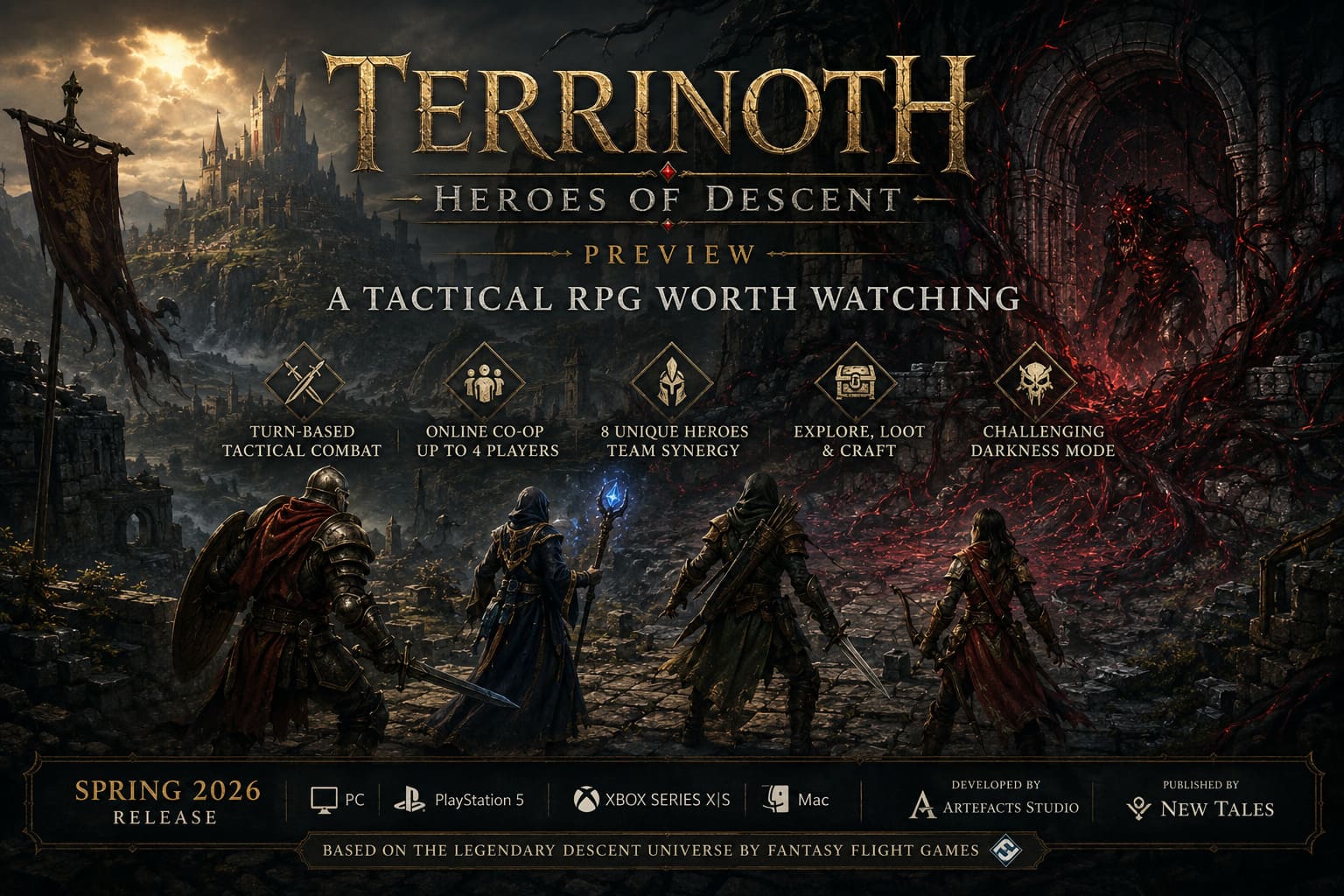
More importantly, this is the first full tactical RPG adaptation set directly inside the legendary Descent universe created by Fantasy Flight Games.
For longtime tabletop fans, this is a huge moment. For strategy RPG players searching for their next co-op obsession, this game could quietly become one of the biggest surprises of 2026.
Terrinoth Heroes of Descent Gameplay Mechanics Guide: Turn-Based Combat & Co-Op Tactics Explained
The Return of the Terrinoth Universe
The world of Terrinoth has existed for years across tabletop classics like Descent: Journeys in the Dark, Runebound, and Runewars. Yet despite its popularity among board game fans, the setting never fully crossed into the modern video game space until now.
What makes Terrinoth interesting is how grounded the fantasy world feels despite its massive lore. Ancient kingdoms rose and collapsed. Powerful magical relics changed history. Dragon Lords nearly consumed the world in wars over cosmic artifacts known as the Stars of Timmeran.
Instead of overwhelming players with endless exposition, the game appears to introduce its world naturally through exploration, environments, mission design, and party interactions. Personally, I prefer this style of storytelling. A fantasy setting feels stronger when you discover its history while playing instead of reading giant walls of lore text.
Terrinoth Heroes of Descent Guide: Dungeon Crawling Evolution
Two Gameplay Styles That Work Together Perfectly
One of the smartest design choices in Heroes of Descent is the way the gameplay constantly shifts between real-time exploration and turn-based tactical combat.
During exploration, players control a party of four heroes while navigating dungeons, ruins, forests, and dangerous underground passages from an isometric perspective. You can search for hidden loot, interact with NPCs, destroy environmental objects for crafting materials, and uncover optional secrets scattered across each mission.
The pacing feels relaxed during these moments, almost like a classic fantasy adventure game. But everything changes the second enemies detect your party.
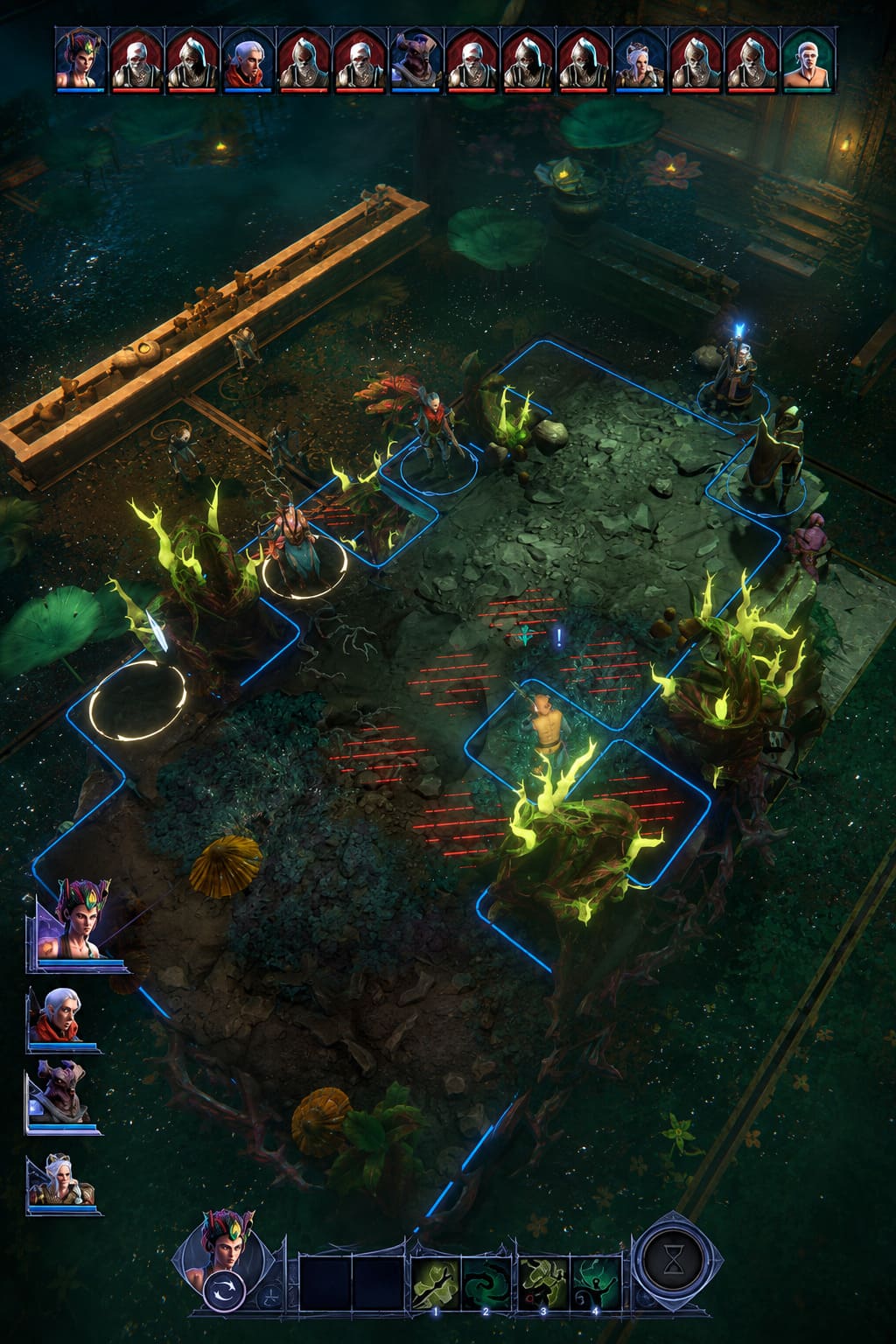
The transition into combat is immediate and surprisingly smooth. Suddenly every movement matters. Positioning becomes critical. Elevation, line of sight, and ability timing completely reshape the battlefield.
And honestly, this is where the game truly starts to shine.
Combat Feels Like a True Tactical RPG
After watching multiple gameplay breakdowns and early demo footage, the combat system clearly takes inspiration from both modern tactical RPGs and traditional tabletop mechanics.
Every action consumes Action Points, forcing players to constantly think ahead instead of simply attacking mindlessly. A poorly positioned hero can easily become surrounded. A missed spell placement can destroy an entire strategy.
The game heavily rewards players who understand battlefield control and hero synergy.
Key Combat Features
- Turn-based tactical battles with Action Point management
- Environmental advantages through elevation and terrain
- Hero combo systems and chained abilities
- Grid-style positioning inspired by tabletop gameplay
- Distinct enemy behaviors and AI reactions
One mechanic that immediately caught my attention was vertical movement during combat. Rogues can use mobility skills to reach elevated areas quickly, while ranged classes gain significant advantages from high ground positioning.
That small detail alone adds far more depth than many modern strategy games offer.
The Heroes Are Built Around Team Synergy
Unlike RPGs where one overpowered character carries the entire game, Terrinoth: Heroes of Descent appears designed around full-party coordination.
The final game includes eight playable heroes with unique personalities, voice acting, ultimate abilities, and class identities.
Main Hero Archetypes
| Class | Primary Role |
|---|---|
| Fighter | Frontline defense and enemy control |
| Mage | Area damage and elemental attacks |
| Rogue | Mobility, flanking, and disruption |
| Archer | Precision ranged attacks |
| Healer | Support and sustain |
The real depth comes from combining abilities between different heroes.
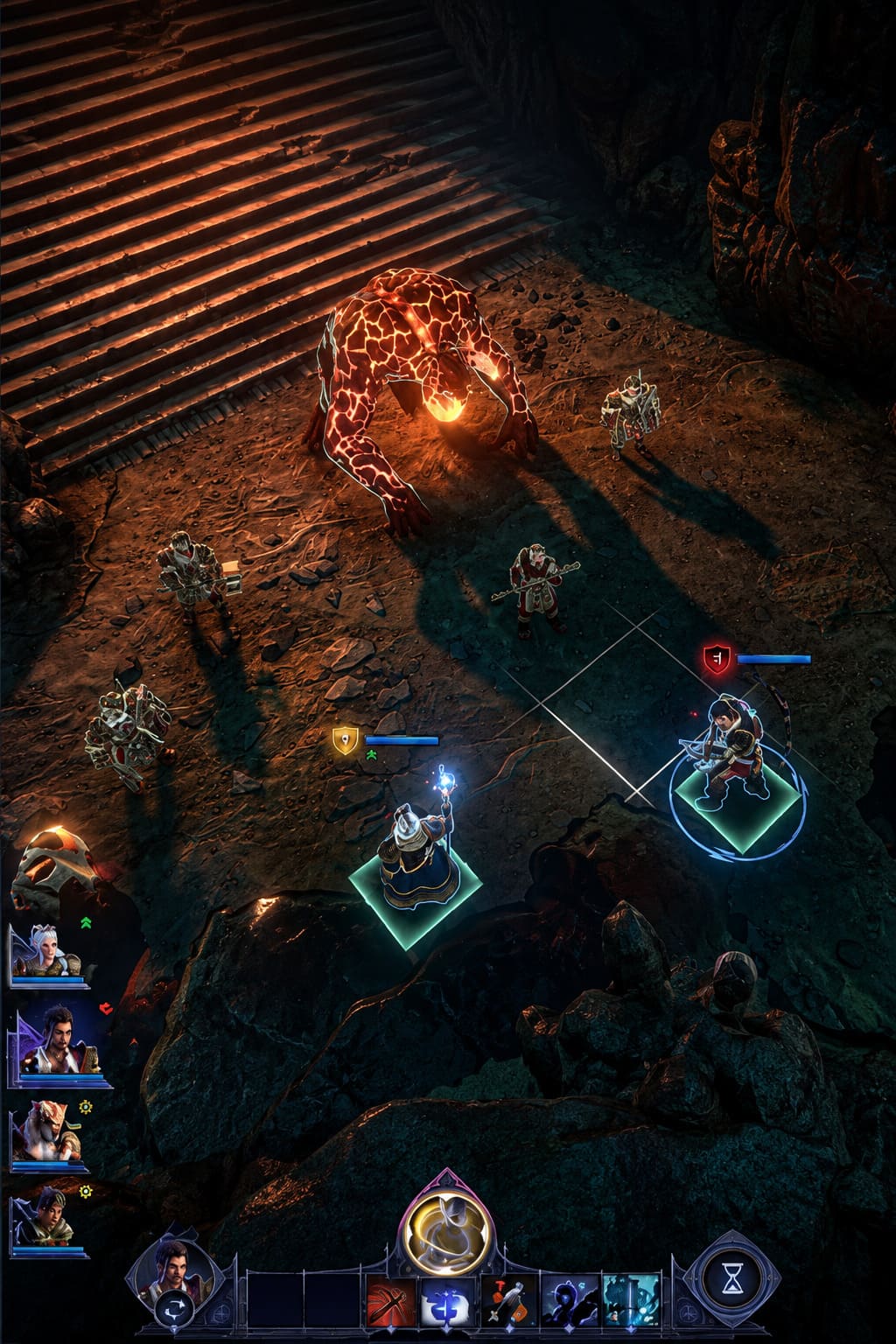
A fighter can group enemies together with taunts or crowd-control abilities, allowing the mage to unleash massive elemental attacks while the archer focuses down weakened targets from a safe distance. Meanwhile, the rogue can reposition behind enemy lines to eliminate dangerous ranged threats.
It creates the kind of tactical rhythm that strategy fans love — every turn feels important.
Progression and Customization
The RPG systems appear flexible enough to support different playstyles without becoming unnecessarily complicated.
As players progress through the campaign’s large dungeon environments, heroes gain experience, unlock new abilities, and improve equipment through crafting and upgrades.
Sub-classes also allow additional specialization paths, which should help party builds feel more unique during repeat playthroughs or co-op runs.
Thankfully, the progression system seems focused on meaningful upgrades instead of endless grinding. That balance is incredibly important in modern RPG design.
Built for Co-Op Game Nights
One feature I genuinely appreciate is the structure of the campaign itself.
Rather than forcing players into a massive open-world marathon, the game is divided into smaller story-focused missions designed to last roughly one to two hours each.
That may sound minor, but it actually fits the tabletop roots of the franchise perfectly. It recreates the feeling of sitting down with friends for a complete dungeon session without demanding an entire weekend.
Co-Op Features
- Online multiplayer for up to four players
- Drop-in and drop-out support
- Full solo play with party control
- Mission-based campaign structure
- Multiple difficulty settings
For solo players, controlling the entire party creates a slower and more methodical tactical experience. In co-op, however, the game transforms into coordinated chaos where teamwork and communication become essential.
Honestly, I can already imagine the panic during difficult boss fights.
Darkness Mode Could Become the Real Endgame
While casual players can enjoy the story on easier difficulties, hardcore tactical RPG fans will probably gravitate toward the game’s brutal Darkness Mode.
This difficulty setting reportedly increases enemy aggression, reduces available resources, and punishes poor positioning much more severely.
That sounds exactly like the kind of challenge experienced strategy players want. Tactical RPGs are always more satisfying when victories feel earned instead of guaranteed.
Why This Could Be One of 2026’s Most Underrated RPGs
The biggest reason I’m personally keeping an eye on Terrinoth: Heroes of Descent is because it understands its identity.
It is not trying to become another gigantic open-world RPG with hundreds of filler quests. It is not pretending to reinvent the strategy genre either.
Instead, it focuses on delivering:
- Strong tactical combat
- Meaningful co-op gameplay
- A respected fantasy universe
- Manageable mission pacing
- Classic dungeon-crawling atmosphere
And honestly, that focus might end up being its greatest strength.
If the developers can maintain tactical depth, satisfying progression, and stable online co-op throughout the full release, this game could become a favorite among strategy RPG fans for years.
For now, cautious optimism feels appropriate — but the potential here is absolutely real.
Final Verdict
Terrinoth: Heroes of Descent already feels like a passion project built by people who genuinely understand tactical RPGs and tabletop dungeon crawlers. The mix of exploration, strategic combat, party synergy, and cooperative gameplay creates a very promising foundation.
Whether you are a longtime fan of the Descent universe or simply someone looking for your next fantasy strategy obsession, this is definitely a game worth watching before its Spring 2026 release.
The Land of Steel may finally be ready for its digital evolution.