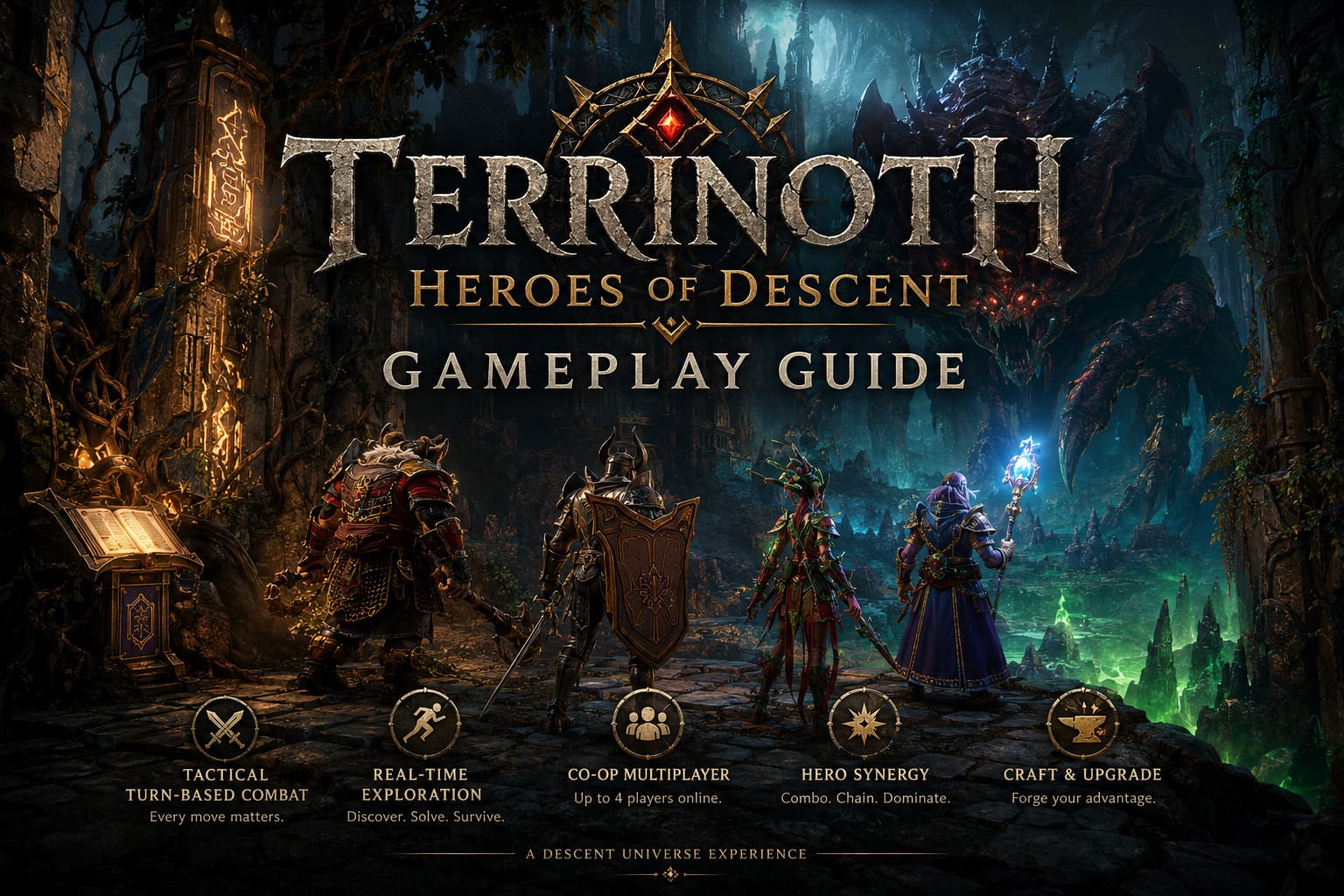
Terrinoth Heroes of Descent Gameplay Mechanics Guide: Turn-Based Combat & Co-Op Tactics Explained
If you’ve spent years diving into dungeon crawlers, tactical RPGs, and tabletop-inspired adventures, then Terrinoth: Heroes of Descent immediately feels familiar in the best possible way.
But this is not another casual fantasy RPG trying to imitate bigger franchises. Instead, the game focuses on delivering a tense, highly tactical dungeon-crawling experience where every movement, every skill, and every positioning mistake can decide the outcome of a battle.
Developed by Artefacts Studio and set in the legendary Descent universe, Terrinoth: Heroes of Descent blends real-time exploration with punishing turn-based combat systems.
Rather than overwhelming players with endless open-world distractions, the game doubles down on strategic gameplay, teamwork, and combat depth.
After spending time analyzing gameplay systems and community reactions, it’s clear that this title is aiming directly at players who enjoy tactical thinking over mindless action.
Terrinoth Heroes of Descent Guide: Dungeon Crawling Evolution
Real-Time Exploration Keeps the Adventure Moving
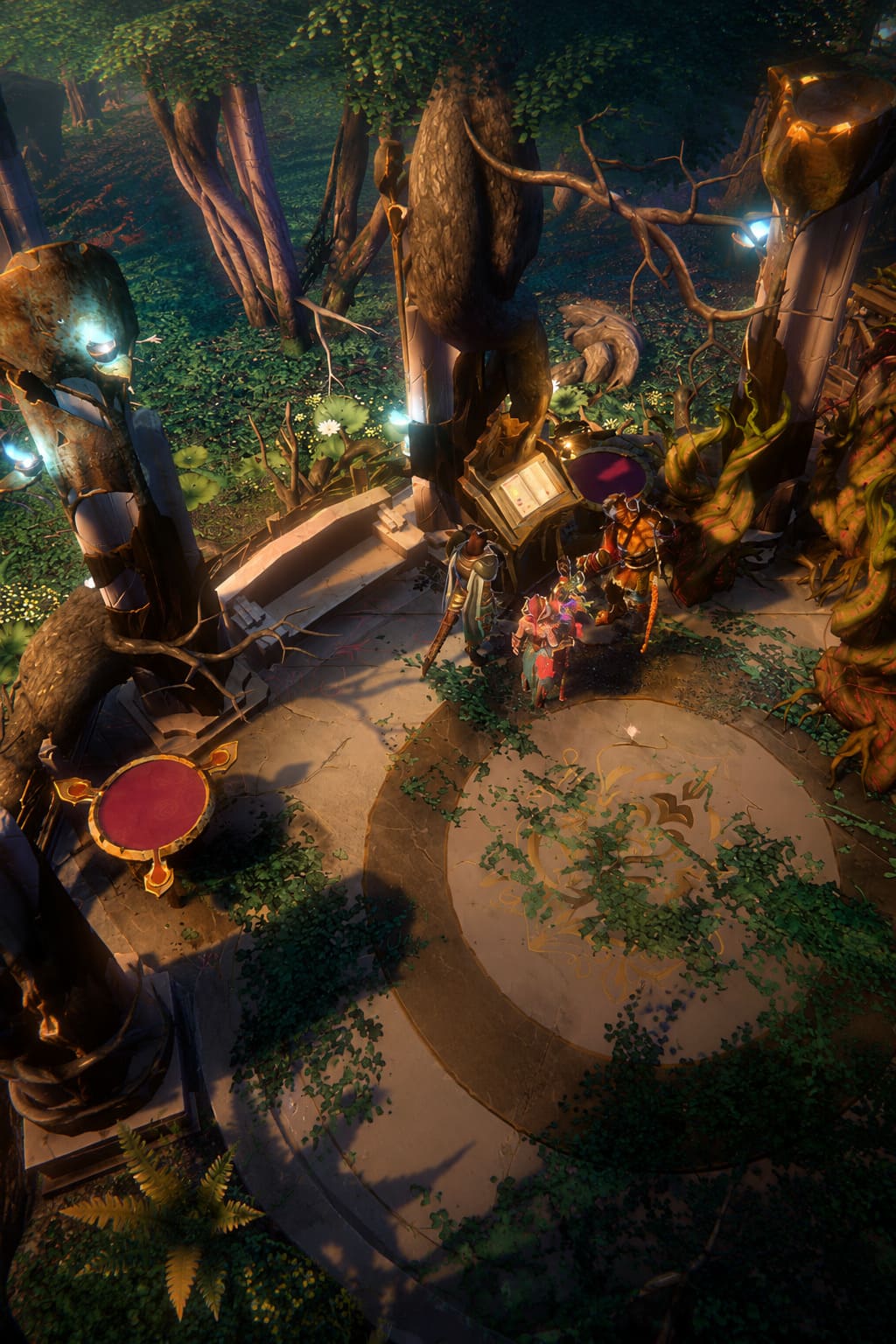
One of the smartest design choices in Terrinoth: Heroes of Descent is how the game handles exploration. Instead of forcing players into turn-based movement every second, dungeon exploration happens in real time. This creates a much smoother pace and gives the world a more natural feeling.
As players move through dark corridors and massive dungeons, they can search for hidden treasure, gather crafting resources, solve environmental puzzles, and uncover secrets scattered throughout the campaign. Exploration is not simply filler content between combat encounters. It actively feeds into progression and survival.
The world also feels more alive because character conversations and NPC interactions happen dynamically during exploration. Different party combinations can trigger different dialogue moments, giving players another reason to experiment with team compositions.
Key Exploration Features
- Hidden loot and collectible resources
- Environmental puzzles and locked pathways
- Real-time party movement
- Interactive dungeon objects
- Dynamic character dialogue
Terrinoth Heroes of Descent Official Trailer Breakdown, Gameplay Features, and Tabletop Legacy
Combat Transitions Feel Fast and Seamless
The moment enemies detect your party, the game instantly shifts into tactical combat mode. There are no awkward pauses or immersion-breaking loading screens. This smooth transition helps every encounter feel organic, almost like stumbling into danger naturally instead of activating a scripted battle arena.
Combat itself relies heavily on positioning, initiative management, and Action Point economy. Unlike many tactical RPGs that separate turns by teams, Terrinoth: Heroes of Descent uses an individual initiative system. Heroes and enemies take turns based on their stats and abilities rather than waiting for entire factions to finish acting.
This small mechanic completely changes how battles feel. Players cannot simply plan one giant combo turn and safely execute it. Instead, strategies constantly evolve depending on which unit moves next.
Action Points Control Everything
The entire combat system revolves around Action Points, commonly referred to as AP. Every movement, attack, spell, or ability consumes AP, forcing players to carefully think about efficiency during every turn.
At first glance, the system appears simple. But after a few difficult encounters, it becomes obvious how punishing poor AP management can be. Wasting points on unnecessary movement or attacking from the wrong angle can leave characters exposed and vulnerable.
Core Combat Mechanics
| Mechanic | Gameplay Impact |
|---|---|
| Action Points | Limits movement and ability usage every turn |
| Line of Sight | Walls and obstacles block ranged attacks and spells |
| Elevation | Higher terrain improves ranged effectiveness |
| Environmental Hazards | Traps and obstacles can damage both enemies and allies |
| Choke Points | Narrow paths force careful team positioning |
One mechanic that surprised many players is that characters cannot move through each other during combat. This creates realistic battlefield congestion, especially inside tight dungeon corridors. A poorly positioned tank can accidentally trap fragile ranged allies behind them.
Positioning Is More Important Than Raw Damage
Many RPG players naturally focus on damage numbers and powerful abilities, but Terrinoth: Heroes of Descent rewards positioning more than pure aggression. Proper formation management often matters more than weapon upgrades.
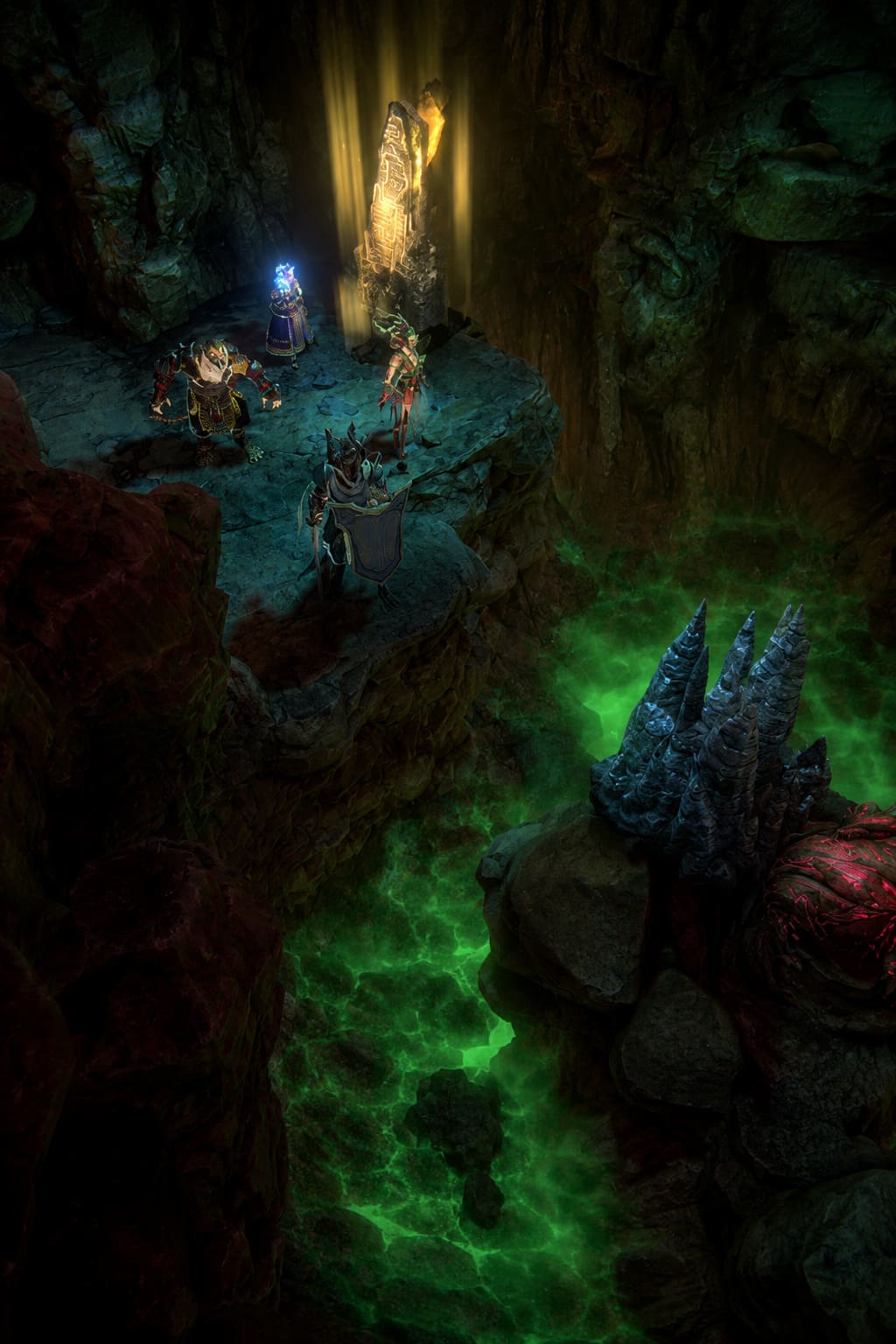
Tanks can physically block enemy movement inside narrow hallways while ranged heroes attack safely from behind. Elevation advantages dramatically improve ranged combat effectiveness, while hazards like spikes and traps can be used against enemies for extra damage.
Because the game heavily emphasizes spatial awareness, every battlefield feels like a tactical puzzle instead of a simple damage race.
Heroes Feel Unique Instead of Generic
Another strength of the game is how distinct each hero feels mechanically. Rather than simply assigning traditional RPG labels like tank or mage, the developers created characters with abilities that directly influence battlefield control and team synergy.
Kharaz the Defensive Specialist
Kharaz serves as one of the game’s primary defensive frontliners. His taunt abilities force enemies to focus on him while simultaneously boosting nearby allies with defensive bonuses. In difficult encounters, proper Kharaz positioning can completely stabilize a collapsing fight.
Myria the Combo Expert
Myria focuses on aggressive combo chains and Action Point recovery. Certain abilities reward her with bonus AP after securing kills, allowing experienced players to chain together devastating multi-target turns.
However, Myria’s aggressive playstyle also creates risk. If her combos fail or enemies survive with low health, she can quickly become exposed and vulnerable.
The Synergy System Creates Real Tactical Depth
The most exciting combat mechanic in Terrinoth: Heroes of Descent is the synergy system between party members. Certain abilities apply status effects like poison, stun, vulnerability, or burning. When another hero follows up with a compatible ability, special combo effects trigger.
This system transforms combat into a team-based strategy experience rather than a collection of isolated turns. Strong players are constantly planning several moves ahead, setting up chain reactions between heroes.
Successfully executing these combinations feels incredibly satisfying, especially during difficult boss encounters where maximizing efficiency becomes critical.
Progression and Character Customization
Outside combat, the game offers meaningful progression systems designed to encourage experimentation. Characters level up through combat and exploration, unlocking skill trees filled with passive bonuses and new active abilities.
Players can also invest resources into the Forge system, which acts as a central crafting and upgrade hub. Weapons and armor can be improved, customized, and specialized depending on upcoming challenges.
This system prevents progression from feeling shallow because gear choices actively influence combat strategy instead of simply increasing statistics.
Solo Play and Co-Op Feel Completely Different
Although the game fully supports solo play by allowing one player to control all four heroes, cooperative multiplayer feels like the true intended experience.
Online co-op supports up to four players and completely changes the pacing of combat. In solo mode, decisions happen instantly because one player controls everything. In multiplayer, every battle becomes a conversation about positioning, ability timing, and resource management.
This cooperative structure captures the atmosphere of classic tabletop dungeon crawlers surprisingly well. Successful teams communicate constantly, while disorganized groups can quickly fall apart during difficult encounters.
Terrinoth Finally Feels Like a Modern Tactical Dungeon Crawler
Terrinoth: Heroes of Descent succeeds because it understands exactly what kind of game it wants to be. Instead of chasing massive cinematic storytelling or endless open-world exploration, it focuses on delivering challenging tactical gameplay rooted in teamwork and positioning.
The combination of real-time exploration, punishing turn-based combat, and layered synergy systems creates an experience that feels both modern and faithful to its tabletop origins. Every encounter demands attention, and every victory feels earned.
For players who enjoy tactical RPGs that reward careful planning instead of mindless button mashing, Terrinoth: Heroes of Descent could easily become one of the most interesting dungeon crawlers in recent years.