Solarpunk Automation Guide 2026: How to Build a Fully Automated Floating Island Factory
When I first launched Solarpunk, I expected another cozy survival game with farming, crafting, and a beautiful art style. After spending dozens of hours exploring floating islands, building renewable energy systems, and optimizing resource production, I realized the game offers something much deeper. It combines relaxing exploration with surprisingly complex automation mechanics that reward creativity instead of brute-force grinding.
Unlike factory-building games that encourage endless pollution and industrial sprawl, Solarpunk takes a completely different approach. Every automated system feels connected to the environment rather than destructive to it. That design philosophy is what makes the game stand out in 2026.
As someone who spends a lot of time streaming new survival and crafting releases, I can confidently say that automation is where Solarpunk truly shines. The moment you stop manually watering crops, chopping trees, and hauling ore between islands, the entire experience changes. Your floating home evolves into a living ecosystem that practically runs itself.
In this guide, I’ll share the strategies that helped me build a highly efficient automated sky base while still keeping the peaceful atmosphere that makes Solarpunk special.
Why Automation Changes Everything
During the first few hours, handling tasks manually feels rewarding. Gathering resources, watering plants, and exploring nearby islands all contribute to the sense of progression.
However, as your infrastructure expands, those same activities start consuming valuable time. Instead of discovering new islands or upgrading technology, you’re repeating basic chores.
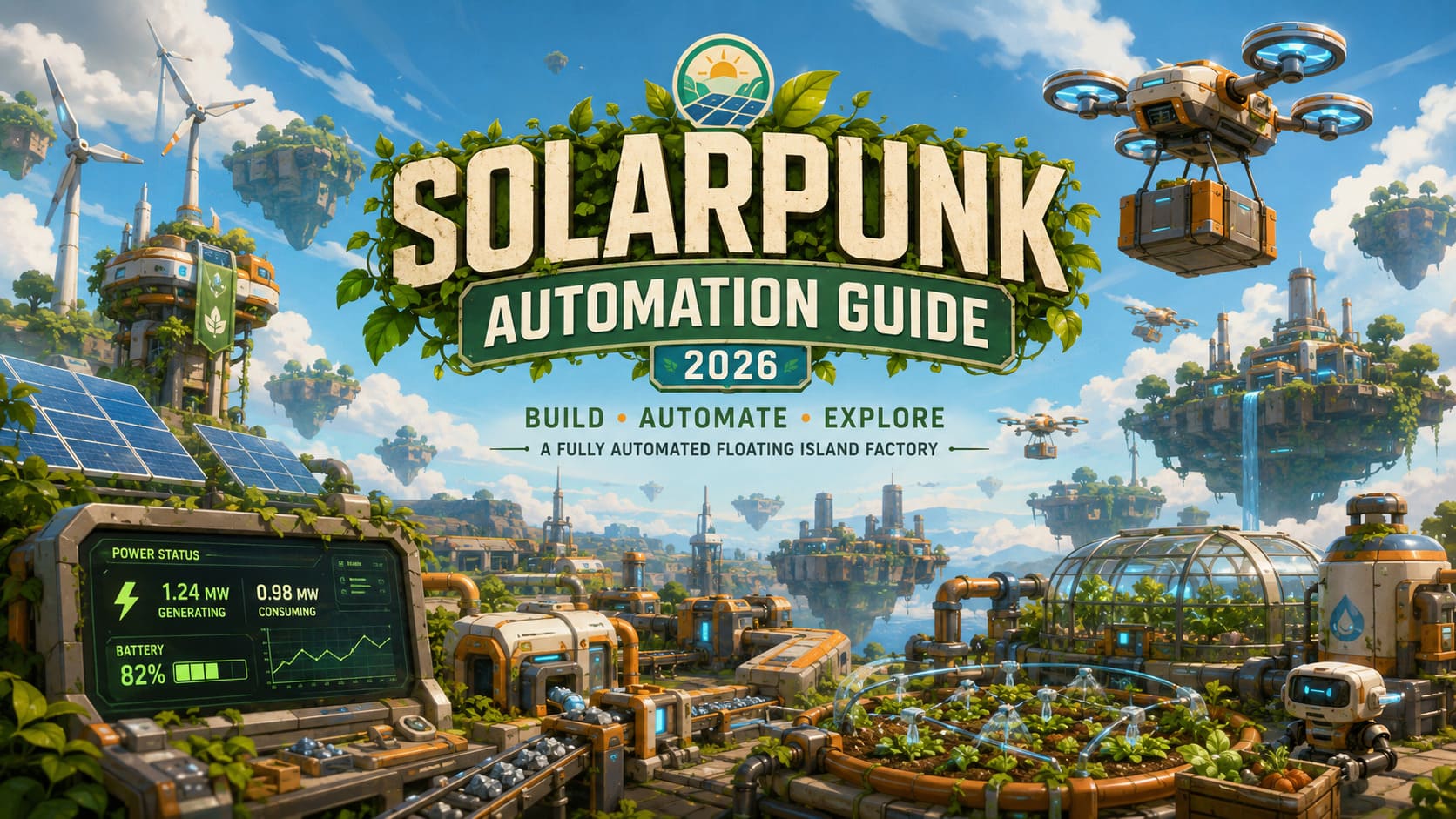
Automation solves this problem.
Once key systems become autonomous, you can focus on:
- Expanding your island network
- Unlocking advanced technologies
- Designing larger structures
- Exploring hidden locations
- Optimizing production efficiency
The biggest lesson I learned is that Solarpunk rewards players who automate early rather than waiting until the late game.
Building a Reliable Renewable Energy Grid
Everything in Solarpunk depends on electricity. No matter how advanced your factory becomes, it won’t function if your power generation cannot keep up with consumption.
One of the first mistakes I made was building machines faster than I expanded my energy production. The result was immediate: the entire network shut down.
To avoid this, I always monitor the balance between generation and demand.
Core Power Sources
| Power Source | Output | Notes |
|---|---|---|
| Solar Panel | 70W | Excellent daytime efficiency |
| Windmill | 210W | Strong continuous production |
| Generator | 120W | Requires fuel input |
| Battery | Storage | Supports power during shortages |
In my experience, windmills become the backbone of any serious automation network. Their consistent output makes them significantly more dependable than solar panels alone.
Solar panels are still worth building, especially early on, but relying exclusively on sunlight creates vulnerabilities during storms and nighttime cycles.
Why Batteries Are Essential
A surprising number of players underestimate batteries.
Batteries aren’t just backup storage. They act as stabilization devices for your entire infrastructure.
Whenever your production exceeds consumption, excess energy gets stored. During low-generation periods, batteries release that stored energy and prevent system-wide failures.
After adding multiple battery banks to my main island, blackouts became almost nonexistent.
Smarter Power Management
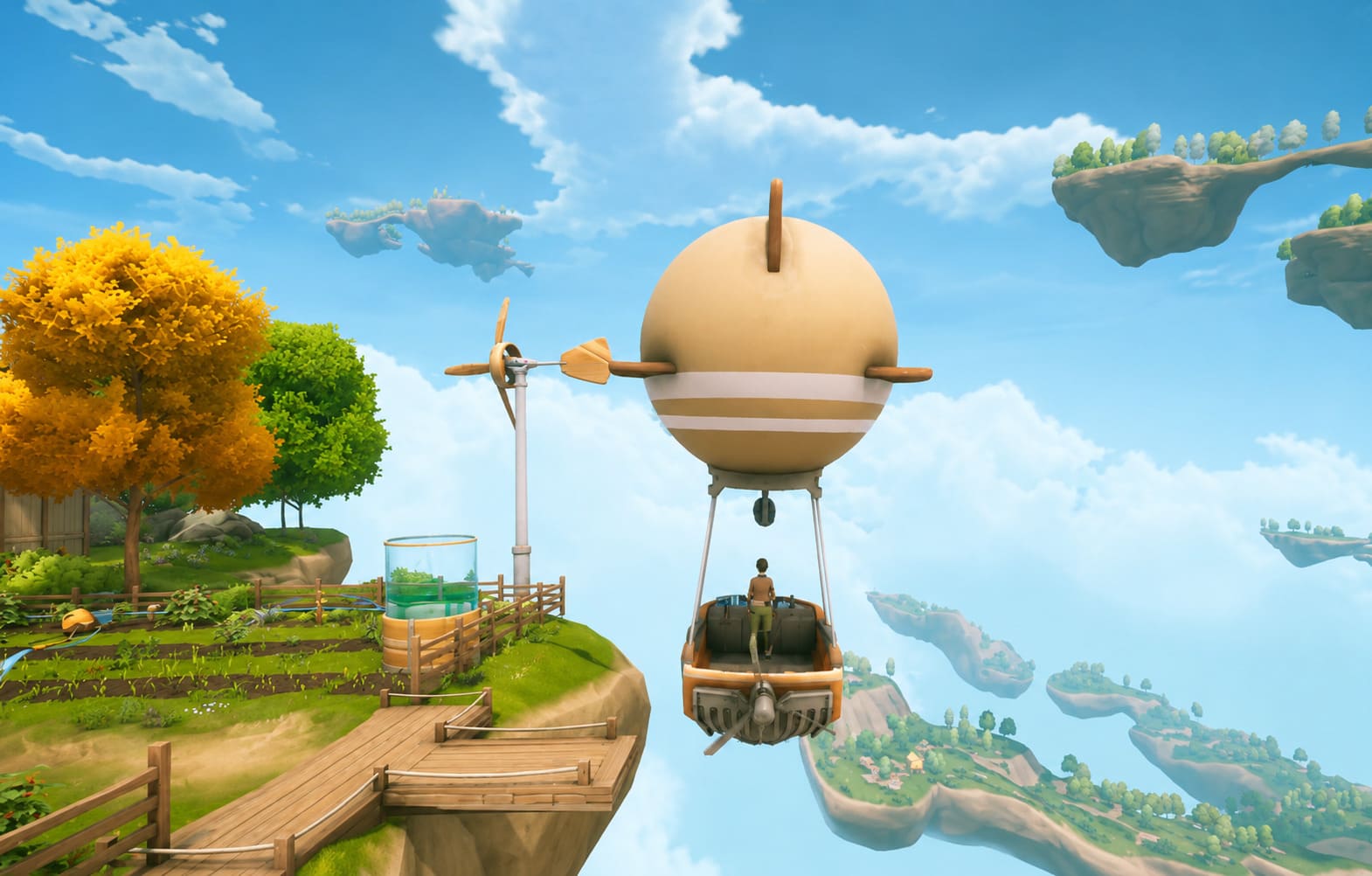
As my factory expanded, I discovered that controlling power distribution was just as important as generating energy.
Instead of keeping every machine active at all times, I created separate network zones.
For example:
- Farming systems
- Mining infrastructure
- Drone logistics
- Production facilities
This approach allowed me to activate specific sectors only when needed.
Installing switches throughout the base made troubleshooting dramatically easier. Whenever consumption suddenly spiked, I could quickly identify which section was responsible.
A network monitoring display also became one of my favorite quality-of-life upgrades. Watching real-time production statistics helped me spot inefficiencies before they became serious problems.
Automating Agriculture for Maximum Efficiency
Farming starts simple in Solarpunk, but eventually becomes one of the most time-consuming activities if left manual.
My first automation milestone involved eliminating hand watering entirely.
The Perfect Irrigation Setup
A basic automated farming network requires only a few components working together:
- Water collection system
- Sprinkler network
- Electrical connection
- Rain detection system
The rain detector deserves special attention.
At first, I ignored it because it seemed unnecessary. Later, I realized it significantly reduces both water and power consumption by disabling irrigation during natural rainfall.
It’s a small optimization, but over many in-game days, those savings add up.
Greenhouses Are More Important Than They Look
One thing that caught me off guard was how vulnerable crops can be to severe weather.
After losing an entire harvest during a storm, I started moving valuable crops into dedicated greenhouses.
The benefits are substantial:
- Better environmental control
- Protection from weather damage
- Improved farming organization
- Easier sprinkler placement
I especially recommend protecting cotton production. It becomes surprisingly important for multiple crafting chains later in the game.
The Farming Bots That Changed My Base
The moment I unlocked advanced automation technology, the game entered an entirely new phase.
Instead of maintaining crops manually, specialized bots took over.
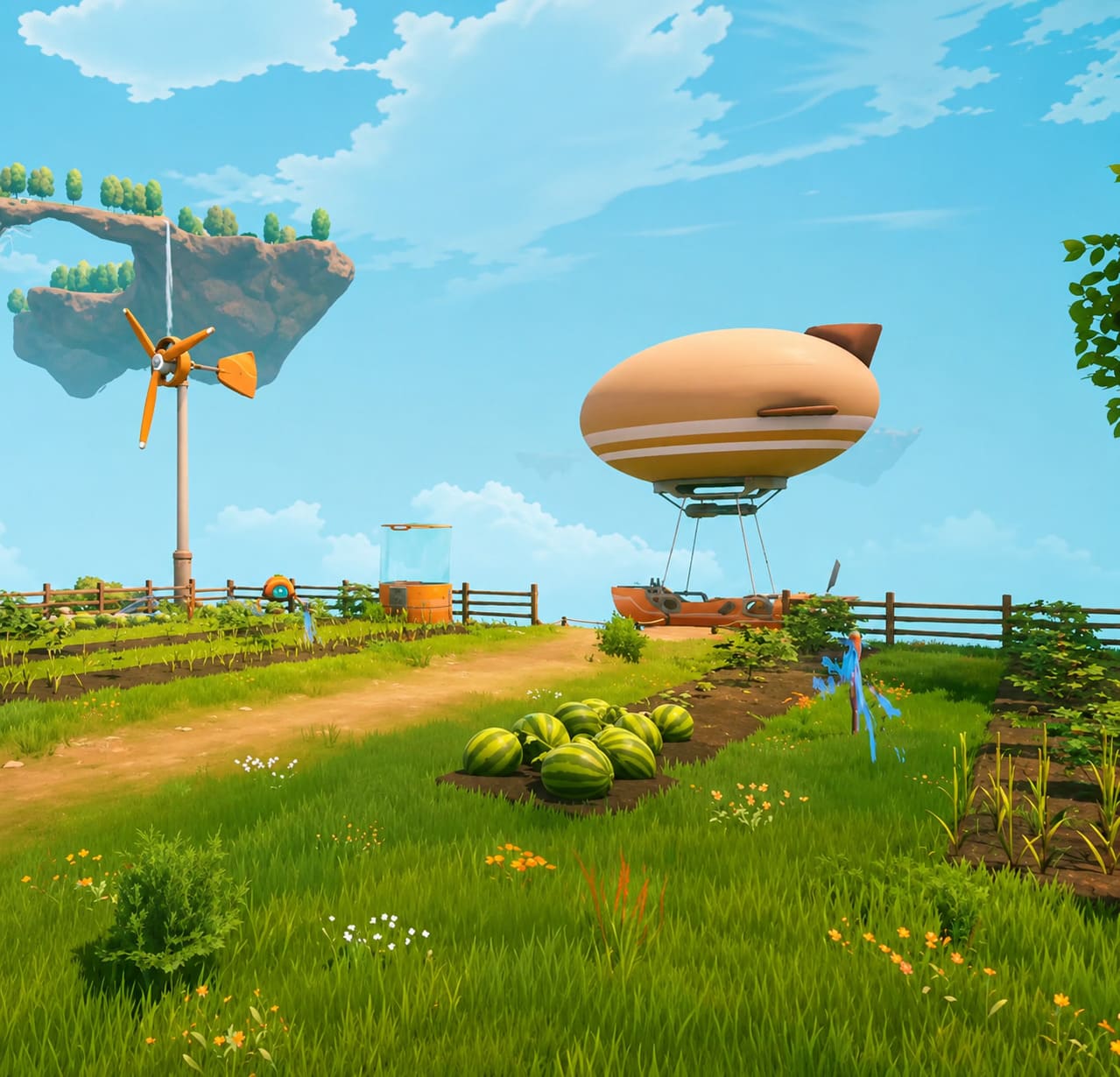
Farm Bots
Farm Bots automatically harvest mature crops and immediately replant new seeds.
This creates a continuous production cycle that requires almost no supervision.
The result is consistent food generation and resource production even while you’re exploring distant islands.
Forester Bots
Forester Bots might be my favorite automation tool in Solarpunk.
Place one inside a designated tree-growing zone and it will:
- Cut mature trees
- Collect wood
- Replant saplings
- Maintain the entire forest cycle
After setting up my first forestry area, wood shortages disappeared completely.
Watching an automated forest sustain itself feels incredibly satisfying and perfectly fits the game’s eco-friendly philosophy.
Creating Automated Mining Outposts
Eventually, every player reaches the point where local resources become insufficient.
Iron, copper, and advanced materials often require traveling to remote islands.
Doing this manually becomes tedious very quickly.
Instead, I recommend establishing permanent extraction sites.
My Standard Mining Outpost Design
Whenever I discover a valuable ore deposit, I build a simple but reliable setup.
| Component | Purpose |
|---|---|
| Electric Drill | Ore extraction |
| Solar Panels | Primary power |
| Battery | Backup storage |
| Storage Container | Resource buffering |
This configuration requires minimal maintenance while producing resources around the clock.
The best part is that once the system is operational, you rarely need to visit again.
Transport Drones Are the Real Endgame
If I had to choose a single feature that defines Solarpunk’s automation system, it would be transport drones.
Before unlocking them, I spent countless hours flying between islands carrying resources manually.
After deploying my first drone network, everything changed.
Why Drones Are So Powerful
Transport drones essentially eliminate logistics management.
They can:
- Travel between islands automatically
- Collect mined resources
- Deliver materials to storage
- Maintain supply chains without supervision
This creates a true automated economy where extraction and delivery happen continuously in the background.
I still remember the first time I returned from an exploration trip and discovered hundreds of ore waiting in storage. That moment made all the setup work worthwhile.
Upgrading Drone Capacity
One of the smartest upgrades available is expanding drone cargo space.
Increasing carrying capacity dramatically improves efficiency because:
- Fewer trips are required
- Resource throughput increases
- Power consumption becomes more efficient
- Large-scale mining operations become practical
Once upgraded, drones become the backbone of your industrial ecosystem.
Co-Op Automation Works Surprisingly Well
I spent some time playing Solarpunk with friends, and the cooperative experience exceeded my expectations.
The biggest advantage comes from specialization.
Instead of everyone performing the same tasks, assigning roles creates much smoother progression.
A typical team structure might include:
| Role | Responsibility |
|---|---|
| Energy Engineer | Power systems and infrastructure |
| Logistics Manager | Drones and storage organization |
| Explorer | Resource discovery and expansion |
| Builder | Base design and construction |
This division allows projects that would take hours alone to be completed in a fraction of the time.
Solarpunk Airship Guide 2026: How to Build and Upgrade Your Airship Fast
Final Thoughts: Solarpunk’s Most Addictive Feature
After spending significant time with Solarpunk, I don’t think the beautiful floating islands are what kept me playing.
What truly hooked me was the gradual transformation from survival gameplay into full-scale automation.
There’s something incredibly rewarding about standing on your island and watching every system function independently.
Windmills generate power.
Sprinklers maintain crops.
Bots harvest resources.
Drones move cargo between islands.
Meanwhile, you’re free to explore, build, and experiment without worrying about repetitive chores.
Few survival games manage to make automation feel this relaxing. Solarpunk succeeds because its systems encourage efficiency without sacrificing the peaceful atmosphere that defines the experience.
If you’re just starting out, focus on renewable energy first, automate farming as early as possible, and invest heavily in drone logistics. Those three decisions alone will accelerate your progression more than any other upgrades in the game.
For me, that’s where Solarpunk delivers its best moments—not when you’re working for your island, but when your island finally starts working for you.