Serious Sam Shatterverse Co-Op Guide: How to Play with Friends (2026)
If there is one thing I have always loved about Serious Sam, it is the sheer amount of chaos the series can throw at you. You are never really “safe.” There is always another horde coming from somewhere, something exploding in the distance, or a ridiculous enemy charging directly at your face.
Serious Sam Shatterverse takes that familiar formula and pushes it in a much more cooperative direction. Instead of simply running through a traditional linear campaign, the game is built around fast PvE runs, different versions of Sam Stone, shifting arenas, and a team of up to five players.
And honestly, this is probably the most interesting way to play the franchise with friends.
The basic idea is simple: gather your squad, choose your version of Sam, jump into a dimensional run, survive increasingly nasty encounters, collect upgrades, and make it back stronger than you were before. But once the difficulty starts climbing, blindly shooting everything that moves stops being enough.
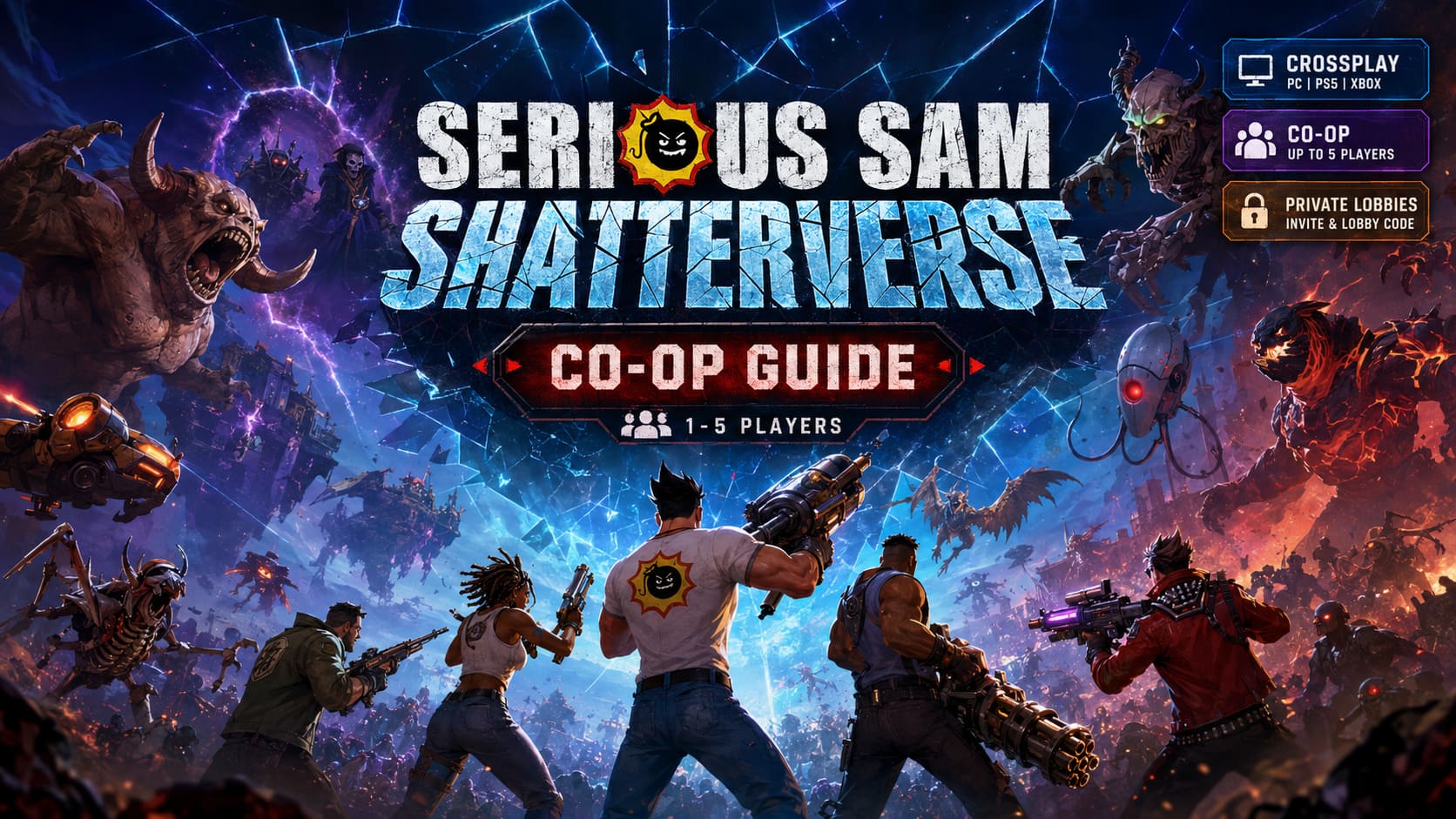
This Serious Sam Shatterverse co-op guide explains how multiplayer works, how to create a private lobby, how crossplay works, what each Sam variant brings to a team, and which strategies actually make sense when the screen is completely covered in enemies.
How Co-Op Works in Serious Sam Shatterverse
The first thing to know is that multiplayer isn’t available immediately. You need to get through the opening section of the game before the main social and preparation area becomes accessible.
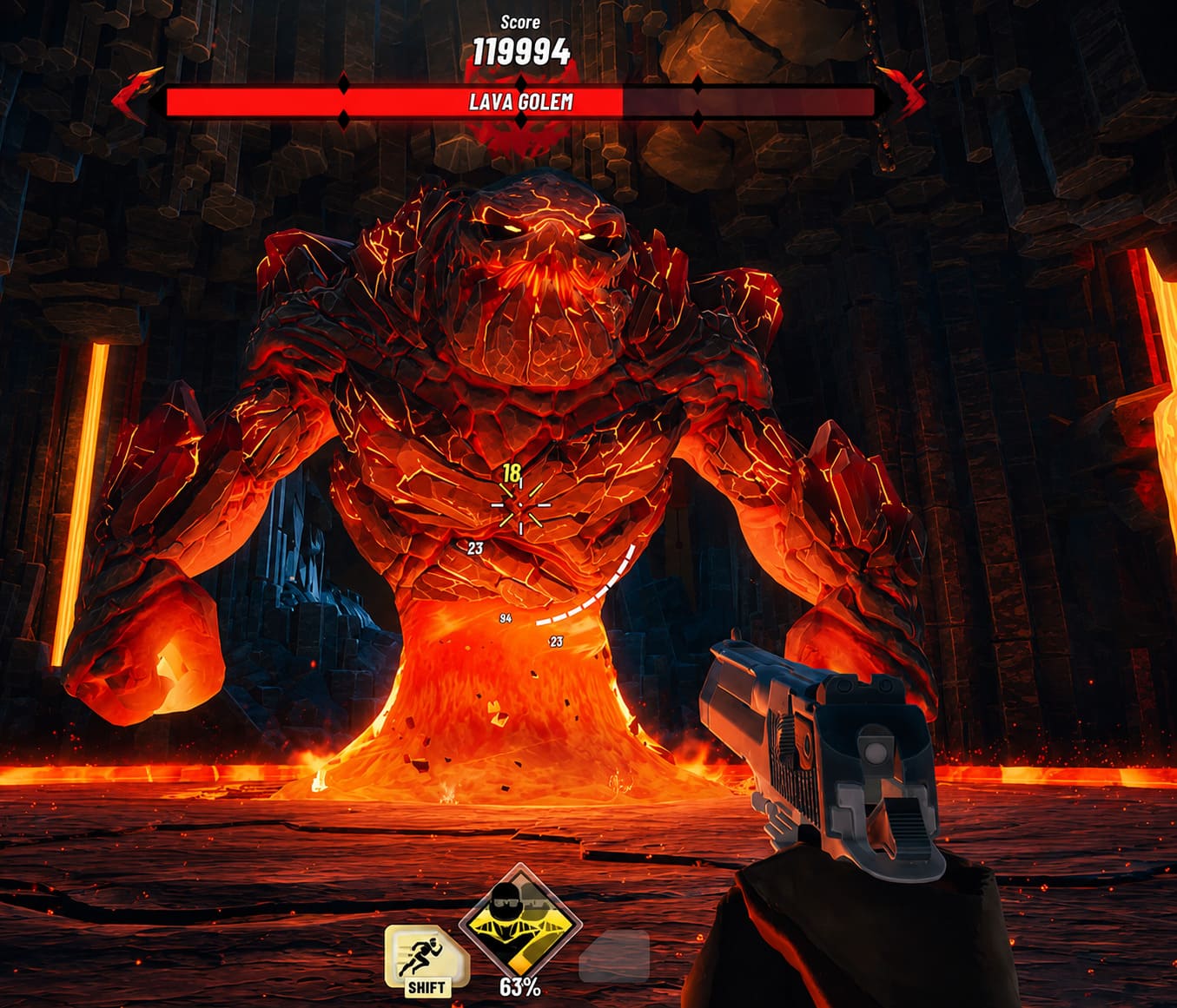
After completing the introductory sequence, you arrive at the Serious Program Command Center. This hub acts as your staging ground between runs. It’s where you’ll prepare your loadout, improve your character, select missions, and bring your friends together.
The game supports 1–5 players online, so you can technically experience everything alone, but Shatterverse clearly feels designed around cooperation.
Starting a Multiplayer Run
Getting a session going is straightforward:
- Finish the introductory tutorial and unlock the Command Center.
- Open the multiplayer or matchmaking interface.
- Choose Host Run.
- Set the lobby to Friends Only or Invite Only if you don’t want random players joining.
- Invite teammates through your platform’s friend system or use the in-game lobby code.
- Once everyone is ready, select your run and enter the next dimension.
The lobby system is particularly useful when everyone isn’t playing on the same platform. Instead of worrying about platform-specific friend lists, players can use the game’s universal social system to connect.
There is also a Lobby Code option for quickly getting people into the same session. If you’re playing with a group that is already chatting through Discord or another voice service, this is arguably the easiest method.
Serious Sam Shatterverse Crossplay Explained
One of the biggest advantages of Shatterverse’s multiplayer design is its cross-platform support.
The game supports multiplayer between PC, PlayStation 5, and Xbox Series X/S, allowing players on different systems to join the same squad.
That matters more than it might sound. Cooperative games live or die by their player population, and separating communities by platform is one of the fastest ways to make matchmaking painful.
For crossplay, players use a universal Behaviour Interactive account. Your Steam, PlayStation Network, or Xbox profile can be connected to this account, giving you an in-game identity that works across platforms.
Once linked, you can search for friends through their universal player identifier.
| Multiplayer Feature | Serious Sam Shatterverse |
|---|---|
| Online Co-Op | Yes |
| Maximum Players | 5 |
| Crossplay | PC, PS5, Xbox Series X/S |
| Private Lobbies | Yes |
| Friend Invites | Yes |
| Lobby Codes | Yes |
My advice: get everyone connected before starting a serious run. There is nothing worse than spending five minutes trying to solve everyone’s account settings while the rest of the squad is already impatient to start shooting.
The Five Sam Variants and Their Roles
The character system is where Shatterverse starts to feel considerably different from classic Serious Sam.
Instead of everyone simply being another version of the same protagonist, the different Sams are built around recognizable combat roles. You can still play aggressively with almost anyone, but choosing complementary characters becomes increasingly valuable at higher difficulties.
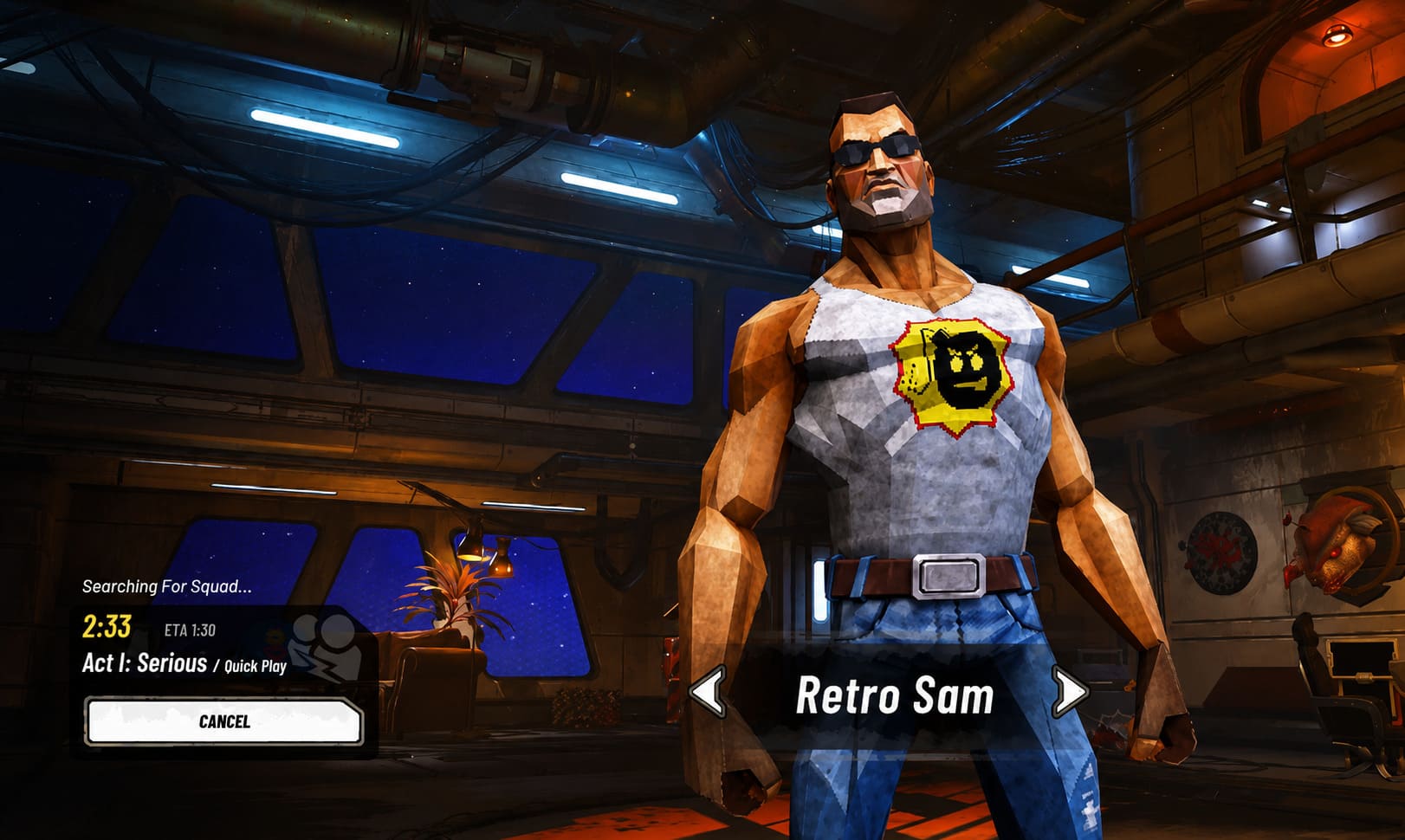
Retro Sam — The Reliable Frontliner
Retro Sam is the most familiar version of the character and arguably the easiest choice for players who simply want to get into the action.
He has a strong health pool and specializes in dependable kinetic weapons. His Ultimate, Decoy Sams, creates multiple holographic copies that attract enemy attention.
This is more useful than it sounds.
When a giant horde is approaching, those decoys can give the entire team a few precious seconds to reload, reposition, or revive someone. I would consider Retro Sam one of the safest choices for a group that is still learning the game.
Orphan Sam — Mobility Specialist
Orphan Sam takes a more mobile approach. Her enhanced dash gives her excellent repositioning potential, making her particularly useful against enemies that punish stationary players.
Her Razor Portal Ultimate creates a localized dimensional rift that releases spinning energy blades through enemy formations.
She works best for players who hate standing still. If your instinct in a shooter is to constantly move, dash and attack from different angles, this is probably your Sam.
Broken Sam — High-Risk Damage Dealer
Broken Sam is where things become considerably more dangerous.
His damage increases when his armor is completely depleted, turning an otherwise dangerous situation into a potential offensive advantage.
His Catalyst Beam is designed for serious single-target damage and is especially useful against bosses and elite enemies.
The catch is obvious: you need to understand the difference between deliberately playing around low armor and simply getting yourself killed.
A good Broken Sam player can carry damage-heavy encounters. A careless one will constantly need rescuing.
Alien Sam — Burst Damage Monster
Alien Sam is arguably the most ridiculous option of the bunch, and I mean that as a compliment.
His Quad Wield Ultimate temporarily gives him additional arms, allowing him to use four weapons simultaneously.
When you need something to disappear immediately, this is the kind of ability you want available.
The trick is not wasting it on enemies that your team can eliminate normally. Save it for massive waves, elites, or moments when a boss needs to lose a very large portion of its health bar very quickly.
Cartoon Sam — The Chaos Pick
Then there is Cartoon Sam.
His animated movement physics give him slightly different aerial behavior, but his real selling point is his Ultimate: Cannon.
Instead of firing a cannonball, Cartoon Sam launches himself from a giant pirate cannon and crashes into the battlefield, causing a huge explosion.
Is it practical? Yes.
Is it completely ridiculous? Also yes.
And honestly, that’s exactly what I want from a Serious Sam game.
Understanding the Shatterverse Roguelite Loop
The biggest adjustment for veterans is the structure of the game.
Shatterverse isn’t built around simply moving from one traditional campaign level to another. Instead, you’re repeatedly entering runs through different dimensions and combat arenas.
Between those runs, the Command Center gives you opportunities to improve your future attempts.
The hub contains several important systems:
| Hub Location | Main Purpose |
|---|---|
| Armory | Unlock weapons and modify starting equipment |
| Perk Station | Improve permanent character bonuses |
| Mission Board | Select upcoming runs and modifiers |
This creates a satisfying loop: run → collect resources → upgrade → start another run → push farther.
Personally, I prefer this structure when I’m playing co-op. A traditional campaign is great when everyone has time to commit to a long session, but roguelite runs make it much easier for a group of friends to jump in, play for a while, and try again later.
How to Survive Co-Op Runs
The biggest mistake I see players make in horde shooters is assuming that having more players means you can ignore teamwork.
It doesn’t.
More players also mean more enemies, tougher encounters, and more opportunities for the team to get scattered.
Don’t Waste Your Ultimates
This is probably the most important rule.
Don’t immediately activate every Ultimate just because the ability is available.
A much better approach is to chain abilities together.
For example, Retro Sam can use Decoy Sams to pull enemies toward a concentrated area. Once the horde is grouped together, another player can unleash a powerful area attack.
That creates much better value than five players independently using their strongest abilities against five different groups of enemies.
Give Players Different Jobs
Your squad should also avoid running identical loadouts.
A balanced team should ideally have players capable of handling both close-range crowds and distant threats. Shotguns, miniguns, and explosives are excellent for controlling ground-based hordes, while precision or long-range weapons help deal with flying enemies and targets that stay outside the main firefight.
You don’t need a rigid MMO-style class system. You simply need to make sure everyone isn’t doing exactly the same thing.
Share Resources
Ammo, armor, and health should be treated as team resources.
If someone is critically low on ammunition and another player is carrying a full supply, don’t greedily grab the next box just because it’s nearby.
This becomes especially important with characters whose effectiveness depends on particular resources. Keeping the right player supplied can make a much bigger difference than spreading everything evenly.
Dimensional Anomalies: Risk Versus Reward
The arenas also contain anomalies that can change the flow of a run.
Some dimensional events provide useful rewards such as temporary perks, stronger weapons, or other combat advantages. Others can trigger additional enemies, mini-boss encounters, or negative modifiers.
This is where communication becomes important.
Don’t activate mysterious anomalies without telling the rest of the team.
It sounds obvious, but in a game moving at Serious Sam speed, one player touching something interesting can turn a manageable arena into complete madness in seconds.
Sometimes that madness is worth it. Sometimes it isn’t.
How to Fix Serious Sam Shatterverse Crashing on Startup (Complete PC Guide)
Fixing Common Serious Sam Shatterverse Co-Op Problems
Multiplayer problems are never fun, especially when you’ve finally assembled four friends.
If you encounter a “Lobby Not Found” message, first check that the host’s session is actually configured for online play and isn’t accidentally restricted to local or offline functionality. Creating a new lobby code can also help if the previous session has become invalid.
If somebody gets disconnected during a run, check whether the Rejoin Active Run option is available. Shatterverse’s multiplayer structure allows disconnected players to return to an ongoing session rather than automatically losing the entire run.
For high latency or rubber-banding, the host’s geographical location can make a noticeable difference. When possible, select a server region that offers a reasonable connection for everyone. A player thousands of kilometers away from the host is naturally going to have a worse experience than someone playing nearby.
Serious Sam Shatterverse Lobby Invite Not Working Glitch: How to Fix Co-op Connection Errors
Final Thoughts
Serious Sam Shatterverse is at its best when you stop treating it like a traditional solo shooter and start treating it like a five-person demolition project.
You can absolutely jump in and shoot everything yourself. That’s still part of the fun. But the deeper systems reward players who pay attention to character abilities, resource management, positioning, and Ultimate combinations.
The five Sam variants give teams plenty of room to experiment, while the roguelite structure gives every run a reason to feel different. Crossplay is another major advantage, especially for groups split between PC and consoles.
And let’s be honest: there are few things more satisfying than watching one friend pull an entire horde into position while another unleashes a ridiculous Ultimate that turns the whole arena into a fireworks display.
That’s the kind of co-op chaos Serious Sam Shatterverse should be about.
Get your squad together, choose your Sams carefully, communicate when things get ugly, and don’t waste your best abilities on the first enemy wave you see. The Shatterverse is going to get very messy very quickly.