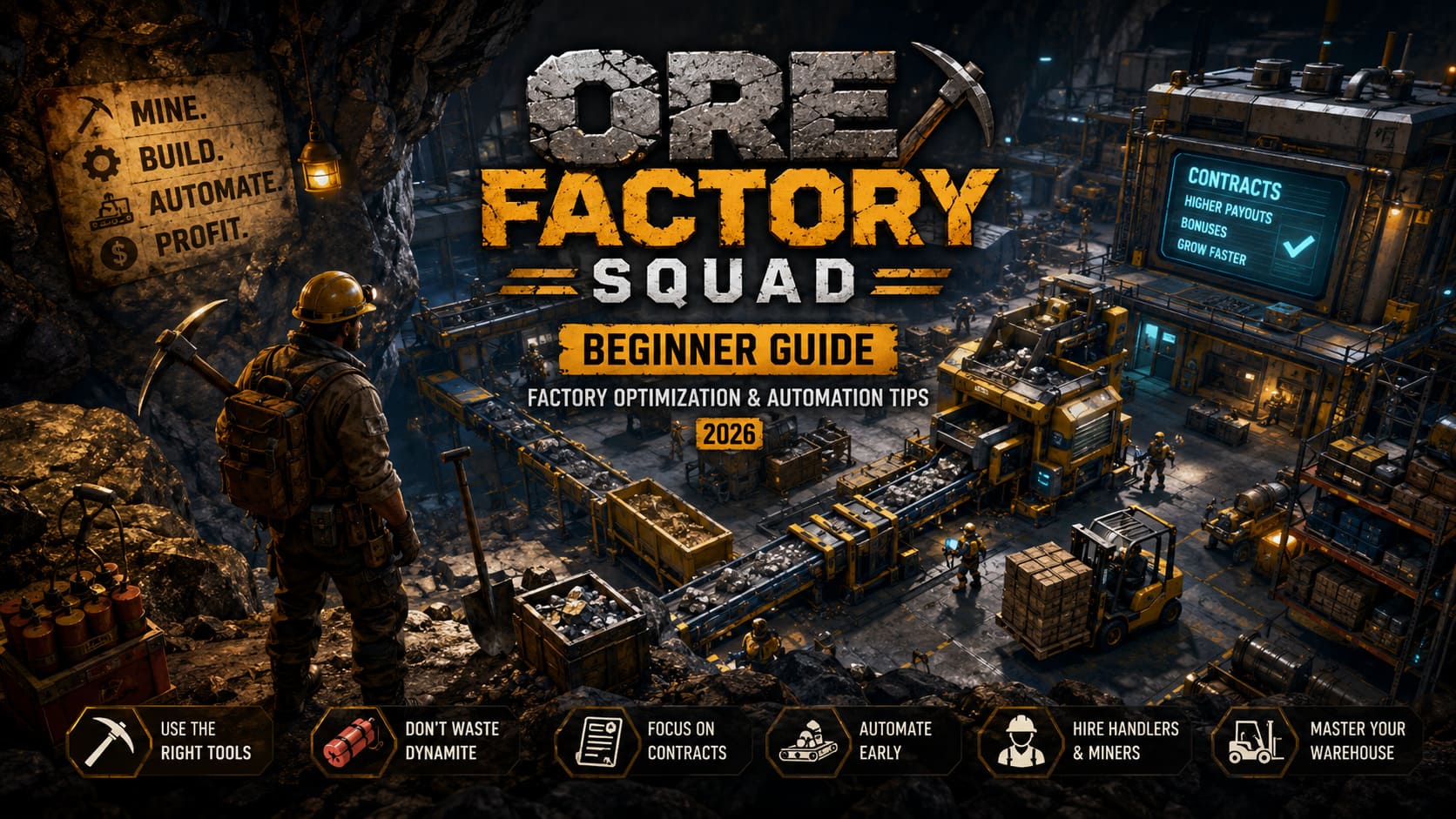
Ore Factory Squad Beginner Guide: Factory Optimization & Automation Tips (2026)
When I first launched Ore Factory Squad, I expected another casual mining simulator where you dig for resources, throw them into a machine, and watch numbers go up. A few hours later, I realized the game is much more ruthless than it looks. Every misplaced conveyor, every poorly accepted contract, and every unnecessary machine purchase slows your progress dramatically.
That’s exactly why the first several in-game days matter more than almost anything else.
Unlike many automation games that eventually forgive inefficient planning, Ore Factory Squad quietly punishes messy production chains. The difference between a carefully organized warehouse and a chaotic pile of machines isn’t just aesthetics—it’s the difference between expanding into multiple mining properties or constantly wondering where all your money disappeared.
After spending countless hours optimizing production lines, rebuilding factories from scratch, and experimenting with different automation approaches, I’ve found several strategies that consistently outperform the “build whatever fits” mentality.
If you’re starting fresh in 2026, this guide will save you a huge amount of time—and probably a few frustrating factory rebuilds.
Why Early Optimization Matters
Every successful operation in Ore Factory Squad follows one simple principle:
Keep resources moving.
The game revolves around three interconnected systems that constantly depend on one another.
| Gameplay Stage | Primary Goal | Biggest Beginner Mistake |
|---|---|---|
| Mining | Collect raw materials quickly | Digging inefficient tunnels |
| Processing | Convert materials into valuable products | Poor machine placement |
| Logistics | Complete contracts and earn money | Warehouse clutter and slow deliveries |
None of these systems works well in isolation.
You can mine thousands of resources, but if conveyors jam, profits stop.
You can build an incredible factory, but without enough materials, expensive machines simply sit idle.
The sweet spot is maintaining a continuous production flow where mining, refining, storage, and shipping operate almost automatically.
Learn Your Tools Before Buying Expensive Machines
The starting equipment may look basic, but it’s surprisingly effective when used correctly.
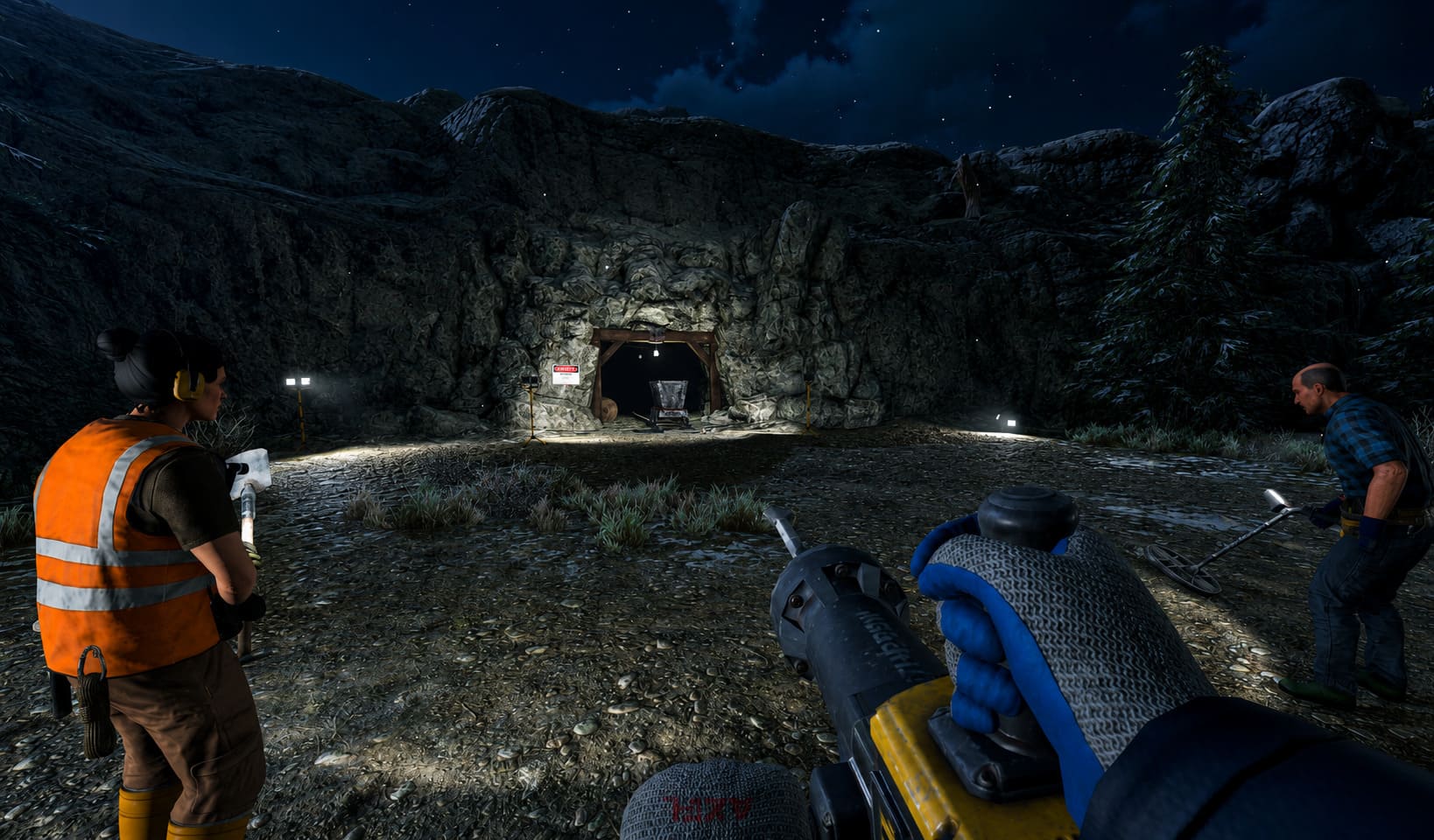
The Shovel Is Faster Than Most Players Think
Many beginners swing the pickaxe at everything they encounter.
That wastes both time and stamina.
The shovel excels at clearing:
- Dirt
- Loose soil
- Sand
- Large surface layers
Removing these softer materials quickly exposes the valuable stone deposits hiding underneath.
Think of it as preparing the battlefield rather than harvesting resources.
Save the Pickaxe for Hard Materials
Once rock becomes visible, switch immediately.
The pickaxe deals far more damage against:
- Stone
- Limestone
- Clay
- Mineral veins
Alternating between both tools dramatically increases mining speed.
It’s a small habit that keeps paying off during the entire game.
Don’t Waste Dynamite
Explosives feel amazing.
They’re also expensive.
I’ve seen plenty of new players throw dynamite into random dirt because explosions are satisfying.
That’s basically burning money.
Instead, reserve explosives for situations like:
- Massive rock walls
- Dense mineral clusters
- Areas slowing manual excavation
A well-placed blast can remove several minutes of repetitive mining.
A poorly placed one simply creates a bigger hole.
Also remember that your teammates aren’t immune to physics. Nothing kills productivity faster than accidentally launching your entire squad across the cave.
Contracts Beat Stock Sales Almost Every Time
The computer terminal offers two ways to make money.
Only one of them should become your primary income source.
Stock Sales
Stock sales provide instant cash.
They’re useful when:
- Storage becomes full
- You need emergency funds
- You’re just short of buying an important machine
The downside?
Market prices are heavily discounted.
Selling everything through stock sales feels convenient early on, but you’ll quickly notice how slowly your factory grows.
Contracts
Contracts require planning.
They ask for specific products within a deadline.
That sounds restrictive until you notice the rewards.
- Higher payouts
- Performance bonuses
- Far better long-term profitability
Before accepting anything, always check what resources your current property contains.
Mining mostly limestone?
Accept limestone contracts.
Found huge clay deposits?
Build around clay production.
Trying to force resources your mine barely produces usually creates unnecessary bottlenecks.
The Best First-Day Progression
If I had to restart from scratch today, my opening strategy would look almost identical every time.
Step One — Gather Everything Nearby
Ignore perfection.
Focus on volume.
Strip away surface dirt, expose stone deposits, and collect enough raw materials to keep your first machines working continuously.
Inventory management matters less than momentum during the opening hour.
Step Two — Keep Machines Close Together
Early factories don’t need beautiful layouts.
They need efficiency.
Position crushers and processors as close to storage as possible.
Every unnecessary trip carrying heavy resources slows progression.
Short walking distances compound into massive time savings over several hours.
Step Three — Organize Warehouse Space Immediately
One mistake nearly everyone makes is dropping finished products wherever there’s room.
That eventually becomes a nightmare.
Instead:
- Stack products neatly
- Reserve clear walking paths
- Place pallets inside storage zones
- Rotate machinery so outputs naturally land where they’re supposed to
Future-you will appreciate the organization.
Step Four — Rush Early Levels
Your first priority isn’t buying random decorations or experimental machines.
Reach the early player levels that unlock employee licenses.
The first automated workers completely change how the game feels.
Building Your First Automated Production Line
Manual transportation works…
…until it doesn’t.
Eventually you’ll spend more time carrying resources than actually mining them.
That’s the moment automation becomes essential.
A reliable beginner production line looks like this:
Raw Materials → Intake Hopper → Conveyor → Crusher → Conveyor → Processor → Conveyor → Pallet Storage
Simple.
Expandable.
Easy to troubleshoot.
Avoid unnecessary complexity until you’ve mastered the basics.
Machine Positioning Is More Important Than Machine Count
Buying extra equipment rarely fixes production problems.
Proper placement does.
Use the hammer tool frequently.
Rotate machines.
Adjust conveyor alignment.
Fix awkward output angles.
A single crooked machine can interrupt an otherwise perfect production chain.
I’ve rebuilt entire factories just because correcting one conveyor became more work than redesigning everything.
Why Handlers Are Worth Every Dollar
Hiring your first Handler feels almost magical.
Instead of constantly running back to refill machines, you can remain underground searching for valuable resources while automated workers keep production alive.
Handlers excel at:
- Feeding production machines
- Managing conveyor systems
- Preventing idle equipment
- Supporting warehouse logistics
Meanwhile, Miner employees continuously gather resources, reducing manual labor even further.
Once both roles begin working together, your factory starts behaving like an actual industrial operation.
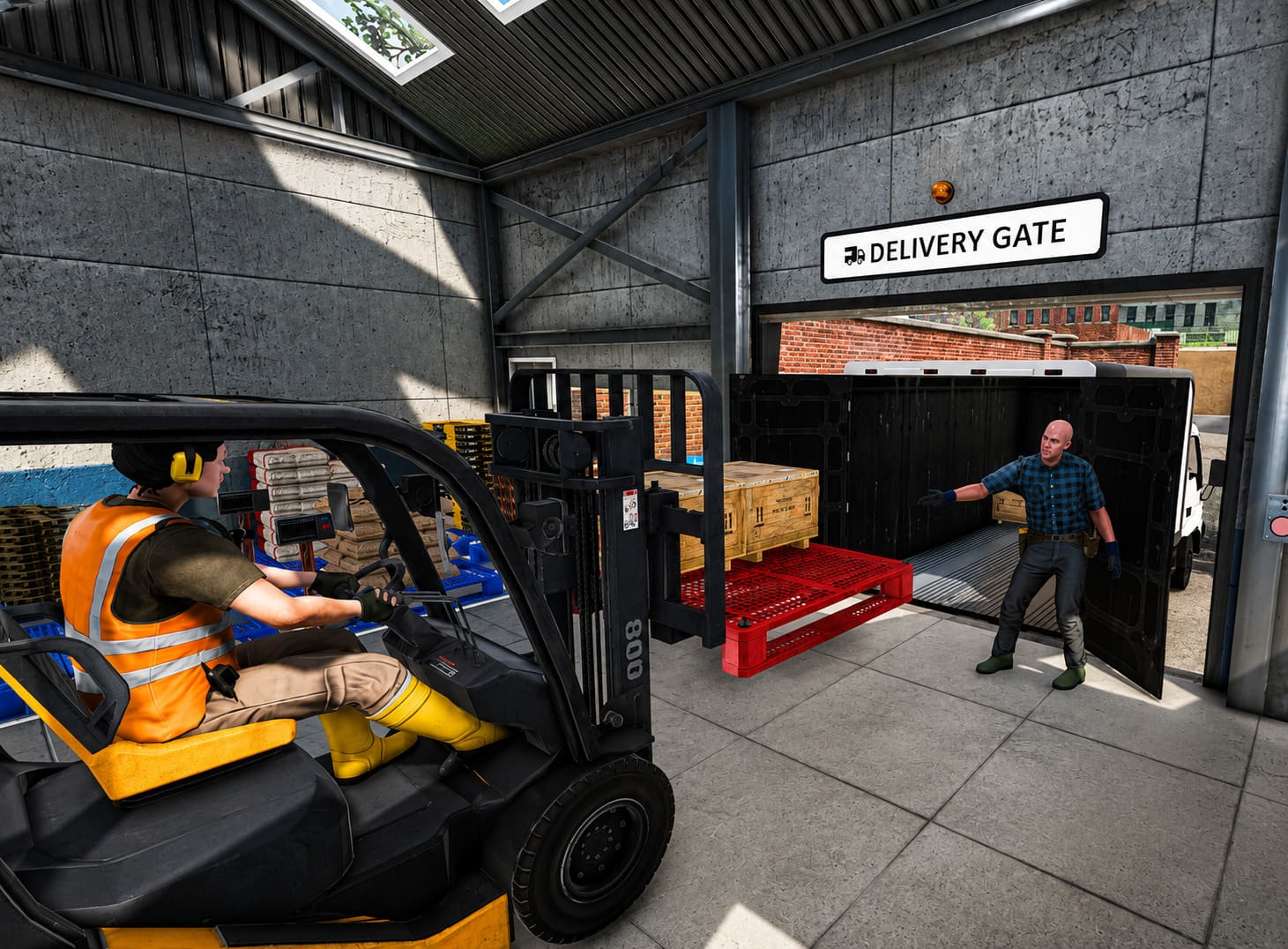
Master Forklift Operations
The forklift seems simple.
It isn’t.
Physics can become surprisingly unforgiving.
Always approach pallets slowly and from the center.
Turning sharply with elevated cargo often flips entire loads across the warehouse floor.
That might look hilarious once.
Not after your twentieth contract shipment.
Keeping warehouse lanes clear also helps avoid expensive accidents.
Think like a warehouse manager rather than a demolition driver.
Deliver Contracts Without Costly Mistakes
Before sending any truck away, double-check everything.
Confirm:
- Correct products
- Required quantities
- Proper pallet placement
- Active contract selection
Missing even one pallet usually means another unnecessary delivery cycle.
Those delays become increasingly painful on higher-paying contracts with tighter deadlines.
Veteran Tips That Make a Huge Difference
After dozens of factory expansions, a few habits consistently produce better results.
| Optimization Tip | Why It Works |
|---|---|
| Search every tunnel carefully | Hidden valuables sell for excellent money. |
| Buy land based on resource quality | Better deposits outperform cheap properties. |
| Inspect production lines regularly | Small conveyor jams become major bottlenecks. |
| Upgrade belts before buying more machines | Faster logistics improve every production stage. |
| Divide responsibilities in co-op | Specialized players outperform everyone doing everything. |
Rare collectibles hidden underground deserve special attention.
Selling valuable artifacts can generate enough money to fund significant factory upgrades much earlier than expected.
Never ignore unusual objects buried inside cave walls.
Ore Factory Squad Resources Full List: Guide to All Ores, Processing Chains, and Products (2026)
The Best Multiplayer Strategy
Ore Factory Squad truly shines with friends.
Trying to perform every job yourself eventually becomes exhausting.
Instead, assign clear responsibilities.
- One player should remain underground mining.
- Another manages forklifts and deliveries.
- The remaining teammates can focus entirely on factory optimization, machine placement, expansion, and troubleshooting.
Specialization keeps everyone productive while dramatically reducing idle time.
Communication becomes just as valuable as better equipment.
Ore Factory Squad Dig Sites Guide: Complete 4 Sites & Ore List (2026)
Final Thoughts
Ore Factory Squad isn’t simply about digging deeper.
It’s about building smarter.
The game constantly rewards players who think several steps ahead instead of chasing quick profits. Careful warehouse organization, intelligent contract selection, efficient conveyor placement, and early automation create an industrial ecosystem that practically runs itself.
Resist the temptation to sell everything immediately for fast cash. Build around the resources your current property naturally provides, invest in Handlers as soon as they’re available, and keep every conveyor serving a clear purpose. A tidy factory may not look flashy at first, but hours later you’ll be processing materials faster, completing contracts with ease, and expanding into richer mining sites while less organized players are still untangling production bottlenecks.
The best factories aren’t always the biggest—they’re the ones where every machine, belt, worker, and pallet has a job. Once your operation reaches that point, the satisfying loop of mining, refining, and shipping becomes incredibly addictive, and watching a perfectly optimized production line run at full speed is one of the most rewarding experiences Ore Factory Squad has to offer.