Last Pirates Die Together Co-Op Guide: How to Play With Friends and Survive Cursed Islands
Last Pirates: Die Together is exactly the kind of multiplayer game I tend to lose entire evenings to. It looks ridiculous on the surface, and honestly, that is part of the appeal. You have pirates with floppy arms, cursed islands, bizarre monsters, heavy furniture, treasure carts that seem to have a personal grudge against you, and a resurrection system that basically asks your friends to put your butt back where it belongs.
But underneath all that chaos is a surprisingly tense co-op extraction game.
Developed by RetroStyle Games, Last Pirates: Die Together entered Steam Early Access on August 18, 2026, following public playtests that attracted more than 205,000 players. The formula is familiar if you’ve played games such as Lethal Company, R.E.P.O., or PEAK: enter a dangerous location, grab everything valuable that isn’t nailed down, panic when something starts chasing you, and somehow make it back alive.
The difference is the pirate theme and the game’s wonderfully stupid physics.
After spending time with this kind of gameplay, my biggest piece of advice is simple: don’t treat Last Pirates like a normal horror game. Treat it like a team sport where everyone is slightly incompetent. The best runs aren’t necessarily the ones where nobody makes mistakes. They’re the ones where the crew can recover when everything inevitably goes wrong.
What Makes Last Pirates: Die Together So Much Fun?
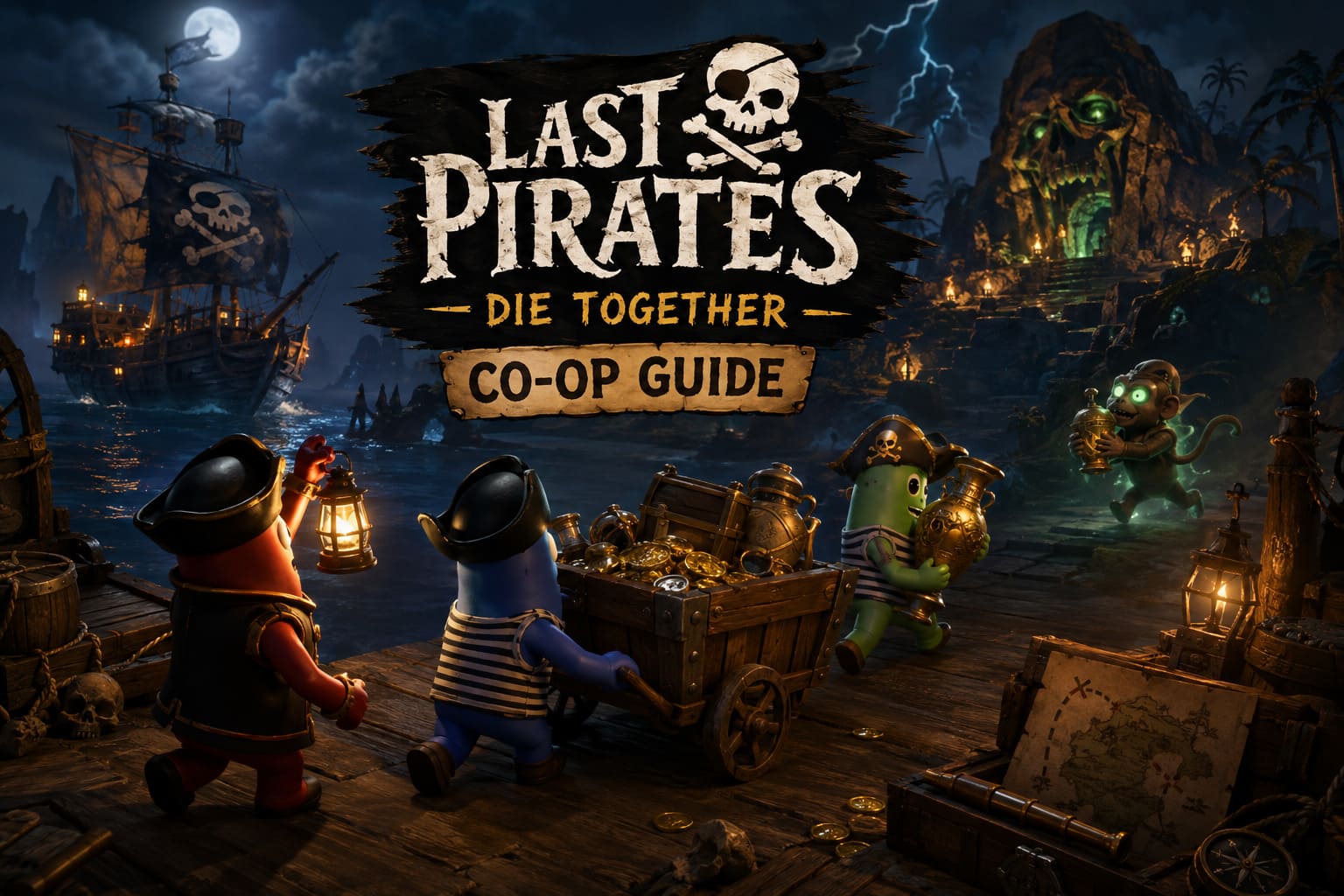
The basic premise is straightforward. A pirate captain sends your crew to cursed islands because, naturally, he wants more money. You and up to three other players explore procedurally generated locations, collect valuables, avoid monsters, and return the loot to your ship before the situation becomes completely unmanageable.
There is a financial quota hanging over every expedition. That changes the way you approach exploration.
You can’t simply wander around looking for the biggest treasure forever. At some point, you have to decide whether another room is worth the risk. That decision is where much of the tension comes from.
And then the physics kick in.
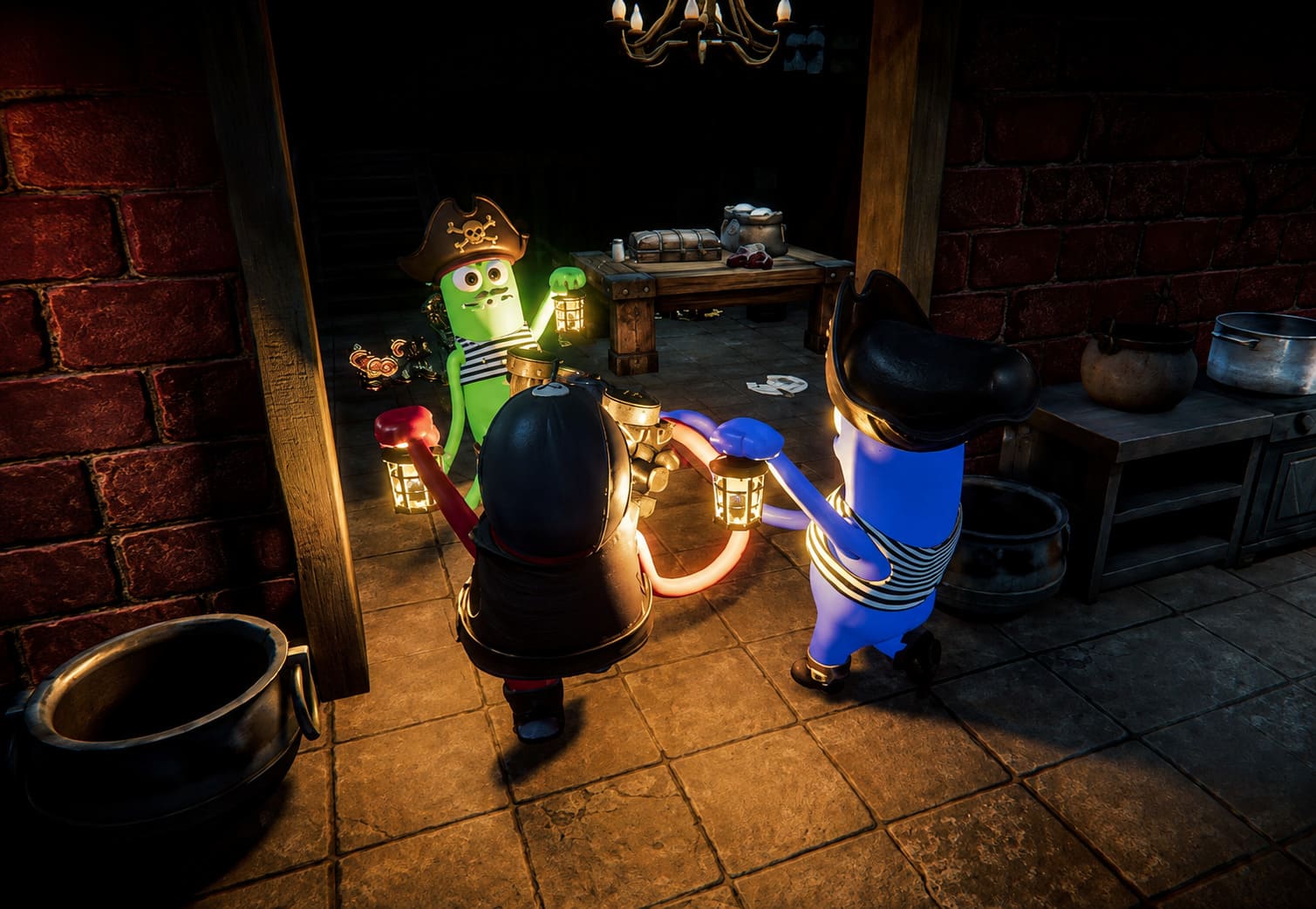
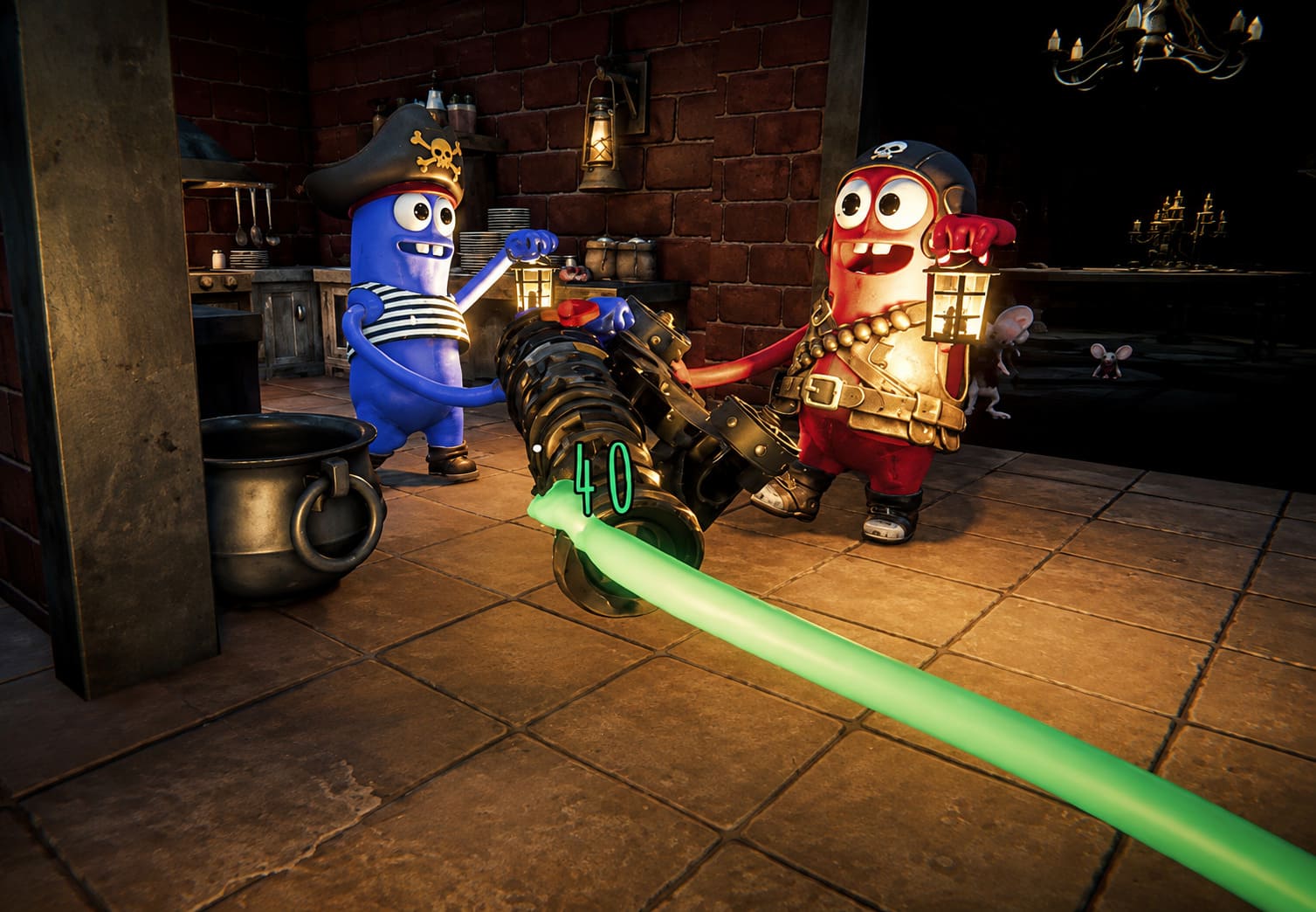
Your pirate’s arms are ridiculously elastic and surprisingly useful. You can grab objects from awkward angles, manipulate doors, drag furniture, pick up treasure, and generally make a mess of the environment. Large objects often require two or more players, which creates some genuinely funny situations.
I’ve had enough experience with physics-based co-op games to know one thing: the physics engine will eventually become your greatest enemy.
A monster might not kill you. Your friend trying to rotate a cart around a doorway might.
Last Pirates Co-Op Multiplayer: How to Play With Friends
The game supports crews of up to four players, and co-op is clearly where Last Pirates: Die Together feels most natural.
Solo play can work, but the difficulty and mechanics are much easier to manage when everyone has another pirate watching their back.
| Multiplayer Feature | What It Means |
|---|---|
| Player Count | 1–4 players |
| Game Type | Co-Op Extraction Horror |
| Voice Chat | Proximity and Directional Audio |
| Lobby Options | Public or Private |
| Communication | Voice, Text, and Emotes |
| Core Objective | Loot, Survive, Extract |
Before launching a session, make sure everyone is using the same matchmaking region. Connection problems are never fun, but they are especially annoying when you’ve already convinced three friends to spend their evening getting eaten by monsters.
From the main terminal aboard your pirate ship, select Host Game. You can open the lobby publicly or keep it private for your regular crew.
Friends can join through Steam’s social features, while players using private sessions can rely on the session code or in-game matchmaking options.
Communication Is More Important Than You Think
This is where I think Last Pirates gets particularly clever.
The proximity voice system isn’t just there so everyone can scream after seeing a monster. Certain creatures can react to sound, which means your microphone can effectively become another gameplay mechanic.
If you’re all shouting constantly, you’re making yourselves easier to find.
Sometimes silence is genuinely the smarter strategy.
There is also a nasty psychological trick involving one of the game’s enemies: the Mimic.
The Mimic Can Use Your Own Voice Against You
The Voice-Recording Mimic is one of the coolest ideas in the game.
It can capture short pieces of your voice chat and play them back later. Imagine hearing your friend call your name from another room, walking toward them, and realizing about five seconds too late that your friend has actually been standing behind you the entire time.
That is the sort of horror I enjoy because it doesn’t rely entirely on cheap jump scares.
The best counter is basic but effective:
- Stay within visual range of your teammates whenever possible.
- Don’t blindly follow a voice coming from another room.
- Confirm a player’s location before separating from the group.
- Use voice communication strategically when dangerous creatures are nearby.
If someone suddenly says, “Come here, I found something,” check where they actually are before sprinting into a dark corridor.
Trust is important.
Verification is better.
Understanding the Looting Loop
Every expedition follows roughly the same structure, and learning this loop is the key to making consistent progress.
1. Prepare on the Ship
Before leaving, check your equipment and decide what the crew actually needs.
Don’t waste your entire budget on flashy items if you’re still struggling to reach the quota. Utility gear and defensive equipment can be far more valuable than something that simply looks cool.
2. Enter the Island
The environments are procedurally generated, so memorizing one route isn’t enough.
You’ll encounter different room layouts, treasure locations, hazards, and monster encounters. That unpredictability is one of the reasons repeated runs remain entertaining.
3. Secure Valuable Loot
Look for chests, gold, antique furniture, golden teeth, and other high-value objects.
Some treasures are incredibly heavy, which creates a problem: valuable doesn’t always mean practical.
A huge piece of furniture may technically be worth more than several small objects, but if carrying it turns your entire team into slow-moving targets, the theoretical value becomes less important.
4. Extract Before Greed Wins
This is the part where most crews fall apart.
You find one more valuable item.
Then another.
Then someone says, “We can probably grab one more.”
And suddenly the entire team is running for the ship while a monster is chasing them and someone has dropped half the loot into a ravine.
Know when to leave.
How the Elastic Arms and Physics Actually Change Combat
The wobbly arms aren’t just a visual joke. They completely change how you interact with the environment.
Small objects can generally be carried by one player, while heavier treasures may require multiple crew members.
That creates a natural reason to stay together.
You can also use carts to transport larger quantities of loot, but don’t assume a cart automatically solves everything.
It absolutely can make things worse.
Uneven ground, narrow passages, obstacles, and awkward angles can send your carefully collected treasure flying in every direction.
My preferred strategy is to have one player pull while another helps guide the cart. It takes longer than blindly dragging it around, but losing an entire haul because the cart flipped over is one of those mistakes you only make once.
Usually.
Stamina Management Is Critical
Carrying heavy objects consumes stamina. When your stamina runs out, you can become vulnerable and potentially drop what you’re carrying.
This means the strongest player isn’t necessarily the player carrying the biggest object.
Sometimes the smartest move is to make several smaller trips.
If your crew is deep inside a dangerous area and everyone is exhausted, you’re basically asking the monsters to come collect their dinner.
A good rule is:
If your stamina is getting low and you’re far from the ship, stop collecting and start extracting.
Gold isn’t worth much if it’s sitting next to your corpse.
Monsters and Hazards: How to Stay Alive
The islands are designed to punish careless movement.
Some enemies respond to sound. Others rely on ambushes, environmental advantages, or simply overwhelming players when they become separated.
There are also traps that can punish reckless exploration, including pressure plates, swinging hazards, pits, and other environmental surprises.
And then there are the treasure thieves.
The Ghostly Monkeys
These little nightmares aren’t necessarily trying to kill you.
They want your stuff.
Ghostly monkeys can steal treasure from players, which means even a successful expedition can become frustrating if you aren’t paying attention.
If you spot one, protect the loot rather than immediately chasing it into an unknown area. Getting greedy and following a thief into a trap is exactly the sort of chain reaction this game loves.
Cursed Loot Is Not Always Worth Picking Up
One of the biggest mistakes new players can make is assuming that every valuable object should immediately go into someone’s hands.
Some items carry curses that can affect movement, controls, health, or enemy behavior.
A suspicious glowing artifact sitting conveniently in the middle of a room is rarely a gift.
Before grabbing something unusual, make sure the rest of the crew knows what you’re doing.
One player should be ready to cover the carrier while another keeps an escape route open.
The value of the item matters.
Your survival matters more.
The Butt Slap Resurrection System Is Weirdly Brilliant
This is probably the mechanic everyone talks about after playing Last Pirates: Die Together.
Death doesn’t necessarily mean the end.
When a pirate dies, their body can separate into pieces, including the infamous rear end. A surviving teammate can pick up the detached part, bring it back to the rest of the body, and physically reconnect everything.
Then comes the slap.
Yes, you revive your friend by basically putting their butt back on and smacking them back into existence.
It’s stupid.
It’s hilarious.
And surprisingly useful.
The mechanic also creates an important strategic rule: don’t immediately abandon a dead teammate.
If they’re somewhere relatively accessible, retrieving their body parts may be worth the risk. But if the corpse is sitting in the middle of a monster-infested nightmare zone, you need to decide whether the rescue attempt could kill another player.
A dead teammate is unfortunate.
Three dead teammates because everyone attempted the rescue at once is considerably worse.
Best Co-Op Strategies for Making More Gold
Once your crew understands the basics, you can start optimizing your runs.
Give Everyone a Job
Four players wandering around independently is usually less effective than a coordinated team.
A simple setup works well:
- Scout: Checks routes and watches for threats.
- Looters: Focus on collecting valuable items.
- Guard: Carries defensive equipment and watches the group.
- Carrier: Manages the cart or heavier treasure.
You don’t have to follow these roles rigidly, but having responsibilities prevents everyone from doing the same thing.
Create Temporary Loot Stashes
If you’ve cleared a safe section of the map, consider creating a temporary pile of loot there.
Instead of making ten dangerous trips back to the ship individually, collect valuables in one relatively safe location and transport them together.
This is especially useful when dealing with heavy objects.
Just don’t forget where you put everything.
I’ve played enough scavenging games to know that “we’ll remember where we dropped it” is famous last words.
Don’t Let Greed Control the Run
The best extraction players aren’t the ones who grab the most loot.
They’re the ones who know when to stop.
If you’ve already reached your quota and the island is becoming increasingly dangerous, leave.
There will always be another run.
There will not always be another life.
Last Pirates: Die Together Gameplay Guide and PC System Requirements (2026)
Is Last Pirates: Die Together Better With Friends?
Absolutely.
The solo mode has its place, especially if you want to learn the mechanics without having three friends yelling in your ear, but the multiplayer design is clearly the star.
The elastic physics become funnier with more players. Heavy objects require coordination. Monsters become harder to predict when people split up. The Mimic becomes significantly more dangerous when everyone is communicating through voice chat.
And when someone dies?
Well, somebody has to go retrieve their butt.
That alone tells you what kind of game this is.
Final Verdict: A Co-Op Horror Game Built for Chaos
Last Pirates: Die Together doesn’t try to reinvent cooperative horror from scratch. Instead, it takes familiar extraction mechanics and mixes them with pirate comedy, unpredictable physics, cursed treasure, voice-based enemies, and some wonderfully ridiculous teamwork mechanics.
For me, that’s exactly why it works.
The horror gives the expedition tension, but the physics and player interactions create the stories you’ll actually remember. One run might end with a successful extraction carrying a mountain of treasure. The next could end because somebody pushed a cart into a wall, screamed into their microphone, attracted a monster, dropped the loot, and died five feet from the ship.
That’s the charm.
If you’re playing with friends, stay together, manage stamina, listen carefully, watch suspicious loot, and don’t blindly trust voices coming from dark rooms. Assign roles, use carts intelligently, and know when the treasure you’ve found is already enough.
Because the fundamental rule of Last Pirates: Die Together is incredibly simple:
The island wants your gold. The monsters want your crew. And your friends will probably accidentally kill you before either one gets the chance.