Island Beekeeper Queen Bee Guide: Ultimate Care, Spawning, and Crossbreeding Tips (2026)
When I first launched Island Beekeeper, I expected another relaxing farming simulator where I’d casually plant flowers, collect honey, and admire floating islands while listening to calming music. About ten hours later, my peaceful little apiary had turned into a genetics laboratory, every hive was carefully organized, and I was obsessing over Queen traits like I was min-maxing an MMO raid build.
That’s the moment I realized something a lot of new players miss.
The Queen Bee isn’t just another unit inside your hive—she’s the engine that powers your entire economy. One weak Queen can bottleneck dozens of worker bees, while a properly managed bloodline can completely transform your floating islands into an automated honey empire.
After spending countless hours experimenting, comparing results with other dedicated players, and testing different breeding setups, these are the strategies that consistently deliver the strongest colonies.
Why Queen Bees Matter More Than Anything Else
Every productive hive starts with one healthy Queen.
Worker bees gather pollen.
Drones pass down genetics.
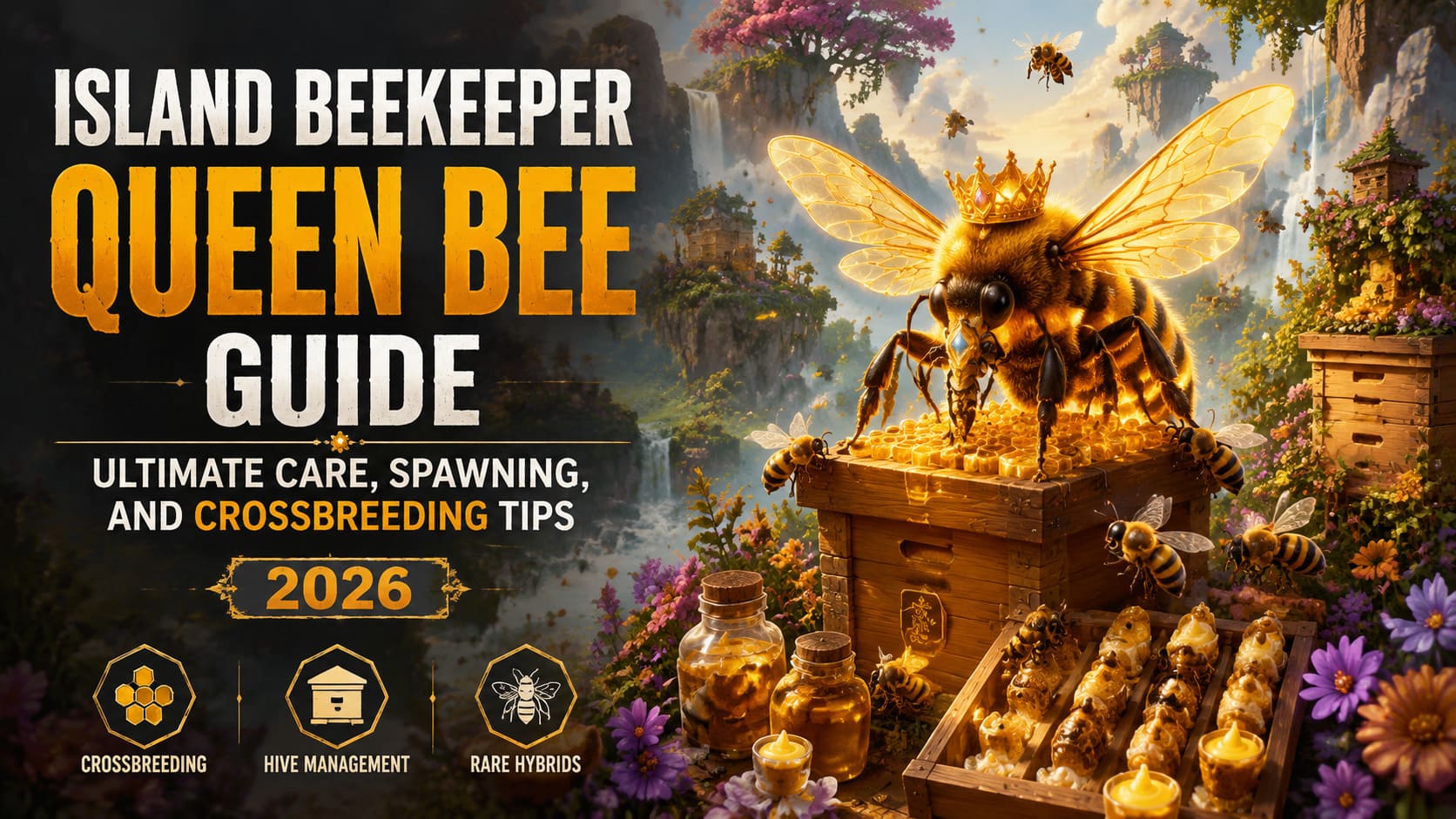
The Queen controls almost everything else.
She determines colony growth, breeding potential, production speed, and even how efficiently your bees survive in different environments. Lose a Queen and your hive doesn’t simply slow down—it practically falls apart.
The biggest mistake beginners make is treating Queens like disposable resources.
Don’t.
Think of each high-quality Queen as a long-term investment. The better her traits, the easier every other system becomes later in the game.
Understanding Queen Statistics
Not every Queen is created equal, even if two of them belong to the same species.
The most valuable characteristics include:
| Trait | Why It Matters |
|---|---|
| Lifespan | Longer-lived Queens reduce replacement downtime. |
| Spawn Speed | Produces workers and drones much faster. |
| Mutation Chance | Increases odds of discovering valuable hybrids. |
| Environmental Resistance | Maintains productivity across difficult island climates. |
Personally, I prioritize Spawn Speed over everything else early on.
More workers means more pollen.
More pollen means more honey.
More honey means faster upgrades.
Everything snowballs from there.
Finding Wild Queen Bees Efficiently
Expanding your genetics requires hunting wild colonies across the floating islands.
Fortunately, they’re not especially rare once you know what you’re looking for.
Typical spawn locations include:
- Ancient sky trees
- Cliff overhangs
- Hanging flower clusters
- Large biome-specific hive structures
Later regions introduce specialized colonies with much stronger genetic traits, making exploration incredibly rewarding.
One interesting mechanic many players discovered is that moving too quickly can actually reduce successful wildlife spawning.
If you’re constantly boosting around with the Medocycle, certain hives simply won’t appear until the area fully loads.
Walking the final stretch instead of speeding through often produces much better results.
It sounds strange, but after testing multiple routes, I noticed the difference myself.
Never Raid a Hive Without Preparation
Greed gets punished surprisingly hard.
Running into a wild hive without equipment usually ends with an angry cloud of workers chasing you across half the island.
Before harvesting any colony, I always carry:
- Smoker
- Bug Repellent
- Insect Net
The Smoker temporarily calms defensive bees, while Bug Repellent greatly reduces swarm aggression.
Once the hive opens, the Queen slowly leaves the structure.
Don’t hesitate.
Catch her immediately before she disappears into the clouds.
Missing one feels terrible.
Building the Perfect Home Hive
Bringing a Queen home is only the beginning.
Keeping her productive is where experienced players separate themselves from everyone else.
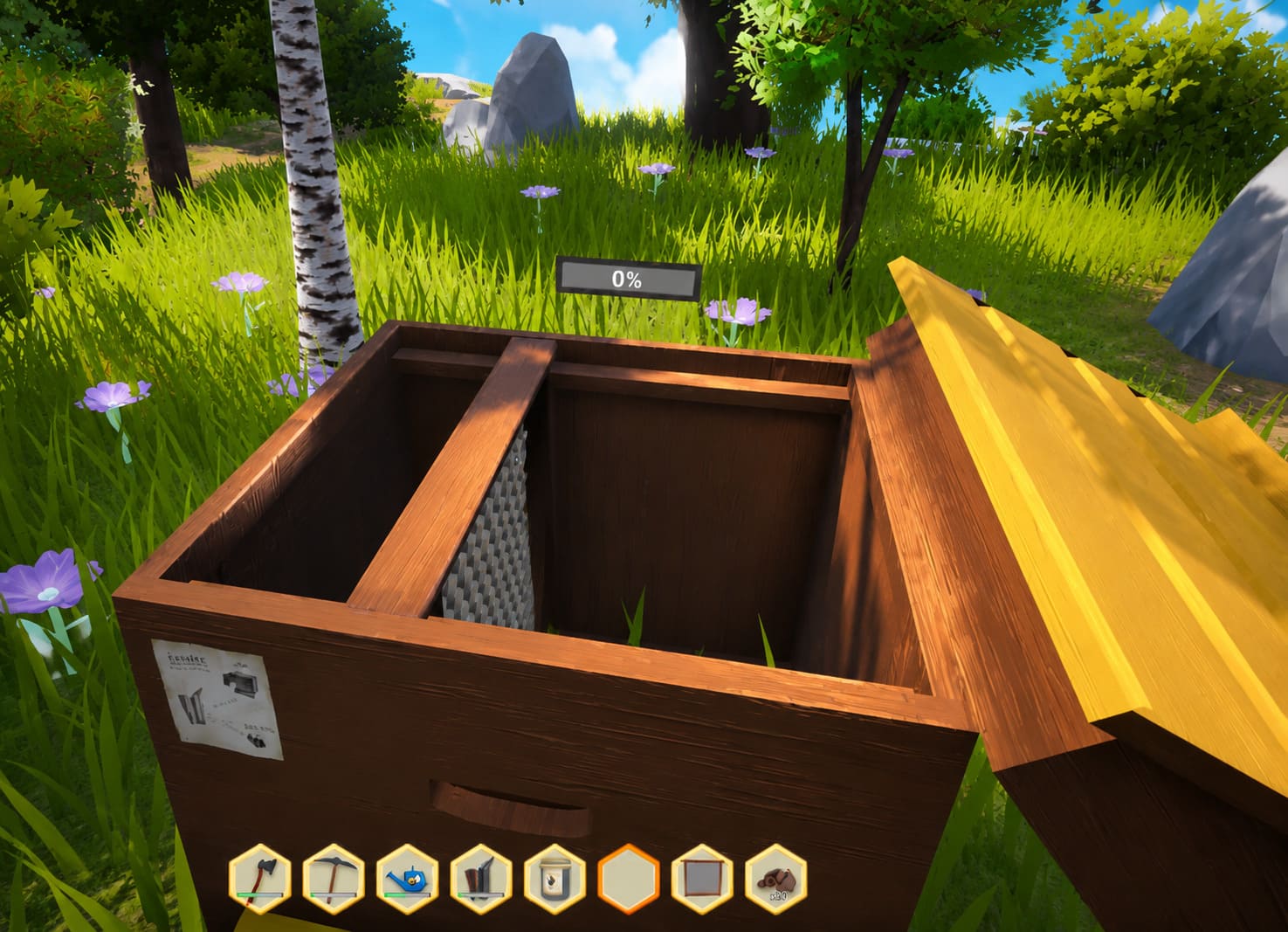
Give Every Hive Room
Packing dozens of hives into perfect little grids looks nice.
It also hurts productivity.
Queens perform noticeably better when colonies have breathing space surrounded by flowers rather than neighboring hive boxes.
I now leave several empty tiles between each colony, filling those gaps with nectar-producing plants instead.
The difference becomes obvious after only a few in-game days.
Automate Feeding Early
Natural nectar works well enough at first.
Later?
Not even close.
Installing automated syrup feeders keeps Queens operating near maximum efficiency regardless of seasonal flower production.
During poor blooming periods this becomes one of the easiest productivity boosts available.
Instead of worrying whether your colony has enough food, the entire process quietly runs in the background while you focus elsewhere.
Automation wins again.
Match Queens to Their Preferred Climate
One lesson I learned the hard way was transporting tropical Queens directly into freezing alpine islands.
Production immediately dropped.
Certain Queens simply dislike unfamiliar environments.
You have two options:
| Solution | Benefit |
|---|---|
| Install climate regulators | Immediate productivity recovery. |
| Breed climate-resistant offspring | Permanent long-term improvement. |
The second option takes more effort but pays off dramatically later.
How to Spawn Your Own Queen Bees
Eventually, relying on wild captures isn’t sustainable.
Fortunately, Island Beekeeper offers several reliable breeding methods.
Controlled Swarming
This feels surprisingly authentic while still remaining fun.
To encourage natural Queen production:
- Raise hive population close to maximum.
- Keep food supplies completely stocked.
- Allow slight overcrowding.
- Watch for Queen Cells appearing inside the colony.
- Carefully remove mature Queen Cells into a separate Nucleus Box.
Worker bees begin feeding selected larvae Royal Jelly, eventually creating brand-new Queens.
It takes patience.
It’s absolutely worth it.
Advanced Queen Nursery Strategy
If you’re chasing perfect genetics, manual breeding becomes the superior option.
My preferred setup looks like this:
- Build a dedicated Nursery Hive.
- Select larvae from your strongest colony.
- Transfer them into artificial Queen cups.
- Surround them with plenty of nurse bees.
- Wait for mature virgin Queens before establishing new colonies.
This method gives much more control over which bloodlines continue.
Instead of hoping for lucky spawns, you’re effectively designing your own breeding program.
Crossbreeding Rare Queen Hybrids
This is where Island Beekeeper completely hooked me.
The breeding system hides an impressive amount of depth beneath its cozy appearance.
Combining different species can unlock entirely new Queen variants with unique bonuses.
Success isn’t guaranteed.
That’s exactly what makes every breakthrough feel exciting.
My Favorite Hybrid Paths
| Hybrid Queen | Parents | Major Bonus |
|---|---|---|
| Radiant Queen | Forest Queen + Luminous Drone | Produces glowing honey used for advanced crafting recipes. |
| Industrial Queen | Rocky Earth Bee + Worker lineage | Helps automate nearby resource gathering. |
| Botanical Queen | Lavender Queen + Blueberry Drone | Significantly improves nearby crop growth and mutation chances. |
The Radiant Queen remains my personal favorite.
Watching entire apiaries glow at night never gets old.
Prevent Genetic Contamination
Here’s one mistake I kept making early.
I mixed random drones inside the same breeding hive.
Bad idea.
Extra drones introduce unwanted genetics and make targeted breeding much less predictable.
Whenever you’re pursuing a specific hybrid:
- Remove unnecessary drones.
- Use dedicated breeding hives.
- Keep each bloodline isolated until results stabilize.
It requires more organization but dramatically improves consistency.
Island Beekeeper Bee Crossbreeding Combinations Guide: How to Breed Hybrid Bees (2026 Game)
Common Problems and Easy Fixes
Workers Rejecting a New Queen
Sometimes a fresh Queen enters a colony only to get attacked by the workers.
The safest solution is surprisingly simple.
Leave her inside a protective Queen cage for roughly one in-game day.
Once workers adapt to her pheromones, release her normally.
I’ve stopped losing valuable Queens since adopting this habit.
Improve Honey Quality with Better Flowers
Flowers don’t only affect nectar production.
Certain plants noticeably improve your finished honey.
Some of my favorites include:
- Lavender for productivity
- Cotton for hive comfort
- Rare berry bushes for premium honey varieties
Changing nearby vegetation often has a bigger impact than replacing an average Queen.
Many players underestimate how important flora synergy becomes later in the game.
Use Your Medocycle Smarter
Instead of manually checking dozens of islands, establish regular scouting routes.
Place collection markers near known hive locations and revisit them every in-game day.
This dramatically increases your chances of finding newly spawned wild Queens before they disappear.
It’s one of those quality-of-life tricks that saves hours over a long playthrough.
Island Beekeeper Multiplayer Guide: Max Player Count & Xbox Game Pass Status Explained
Final Thoughts
Island Beekeeper might look like another charming cozy simulator at first glance, but underneath its colorful visuals sits a surprisingly rewarding colony management system that constantly encourages experimentation.
The longer I played, the less my success depended on simply collecting more bees and the more it relied on understanding genetics, colony balance, environmental adaptation, and efficient automation. That’s where the game really shines. Every new Queen feels meaningful, every successful hybrid unlock feels earned, and every optimized hive pushes your floating apiary one step closer to becoming a self-sustaining machine.
If I could offer only one piece of advice, it would be this: never settle for “good enough” Queens. Build strong bloodlines, protect your best breeders, keep your colonies organized, and don’t be afraid to experiment with unusual pairings. Some of the most valuable hybrids appear when you stop following the obvious path.
Master your Queens, perfect your breeding program, and before long you’ll be shipping legendary honey from the skies while your apiary practically runs itself. That’s the moment Island Beekeeper evolves from a relaxing farming game into one of the most satisfying management experiences I’ve played in the cozy genre.