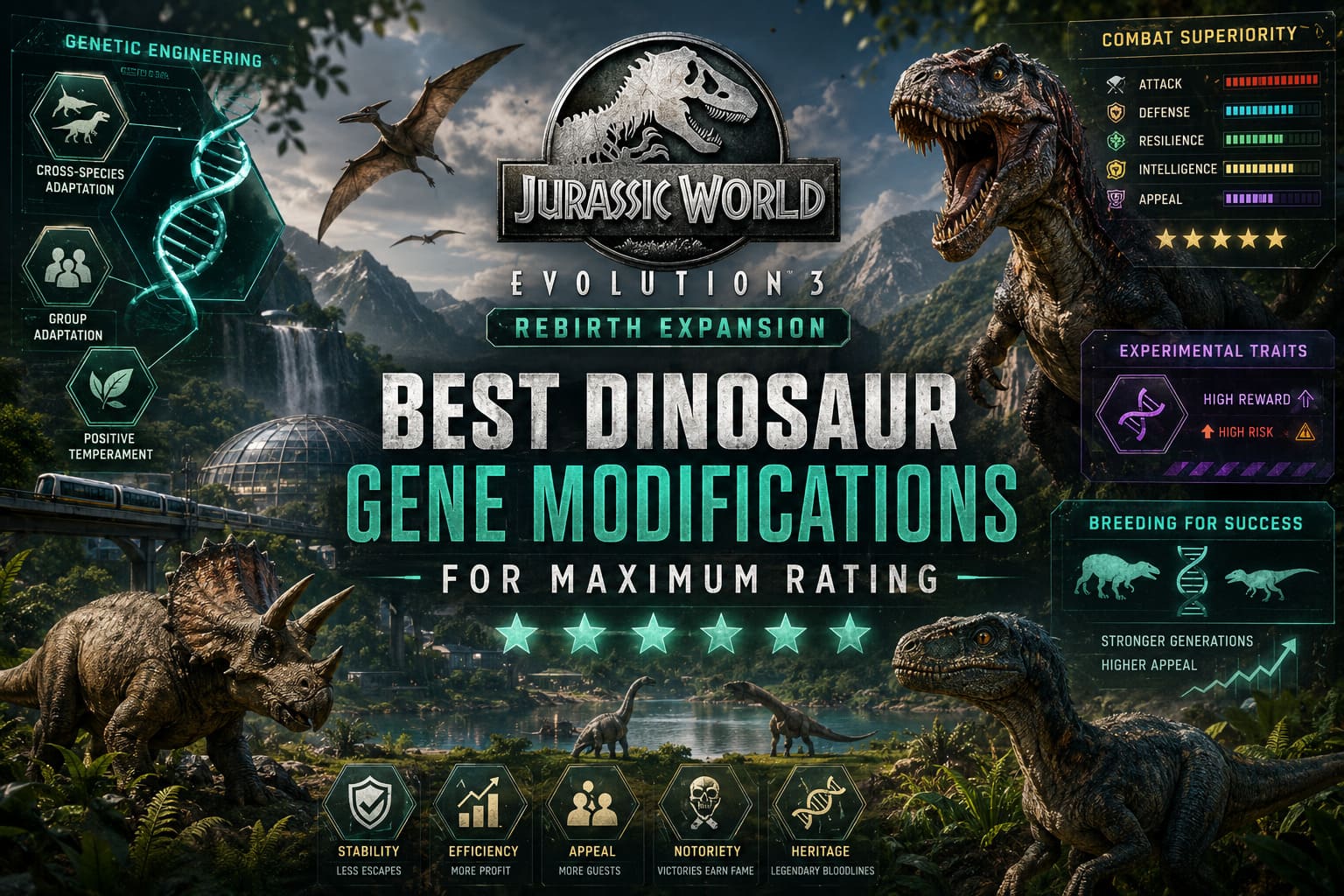
Jurassic World Evolution 3 Rebirth Expansion: Best Dinosaur Gene Modifications for Maximum Rating
When I first jumped into Jurassic World Evolution 3: Rebirth, I expected bigger dinosaurs, prettier maps, and a few extra management systems. What I did not expect was how deeply the new genetics system would change the entire way I build parks.
After dozens of hours experimenting with breeding programs, gene editing, and way too many failed predator exhibits, one thing became crystal clear: the old strategy of simply producing the largest carnivores no longer guarantees success. In Rebirth, the smartest parks are built around efficient genetics, stable ecosystems, and carefully crafted dinosaur bloodlines.
The expansion completely changes the relationship between dinosaur appeal and long-term profitability. A genetically optimized herbivore family can often generate more consistent value than a constantly escaping apex predator that keeps eating tourists and destroying fences.
If you’re aiming for a flawless five-star park, these are the gene modifications and breeding strategies that have delivered the best results in my own campaigns.
Why Genetics Matter More Than Ever
The biggest mistake new players make is focusing entirely on species appeal.
Sure, massive predators look incredible. Everybody wants a park packed with giant carnivores. The problem is that appeal alone doesn’t keep your rating high.
A dinosaur now contributes value through multiple systems:
| Factor | Impact on Rating |
|---|---|
| Base Species Appeal | Initial attraction value |
| Gene Modifications | Additional appeal bonuses |
| Behavioral Stability | Reduced management penalties |
| Breeding Efficiency | Long-term profitability |
| Combat Reputation | Bonus appeal from victories |
| Comfort Levels | Prevents rating loss from escapes |
The key difference is sustainability.
A dinosaur worth 3,000 appeal points becomes a liability if it escapes every few months. Meanwhile, a stable enclosure containing several compatible species can quietly generate enormous visitor traffic for years.
That’s where smart genetic engineering comes into play.
Cross-Species Adaptation Is the Real MVP
If I could unlock only one gene technology early, this would be it.
Many players chase combat traits first because they sound exciting. In practice, Cross-Species Adaptation creates far more value.
The modification increases the likelihood of producing tolerant dinosaurs that can coexist with other species.
Why is this such a big deal?
Because enclosure space is one of the most valuable resources in the game.
Instead of building:
- One enclosure for Species A
- One enclosure for Species B
- One enclosure for Species C
You can combine multiple compatible dinosaurs into a massive ecosystem exhibit.
Guests absolutely love giant mixed-species habitats. More importantly, your viewing galleries, hotels, and attractions become significantly more efficient.
My most successful park featured seven species sharing a single mega-enclosure, generating absurd guest traffic while consuming a fraction of the infrastructure budget.
Group Adaptation Solves One of the Most Annoying Problems

Every veteran of the franchise has experienced it.
You hatch a beautiful dinosaur with amazing stats.
Then you discover it hates literally everyone around it.
Suddenly you’re redesigning an entire section of the park because one prehistoric diva refuses to socialize.
Group Adaptation dramatically reduces this headache.
The modification improves social tolerance and lowers the chance of developing problematic behavioral traits that force isolated housing.
From a pure management perspective, this gene pays for itself many times over.
- Less micromanagement.
- Less enclosure redesign.
- Less frustration.
- More profit.
Those are the kinds of upgrades I love.
Positive Temperament Is Surprisingly Powerful
This might be the most underrated genetic modification in the entire expansion.
Most players ignore comfort-related upgrades because they don’t directly increase appeal numbers.
That’s a mistake.
A dinosaur with enhanced comfort thresholds can tolerate temporary environmental problems without immediately entering a panic spiral.
Storm damage?
Less dangerous.
Minor habitat issues?
Less dramatic.
Power outages?
Still risky, but far more manageable.
I started using Positive Temperament extensively after a tropical storm nearly destroyed one of my high-income parks. Since then, my escape incidents have dropped dramatically.
In a game where chaos can wipe out hours of progress, stability is worth a lot.
The Ultimate Combat Gene Combination
Not every dinosaur needs to be peaceful.
Sometimes you want a superstar predator that becomes the centerpiece of your entire park.
For those situations, I keep returning to the same combination.
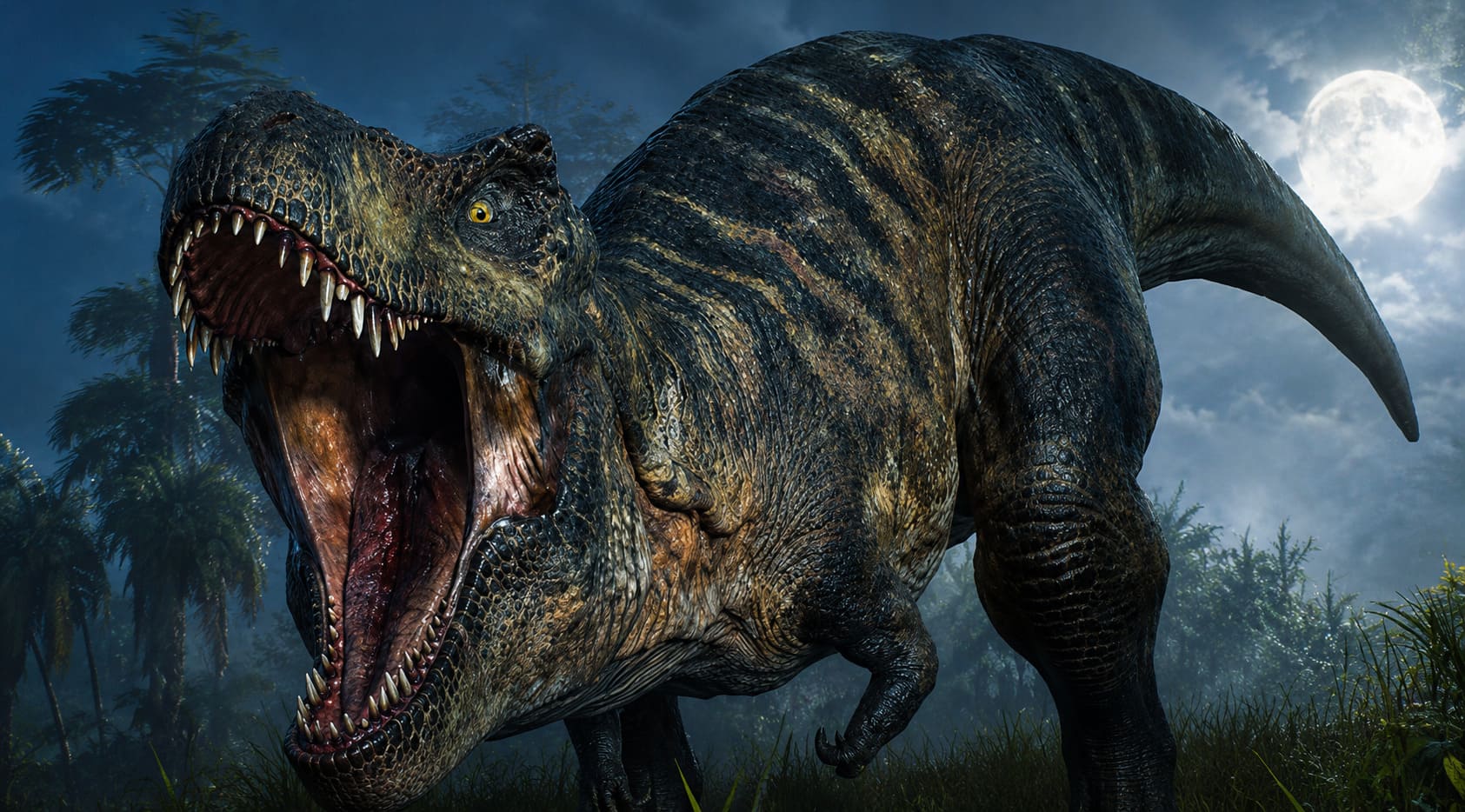
Recommended Predator Build
| Gene | Primary Benefit |
|---|---|
| Increased Bone Density | Attack, Defense, Resilience |
| Intuitive Learning | Combat efficiency |
| High-Quality Genome | Better inherited traits |
| Experimental Trait | Massive appeal boost |
This setup turns apex predators into absolute monsters.
I’ve tested it extensively on large carnivores, and the results are ridiculous.
Victorious predators accumulate notoriety bonuses over time. After several successful encounters, their appeal can reach levels that ordinary genetic builds simply cannot match.
The downside is obvious.
These animals become walking disasters if containment fails.
Never place heavily modified combat predators inside standard enclosures.
Trust me.
I learned that lesson the hard way.
Experimental Traits: Incredible Rewards, Terrifying Risks
Experimental Traits are probably my favorite addition in Rebirth.
They’re also responsible for some of my most spectacular failures.
Once unlocked, these traits can transform average dinosaurs into elite attractions.
The catch?
Every benefit comes with a potential drawback.
Some common side effects include:
- Increased food consumption
- Greater water requirements
- Unpredictable aggression
- Higher maintenance demands
- More complicated comfort needs
I strongly recommend limiting Experimental Traits to showcase animals rather than entire populations.
One genetically enhanced superstar predator is exciting.
Twenty genetically unstable predators is the beginning of a disaster movie.
Breeding Programs Are the Secret to Long-Term Success
The real game-changer isn’t any single gene.
It’s inheritance.
Many players continue relying heavily on hatchery production long after they should transition into breeding programs.
That approach wastes enormous amounts of money.
The moment you create an exceptional male and female pair, your priorities should shift.
Build comfortable habitats.
Maintain excellent health conditions.
Allow the animals to reproduce naturally.
Their offspring can inherit valuable characteristics without requiring expensive genetic reconstruction.
Over time, your park develops entire family lines carrying premium traits.
This creates one of the strongest economic advantages available in the game.
The first generation costs money.
The next several generations become increasingly profitable.
My Personal Five-Star Formula
After experimenting across multiple campaigns and sandbox saves, this strategy consistently delivers the best results.
Early Game
- Unlock Cross-Species Adaptation.
- Improve hatchery success rates.
- Build efficient mixed-species habitats.
- Prioritize comfort and stability.
Mid Game
- Introduce selective breeding.
- Expand large ecosystem exhibits.
- Improve enclosure efficiency.
- Increase guest viewing opportunities.
Late Game
- Create elite showcase predators.
- Introduce Experimental Traits carefully.
- Develop multi-generation bloodlines.
- Maximize appeal through notoriety bonuses.
This structure creates steady income growth without the constant chaos that often destroys developing parks.
The Biggest Mistake Players Are Making
A lot of players still think bigger equals better.
That mindset worked in earlier management games.
Rebirth rewards something different.
Efficiency.
The strongest parks aren’t necessarily filled with the most dangerous dinosaurs.
They’re filled with dinosaurs that generate appeal while remaining manageable.
A stable mixed-species habitat packed with genetically optimized animals often outperforms a collection of unstable apex predators.
That’s the lesson the game keeps teaching me.
Every time I ignore it, I end up rebuilding fences instead of expanding my empire.
Final Thoughts
Jurassic World Evolution 3: Rebirth feels like the most sophisticated genetics system Frontier has ever implemented. The expansion finally makes every DNA decision meaningful.
My recommendation is simple: focus on adaptability first, comfort second, and combat power third.
Use Cross-Species Adaptation and Group Adaptation to create thriving ecosystems. Invest in Positive Temperament to eliminate unnecessary disasters. Reserve powerful combat genes and Experimental Traits for carefully controlled attraction dinosaurs.
Most importantly, build breeding programs around your best genetic templates.
Once those superior bloodlines start producing offspring, your park practically begins generating value on its own.
That’s when the magic happens.
That’s when visitor numbers explode.
And that’s when those elusive five-star ratings become surprisingly easy to achieve.