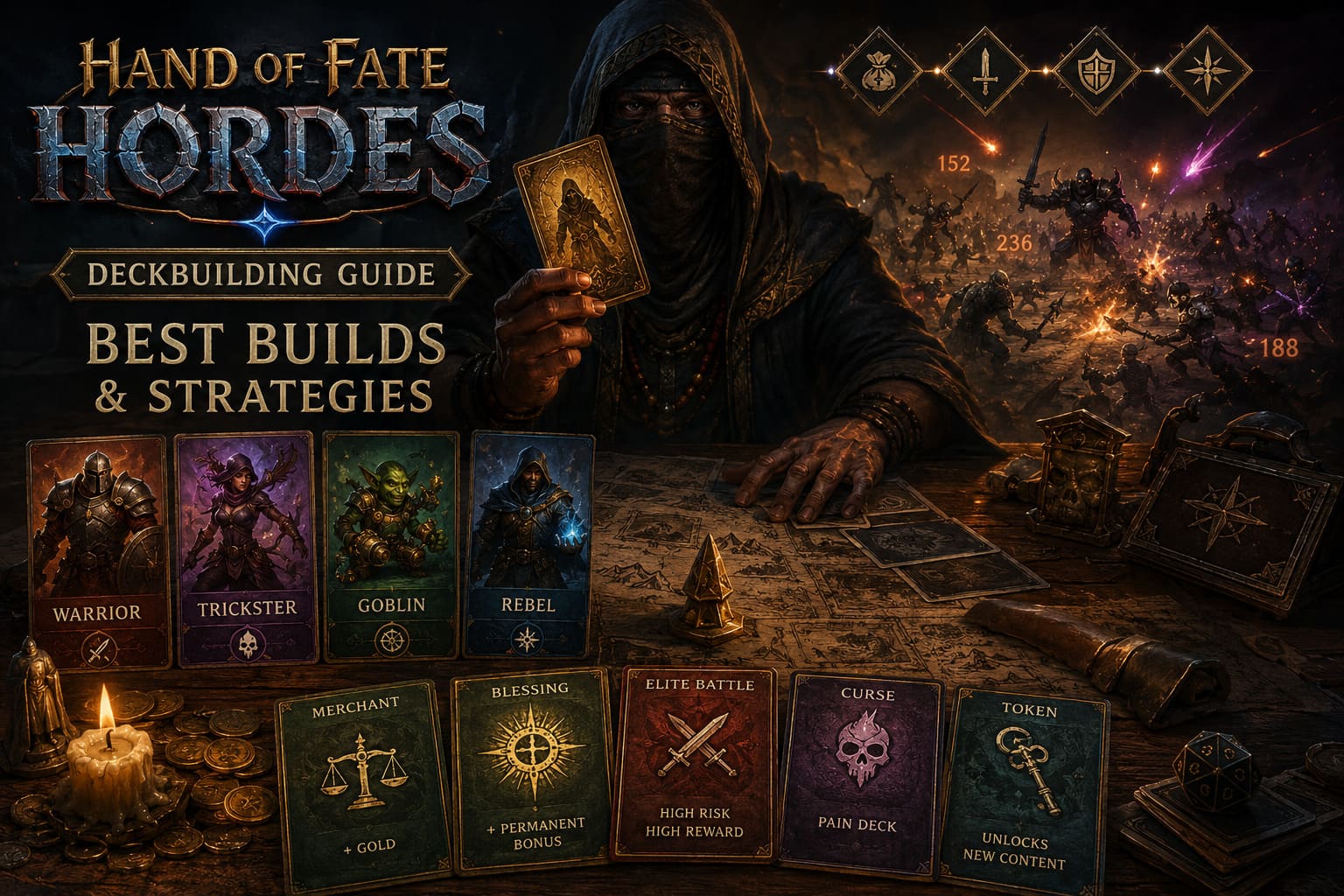
Hand of Fate Hordes Deckbuilding Guide: Best Builds and Strategies
Hand of Fate Hordes takes everything fans loved about the original series and throws it into a completely different battlefield. Instead of carefully timed arena fights, you’re dropped into a relentless bullet heaven where hundreds of enemies flood the screen, projectiles come from every direction, and every mistake compounds over the course of a run.
After spending dozens of runs experimenting with different heroes, encounter combinations, and equipment paths, one thing became painfully obvious: winning has far less to do with mechanical skill than most players initially think. Sure, dodging matters. Positioning matters. But the real battle is won before the first monster even appears.
Your deck is your build.
Every card determines what opportunities, rewards, risks, and power spikes you’ll encounter. A poorly designed deck creates impossible runs. A focused deck creates absurdly powerful combinations capable of deleting entire screens of enemies before they even reach you.
If you’re looking to consistently defeat the Dealer instead of hoping for lucky RNG, here’s everything you should know.
Your Deck Is the Real Character Build
One of the biggest mistakes new players make is assuming that unlocking more cards automatically means they should use more cards.
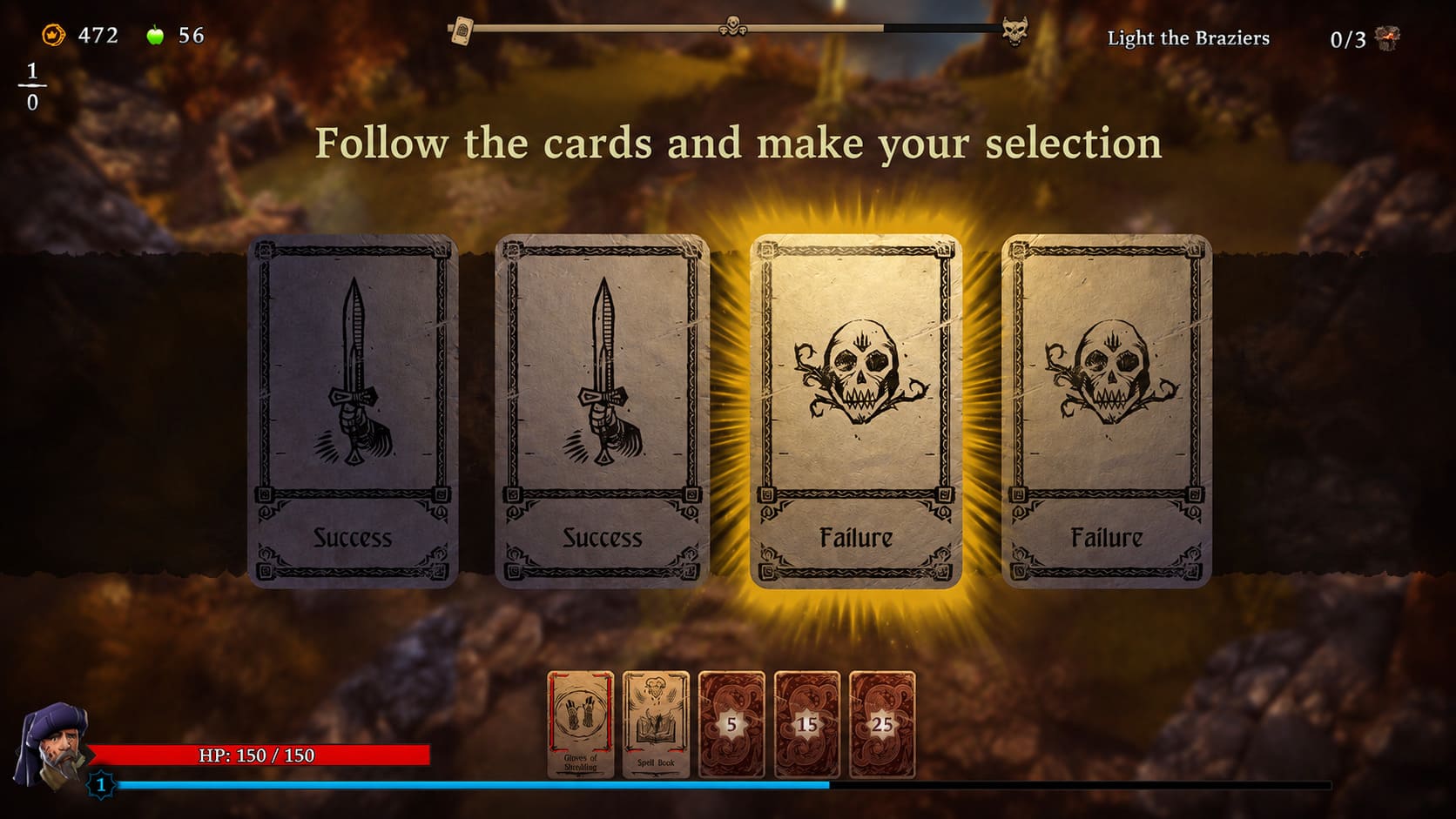
That’s exactly how you sabotage yourself.
Every unnecessary encounter added into your deck decreases the odds of drawing the encounters that actually matter. Instead of seeing your favorite merchants, blessings, or equipment, you’ll spend valuable map space clearing mediocre events that contribute almost nothing to your build.
A lean deck wins games.
The closer your deck stays to the minimum card requirement, the more predictable every run becomes.
That consistency matters far more than gambling on dozens of random possibilities.
Think about it like this:
- Fewer weak encounters
- More reliable equipment
- Better economy
- Faster power spikes
- Less wasted exploration
The Dealer loves randomness.
You shouldn’t.
Build Around One Strategy Instead of Five
One trap almost every player falls into is mixing every interesting item into a single deck.
Critical gear.
Magic relics.
Heavy armor.
Summoning effects.
Explosives.
It sounds fun, but the result is usually a character that’s average at everything and excellent at nothing.
Instead, commit to one clear game plan from the very beginning.
| Build Focus | Prioritize | Avoid |
|---|---|---|
| Heavy Melee | Armor, shields, swords, health scaling | Magic-focused relics |
| Critical Assassin | Daggers, dodge bonuses, critical rings | Heavy defensive gear |
| Economy Build | Gold generation, merchants, discounts | Risky combat-only encounters |
| Elemental Magic | Mana upgrades, staffs, elemental artifacts | Physical damage equipment |
Every powerful late-game run follows the same principle:
One focused strategy always outperforms several unfinished ones.
Choosing the Right Hero Changes Everything
Every hero has completely different scaling, which means every deck should look different.
Trying to force identical cards onto every character simply doesn’t work.
Warrior
The Warrior is exactly what longtime Hand of Fate players expect.
He thrives in close combat, shrugs off punishment, and becomes incredibly durable once proper armor begins dropping.
His strongest decks usually revolve around:
- High armor values
- Shield synergy
- Reliable melee weapons
- Health scaling
- Crowd control
Combat-heavy encounters become much less intimidating because this hero naturally benefits from prolonged fights.
If you’re still learning enemy patterns, the Warrior is easily the most forgiving choice.
Trickster
The Trickster rewards aggressive movement instead of defensive play.
Standing still is almost always the wrong answer.
Her greatest strengths include:
- Extremely high mobility
- Massive critical damage
- Dodge-based survivability
- Excellent boss damage
Luck encounters suddenly become much stronger when using her.
Dice games.
Risky gambles.
High-reward events.
Many players avoid these cards, but the Trickster can extract incredible value from them when fortune cooperates.
Goblin
The Goblin surprised me more than any other character.
At first glance he feels weaker than everyone else.
After several successful runs?
He’s arguably one of the strongest economy-focused heroes in the game.
Instead of relying purely on raw combat stats, the Goblin builds overwhelming momentum through resources.
Focus on cards that generate:
- Gold
- Bombs
- Engineering gadgets
- Merchant discounts
- Extra purchases
A rich Goblin can solve problems that other heroes simply cannot.
Sometimes buying the perfect legendary item is easier than praying it randomly appears.
Rebel
The Rebel comfortably sits between melee and ranged combat.
He adapts better than almost any other hero thanks to his access to elemental effects.
His strongest equipment usually emphasizes:
- Staffs
- Magical rings
- Chain lightning
- Freeze effects
- Mana regeneration
Large enemy groups become dramatically easier once elemental synergies begin stacking together.
Instead of fighting hordes individually, entire packs simply disappear under continuous status effects.
Encounter Cards Decide Whether Your Run Snowballs or Collapses
People often obsess over weapons while ignoring encounter cards.
That’s backwards.
Your encounters determine how quickly your build develops.
A healthy deck usually contains three categories.
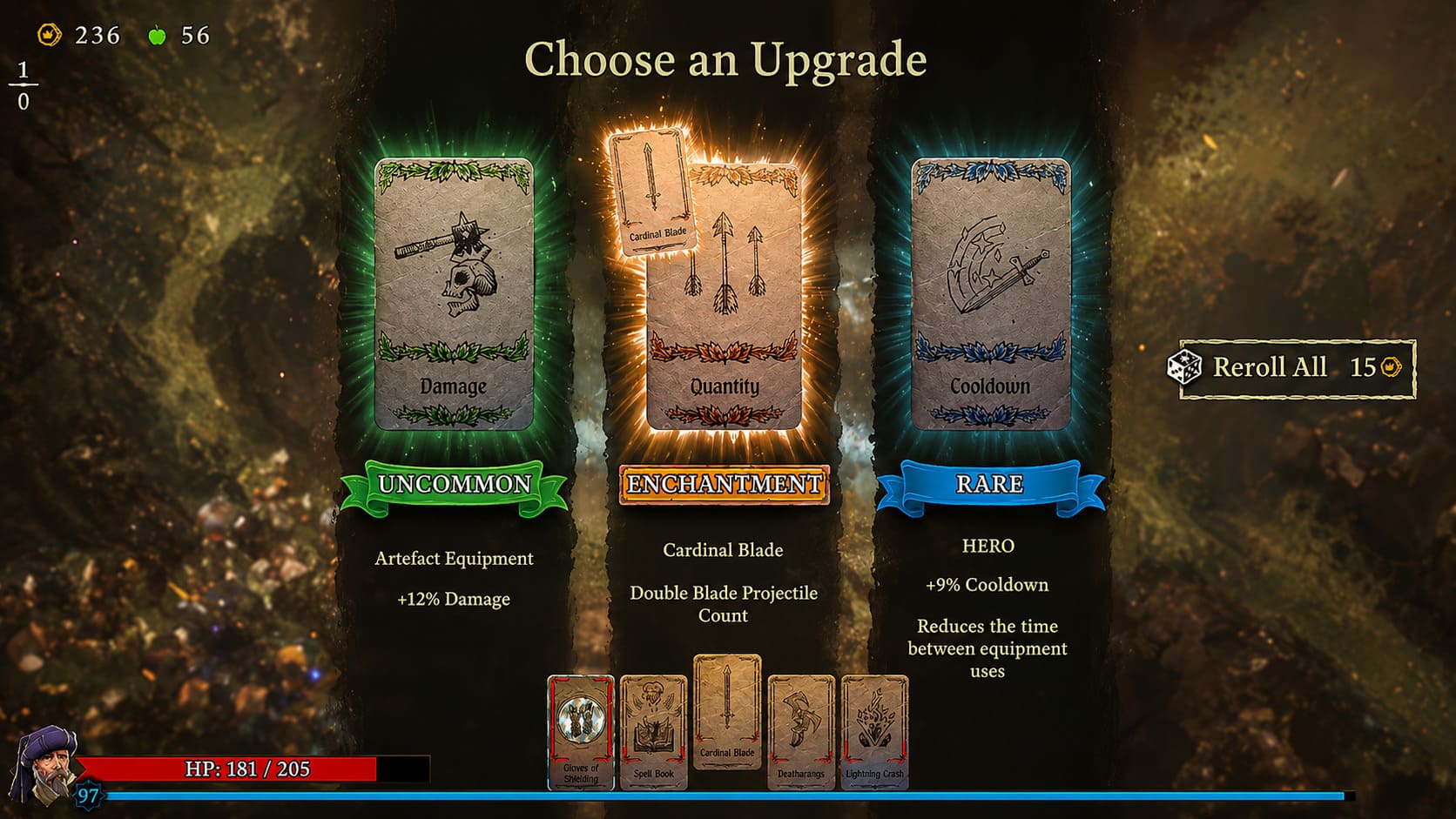
Resource Encounters
These keep your run alive.
Food.
Gold.
Safe merchants.
Reliable blessings.
Running out of food halfway through a map is one of the fastest ways to throw away an otherwise excellent build.
Never underestimate basic resource generation.
Progression Encounters
These unlock future content.
Many Token Cards permanently expand your collection after completing special objectives.
The rewards are absolutely worth chasing eventually.
However…
Don’t force them into every run.
If you’re pushing difficult bosses, temporarily removing incomplete Token encounters often increases your success rate dramatically.
Winning now is usually better than unlocking something later.
Combat Encounters
Combat obviously provides excellent rewards.
The mistake is adding too many brutal fights into your deck.
Elite battles.
Multi-wave encounters.
Boss-level challenges.
They’re fantastic once your collection grows.
Early on, they’re simply another opportunity for the Dealer to end your run.
Finding the balance between challenge and consistency is one of the biggest skills experienced players develop.
Economy Is Stronger Than Most Players Realize
Gold isn’t just another resource.
It’s flexibility.
A healthy economy allows you to recover from terrible RNG.
Didn’t find a weapon?
Buy one.
Need healing?
Visit a shop.
Curse ruining your build?
Pay to remove it.
Merchant encounters become dramatically stronger once your deck consistently generates enough income to actually use them.
This creates a snowball effect.
Better economy leads to better equipment.
Better equipment clears harder encounters.
Harder encounters provide better rewards.
The cycle repeats until your build completely overwhelms enemy scaling.
Curses Can End Great Runs
Eventually you’ll draw from the dreaded Pain Deck.
Some curses are annoying.
Others completely destroy otherwise perfect builds.
Reduced healing.
More dangerous encounters.
Resource penalties.
Increased combat difficulty.
Ignoring these effects rarely ends well.
Whenever possible, include reliable methods of removing curses from your deck.
Priests.
Sacred shrines.
Special merchants.
Anything capable of cleansing negative effects becomes increasingly valuable during longer runs.
Sometimes removing one curse is worth more than finding another legendary weapon.
Blessings Create the Strongest Late-Game Builds
If curses slowly dismantle your character, blessings do exactly the opposite.
Permanent bonuses stack throughout a run and frequently become the foundation of your strongest combinations.
Some equipment even scales directly from the number of blessings currently active.
That’s why experienced players intentionally include encounters capable of rewarding blessings whenever possible.
The earlier you obtain them, the more value they generate over the remainder of the adventure.
Small bonuses eventually become ridiculous.
Surviving the Bullet Heaven Combat
Deckbuilding wins the war.
Combat wins individual battles.
Hand of Fate Hordes quickly fills the screen with enemies, projectiles, explosions, and environmental hazards.
Panicking usually leads to death.
Target priority matters far more than total damage.
Certain enemies demand immediate attention.
The Bandit King should almost always become your first target because he continuously strengthens nearby allies while bombarding you with explosive attacks.
Ignoring him allows ordinary enemies to become much more dangerous than they should be.
The Bandit Jack creates an entirely different problem.
Every successful hit steals your precious gold.
That might not sound devastating until you realize your entire economy can disappear before reaching the next merchant.
Against undead enemies, the situation changes again.
Shield-bearing Skulls can completely negate automatic attacks while blocking.
Instead of wasting precious seconds attacking their defenses, time your dodges carefully and use shield bashes whenever openings appear.
Meanwhile, enemy riflemen remain one of the most dangerous ranged threats.
Standing still against them is practically asking to restart the run.
Constant movement saves lives.
Long-Term Progression Matters More Than Individual Runs
Every defeat teaches something useful.
Maybe your deck lacked food.
Maybe your economy collapsed.
Maybe your damage stopped scaling during the final boss.
Instead of blaming RNG every time, look at what consistently fails.
Small adjustments between runs gradually transform average decks into reliable winning machines.
Spend Tokens on permanent progression whenever possible.
Improve baseline hero statistics.
Unlock stronger encounters.
Expand your equipment pool.
Each successful unlock makes future runs noticeably smoother.
That long-term progression is one of the most satisfying aspects of Hand of Fate Hordes because every session feels meaningful—even the failed ones.
Hand of Fate: Hordes Release Date – PS5, Xbox, and Nintendo Switch 2 Guide
Final Thoughts
Hand of Fate Hordes brilliantly preserves the strategic identity of the original games while embracing the frantic pace of modern bullet heaven roguelikes. The action might dominate the screen, but the smartest decisions still happen before combat even begins.
A carefully curated deck, a focused equipment strategy, and a hero whose strengths are fully supported will outperform flashy but inconsistent builds every single time. Resist the temptation to include every newly unlocked card, invest in encounters that strengthen your chosen playstyle, and never underestimate the importance of food, merchants, blessings, and a healthy economy.
Master those fundamentals, refine your deck after every run, and the Dealer will eventually stop feeling like an unbeatable puppet master. Instead, he’ll become just another obstacle standing between you and another victorious escape from the Shadow Vaults.